These North Carolina Towns Have the Best Main Streets
In North Carolina, towns like Hendersonville and Blowing Rock still organize themselves around a defined main street. In Hendersonville, multiple connected blocks of preserved commercial buildings form the center of retail, offices, and public events. In Blowing Rock, most dining and shopping activity is concentrated along a short stretch of Main Street rather than dispersed along highway corridors. In both cases, the layout limits sprawl and keeps foot traffic centralized. Civic buildings, independent businesses, and seasonal programming operate within the same few blocks. This list looks at North Carolina towns where Main Street remains the primary commercial and civic spine, not a decorative strip but the core of how the town functions day to day.
Little Switzerland

Little Switzerland sits along the Blue Ridge Parkway in McDowell County at roughly 3,200 feet elevation. It is not a conventional town with a large downtown grid. It is a compact roadside cluster built around the Parkway and NC Highway 226A.
The commercial core comprises a short stretch featuring the Switzerland General Store, a handful of seasonal shops, and the Switzerland Inn, which overlooks the Blue Ridge escarpment. The buildings reflect early 20th-century mountain-lodge architecture rather than European design, despite the name.
This is not a busy main street destination. It is a small, elevation-based stop defined by long-range mountain views and a tight grouping of businesses serving Parkway traffic. The setting, more than the retail density, is what shapes the place.
Davidson

Davidson sits about 20 miles north of Charlotte along Lake Norman. The town developed alongside Davidson College, founded in 1837, and the commercial district remains tightly aligned with the campus.
Main Street runs roughly a quarter mile between Concord Road and Griffith Street. Brick storefronts house independent restaurants, local retailers, and long-running staples such as the soda shop and Main Street Books. National brands are limited, though a Ben & Jerry’s sits just off the main strip.
The campus boundary is seamlessly connected to downtown. Students, faculty, and residents use the same sidewalks, parks, and civic areas, such as the town green and nearby churches. The area is small, walkable, and deliberately kept that way through local planning rules that limit chain businesses.
In Davidson, Main Street is not decorative. It is the functional overlap between the college and the town, and it remains the center of daily activity.
Mooresville

Downtown Mooresville centers on North Main Street, with commercial blocks extending between Iredell Avenue and McLelland Avenue. The corridor features a mix of independent boutiques, restaurants, breweries, and civic buildings, and it serves as the town's primary event space.
Mooresville sits near Lake Norman, which has roughly 520 miles of shoreline, though Lake Norman State Park occupies only a portion of it. Outdoor recreation is part of the town’s identity, but downtown is a distinct commercial core.
Bryson City

Located along the borders of the Great Smoky Mountains, Bryson City is more of an outdoor adventure destination than a bustling shopping center. However, Mainstreet in Bryson, North Carolina, offers a warm-hearted walkable street with a range of locally owned businesses such as bookshops, art galleries, a historical museum, and more. This small city is your go-to destination after numerous days of enjoying nature’s wonders at Smokey Mountains, with its hiking trails and famous Grotto waterfall. Surrounded by flowers and greenery, Bryson’s main street makes for a perfect family trip or night out, offering two locally-owned breweries and an aquarium.
West Jefferson

West Jefferson took shape in the early 1900s after the Virginia-Carolina Railroad arrived and gave the town a commercial foothold. That era still shows in today’s downtown, where brick storefronts line Jefferson Avenue in a tight, walkable stretch.
Today, the commercial core is known for its public art. More than a dozen large-scale murals are painted directly onto downtown buildings, depicting Appalachian history, music traditions, local wildlife, and farming life. They are integrated into the business district rather than separated into a formal arts district. Independent coffee shops, working studios, and multiple art galleries operate within a few walkable blocks.
Blowing Rock

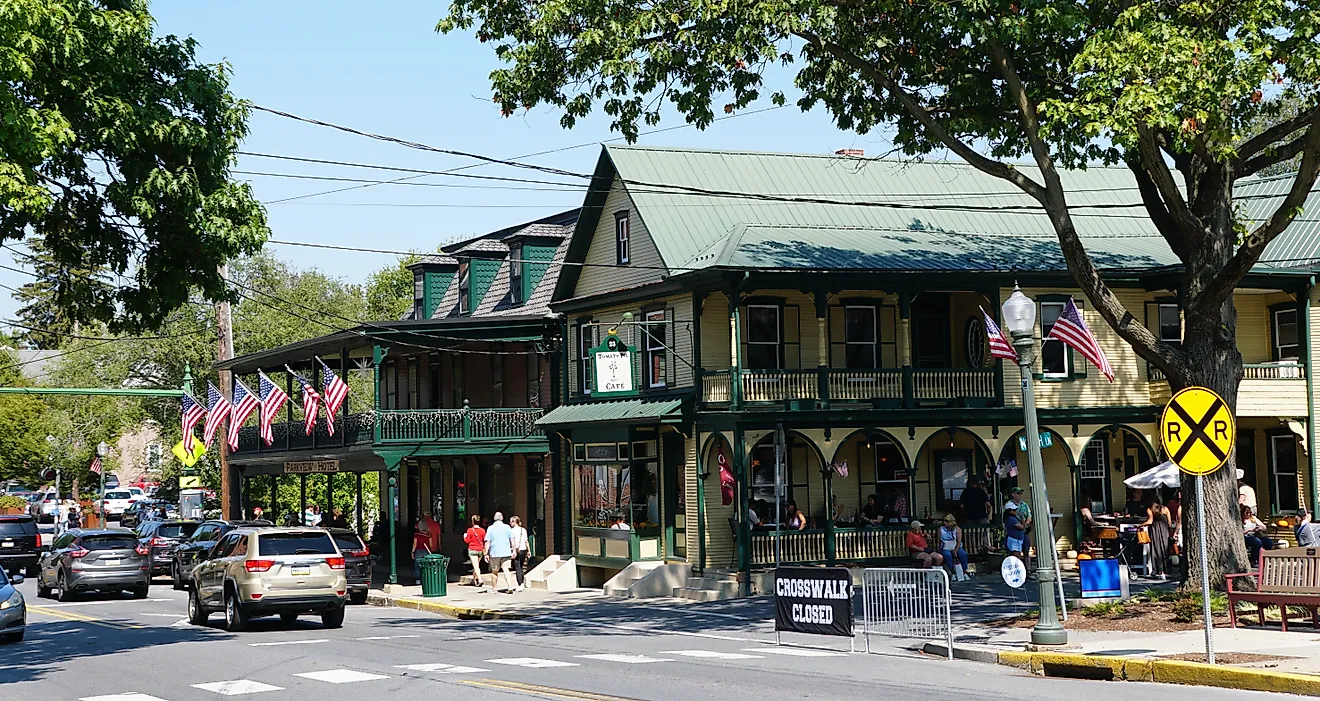
Blowing Rock’s downtown centers on Main Street, a short stretch lined with early 1900s storefronts and a few buildings that started out as houses. Local zoning has kept larger developments out, so the business district stays tight, walkable, and easy to navigate on foot.
Retail thrives locally, with charming independent boutiques, galleries, and long-standing restaurants nestled into small-scale buildings. Seasonal flower planters and coordinated streetscape maintenance help create a warm, inviting atmosphere along the main corridor, making the area feel welcoming and vibrant.
Grandfather Mountain and the Blue Ridge Parkway sit a short drive from downtown, but they are separate destinations. The town itself functions around its Main Street core, where shopping, dining, and community events are concentrated within a few blocks.
Hendersonville

Downtown Hendersonville is Main Street. More than 60 historic buildings line a few connected blocks, and that stretch still functions as the town’s primary business and civic area.
Brick storefronts from the late 19th and early 20th centuries house a mix of independent retailers, restaurants, and service businesses. Seasonal flower planters and coordinated streetscape maintenance are a visible part of the town’s identity.
Several museums sit directly within or adjacent to the main strip. Hands On! Children’s Museum operates on Main Street, while the Mineral & Lapidary Museum and the Henderson County Heritage Museum are located within walking distance in the historic courthouse building.
Mount Airy

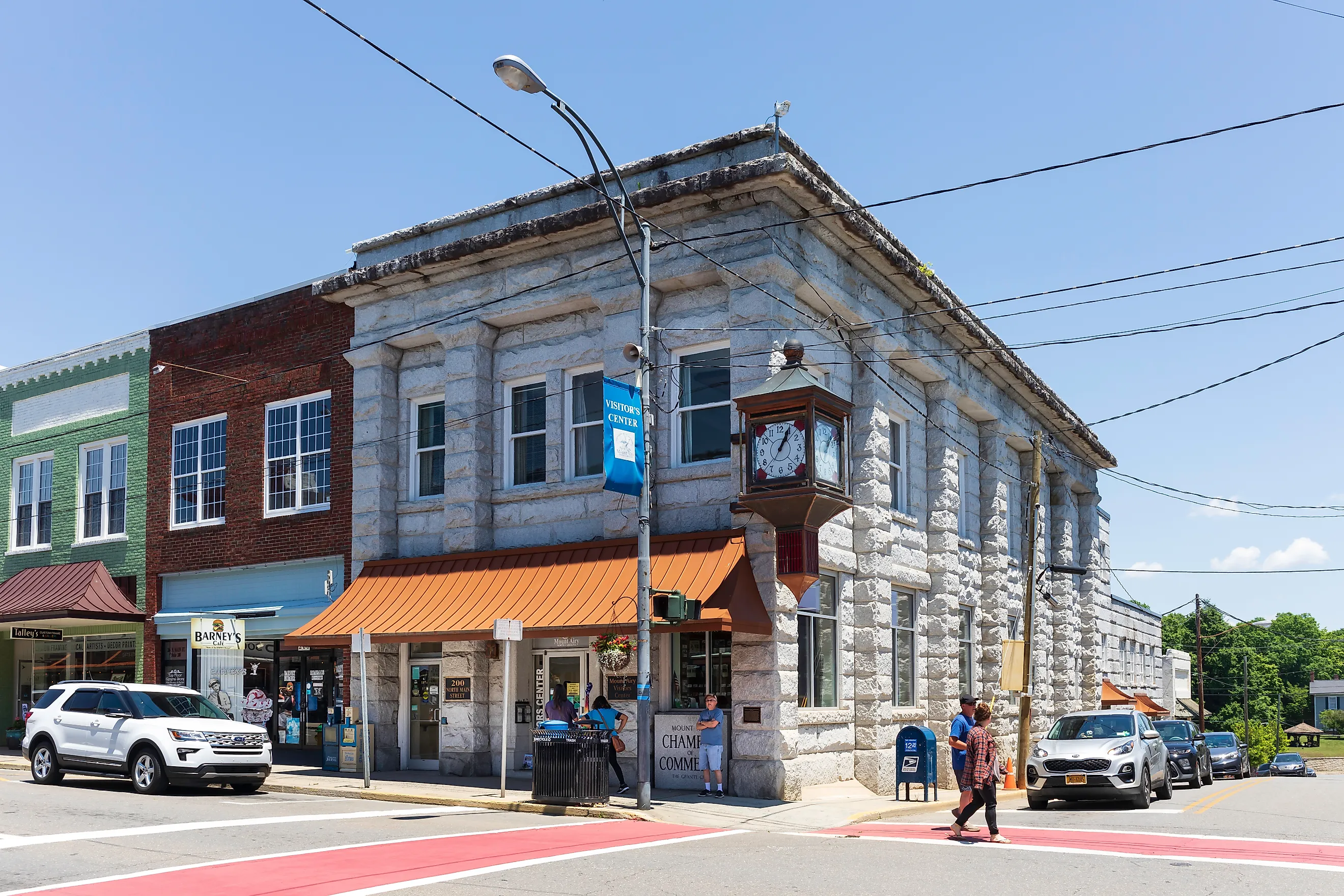
Mount Airy sits in Surry County near the Virginia border. Downtown runs along Main Street, where brick storefronts reflect the town’s early 20th-century growth.
The commercial core is closely tied to the Andy Griffith connection. Mount Airy was Griffith’s hometown and served as the inspiration for the fictional town of Mayberry. That influence is visible in museums, themed attractions, and the annual Mayberry Days festival held in late September.
In Conclusion
Ultimately, these North Carolina towns offer a distinctive vibe from each other. With so much to see and experience, all of them are worth a short visit. While some of these recommended towns offer a more nature-centric atmosphere that the main streets tailor to, others elaborate on the history and culture of its residents. In either setting, they are all homely and welcoming of any visitors as they thrive off of tourists and their support.