The Gulf Coast's 11 Most Laid-Back Towns
With warmer weather making its slow return, the Gulf Coast’s warm waters are calling, along with barrier islands that stretch out in long bands of sand and marsh. Carrabelle has the kind of quiet beach-and-marsh setting that makes a town easy to settle into, especially with Crooked River Lighthouse and Tate’s Hell State Forest close by. Pass Christian feels easygoing from the start, thanks to Scenic Drive, its historic homes, and the long view over the Mississippi Sound. Relaxation is never too far on the Gulf Coast, and the towns below show it.
Cedar Key, Florida

Cedar Key centers on Dock Street, a short waterfront strip where shrimp boats, oyster houses, and weathered shopfronts face the marina, giving the town a commercial core that still looks tied to the water instead of separated from it. Cedar Key Museum State Park preserves the 1920 home of St. Clair Whitman, and its exhibits explain how cedar lumber, pencil slats, and seafood once shaped the local economy. Offshore, Atsena Otie Key mixes natural scenery with traces of the old settlement, including a cemetery and open shoreline that make a kayak or boat trip feel more interesting than a standard beach stop. Seahorse Key adds another layer of history, with its 1854 lighthouse and steep island setting, though the lighthouse is generally only accessible during the island’s annual public open house.
Carrabelle, Florida

Carrabelle keeps one of the Gulf’s more unusual landmarks at Crooked River Lighthouse, where the restored keeper’s house displays a rare 1894 Fresnel lens and the tower overlooks the river, marsh, and low coastline around town. Across from Carrabelle Beach, the Camp Gordon Johnston WWII Museum explains how thousands of soldiers trained here for amphibious landings, giving this quiet stretch of sand a much more important backstory than you would guess from the view alone. Carrabelle Beach itself is one of the town’s best natural stops because its shallow water, long shoreline, and open view toward Dog Island make it feel less built up than most Florida beaches. West of town, Tate’s Hell State Forest adds boardwalks, paddling routes, and dense pine flatwoods that show how much wild country still surrounds Carrabelle.
Apalachicola, Florida

Apalachicola’s riverfront is anchored by Water Street, where old brick buildings, oyster bars, and the working harbor still sit close together enough to show how this town grew as a port rather than a beach resort. Orman House Historic State Park preserves an 1838 Greek Revival home overlooking the river, and its grounds and outbuildings make the town’s antebellum history easier to picture than any marker could. John Gorrie Museum State Park focuses on the physician who experimented with mechanical cooling here in the 1840s, giving the town a small but genuinely important scientific landmark. For a natural stop, the Apalachicola National Estuarine Research Reserve opens up the wider bay and marsh landscape with trails, exhibits, and access to the estuary that supports the seafood culture Apalachicola is still known for.
Mexico Beach, Florida

Mexico Beach is built around its shoreline, and the town’s 3.1 miles of white-sand beach are the main reason people come, with easy public access and a broad, uncrowded feel. Canal Park ties the town to the water in a more local way, with beach access, a boardwalk area, and regular use as a gathering spot for community events right off Canal Parkway. The Mexico Beach Marina adds the working-coast side of town, supplying bait, tackle, and boat access that make fishing and boating part of the place instead of just an activity added for visitors. For a quieter natural angle, paddling the canals and nearby waters around Mexico Beach brings you into marshy edges and bird habitat that show how much of the area still feels undeveloped beyond the sand.
Dauphin Island, Alabama

Dauphin Island packs several of coastal Alabama’s best-known sights into a barrier-island setting, and Fort Gaines is the clearest example, with brick tunnels, original cannon positions, and views across Mobile Bay from one of the Civil War sites tied to the Battle of Mobile Bay. The Audubon Bird Sanctuary covers maritime forest, marsh, dunes, and beach, so its boardwalks and trails give you a much fuller look at the island than you get from the road alone. The Alabama Aquarium at the Dauphin Island Sea Lab focuses on local estuaries and Gulf habitats, which makes it more useful here than a generic aquarium built around species from everywhere else. On the public shoreline, Dauphin Island Public Beach brings in the straightforward beach side of town, with wide sand and open Gulf views that balance the island’s historic and ecological stops.
Pass Christian, Mississippi

Pass Christian’s best-known stretch is Scenic Drive, where large live oaks, historic homes, and a long view over the Mississippi Sound make it one of the most distinctive waterfront roads on the Gulf. War Memorial Park sits right by the beach with its gazebo and open lawn, giving the town a landmark public space that works as both a memorial site and a place to watch the water. Pass Christian Harbor brings in the commercial side of town, with fishing boats, marina activity, and easy access to the working waterfront that separates Pass Christian from beach towns built mostly around condos and hotels. Along the shore, the Pass Christian Beach area stays broad and open, and its quieter setting near the residential waterfront makes it better suited to a slow walk or sunset stop than the busier casino-backed sections of the Mississippi coast.
Bay St. Louis, Mississippi

Bay St. Louis has one of the Mississippi coast’s strongest small-town centers in Old Town, where Main Street and Beach Boulevard meet in a compact district of shops, restaurants, and galleries that still feels tied to the waterfront instead of sealed off from it. The Bay St. Louis Municipal Harbor adds the working-coast side of town, with slips, charter activity, and a marina setting close enough to downtown that boats remain part of the everyday view. The Alice Moseley Folk Art Museum remains a worthwhile stop in Bay St. Louis, now operating from 105 South Toulme Street in Old Town with paintings by one of the area’s best-known artists. The Historic L&N Train Depot and nearby Depot Row bring in another layer of character, combining a Mississippi Landmark building, the Bay St. Louis Mardi Gras Museum, and a cluster of nearby small businesses in one of the most recognizable parts of town.
Ocean Springs, Mississippi

In Ocean Springs, the Walter Anderson Museum of Art stands out for its murals, watercolors, and prints tied directly to the Gulf Coast, and it gives the town a cultural stop with real local roots rather than a generic small-town gallery. Shearwater Pottery, founded in 1928 by Peter Anderson, is still one of the most distinctive commercial landmarks here, with a showroom full of hand-made ceramics that connects Ocean Springs to the Anderson family’s long artistic history. The Davis Bayou Area of Gulf Islands National Seashore brings in the natural side of town with marshes, wooded trails, fishing access, and views across protected coastal habitat just a few minutes from downtown. Downtown Washington Avenue and Government Street pull the pieces together with locally owned shops, restaurants, and galleries in a walkable historic district that feels active without losing its small scale.
Grand Isle, Louisiana

Grand Isle feels different from most Gulf towns because nearly everything that matters here is tied directly to the water, and Grand Isle State Park shows that best with its Gulf beach, birding habitat, fishing access, and camping area set right on Louisiana’s only inhabited barrier island. The town’s fishing culture is not a side attraction, and the marinas and charter docks along Louisiana Highway 1 make that obvious by keeping offshore trips, bait shops, and boat traffic in plain view. Grand Isle Birding Trail sites add another reason to come, especially during migration, when warblers, shorebirds, and other species turn this narrow strip of land into one of the state’s best-known birdwatching spots. The Tarpon Rodeo Pavilion gives Grand Isle a landmark tied to its long-running summer fishing tournament, which says more about the town’s identity than any generic beach boardwalk could.
Port Aransas, Texas

Port Aransas centers on the water, and its standout places show that clearly without needing much explanation. Mustang Island State Park gives the town its broadest natural landmark, with five miles of Gulf shoreline, paddling trails, camping areas, and long open beach views. Roberts Point Park sits on the ship channel with an observation tower, picnic areas, and one of the easiest spots in town for dolphin watching. Leonabelle Turnbull Birding Center brings a different landscape into view, with boardwalks over wetlands and regular sightings of herons, roseate spoonbills, and other coastal birds. In the commercial heart of town, Tarpon Street and the marina district keep charter boats, seafood restaurants, and fishing businesses close together, so the working harbor remains part of Port Aransas’s identity.
Rockport, Texas

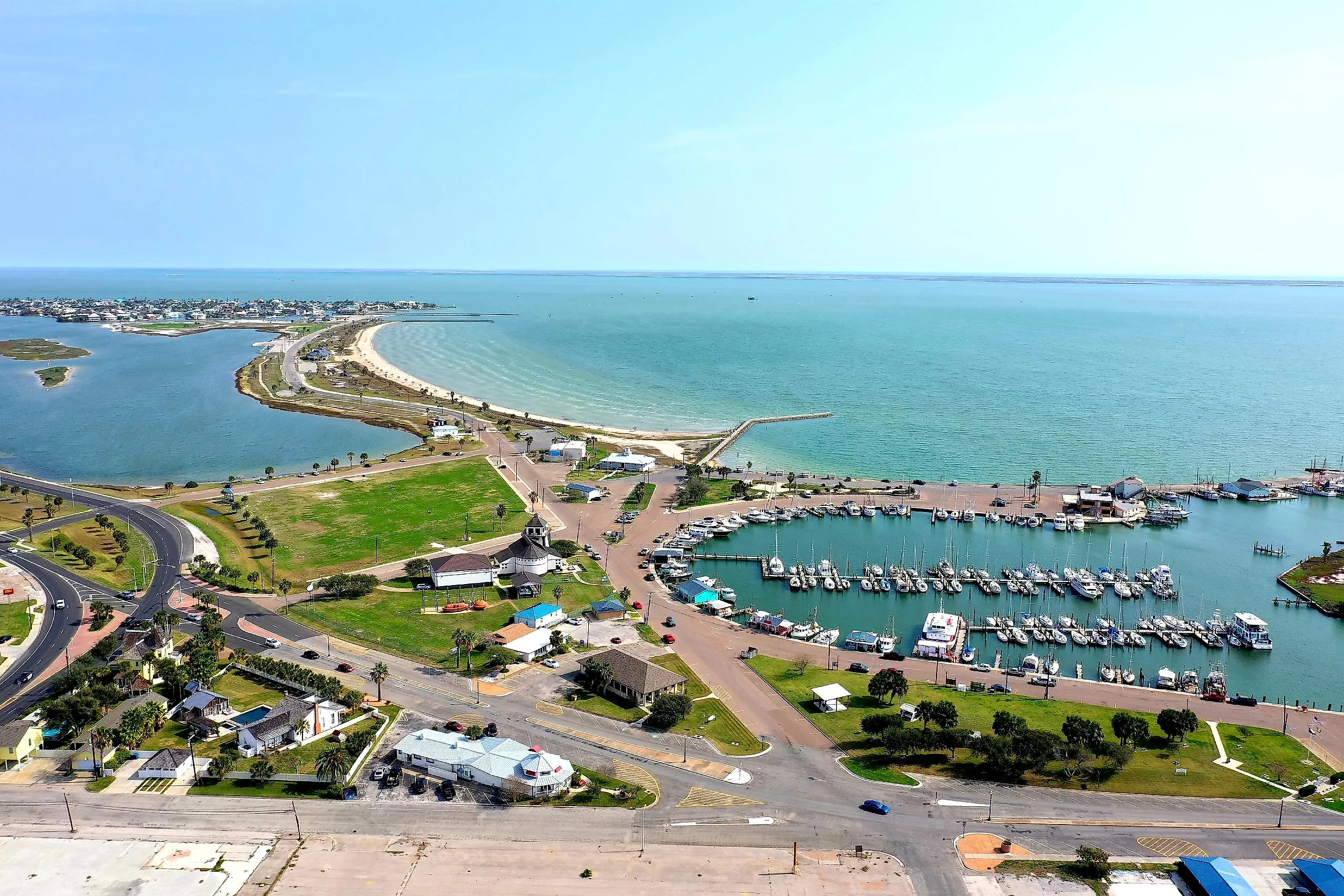
Rockport’s shoreline landmark is Rockport Beach, a long bayfront stretch with calm water, a fishing pier, and the state’s first certified Blue Wave Beach. Fulton Mansion State Historic Site preserves an 1877 Second Empire house with indoor plumbing, gas lighting, and gardens facing Aransas Bay. The Texas Maritime Museum gives Rockport a strong commercial and historical anchor through exhibits on shipbuilding, navigation, fishing, and Gulf trade. At Goose Island State Park, the coastal landscape opens up through fishing spots, bird habitat, and the famous Big Tree, one of Texas’s oldest live oaks.
From quiet marsh edges in Carrabelle to the harbor views of Rockport, these towns show how much variety the Gulf Coast can fit into one easygoing trip. Some lean historic, some are built around beaches, and others keep their appeal in working waterfronts and bird-filled backwaters. What ties them together is simple: each one gives you room to slow down, look around, and enjoy the coast without feeling rushed at all.