The 7 Friendliest Little Towns In South Carolina
South Carolina's smaller communities run on a different rhythm than the resort coastline. Lowcountry villages keep watermen and shrimp fleets at the centre of community life. Upcountry towns sit in the rolling foothills below the Blue Ridge Escarpment and lean on textile-era main streets and outdoor recreation. The Pee Dee corner of the state holds its 18th-century courthouse towns and the rural blackwater swamps that surround them. The seven below cover all three regions and rank among the friendliest small-town stops in South Carolina.
McClellanville

McClellanville sits on Jeremy Creek 40 miles up the coast from Charleston and runs as one of the last working shrimp ports in South Carolina. The Lowcountry Shrimp Festival on the first weekend of May each year blesses the fleet at Carolina Seafood's dock and marks the start of the commercial shrimp season, drawing several thousand visitors to a town of fewer than 500 residents. Cape Romain National Wildlife Refuge, accessed by ferry from the McClellanville harbour, covers 66,000 acres of barrier islands and salt marsh and runs one of the most productive sea-turtle nesting beaches on the East Coast at Cape Island. St. James Santee Episcopal Church, the 1768 Georgian brick chapel-of-ease just outside town on Old King's Highway, is on the National Register of Historic Places and remains one of the most intact small parish churches surviving from the colonial period. The Village Museum on Pinckney Street covers the local shrimping history and the recovery from Hurricane Hugo (the 1989 storm made landfall about 20 miles south at the Isle of Palms).
Lancaster

Andrew Jackson was born in the Waxhaws settlement just south of present-day Lancaster on March 15, 1767, in a region the future seventh president himself claimed for South Carolina (though the precise birthplace cabin straddled the Carolina line and the question has never been settled). Andrew Jackson State Park on US Highway 521 covers 360 acres of the Waxhaws landscape with a museum, a James Earle Fraser equestrian statue of young Jackson, a fishing lake, and a relocated one-room schoolhouse representative of the period. The Red Rose Festival every May draws a regional crowd to Lancaster's downtown for the annual carnival, vendor market, and live music programming run by the chamber. Lancaster Motor Speedway, the long-running half-mile dirt oval east of town, runs Saturday-night sprint car and modified racing through the summer schedule. Hall Family Farm on the southwest edge of town runs you-pick strawberries through June and the most active pumpkin-patch operation in the Catawba River corridor in October.
Hartsville

Hartsville is the home of Sonoco Products Company, the global paper and plastic packaging company founded as the Southern Novelty Company in town in 1899 and still headquartered on West Carolina Avenue. Coker College (now Coker University), founded by Sonoco-family member Major James Lide Coker as a women's college in 1908, anchors the south side of town and runs the Coker Arboretum on its grounds. Kalmia Gardens on Carolina Avenue is the 35-acre botanical garden donated by Sonoco and David Coker, built around the 1820s Hart family home, with the only stand of native Atlantic white cedar in the South Carolina Sandhills. Neptune Island Waterpark and the adjacent Byerly Park sports campus together cover about 100 acres on the west side of town and run the heaviest concentration of public recreation in Darlington County. The Hartsville Museum, in the 1930s WPA-era post office on Fifth Street, runs a free rotating exhibit calendar with the Sculpture Courtyard outside.
Landrum

Campbell's Covered Bridge, the 1909 Howe-truss span about 5 miles southwest of Landrum on Beaverdam Creek, is the only surviving covered bridge in South Carolina and sits within an 18-acre public park along the creek. The Foothills Equestrian Nature Center (FENCE) on Hunting Country Road covers 380 acres of nature trails and runs as the regional anchor for the Tryon equestrian community that overlaps the Carolinas state line. Blue Wall Preserve, a 575-acre Nature Conservancy property in the Saluda Grade foothills, protects part of the larger Blue Ridge Escarpment conservation corridor and the watershed that feeds the city of Greenville. The Landrum Christmas Stroll on the first Saturday of December draws several thousand visitors for one of the largest small-town holiday events in the Upstate. The Hare and Hound Pub on East Rutherford Street covers the British pub end of the dining scene.
Latta

The Latta Downtown Historic District holds 13 contributing buildings from the late 19th and early 20th centuries, when the town anchored a regional cotton, tobacco, and lumber economy along the Wilmington & Manchester Railroad. The Dillon County Museum on South Marion Street occupies a former dentist's office and runs exhibits covering the agricultural and rail history that shaped Latta. The Latta Library on Main Street, opened in 1914, is one of the oldest continuously operating public libraries in the Pee Dee region. Latta Springfest each spring in the downtown park draws families from across the Pee Dee region for an Easter egg hunt, pony rides, vendor booths, and the live-music programming that closes the day. The McLaurin Plantation site northwest of town, partially preserved, marks one of the antebellum operations the town grew up around.
Walterboro

The South Carolina Artisans Center on Wichman Street is the state's officially designated folk-art and crafts gallery and represents over 200 working South Carolina artists in a 9,000-square-foot centre. The Walterboro Wildlife Sanctuary, formerly the Great Swamp Sanctuary, runs 842 acres of blackwater swamp and cypress-tupelo bottomland directly off Interstate 95 and is one of the few Lowcountry swamp habitats accessible by boardwalk from a town centre. The Tuskegee Airmen Memorial at the Lowcountry Regional Airport marks the World War II training of African American fighter pilots at the former Walterboro Army Airfield, an advanced flight-training base during the war. The Colleton Museum at Hampton and Benson Streets covers the regional history alongside the weekly Saturday-morning Colleton Farmers Market. The WHAM! Festival every May packs the downtown for a week of art, music, and storytelling programming.
Abbeville

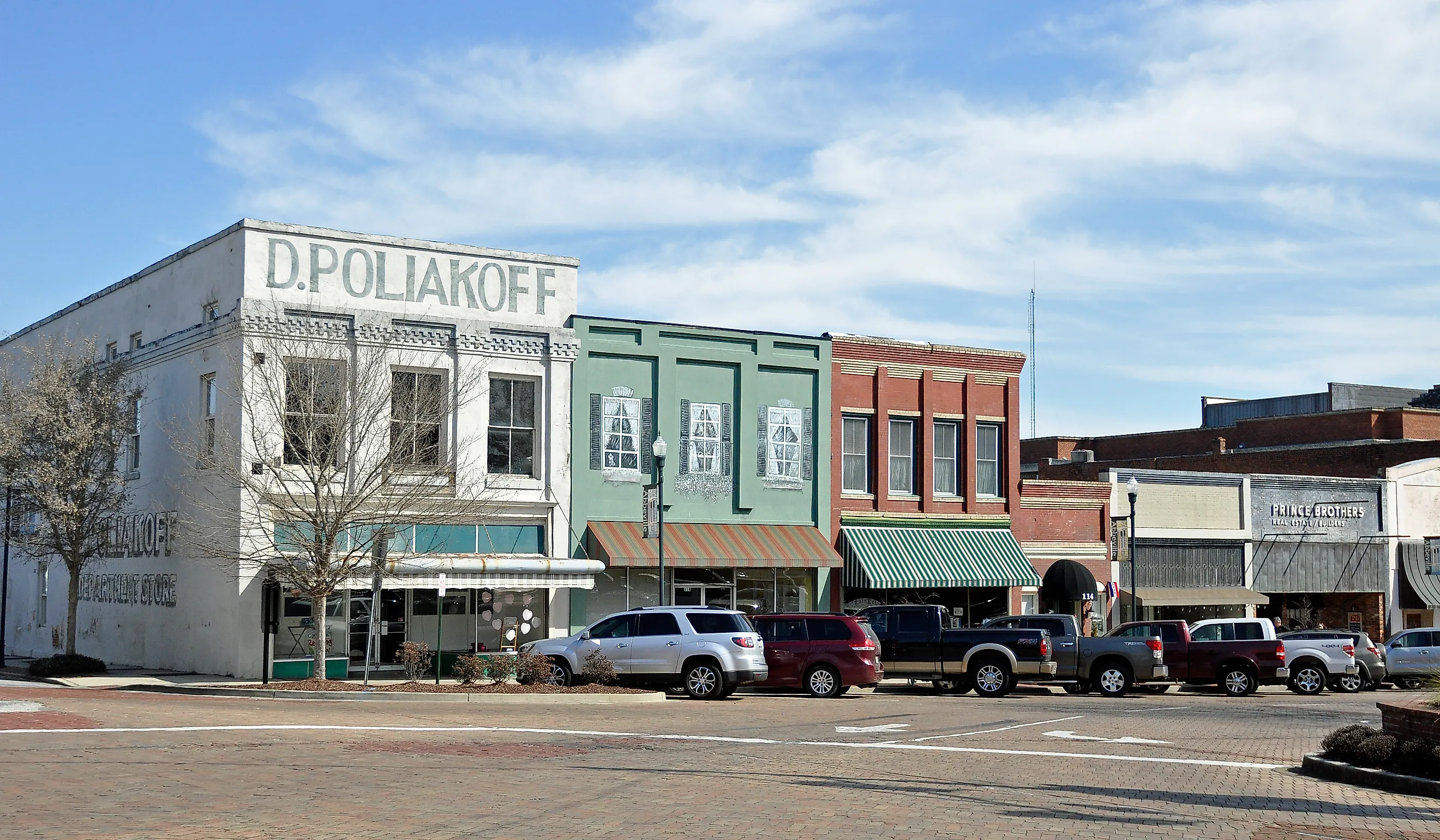
The first organised secession meeting in the South was held on what is now Secession Hill in Abbeville on November 22, 1860, about six weeks before South Carolina formally seceded on December 20. The last Confederate cabinet meeting was held at the Burt-Stark Mansion in Abbeville on May 2, 1865, and that building is now a National Historic Landmark museum. The Abbeville Opera House on the town square, built in 1908 as part of the Eureka Hotel block, was designated the Official State Theatre of South Carolina for rural drama in 1992 by the state legislature. Trinity Episcopal Church on Trinity Street, completed in 1860 in the Gothic Revival style, holds an 1860 Henry Erben tracker pipe organ that remains in regular service and is among the oldest in the state. The Abbeville Spring Festival on the square runs one of the largest food and craft vendor lineups of any Upstate small-town festival.
The Friendliest Side Of The Palmetto State
The seven towns above split by region in ways that shape the visit. McClellanville and Walterboro carry the Lowcountry watermen-and-swamp identity. Landrum and Abbeville anchor the Upstate side with the Blue Ridge foothills and the Savannah River valley behind them. Latta, Hartsville, and Lancaster line up across the middle of the state through the Pee Dee and the Catawba corridor. Visitors picking one as a base will find the South Carolina backroad network easy to drive and the small-town downtowns close enough together to chain through a long weekend.