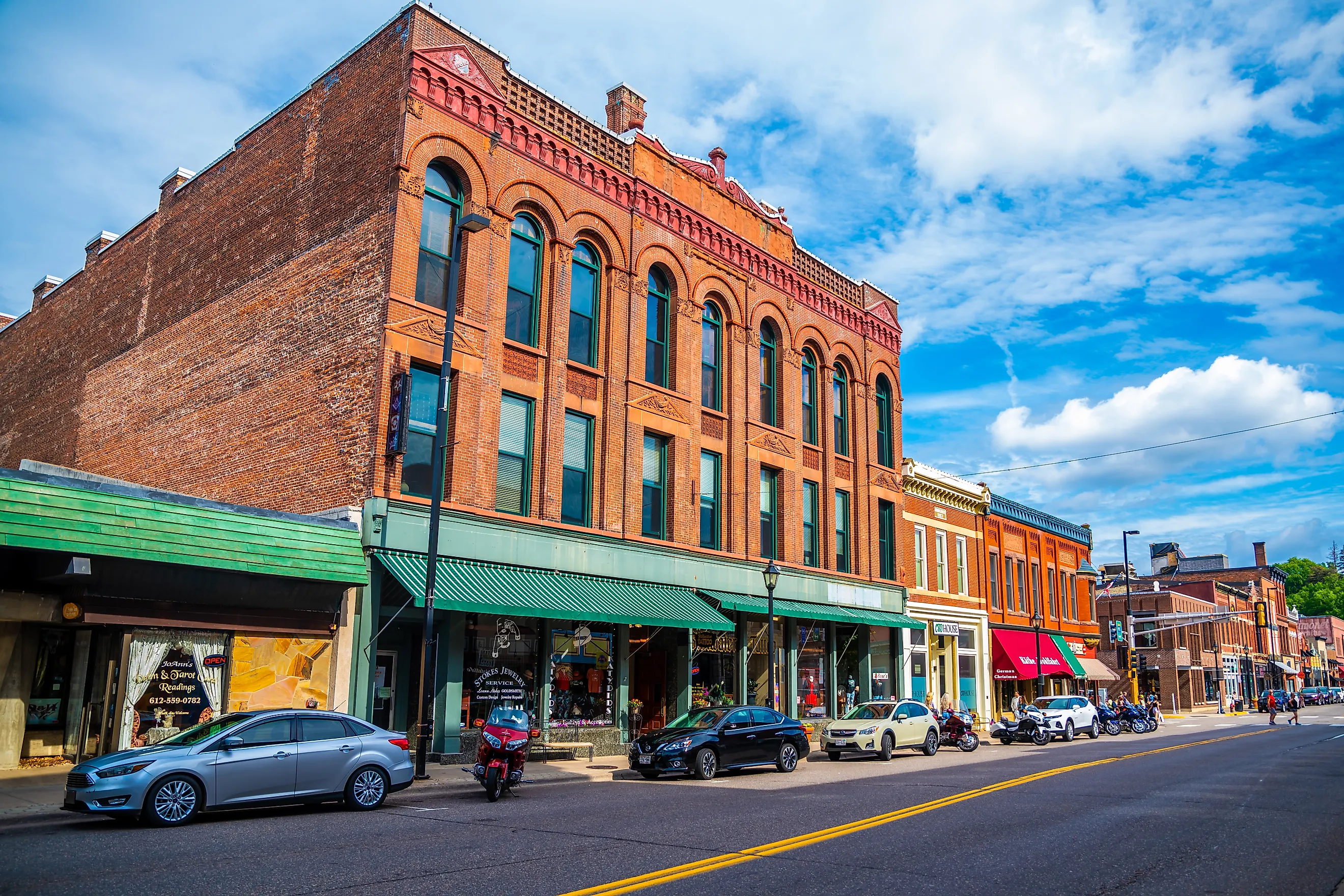
9 Towns in Minnesota that Transport You to the Past
Minnesota’s oldest river towns and immigrant settlements make the state a natural fit for a trip into the past. In Stillwater, you can tour Minnesota’s oldest standing courthouse and cruise the St. Croix River past one of the state’s earliest settlements. Preston offers the Historic Forestville, a reconstructed 19th-century village, along with a 1902 grain elevator and restored railroad cars. Red Wing rounds out the trio with its 1905 train depot and a historic theater that is a must-visit for anyone in Minnesota. The 9 old-world towns below are sure to transport you back in time.
Stillwater

Stillwater, considered Minnesota's historic birthplace, is one of the oldest settlements in the state, existing many years before Minneapolis. Stillwater's Washington County Heritage Center provides more information about the town, which gained fame due to the lumber industry. Its lumber mills were the largest in the nation during the log boom, making Minnesota one of the world's leading lumber markets. Stillwater is home to Minnesota's oldest remaining courthouse, built in 1870, and it now offers tours for visitors. For a scenic way to explore the town, you can take a narrated trolley tour through Stillwater's charming districts, enjoy a self-guided walking tour of downtown, or hop on a riverboat cruise along the St. Croix River.
Pipestone

Native American history and culture are rich in Pipestone. The Pipestone National Monument is one of the town's most iconic landmarks. Many regard the area as sacred because Indigenous people have used the pipestone quarries there to make pipes for ceremonies and prayer. Besides the pipestone quarries, the Pipestone National Monument features a walking trail along Pipestone Creek, a scenic waterfall, a vibrant tallgrass prairie, a museum, and a gift shop. For more historical insights, visit notable buildings like the Calumet Hotel, a four-story Richardsonian Romanesque structure at the main junction in downtown Pipestone. Another point of interest is the Pipestone County Museum, which offers engaging exhibits covering everything from the town's first fire to Pipestone County's involvement in World War I.
Preston

Preston is home to many historic sites that take visitors back in time. See the tall, cherry-red grain elevator built in 1902 by the Milwaukee Elevator Co. Farmers delivered wagonloads of grain to this elevator, which was a busy commercial hub at the beginning of the 20th century. A restored Milwaukee Road train car and caboose are also on display. The Minnesota Historical Society manages Historic Forestville, a recreated 1800s village worth exploring. While there, stop at a store that sells authentic 19th-century goods or cross the Carnegie Steel Bridge to be transported back to 1899. Learn about Southern Minnesota's culture at the Fillmore County History Museum, located a few miles north of Preston.
Hastings

Located in Hastings, the LeDuc Historic Estate, built during the Civil War by one of Minnesota's renowned pioneer families, is one of the few remaining examples of Gothic Revival home design in the United States. To learn about its history, consider taking a guided tour of the house. Special events are also held there, including Victorian tea parties and historic after-hours events. The Dakota County Courthouse, constructed between 1869 and 1871, is one of Hastings' most recognizable structures. In the early 1990s, it was renovated to serve as Hastings City Hall.
Northfield

One of Northfield's most well-known landmarks is the bank that the James-Younger gang attempted to rob in 1876. The Northfield History Center, formerly called the Northfield Historical Society, preserves the site as it was on that tragic day, with exhibits and artifacts to view. Northfield also features the "Outlaw Trail," which follows the same route the gang took back in the day. Another important part of Northfield's history is St. Olaf College, founded in 1874. Known for its lively art and culture scene, the college's Steensland Hall was home to the first campus art gallery, now called the Flaten Art Museum. Visitors can often enjoy musical recitals and concerts, including the annual St. Olaf Christmas Festival, a college tradition since 1912. Learn more about Northfield's history at the Goodsell Observatory, Cowling Arboretum, and Northfield Arts Guild.
New Ulm

New Ulm's fascinating history started in 1854 when the Chicago Land Society, a German colonization group, chose the location on the south bank of the Minnesota River. Ulm, Germany, the hometown of many immigrants, inspired the town's name. New Ulm was officially incorporated as a town many years later. However, the Dakota Conflict of 1862 almost led to its destruction. After recovering, New Ulm was eventually named the Brown County seat. Exhibits that explore the Dakota Conflict and Brown County history can be found at the Brown County Historical Society Museum. The town's German influence is still seen today with places like the August Schell Brewing Company, founded by German immigrant August Schell in 1860. The brewery specializes in German pilsners and lagers and is the second-oldest family-owned brewery in the United States.
Taylor's Falls

The early residents of Taylors Falls were primarily of New England ancestry, even though Swedish immigrants started arriving in the region around 1850. Taylors Falls honors the history of these immigrants while offering visitors outdoor adventure at the 20-mile multipurpose Swedish Immigrant Regional Trail. Most of the historic homes in Taylors Falls, such as the Folsom House, a 19th-century home of lumber baron W.H.C. Folsom, are situated in the Angel Hill Historic District. On Bench Street, Coffee Talk, a historic Victorian-style home built in the 1800s, is now a coffee shop that locals frequent.
Lindström

Lindström is a charming town founded by Daniel Lindstrom, a Swedish immigrant who arrived in America in 1853. Fascinating statues of Karl Oskar and Kristina Nilsson, fictional characters from Vilhelm Moberg's "The Emigrants" novels, are located near Lindström's west entrance and are a major tourist destination. In addition to the statue, Karl Oskar is a significant part of the town and is the basis behind Karl Oskar Days, Lindström's annual festival that pays homage to Swedish heritage. Experience Lindström's natural beauty at Allemansrätt Wilderness Park. The 130-acre scenic park provides the perfect backdrop for a relaxing nature walk or skiing along its long trails. The nearby Swedish Immigrant Trail is also another outdoor escape.
Red Wing

Red Wing is situated along the Mississippi River and was named after an Indian chief in the 1800s. The town ranks among Minnesota's top manufacturing hubs, home to well-known businesses like Red Wing Shoes and Red Wing Stoneware & Pottery. Its rich history is reflected in the downtown area, which features the Sheldon Theatre, built in 1904. The historic Red Wing depot, also called the Milwaukee Road, was built by the Chicago, Milwaukee, and St. Paul Railroad and opened to the public in 1905. Today, Amtrak's Empire Builder train regularly stops at the Red Wing station. The depot also contains an art gallery. Additionally, Red Wing is a popular spot for antique lovers, with many stores selling unique antiques from the past.
Discover These Historic Towns in Minnesota
Anyone who wants to explore history and embark on a voyage of discovery should plan to travel to the Midwestern region of the United States to explore these historic towns in Minnesota. From Stillwater to Red Wing, these towns offer a glimpse into the past with everything from historic districts and monuments to museums and 19th-century architecture.