9 Picture-Perfect Main Streets In Alabama
A main street in Alabama can be a pier, a courthouse square, or a rail trench with trains still running through it. Fairhope opens onto Mobile Bay with a wooden pier a quarter mile long. Monroeville built its square around the courthouse Harper Lee used as a template. Cullman runs its downtown over railroad tracks sunk into a trench. Opelika kept its 19th-century storefronts working, and Grand National's golf course sits a few minutes out of town. Nine main streets, none of them the same idea twice.
Fairhope

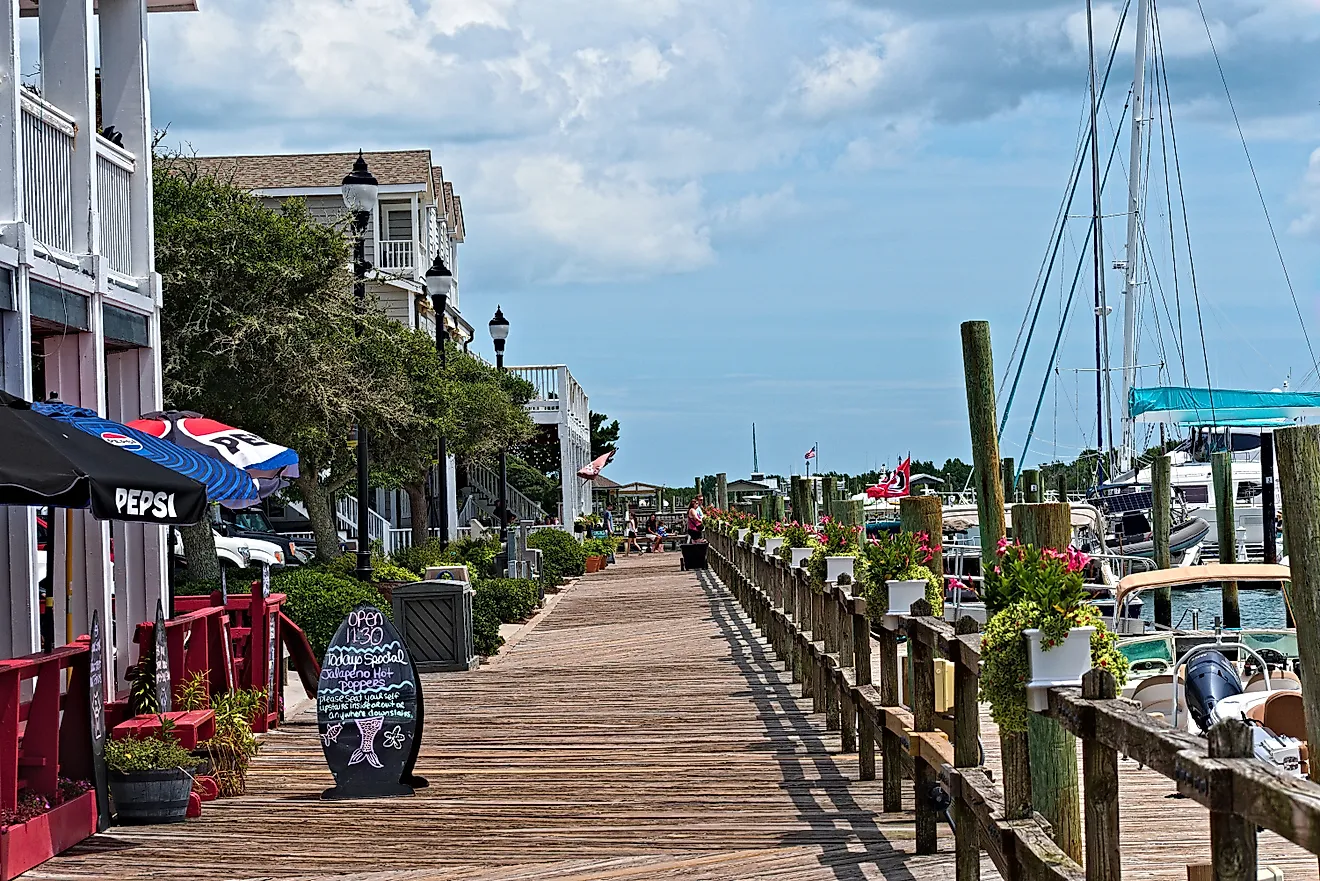
Fairhope Municipal Pier runs 1,448 feet into Mobile Bay, and the sunsets from the end of it are the reason people drive from three states over. The pier is free, open every day, and a magnet at dusk. That is the pitch. The rest of Fairhope Avenue backs it up.
Craftsman bungalows sit under live oaks. Flower planters line the sidewalks. A crape myrtle in Knoll Park is one of the biggest specimens the state has on record. Wok by d'Bay, a block off the main drag, runs Asian-inflected small plates in a room that photographs well and sounds better after 7 p.m. Two blocks up, the Fairhope Museum of History occupies the old city hall with exhibits on the town's late-1800s founding as a single-tax utopian colony, which is a longer story than most visitors expect. The Historic Fairhope Clock still keeps time on the corner.
Eufaula

Eufaula has more than 700 buildings on the National Register, one of the largest concentrations in Alabama, and Broad Street is where you see them all in one walk. The cast-iron Broad Street Fountain anchors the median. Victorian storefronts line both sides. The Shorter Mansion, a two-story Neoclassical Revival on the same street, is the one the town's preservation movement grew up around, and it hosts the annual Eufaula Pilgrimage every April when the private historic homes open their doors.
Cajun Corner on Broad works New Orleans plates on an outdoor patio with a rotating drink list. The Yoholo Micco Rail Trail, a paved path built on an old rail line, runs the length of downtown with a fountain and stretching stations. From the trail, Lake Eufaula is a short walk, and the paddling on the reservoir is as good as it gets in southeast Alabama.
Monroeville

Harper Lee grew up here. The 1903 Old Monroe County Courthouse on the square is the courtroom she used as the template for the trial in To Kill a Mockingbird, and every May the town stages a two-act adaptation of the novel with the first act on the lawn and the second inside the actual courtroom.
The Alabama Literary Festival brings writers to the square through the year. The Atticus Finch Memorial Park Monument is a bronze on the courthouse lawn that photographs well and requires no admission. Across the street, Mrs. Teresa's Homemade Treats runs pastries and lunch plates from a small dining room. Cole's Ice Cream and Coffee next door is where you sit down to actually eat and where the regulars talk to strangers, which is the whole point of a courthouse square.
Northport

The bricks on Main Avenue in Northport are still the originals. That is the tell. The town sits across the Black Warrior River from Tuscaloosa but runs its own downtown, and the Kentuck Art Center and Festival is what makes the block worth a Saturday.
Working artists rent studios inside the center. The "Courtyard of Wonders" outside holds folk-art sculptures that the town has grown up around, and every October the Kentuck Festival of the Arts draws artists and buyers from across the country to a two-day fair on the grass. Historic Shirley Place, an 1838 Creole cottage a block off Main, keeps the pre-Civil War side of the town's history on display. The Historic Northport Train Depot at the end of the street runs light on hours but heavy on charm for anyone who ever built a model railroad in a basement.
Talladega

The 1836 Talladega County Courthouse in the middle of the square is one of the oldest courthouses in continuous use in the state. The Ritz Theatre a block over has been running movies and live shows since the 1930s and still keeps a working marquee. That is the frame. The rest of the downtown fills in around it.
Large-scale murals frame Main Street and give it a walkable rhythm block by block. The Jemison-Carnegie Heritage Hall Museum and Art Center holds regional collections in a former Carnegie library. The Talladega Hall of Heroes down the street displays uniforms and memorabilia from local veterans across every American conflict since the Civil War. Soul Southern Eatery a few doors up runs plate-lunch service that most locals have on speed dial, and the Davey Allison Memorial Park and Walk of Fame on the edge of downtown honors the NASCAR driver from nearby Hueytown with an annual induction ceremony.
Demopolis

Demopolis sits on White Bluff, a limestone cliff at the confluence of the Tombigbee and Black Warrior rivers. Bluff Hall, a Greek Revival mansion built in 1832 on the edge of the drop, is one of the state's more photographed antebellum properties and inspired the fictional Lionnet estate in Lillian Hellman's play The Little Foxes.
Demopolis Public Square, the shaded green in the middle of downtown, is where an early-morning walk resets everything. Rooster Hall on the square has held four different jobs across two centuries. It started as a church, became the county courthouse, ran as an opera house through the Reconstruction era, and now hosts weddings and community events under the original wooden beams. SVH Bistro on the same block runs a rotating menu that stays experimental for a town its size.
Guntersville

Gunter Avenue runs a ridge on a peninsula surrounded by Lake Guntersville, the largest lake in Alabama. Nearly every block downtown has water on one side and mountain on the other. The Colonel Montgomery Gilbreath House, one of the few houses in town the Union Army left standing during the Civil War, now serves as headquarters for the Guntersville Historical Society.
Cafe 336, a converted country store with a consignment section attached, runs salads, soups, sandwiches, and paninis, and the browsing kills the wait. Errol Allan Park along the shore stages free concerts through the spring and fall. Antiques and Sweets on the same drag mixes vintage furniture with a candy counter, which is a strange combination that works better in person than on the sign.
Cullman

Cullman was founded by a Bavarian immigrant named Johann Gottfried Cullmann in 1873, and the town still runs on that inheritance. Five small bridges carry the downtown streets over a railroad trench sunk 30 feet below grade, an engineering decision that keeps the trains moving and the cross-street traffic uninterrupted.
Ave Maria Grotto at St. Bernard Abbey, the town's biggest visitor draw, is the life work of Brother Joseph Zoettl, a Benedictine monk who spent five decades building miniature replicas of world religious landmarks out of cement, marble, and salvaged materials. The four-acre park now holds 125 of his models. WildWater Cullman a few miles out runs a lazy river and a wave pool that make short work of any afternoon. The Little House at Art Park on the edge of downtown is a shaded quiet space with benches. The Cullman County Museum on First Avenue covers the German settlement history in detail.
Opelika

Railroad Avenue tells the whole story. Opelika grew up as a rail junction in the mid-1800s and never lost the tracks. Freight trains still run right down the middle of the historic district, and the restored brick storefronts on both sides have kept their late-1800s and early-1900s facades intact. More than 100 buildings on the block are on the National Register.
The Museum of East Alabama on Railroad covers local history through artifacts and photographs. The Gallery on Railroad next door sells paintings and handcrafted work from regional artists. Irish Bred Pub on the same block runs stout and shepherd's pie in a setting that photographs like Dublin. The Butterfly Wings mural on the Stone Martin Building is the wall visitors line up in front of for photos. Just outside downtown, Grand National on the Robert Trent Jones Golf Trail routinely lands on national best-of lists for public golf and books up months ahead in the spring.
Nine Main Streets, Nine Different Bets
Alabama's main streets do not agree on a single formula. Fairhope trades on Mobile Bay. Cullman built over its railroad and doubles down on its Bavarian founder. Monroeville lets Harper Lee's courthouse do the talking. Opelika kept its rail-junction storefronts and put a golf course on the edge of town. What they share is a specific idea about what the town is, held clearly enough that you notice it walking one block.