9 Most Walkable Town Centers In Wisconsin
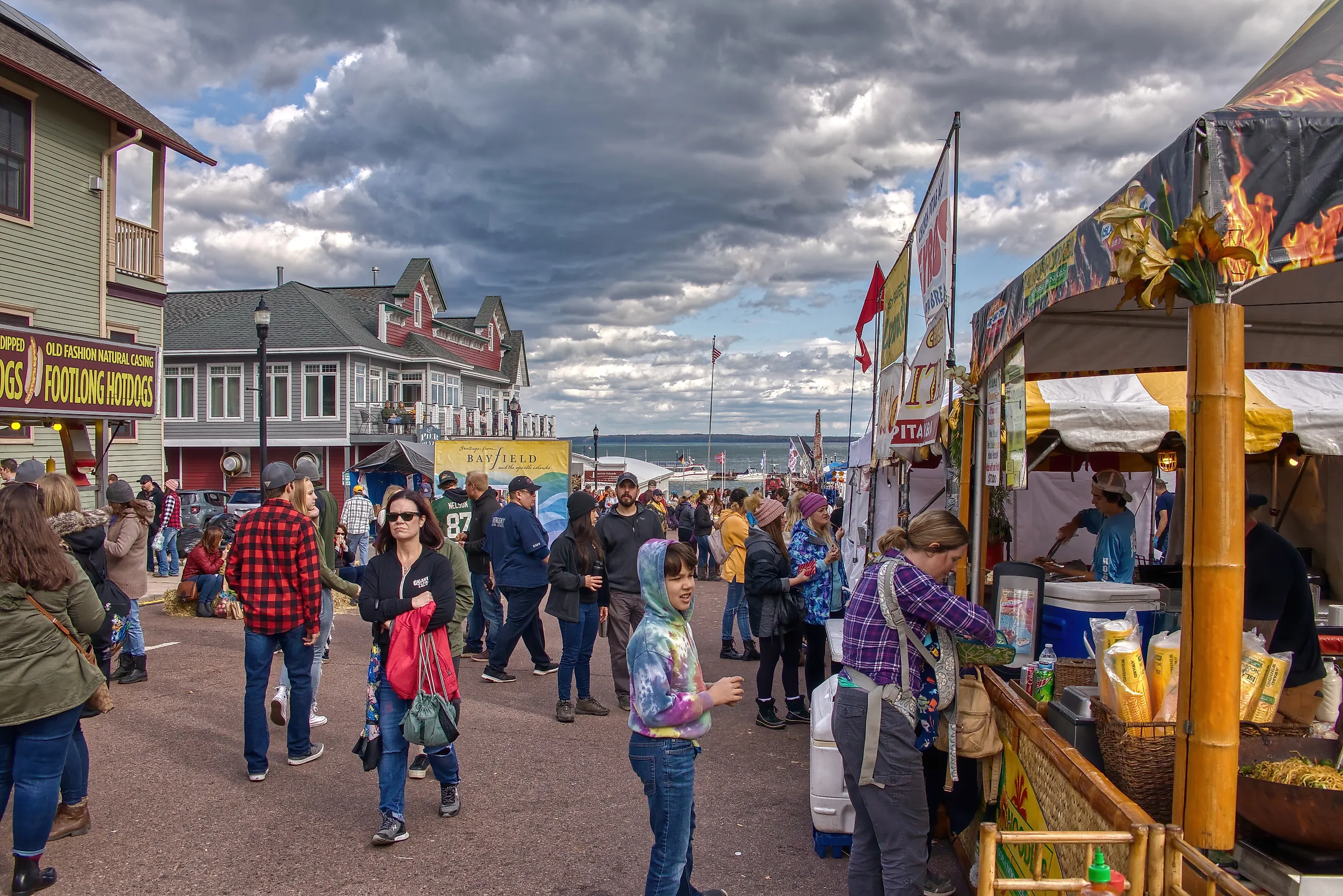
A good town center does not need a car, a map, or a plan. It just needs to be built in a way that makes the next stop obvious. In Bayfield, the streets run downhill toward Lake Superior, pulling you naturally toward the harbor. In Mineral Point, a single stretch of stone buildings connects a mining-era streetscape to restored Cornish cottages and a working pottery studio. The best of these places share a common quality: the next stop is always close enough to continue without rethinking where to go. Across Wisconsin, a handful of town centers are built exactly that way, compact enough to cover on foot, distinct enough that each one feels like its own experience entirely.
Bayfield

Bayfield’s center is a hidden gem for nature lovers as it is built on a hillside above Lake Superior, with streets that run downhill toward the harbor. A good starting point is to start at the Apostle Islands National Lakeshore Visitor Center, set inside the old courthouse. From there, you can already see the water, but the exhibits inside give it more meaning, shipwreck maps, island formations, and routes that explain how people actually used the lake. Walking downhill, the Bayfield Maritime Museum narrows that focus by looking at the displays of fishing equipment, small boats, navigation tools, the kinds of things that tie directly to daily life on the water. From there, the harbor comes into view: ferries move in and out, boats sit along the docks, and the lake becomes the endpoint of the walk. If you continue along Rittenhouse Avenue, the route picks up a few galleries and small shops, but it never drifts far from that central downhill path.
Cedarburg

In Cedarburg, nearly everything is arranged along Washington Avenue, where storefronts, museums, and the mill complex sit within a short, continuous stretch. Start at Cedar Creek Settlement, a former woolen mill where the stone walls and heavy timber framing are still intact. Inside, the building still follows its original mill layout, with long rows of connected rooms now used for shops, tasting rooms, and small food counters. A short walk south brings you to the Cedarburg Art Museum. The house itself tends to stand out first, with stained glass, carved woodwork, and a staircase that feels more residential than institutional. The artwork rotates, but the building doesn’t, and that’s part of the draw. Continue a little further to the history museum, where photographs and objects fill in what the street looked like before it was restored. At the edge of downtown, the Interurban Trail follows the route of the former electric rail line, with a paved path that runs alongside Cedarburg and is used for walking and biking.
Mineral Point

In Mineral Point, downtown runs along High Street, where low stone buildings sit close together and still reflect the town’s mining-era layout. From there, walk down to Pendavris, where a group of restored 19th-century Cornish stone cottages preserves the homes of early lead miners, with original layouts, fireplaces, and period furnishings still in place. Continue along Shake Rag Street to Brewery Pottery, set inside a 19th-century brewery building where ceramics are produced and sold on site, with studio spaces open to visitors. The route continues uphill to the Mineral Point Opera House, a restored 1914 theater that still hosts performances and events as part of the town’s regular use.
New Glarus

New Glarus’ center reflects its Swiss heritage in a way that carries through the entire walk. For example, the Swiss Historical Village sits just above town, where a group of buildings, including a cheese factory, schoolhouse, and farm structures, shows how early settlers organized daily life, with interiors furnished using period tools and household items. As the route moves downhill, the Chalet of the Golden Fleece fills a series of connected rooms with imported goods, textiles, and carvings arranged closely together. A short distance along the same stretch, Chalet Cheese Haus focuses on regional and imported cheeses along with specialty foods, making it a natural stop for those interested in local products. These places sit within a few blocks of each other, keeping the walk on the same stretch of street without needing to change direction.
Port Washington

Port Washington’s downtown is built around Franklin Street and the harbor, so the walk works best when you move east toward the water rather than uphill. Start along Franklin Street, where the storefronts stay close together and the commercial blocks are easy to cover on foot. From there, head toward the marina, where both fishing boats and sailboats share the slips, making the waterfront feel active rather than decorative. A short walk south brings you to Coal Dock Park, a long peninsula with a promenade, pedestrian bridge, benches, and wide views over Lake Michigan, the marina, and South Beach. Back near downtown, Gallery 224 adds another stop with rotating exhibitions that mix emerging and established artists. The appeal of Port Washington is that the center shifts naturally from shopfronts to working harbor to open lakefront, all within the same walk.
Sturgeon Bay

Sturgeon Bay’s center is organized around its canal, which runs directly through the middle of town. Historic Third Avenue forms the starting point, with shops and galleries occupying buildings that maintain their original scale. Walking toward the Door County Maritime Museum introduces the town’s shipbuilding history through full-size vessels and exhibits tied directly to the waterfront. A short walk beyond leads to the Michigan Street Bridge, where the structure lifts for passing boats. The waterfront path continues along the canal before returning to the main street.
Baraboo

Baraboo’s center begins at the courthouse square, where historic storefronts and well-kept facades give the area a distinct visual character. A short walk leads to the AL. Ringling Theater, where painted ceilings and detailed interior work reflect its early 20th-century design. Continuing toward the Baraboo Riverwalk brings the route alongside the water, with benches and open views set along the path. The walk extends to Circus World, where historic wagons and buildings from the Ringling Brothers’ winter quarters remain on site. Each section sits within a short distance, allowing the route to stay within downtown.
Washburn

Washburn’s town center is close to Lake Superior, with the shoreline directly connected to downtown. Along the same stretch, the Washburn Cultural Center brings these together through rotating exhibits, local artwork, and displays tied to the town’s history. Continuing along the same stretch, the Washburn Lakefront Parkway & Walking Trail runs along the water, where the shoreline still shows traces of its industrial past alongside open views of the lake. Continuing toward the marina brings the route closer to the water, while the path up to Memorial Park provides a higher vantage point over Chequamegon Bay.
Manitowoc

In Manitowoc, the town center brings together water, industry, and cultural spaces within a short walk. For instance, the Wisconsin Maritime Museum introduces the town’s shipbuilding history, with the USS Cobia submarine docked outside and open to visitors. The riverwalk continues along the water, where outdoor displays extend the museum’s exhibits. Walking inland leads to the Capitol Civic Centre, a restored theater that anchors downtown. The route ends at the Rahr-West Art Museum, located in a historic mansion a short distance away.
What stands out across these town centers is not just that they are easy to walk, but that each one gives the walk a different shape. In places like Bayfield, the route follows the slope down toward the lake, gradually opening into the harbor. In Cedarburgh, it stays tied to a single street, where buildings and storefronts line up without interruption. In Baraboo, the walk shifts between the square, the theater, and the river without requiring distance. That variation is what keeps the experience from feeling repetitive. The route changes depending on where you are, but it always stays contained, with the next stop close enough to continue without needing to stop and rethink where to go.