8 Tiny Off-Grid Towns In California
California spans over 1,040 miles from its northern end to its southern side, and large parts of that landscape are made up of small towns. It would not be unusual to supplement your travel itinerary, which includes top spots like Disneyland and Yosemite National Park, with visits to tiny towns for relaxation and exploration.
The appeal of tiny off-grid towns in California includes calming activities like walking through a working harbor, touring inside a functioning Gold Rush courthouse, or stepping from Main Street onto a trail without passing crowds or ticket booths. Places like Moss Landing or Pescadero may not advertise themselves loudly, but they offer experiences without the noise, scale, or pace of California’s major cities.
Moss Landing

Moss Landing is a census-designated town in Monterey County located where Highway 1 crosses Elkhorn Slough, one of California’s last large tidal wetlands. Its identity is defined by active maritime work and coastal research. The center of activity is Moss Landing Harbor, a working port used by commercial fishing boats and research vessels. Walkable docks allow close views of daily unloading, equipment repairs, and sea lion haul-outs near the pilings.

The Moss Landing Power Plant remains operational and now hosts one of the world’s largest grid-scale battery storage systems, making the site central to California’s renewable energy transition. For open shoreline access, Moss Landing State Beach runs along the jetty north of town. Strong winds and cold water limit crowds, but the wide beach is reliable for shorebird watching and uninterrupted coastal walks.
Cloverdale

Cloverdale is Sonoma County’s northernmost town, marking the transition from wine tourism to working farmland, about 90 minutes from San Francisco. Fritz Underground Winery produces estate wines aged in caves beneath the hills east of downtown. Tastings focus on site-specific reds and explain how northern Sonoma soils differ from more commercial vineyard zones. Community life concentrates around Cloverdale Citrus Fairgrounds, a year-round venue that hosts agricultural fairs, flea markets, and community events. The annual Citrus Fair highlights livestock judging, produce exhibits, and craft competitions rather than wine promotion.

Nearby, the Cloverdale Museum of History documents the town’s railroad era and hop-growing past. Its permanent displays include early farm equipment, rail photographs, and records from Italian and Portuguese farming families who settled the area. Access to the Russian River is immediate at Cloverdale River Park, a linear riverside park with short walking paths, fishing access, and calm summer water suitable for wading and kayaking.
Ione

Ione lies in California’s Gold Country along State Highway 104 with deep roots in 19th-century mining and railroads. Its standout heritage site is Preston Castle Foundation, the 1890s Romanesque-Revival Preston School of Industry. Public guided or self-guided tours run seasonally (April-August) and take about 60 to 90 minutes through restored wings. It tells first-hand stories of the reform school’s architecture, educational philosophy, and life here across generations.

Meanwhile, Rail Explorers: Amador Division lets you pedal rail bikes along a scenic 4+ mile stretch of historic track. You choose your pace while moving through oak woodlands and past old ties and trestles that speak to the region’s railroad past. Nature and recreation meet at Pardee Lake, a reservoir park where fishing, boating, and shoreline trails fill a day with water views and wildlife.
Willits

Willits is locally proud as the “Gateway to the Redwoods” due to its position just south of vast redwood forests and the Jackson Demonstration State Forest. History and heritage are on display at the Mendocino County Museum, where exhibits trace regional Native American life, early logging and rail eras, and the evolution of local communities through meticulously preserved artifacts and interpretive panels.
Just south of town, Ridgewood Ranch is the retirement home and final resting place of the famed racehorse Seabiscuit. Guided tours here include visits to the preserved stud barn and the Howard family home, set amid oak woodlands and second-growth redwoods that support golden eagles and other native wildlife. You can also take the Skunk Train Wolf Tree Turn ride for 16 miles. Departing from Willits, this historic rail journey passes through old-growth redwood groves and over scenic canyons on tracks first laid in the 1880s to haul timber and freight.
Lakeport

Lakeport gives way to Clear Lake, the largest natural freshwater lake entirely within California. Library Park is a waterfront green space hugging the lake, with picnic tables, a playground, and easy boat launches right on the shore. It is a focal point for fishing, summer concerts, and sunsets over the water. The Lakeport Historic Courthouse Museum invites visitors to the 1870 brick Lake County Courthouse. The museum educates on local Native Pomo artifacts, early settler tools, natural history displays, and notable 19th-century legal cases, all in a structure that survived the 1906 San Francisco earthquake.
Disney’s Boat Rentals offers kayaks, paddleboards, and small boats for exploring Clear Lake’s coves and shallow flats where herons and osprey hunt. Motor sport fans should plan for an event at Lakeport Speedway, which boasts a local paved oval racing track and a dirt one where weekly races and community gatherings take place.
Susanville

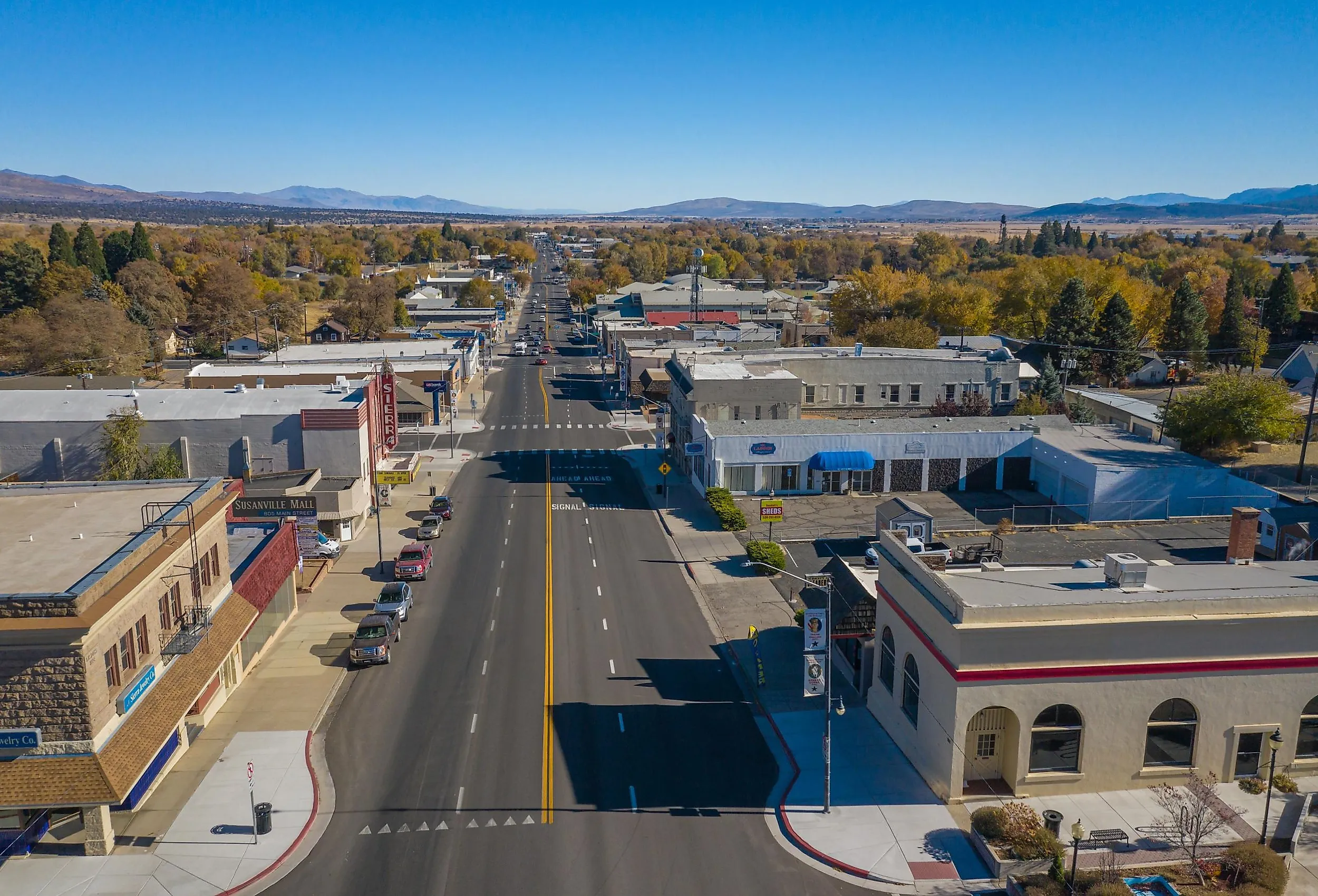
Susanville is among the handful of California towns built directly onto a former railroad grade that now functions as a regional trail system in the Sierra Nevada. That legacy is most visible on the Bizz Johnson National Recreation Trail, which starts on the edge of town and runs 25.4 miles to Westwood. The Susanville segment allows easy access to flat stretches that pass through lava rock cuts, two historic tunnels, and wooden trestles above the Susan River.

Early settlement history is preserved at Roop’s Fort, a log structure from 1854. Interpretive presentations explain how the fort functioned as both a defensive structure and a commercial post during Lassen County’s earliest years. Finally, Susanville Ranch Park covers over 1,100 acres of open rangeland and pine forest. Its trail network exceeds 20 miles, offering long sightlines, gradual climbs, and winter cross-country skiing.
Pescadero

50 miles from San Jose, Pescadero is a coastal farming town and one of the few places on the California coast where agriculture and conservation operate side-by-side within town limits. Just west of town, Pescadero Marsh Natural Preserve protects some of the peninsula’s largest coastal wetlands. The 235-acre preserve has a network of boardwalks and trails through tidal marsh, freshwater ponds, and riparian habitat where more than 200 bird species have been recorded. It is a reliable site for herons, egrets, and seasonal migratory birds, and remains an important refuge for steelhead trout and other native species.

A top draw is Harley Farms Goat Dairy, the only operational dairy in San Mateo County still producing farmstead goat cheese from its own herd. Open to visitors daily from 11 a.m. to 4 p.m., the farm offers tours where you can learn traditional cheesemaking, meet goats in the milking barn and pastures, and sample chèvre, feta, and ricotta in the on-site shop. Additionally, Pescadero State Beach features about 1 mile of shoreline with sandy coves, rocky tide pools, and quiet fishing spots. Tide pooling around low tide reveals marine life such as limpets, anemones, and small crabs along the rocky edges.
Yreka

Yreka is a former Gold Rush supply town whose original street grid and civic buildings still function much as they did in the 1850s. The most visible expression of that history is the Yreka Historic District, where brick buildings from the 1850s to the 1880s continue to house local businesses. Plaques identify former assay offices, hotels, and supply stores that once served miners moving through the Siskiyou Mountains. Additionally, the Siskiyou County Museum is essential for a broader view of the region. Its indoor exhibits cover Karuk and Shasta cultures, Gold Rush settlement, and early transportation routes, while the outdoor grounds display mining equipment, log cabins, and a restored stamp mill that shows how ore was processed.
Yreka’s strongest natural asset is Greenhorn Park, a 500-acre city park built into the hills above downtown. The park boasts nearly 4 miles of interconnected dirt trails with steady elevation gain, oak woodland, and open slopes that provide clear views over the Shasta Valley. It is used year-round for walking and trail running and feels more like backcountry than a town park.
Traveling through these tiny off-grid towns in California shows a side of the United States that rarely makes headlines. These places are defined by limits, water rights, protected land, and rugged terrain, making them stand out and also less known than your usual highlights in the travel lists. You might spend a morning watching fishing boats in Moss Landing or walk straight from downtown into the wetlands in Pescadero. So do not hold back from catching a train to the road-less-traveled in California.