8 Most Underrated Cities In North Carolina
In North Carolina, your itinerary can jump from city parks to beach sunsets in a single weekend. You can hit Downtown Cary Park one day, Durham’s American Tobacco Campus the next, then golden hour on the Wilmington Riverwalk with Wrightsville Beach just a short hop away.
If you're looking for cities that quietly deliver a lot in a compact footprint, places like Concord and Raleigh should be next on your list. These destinations feel easy, walkable, and full of “oh wow, that’s here?” moments; you’re in the right place.
Cary

Located in central North Carolina within the Raleigh-Durham-Chapel Hill metropolitan area, Cary is a city close to Durham and Raleigh. With an estimated population of around 180,000, it ranks among the state’s largest towns, celebrated for its low crime rate, excellent schools, and easy access to parks and greenways.
Cary boasts numerous parks and recreational facilities, offering plenty of open green space such as Downtown Cary Park and North Cary Park. Residents and visitors enjoy walking trails at Hemlock Bluffs Nature Preserve and lakeside activities at Fred G. Bond Metro Park, which features the Bond Park Community Center. Other popular spots include the Cary Arts Center, Page-Walker Arts & History Center, Koka Booth Amphitheatre, and Marla Dorrel Park. Phillips Farms of Cary is a seasonal attraction that is currently closed but plans to reopen in Spring 2026.
Concord

The city of Concord is about 26 miles from Charlotte, the largest city in North Carolina. Set in Cabarrus County, which is part of the Charlotte metropolitan area, Concord’s current population is 111,659. The city’s rich history is reflected through places like the Historic Cabarrus County Courthouse built in the 1870s, the nearby Reed Gold Mine (in Midland), the site where the first documented gold discovery in the U.S. was made, and Charlotte Motor Speedway in Concord, one of the most iconic motorsport venues in the United States, hosting various NASCAR events.
Besides these attractions, the North Carolina Music Hall of Fame is in neighboring Kannapolis, along with Kannapolis’s Village Park, while Concord’s Frank Liske Park offers a range of recreational facilities closer to town. Another place to explore in the city is the Concord Museum, which provides rotating exhibits on local history and development.
Durham

Situated in the central part of the state, about 22 miles away from Raleigh, Durham is part of the Research Triangle region (metropolitan area), anchored by Raleigh, Durham, and Chapel Hill. Durham has a population of around 280,000 and is often overlooked despite its historic landmarks, major universities, and modern economic growth. Highlights include the Hayti Heritage Center and the now-renovated American Tobacco Campus located downtown—a reminder of the city’s once-flourishing tobacco industry. Duke University is a renowned institution for top academic programs, and Durham promotes art and culture by hosting festivals like the Full Frame Documentary Film Festival and the American Dance Festival.
Some outdoor sights to explore around the city include Duke Forest, Eno River State Park, and Sarah P. Duke Gardens, as well as nearby attractions such as Jordan Lake and Leigh Farm Park. For lake days, Little River Lake operates seasonally (with posted 2026 dates), while Lake Michie’s reopening date is still being determined as Durham continues to recover from flooding damage. Farmer's markets, concerts, and festivals occur at Durham Central Park, which is another beautiful place to visit.
Fayetteville

This Cumberland County city is in the southeastern part of the state, about 65 miles from Raleigh. With a recent population of 209,182, Fayetteville is home to Fort Bragg, one of the world’s largest U.S. military installations. The city has a deep appreciation for the military community and hosts events and resources to support service members and their families.
Fayetteville has prominent historic landmarks like the Market House, which served as a market and town hall during colonial times. The Airborne & Special Operations Museum showcases the history of airborne and special operations forces. Outdoor lovers can explore the Cape Fear River Trail for a walk, run, or ride, as well as open green spaces such as the Cape Fear Botanical Garden and the family-owned Gillis Hill Farm, which offers seasonal produce picking, hayrides, and a petting zoo. Other key tourist spots to explore are the Museum of the Cape Fear, Fayetteville Veterans Park, Haymount Truck Stop, 1897 Poe House, and The Climbing Place.
Greensboro

Greensboro is the third-largest city in the state, after Charlotte and Raleigh. Set in Guilford County, with a population of 299,175, the city serves as the county seat. The city’s popular historic landmarks include the Fisher Park Historic District, the Historic Dunleath neighborhood (Aycock Historic District), and the International Civil Rights Center & Museum. The Greensboro Cultural Center encourages artistic expression with many arts-related programs in Greensboro. The city’s famous educational institutes include the University of North Carolina at Greensboro (UNCG), North Carolina Agricultural & Technical State University (NC A&T), Greensboro College, and Guilford College.
The natural beauty of Greensboro is in places such as Tanger Family Bicentennial Garden and the Bog Garden at Benjamin Park. Another key tourist spot is the Greensboro Science Center, which combines an aquarium, a zoo, and a science museum, offering educational experiences for visitors of all ages. Other famous tourist spots are the Greensboro Arboretum, Weatherspoon Art Museum, and the Ambleside Gallery.
Raleigh

North Carolina’s capital, Raleigh, mainly lies in Wake County, with a small part in Durham County, and it functions as Wake County’s seat. With a population of 472,540, it ranks as the second-largest city in the state. Its strategic location makes it a center for transportation, business, and government. As part of the Triangle region, Raleigh boasts top educational, research, and tech industries. The city's hidden gems include its greenway networks and historic neighborhoods. Raleigh’s charm is found in its open spaces and parks like Pullen Park, William B. Umstead State Park, and Mordecai Historic Park. Neighborhoods such as Forest Park, Oakwood, Mordecai, and Boylan Heights showcase stunning homes and architecture.
High Point

High Point is mainly located in Guilford County, with parts extending into Forsyth, Davidson, and Randolph Counties. It is situated in north-central North Carolina within the Piedmont Triad region. The city is renowned for the High Point Market, one of the largest home furnishings trade shows worldwide, and its rich furniture heritage has earned it the nickname “Furniture Capital of the World.” Additionally, the city offers lesser-known attractions like its parks, downtown district, and lively local events. For outdoor activities, visit Festival Park at Oak Hollow Lake or take a short drive to High Point City Lake Park in Jamestown.
Downtown features highlights such as the High Point Public Library, High Point Museum, and Nido & Mariana Qubein Children's Museum. Other notable attractions include the World's Largest Chest of Drawers, Piedmont Environmental Center, and the High Point Bowling Center.
Wilmington

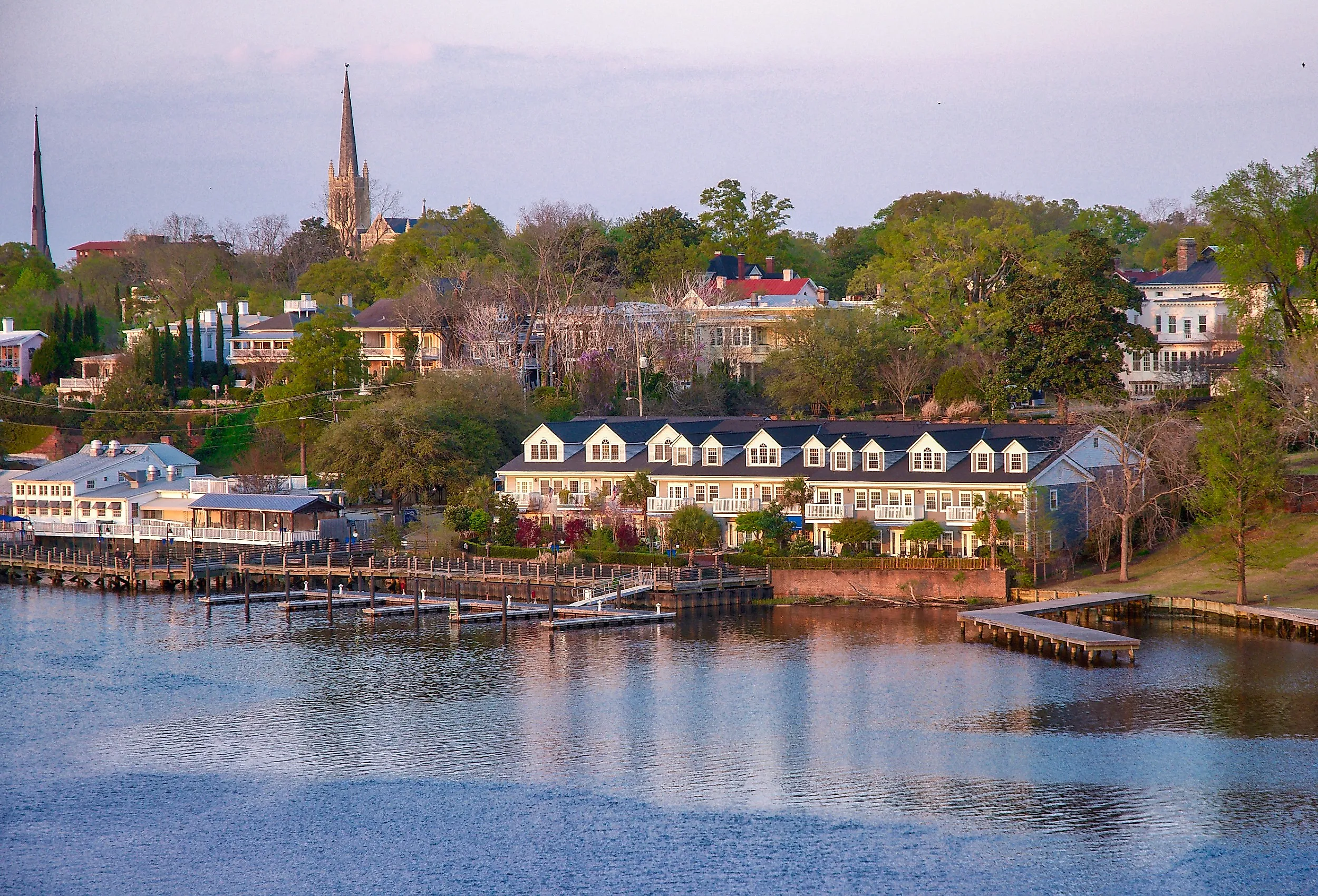
Wilmington, a city in New Hanover County positioned along the Cape Fear River, is about 129 miles from Raleigh. It has an estimated population of 119,524 and features a historic port with a walkable downtown and notable architectural heritage. The well-maintained structures within the Local and National Register Historic Districts give a glimpse into its history, and guided walking tours are an excellent way to explore Wilmington’s past. The city is also known for being a filming location for movies like Scream (2022) and TV shows like One Tree Hill. The Wilmington Riverwalk offers a perfect setting to watch sunsets over the Cape Fear River.
Nearby beaches like Wrightsville Beach and quieter spots such as Carolina and Kure Beaches provide relaxing outdoor escapes. Attractions like Airlie Gardens and the Burgwin-Wright House appeal to history and garden enthusiasts. Other interesting sites include the Cape Fear Museum of History and Science, Fort Fisher Historic Site, Battleship North Carolina, Bellamy Mansion Museum, and Wilmington Railroad Museum.
Often overlooked, many of North Carolina’s cities are underrated. Even cities like Raleigh can be overlooked for their greenway systems and historic neighborhoods. From Concord’s historic courthouse downtown to Durham’s revitalized tobacco district and Wilmington’s riverfront sunsets, each of these cities is worth a closer look for the details that make them memorable.