7 Tiny Off-Grid Towns In New Hampshire
Let's move across New Hampshire through places where a weekend plan is simple: water, woods, and a town center that still functions year-round. Some picks in our list below sit along the Connecticut River with village greens, covered-bridge country, and older civic buildings still in everyday use. Others are built around easy access to Newfound Lake or trail systems near the White Mountain National Forest, where your day naturally turns into a falls walk, a paddle, or a bike ride. And at the far end of the spectrum, the list includes a true northern outpost in the Great North Woods, where distance and darkness are part of the appeal. Below are the best tiny, off-grid gems in New Hampshire!
Haverhill

Haverhill follows the Connecticut River near the Vermont border and feels more like a collection of villages than a single compact town. Farms, forest, and open land shape much of the area, giving it a working, lived-in character. Haverhill Corner is where the town’s history is most visible. Federal and Georgian buildings surround the green, many dating back to the 1700s, and they remain part of daily life rather than preserved showpieces.
Community activity centers around shared spaces rather than a busy commercial strip. Alumni Hall hosts concerts, plays, and performances through Court Street Arts, bringing residents together throughout the year. In warmer months, Windy Ridge Orchard becomes a familiar stop for apple and blueberry picking. Walking through Haverhill Corner passes churches, civic buildings, and shaded greens that show how the town has carried its routines forward quietly for generations.
Bristol

Bristol sits near Newfound Lake in central New Hampshire and serves as a base for outdoor recreation rather than a destination built around tourism. With just over 3,000 residents, the town remains small and relatively quiet, even during busy summer months. Conservation land and wooded areas surround much of the town, reinforcing its rural setting.
Outdoor access defines Bristol’s appeal. Profile Falls Recreation Area offers trails that lead to a waterfall and swimming area, while Newfound Lake supports paddling, fishing, and shoreline walks. Bristol’s downtown is modest but functional, with local businesses serving residents year-round. The Purple Pit Coffee Lounge is a well-known gathering spot for coffee and meals, while Shackett’s Brewing Company provides food and locally brewed beer in the town square. Bristol works best for travelers who want water access and quiet evenings without a heavy tourist presence.
Gorham

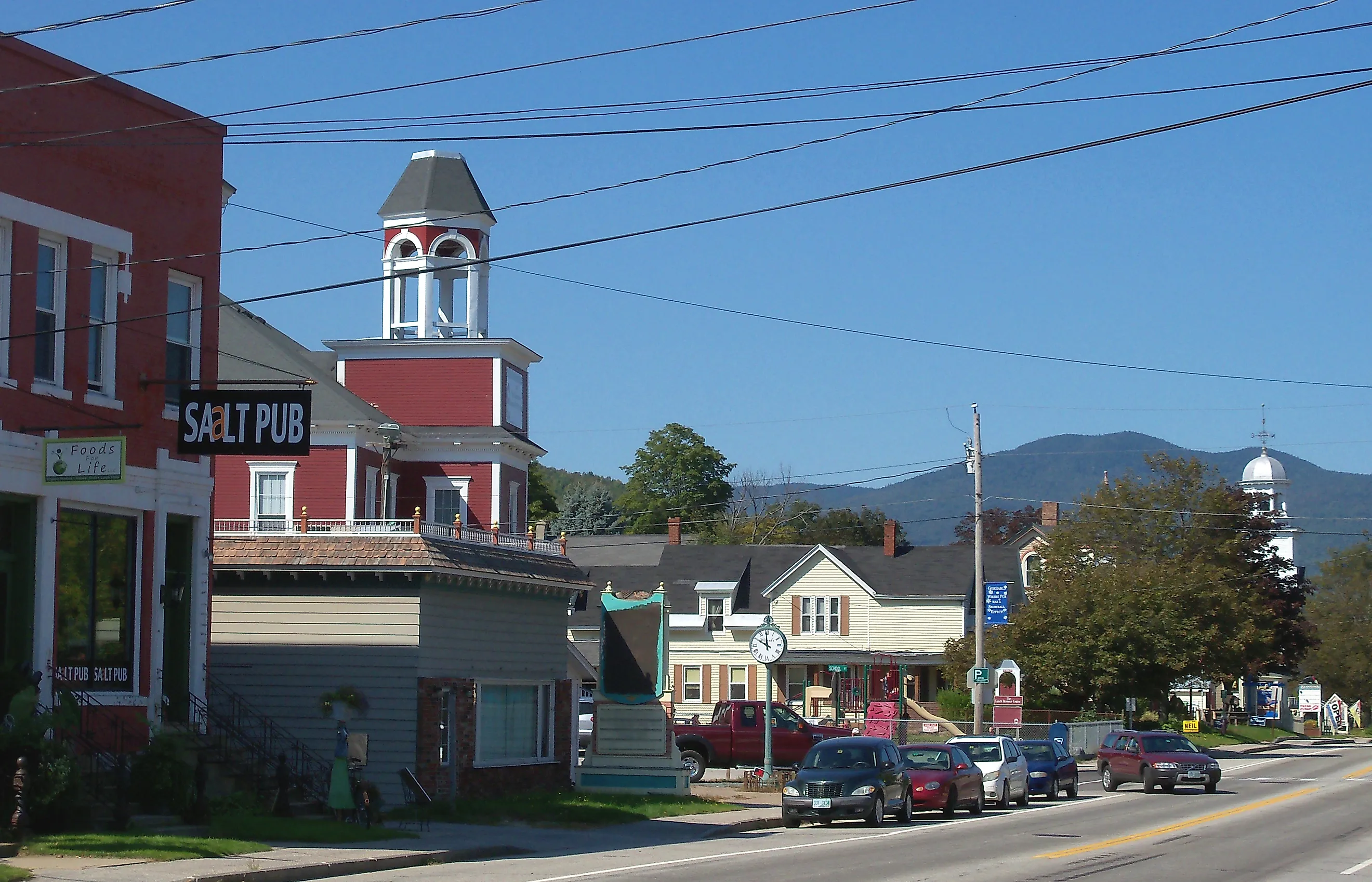
Gorham lies near the northeastern edge of the White Mountains, close to the Maine border, and serves as a gateway to the surrounding forest and mountain terrain. The town has a long connection to outdoor recreation, particularly hiking, snowmobiling, and skiing. Large portions of the surrounding area fall within the White Mountain National Forest, where stretches of land feel genuinely removed from development.
The Presidential Rail Trail runs through Gorham and offers a flat, multi-use route for biking, walking, and snowmobiling. Wildlife sightings are common in the surrounding forest, including moose in quieter areas. In town, Gorham maintains a relaxed center with local restaurants and shops. White Mountain Café & Bookstore combines food and reading space, while Big Day Brewing offers meals and locally brewed beer. Gorham balances access to remote outdoor areas with a town center that still feels active and lived in.
Cornish

Cornish, New Hampshire. Editorial Photo Credit: EWY Media, via Shutterstock.
Cornish sits along the Connecticut River and has long drawn people looking for quiet surroundings and creative space. With a population under 1,700, the town feels lightly settled, with open land and river views shaping daily life. Its most well-known historical connection is to sculptor Augustus Saint-Gaudens, whose former home and studio are preserved at Saint-Gaudens National Historical Park.
The town also reflects its artistic past through its covered bridges and rural roadways. The Cornish-Windsor Covered Bridge remains a functioning crossing between New Hampshire and Vermont and reflects the town’s practical approach to preservation. Outdoor access continues in the Cornish Town Forest, where trails support hiking and mountain biking. Cornish appeals to travelers interested in art history, river landscapes, and quiet exploration rather than structured attractions.
Pittsburg

Pittsburg sits at the northern edge of New Hampshire, directly bordering Canada, and is one of the most remote towns in the state. With fewer than 1,000 residents, it lies within the Great North Woods region, an area defined by forests, lakes, and limited development. Snowmobiling plays a major role in local life, supported by an extensive trail system that draws riders throughout winter.
The Connecticut Lakes form the headwaters of the Connecticut River and support boating, fishing, and paddling during warmer months. Lake Francis State Park provides additional access for camping and fishing, particularly for trout. Services in town are limited, but Green Acres Country Store serves as a central stop for meals and supplies. Pittsburg suits travelers seeking real isolation, long stretches of forest, and outdoor activity as the main focus of their stay.
Lancaster

Lancaster sits between the northern White Mountains and the southern edge of the Great North Woods, surrounded by forest and open land. While it has a defined town center, the area retains a quiet, rural feel. The Connecticut River flows nearby, adding to the area’s outdoor options.
Lancaster’s main street supports small shops, restaurants, and local gathering spots. Fuller’s Sugarhouse offers maple products and locally made goods, while Copper Pig Brewery provides meals and beer brewed on site. The Rialto Theatre, a historic movie house, adds a cultural outlet for residents and visitors. Lancaster works well for travelers who want access to outdoor recreation without giving up a functional town center.
Madbury

Madbury lies in southeastern New Hampshire near the Bellamy River and offers a quieter alternative to nearby population centers. The town’s identity is closely tied to the river and the surrounding conservation land. Portions of the Bellamy River Wildlife Management Area provide space for hiking, birdwatching, and wildlife observation.
The Bellamy Reservoir, created by a dam, supports kayaking and fishing, though swimming is restricted due to its role as a drinking water source. DeMerritt Hill Farm remains an active orchard and event space, offering seasonal activities tied to agriculture. With a population near 2,000, Madbury appeals to visitors looking for river access, working farmland, and a low-key environment.
Finding Peace in New Hampshire’s Quiet Corners

These New Hampshire towns share a common thread. They are shaped more by land and routine than by tourism schedules or rapid development. Lakes, rivers, forests, and foothills guide daily life, while town centers remain functional gathering places rather than attractions built for visitors. Spending time in these communities offers space to slow down, move outside, and experience New England in places where quiet is normal and time feels less hurried.