7 New Hampshire Towns Where Time Stands Still
When elections roll around, most people name-drop New Hampshire as the place where the first-in-the-nation presidential primary was held. The rest of the time, though, the state is celebrated for its historic covered bridges, the White Mountain National Forest, and even the crazy weather on Mount Washington. Visitors flock to New Hampshire to see the incredible fall foliage and drive the iconic Kancamagus Highway. There is simply no shortage of history and dramatic landscapes here, and many of the historic small towns here are largely untouched by the modern rush. If you are looking to experience New Hampshire in a different way, start with the following small towns where time seems to stand still.
Swanzey

You can get your first glimpse of just how beautiful the covered bridges in the state are when you take a trip to Swanzey in Cheshire County. Swanzey was first settled in the early 18th century as part of a frontier defense line in southwestern New Hampshire. Its development was propelled by farming and the several mills powered by the Ashuelot River. Before you dig deeper into the town’s history, book your accommodation at The Bridges Inn in West Swanzey, located just 100 yards from the stunning Thompson Covered Bridge. All the rooms at the inn are named after the bridges that surround it. The inn offers a free hot breakfast, served in the formal dining room while you admire the period wallpaper and tin ceiling. After breakfast, you can head to the bridge, which was built in 1832. It is one of 54 historic covered bridges in the state, and features a Town Lattice Truss design.
If you plan to stay a week or two, you can also visit the other four bridges in Swanzey. They are Swayer’s Crossing, Ashuelot Bridge, Carleton Bridge, and Slate Bridge. After seeing the bridges, stop at Swanzey Lake Park for a picnic, or head to the Ashuelot River for a day of canoeing and kayaking. If you want to go hiking, Monadnock State Park is thirty minutes away and features several trails that lead to Mount Monadnock.
Haverhill

Haverhill was incorporated in 1763 by settlers from Massachusetts and later became the county seat of Grafton County. Its location along the Connecticut River made it an important transportation and industrial center during the 18th and 19th centuries. In 2026, the Haverhill-Bath Covered Bridge is Haverhill’s most notable landmark. The bridge was built in 1829 and is said to be the oldest surviving covered bridge in America. You can walk across the bridge and read the signs explaining how it was constructed.
Haverhill is the perfect example of a town where time seems to stand still, and this becomes especially apparent when you look at the excellently preserved historic buildings. These include the Academy Building, built between 1813 and 1816, and Pearson Hall, built in 1816. Other old buildings include Haverhill Library and the old courthouse, built between 1828 and 1851. The town also offers opportunities to get close to the water if you want to explore more than just the history. The Connecticut River allows fishing and kayaking, while Bedell Bridge State Park (located along the river) offers a boat launch for fishing and hunting. The covered Bedell Covered Bridge once stood in the park, connecting New Hampshire to Vermont. However, it was destroyed by strong winds in 1979.
Jaffrey

Jaffrey was settled in the mid-1700s and developed as a mill town powered by the Contoocook River. As time passed, the town became closely associated with Mount Monadnock, which is one of New Hampshire’s more recognizable natural landmarks. Today, you can hike the trails of Monadnock State Park and climb the mountain to enjoy the sweeping views from the top.
Other fun things to do in this timeless town include visiting Silver Ranch Stables. This third-generation horse farm lies across the street from the popular Kimball Farm. You can go on sleigh or hay rides, and you can also book horseback riding lessons. When you get hungry, walk to Kimball Farm for a delicious meal at the on-site restaurant and one of the legendary ice creams from the ice cream stand. Afterwards, head to nearby Lake Contoocook for a swim or to hike the trails around the water.
Littleton

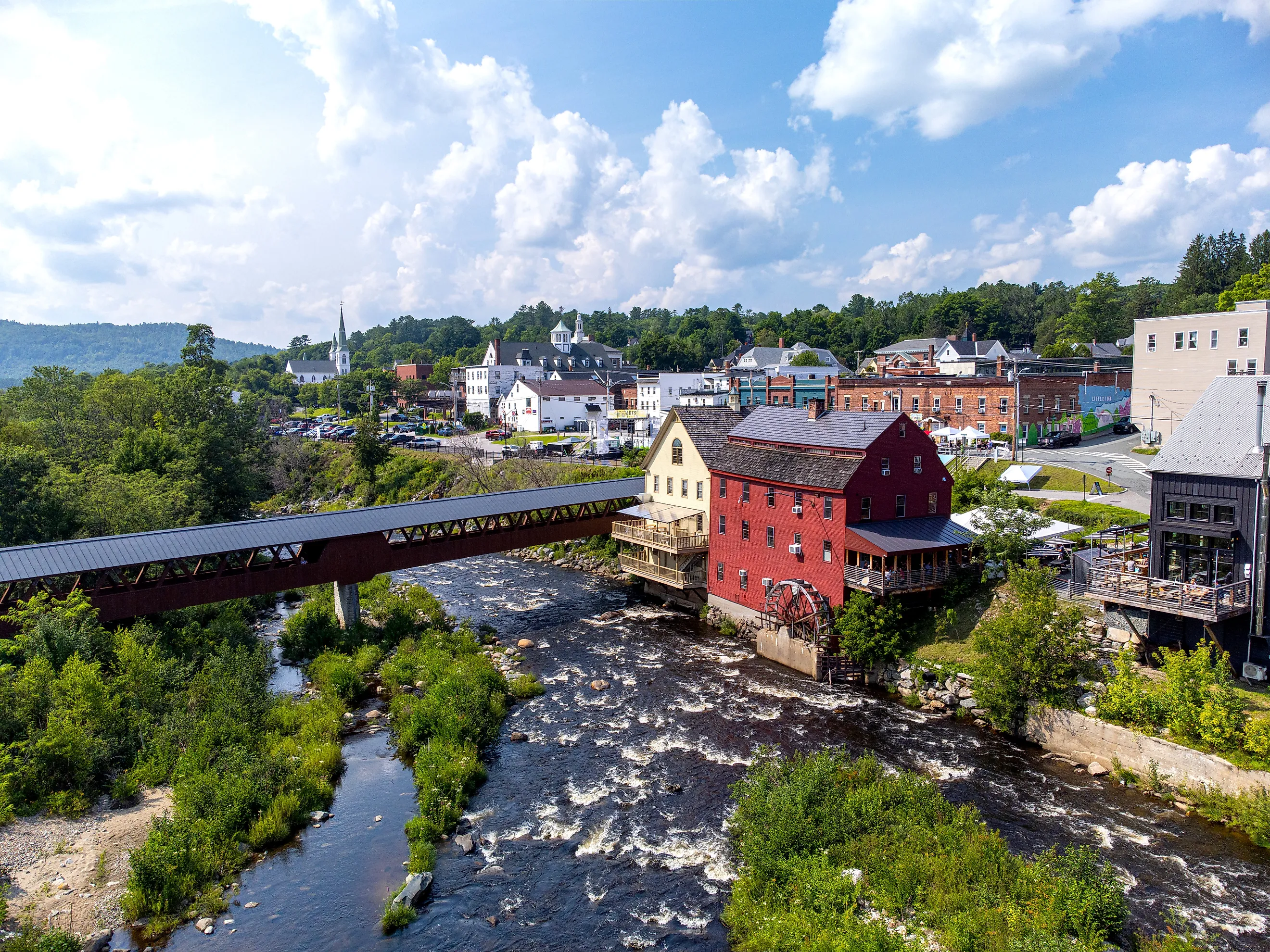
The small town of Littleton grew into a regional center after its incorporation in 1784. This was mainly due to its location along the Ammonoosuc River at first. Later, the town continued to expand due to its railroad connections. Despite ongoing development, Littleton’s downtown area remains both intact and active.
Littleton sits in the White Mountains region of New Hampshire, and it is one of the most charming towns in the state. It also has one of the best and most walkable main streets in the country. Two white-steepled churches flank Main Street and the street is home to the infamous Chutters, which boasts the longest candy counter in the world. After filling up on your favorite sweets and chocolates, head to the Riverwalk Covered Bridge to take a couple of selfies. The bridge also connects Main and Mill Streets to the walking path that snakes along the river. From the path, you can see the old Grist Mill. Two miles from Main Street, you can access a trailhead that takes you to Parker Mountain for excellent views of the town.
North Conway

North Conway developed as a village within the town of Conway and grew quickly with the help of agriculture, tourism, and railroads. It is located in the Mount Washington Valley within the White Mountains Region, so it draws a lot of visitors who want to go skiing, hiking, and even shopping.
If you want to be close to the highway during your North Conway stay, book your accommodation at Eastern Inn and Suites, which sits in front of the Whitaker Woods. The inn features its own trail that connects to trails in the woods so that you can go for a morning stroll before breakfast. If you plan on hiking a somewhat longer trail, consider Diana’s Baths near town. It is a mile round-trip, and there are several waterfalls and swimming holes to see on the way (in summer). You can also stop by Storyland for a fun family day out, six miles away from town. The little ones can meet their favorite storybook characters before cooling off at the Moo Lagoon Water Park. For a more historic excursion that is perfectly apt for this timeless town, book a ride on the Conway Scenic Railroad, which takes you through the White Mountains.
Hancock

Hancock was settled in the 1760s and named after John Hancock, a landowner who went on to become one of the people who signed the Declaration of Independence and the first governor of Massachusetts. Unlike some other towns in New Hampshire, this one, especially the central village, has changed very little over time. Much of the town center is preserved as a historic district, and you will find homes, barns, and buildings here dating back to the 18th and 19th centuries.
Some of the best buildings to explore include the historic Hancock Inn and the beautiful town library. The inn is the oldest in the state and is well known for its fantastic food. After booking your accommodation and having a great meal, you can visit the area connected to the Merrimack River watershed, choosing between the lake, riverfront, or pond to explore the town’s natural surroundings.
Sugar Hill

Sugar Hill is one of New Hampshire’s smallest towns, and the area in which it is located has long been known for both farming and seasonal tourism. The town was officially incorporated in 1962, but its roots extend much further back. It is one of the most beautiful places to visit in the state, with views of the Dalton, Franconia, Kinsman, and Presidential ranges, as well as the June lupine blooms. The area, long before the town was incorporated, was also home to the first resort-based ski school in America in 1929, a forerunner of the sport as it is known today.
While in Sugar Hill, you simply must stop at Polly’s Pancake Bar for mouthwatering pancakes with Maple Sugar before heading to the Sugar Hill Historical Museum. Here, you will learn more about the town’s past from 1780 to the present. If you visit in June, you can catch the annual Lupine Festival, while fall brings out the bright foliage of the sugar maples. You can go leaf peeping along the Kancamagus Highway or hike the nearby Artists’ Bluff Trail. And, 22 miles from Sugar Hill, you can also go skiing on one or more of the 63 trails and 35 glades at Bretton Woods in winter.
The Best Way To Experience New Hampshire
New Hampshire’s timeless towns are the best way to learn everything there is to know about the state. If you enjoy walking through historic town centers and going on self-guided historical tours, you will love every one of the towns on this list. In all of them, you will find reminders and remnants of the past, lovely traditions and festivals, as well as all the modern amenities you need. If a memorable New Hampshire trip is on your radar, you will find these towns a practical and rewarding way to get off the beaten path in this popular state.