7 Best Towns In Germany To Retire Comfortably
Germany is an older country by European standards: the median age was 44.7 in 2025, and the country is organized very well for retirement through walkable towns and accessible leisure opportunities. In Görlitz, arcaded buildings line the Untermarkt, creating walkways that connect directly to the town’s main square. In Wernigerode, the Marktplatz sits at the center of a compact network of streets that extend toward the castle and surrounding parks. In Pirna, the main square leads gradually down to the Elbe, where a riverside promenade forms part of the town’s everyday routine. In addition to tranquil walking opportunities, these towns are also home to excellent healthcare, such as Wernigerode's Harzklinikum hospital.
Görlitz

The old center of Görlitz is built in a way that quietly removes stress from everyday activity. Arcades line the Untermarkt, so even on colder days, you can move between doorways without stepping fully into the open square. From there, the ground rises almost imperceptibly toward St. Peter and Paul Church before dropping toward the Neisse. Once you reach the river, the path flattens out completely and continues for long stretches without interruption. What stands out is how little you need to think about where you’re going. A walk can extend naturally from the square down to the river and continue into the Stadtpark without encountering obstacles or sharp changes in elevation.
Eisenach

Eisenach is a town that allows you to slow down and experience its scenery and vast history. For example, Karlsplatz, one of Eisenach’s central squares, sits just beyond the Nikolaitor, the historic gateway into the old town. Its wide layout and available seating make it a place where people stop and linger rather than move straight across. Streets leading away from the square narrow gradually, pulling you into quieter streets. The route toward Wartburg Castle leads to one of the most significant sites in the region, where Martin Luther translated the New Testament into German during his stay in the early 16th century. Today, the castle can be visited room by room, with interiors that reflect its long history as both a fortress and a residence.

In a more central location, the Bach House is the birthplace of Johann Sebastian Bach and is now a museum, which has small rooms containing historical instruments and manuscripts. The design allows visitors to traverse it at a slow pace, sometimes spending more time in a space than intended. The historic streets surrounding the center provide a feeling of continuity, which is important in a living space, as there are familiar routes, constant traffic, and open spaces without being too congested.
Wernigerode

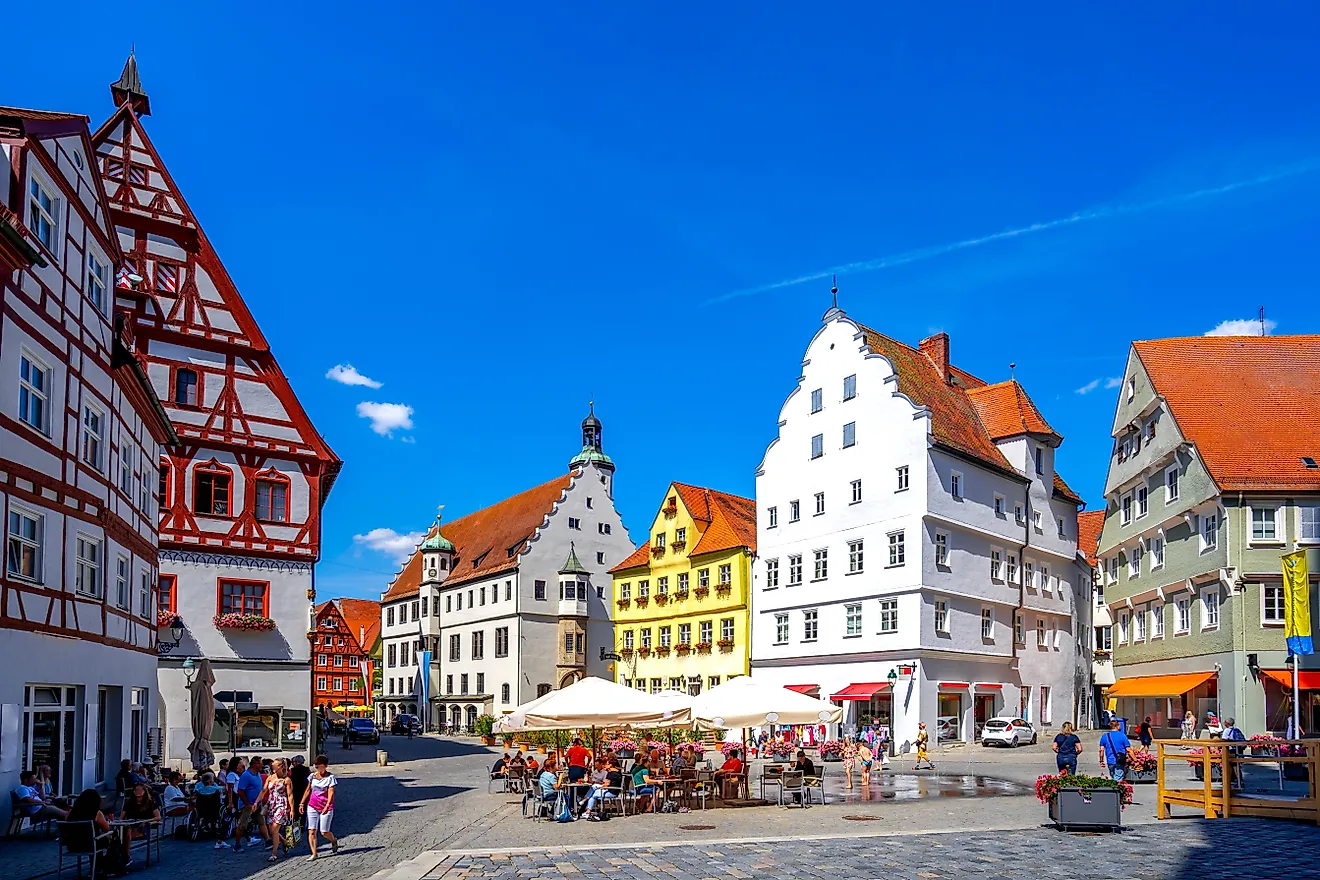
Beyond its historic center, Wernigerode functions as a fully equipped town for long-term living. Medical care is provided through the Harzklinikum, a regional hospital with multiple specialist departments, while facilities such as the Seniorenheim St. Georg and neighborhood-based senior centers offer accessible support for older residents. Throughout the week, the square hosts small markets and local stalls, where residents tend to stop, browse, and talk rather than pass through quickly. Streets lead outward from the square toward Wernigerode Castle, which rises above the town on a wooded hill and remains visible from much of the center. Originally a medieval fortress, it was later transformed into a residence in the 19th century, and its interior rooms are open to visitors. Closer to the center, the Lustgarten provides a quieter contrast, with open lawns and a long walkway beside the former orangery. From here, the view back toward the castle above the rooftops ties the town’s main landmarks together within a relatively small area.
Quedlinburg

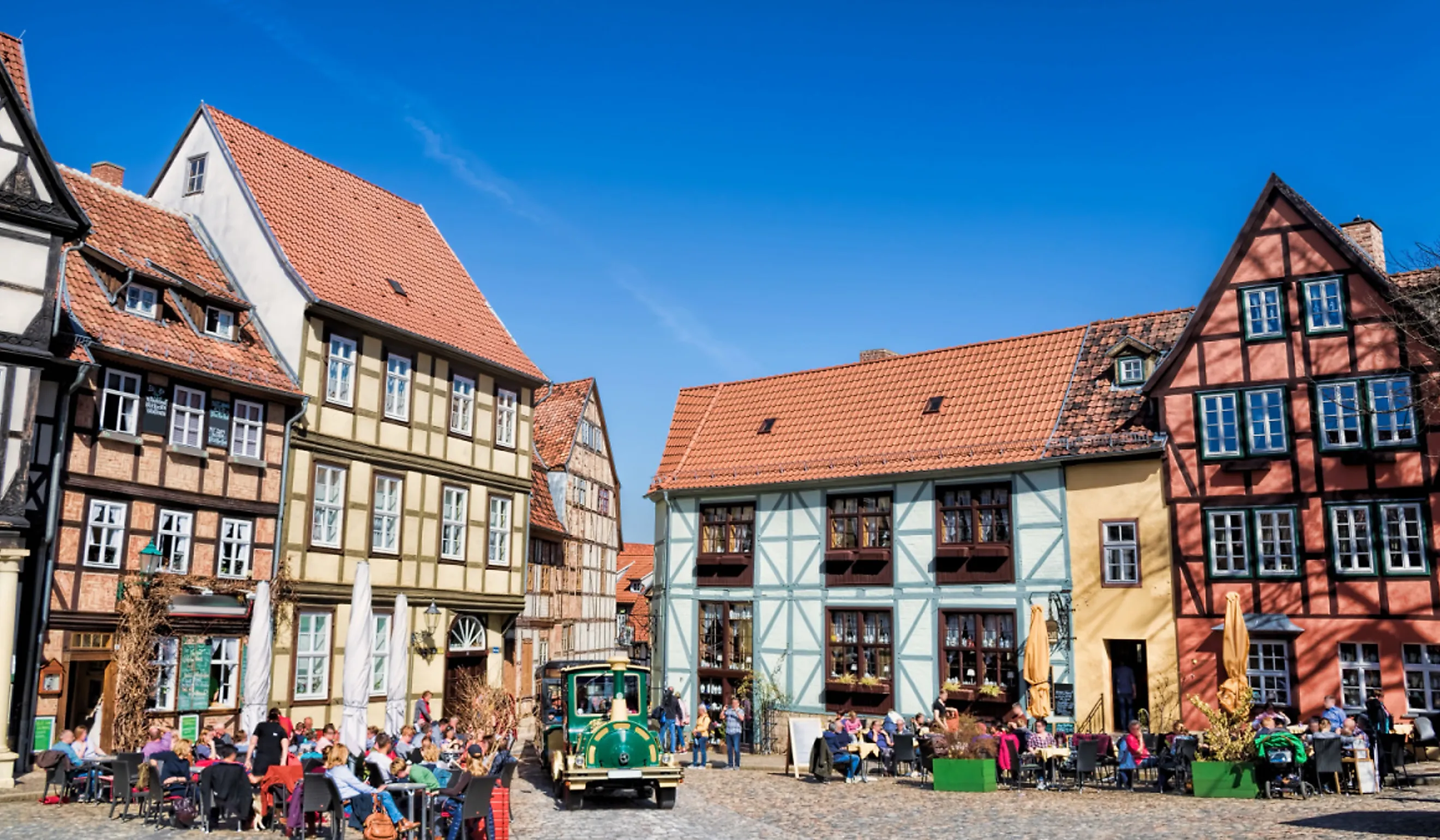
In Quedlinburg, everyday life extends beyond the beautiful historic center through facilities like the DRK Seniorenzentrum and other local care homes, which provide accessible services for older residents and are situated close to the town’s main streets. In its Marketplatz, cafés line the edges of the square, and outdoor seating tends to fill gradually throughout the day, with people lingering over coffee rather than moving quickly between stops. From the square, streets lead toward the Schlossberg, where the Stiftskirche St. Servatius sits above the town. The walk upward passes through narrower lanes and small viewpoints, with places to pause along the way before reaching the church, whose interior houses a medieval treasury and vaulted stone halls. Back at ground level, the paths surrounding Brühl Park provide a quieter environment, with open space and shaded areas, which are normally used for leisurely daily walks. The town’s layout keeps these areas close together, so moving between the square, the hillside, and the park can happen within a single, manageable outing.
Zittau

In Zittau, much of the day unfolds in places like the Zittau Mountains Nature Park, where older residents can appreciate a scenic cultural landscape that dates back 1,000 years. Retirees can also stroll through the town center, where everyday errands, cafés, and small shops remain close together and easy to navigate without much effort. A few streets away, the Church of St. Johannis rises above the surrounding buildings, its tower visible from much of the center and acting as a steady point of reference. Nearby, places like Bäckerei Schwerdtner is a bakery where regulars stop in for bread or pastries as part of their daily routine. In Weinau Park, daily life shifts outdoors, with open lawns and a small pond.
Bad Wildungen

Bad Wildungen is shaped by its long-standing role as a spa town, and that influence is still visible in how people use its public spaces. The Kurpark stretches through the center with tree-avenues lined with trees that connect different parts of town, but what stands out is how it’s used throughout the day, with people walking slowly, stopping at fountains, or sitting for extended periods rather than passing through.

Next to the park, the Wandelhalle continues to play a lively role in everyday life, offering scheduled concerts and small performances that attract regular visitors. From the park, streets lead gradually toward the older parts of town and up to Schloss Friedrichstein, which overlooks the area from above and provides a quieter destination for a longer outing.
Pirna

Approaching Pirna, the first thing that stands out is how the town opens toward the Elbe, with views of the river and the sandstone hills beyond shaping how the place is experienced. The historic center is above the water, with streets leading through compact residential areas where everyday routines remain easy to manage. For example, just beyond the center, the Helios Klinikum Pirna provides full-service medical care, while nearby clinics and senior facilities such as the AWO Seniorenzentrum remain close to the town’s main streets. For history lovers, above the square, St. Mary’s Church rises with its Gothic tower. Inside, the wide, bright space offers a quieter alternative to the bustle outside. Down by the river, the promenade follows the Elbe with open views toward Saxon Switzerland. Benches face the water, and it’s common to see people sitting for longer stretches, watching boats pass or simply staying in place.
What these towns share becomes clearer after a few days. In Görlitz, it might be the walk from the Untermarkt down to the Neisse, passing the same arcades each morning. In Wernigerode, it’s returning to the Marktplatz and watching the activity around the Rathaus before heading toward the Lustgarten. In Zittau, it can be as simple as stopping at the same bakery near the square and continuing on to Weinau Park. Over time, these routes begin to define the rhythm of the day, with one destination leading easily to another. The result is a setting where daily needs remain within reach, supporting a consistent routine, making these 7 towns comfortable for retirement.