6 of the Oldest Incorporated Towns in Pennsylvania
Pennsylvania was originally a British colony after King Charles II appointed William Penn as the proprietor. Long before European arrival, however, Native American peoples such as the Lenape and Susquehannock lived along the rivers in the area that would become Pennsylvania. William Penn received the land as a royal grant and founded the colony as a haven for religious freedom, especially for Quakers.
During the 1700s, Pennsylvania became an important cultural and political center, with Philadelphia serving as the meeting place for the Continental Congress. It was also here that the Declaration of Independence and the U.S. Constitution were debated and adopted. By the time the 19th century rolled around, Pennsylvania was driving the Industrial Revolution with the help of railroads, steel, and coal.
As the state expanded, more people settled across the region, and villages transformed into organized towns. These communities needed structure, so they created local governments to manage trade and land. Over time, many of these places were officially incorporated, becoming legal towns and enabling them to survive as permanent settlements.
Shippensburg

Shippensburg is one of the oldest settlements in Pennsylvania’s Cumberland Valley. In 1730, a group of Scots-Irish families established a community with cabin homes along Burd’s Run on land patented by Edward Shippen. Shippen received the patent from William Penn’s heirs. The community was a western outpost of colonial settlement and later served as the site of early county courts. The town of Shippensburg was not incorporated until 1819, but its community history stretches back nearly a hundred years, during a time of frontier expansion.
Today, Shippensburg is a college town where you can learn more about its long history at the Shippensburg History Center. The center features several exceptional exhibits, and it also offers lectures throughout the year. Other interesting places to visit include the Conrail Museum and the Cumberland Valley Railroad Museum. These museums are located in renovated railroad cars and provide detailed information and displays that highlight how important the railroad was to the Cumberland Valley region’s economy. If you want to enjoy the fresh outdoor air in Shippensburg, you can hike the Cumberland Valley Rail Trail, which starts at the Shippensburg Station. Or, you can relax for the evening and catch a movie at the nearby Cumberland Drive-in, built in 1952.
York

York began as a village in 1741, after settlers in the area started expanding westward. The village was named after York, England, and soon developed into a community centered on agriculture. By 1787, while the United States was taking shape, York was incorporated as a borough. During the Revolutionary War, the Continental Congress sought refuge in York. Here, it adopted the Articles of Confederation, which served as an early framework for the national government. York was also the place where Congress proclaimed the first Thanksgiving Day and officially ratified the French Treaty of Alliance after it was signed by American diplomats, including Benjamin Franklin, in Paris.
Visitors to York today will likely struggle to imagine its humble beginnings. Visitors can embark on an eccentric expedition in downtown York by participating in a scavenger hunt, during which they search for historical and architectural wonders while exploring landmarks such as Continental Square and Central Market. If you have a strong interest in strength sports, stop by the Weightlifting Hall of Fame Museum, where you will find displays and vintage equipment. There's also information about the mythology behind the creation of the Olympic Games at this unique museum.
Carlisle

Carlisle is a town known for its Civil War history, arts, and culture. In 1751, colonial authorities laid the foundations of this borough. Settlers, including French-Swiss fur trader James Le Tort, stayed in this area as early as 1720, but the borough was only officially incorporated from Middleton Township in 1781 and named after Carlisle, England. Carlisle was an integral frontier outpost on the western side of the Susquehanna River. Forts were built here to protect it during conflict. As time passed, Carlisle transformed into a trade and agricultural center, further cementing its historic character.
In 2026, Carlisle expects to receive more visitors than usual, following its recent resurgence. Visitors planning to stop by during the summer should plan to spend some time fly fishing at the nearby Yellow Breeches Creek or explore the Appalachian Trail. More trails at the King’s Gap Environmental Education Center lead to waterfalls and offer fantastic views. Visitors can also take a paddleboat out on Children’s Lake in Boiling Springs for a relaxing day out on the water.
Easton

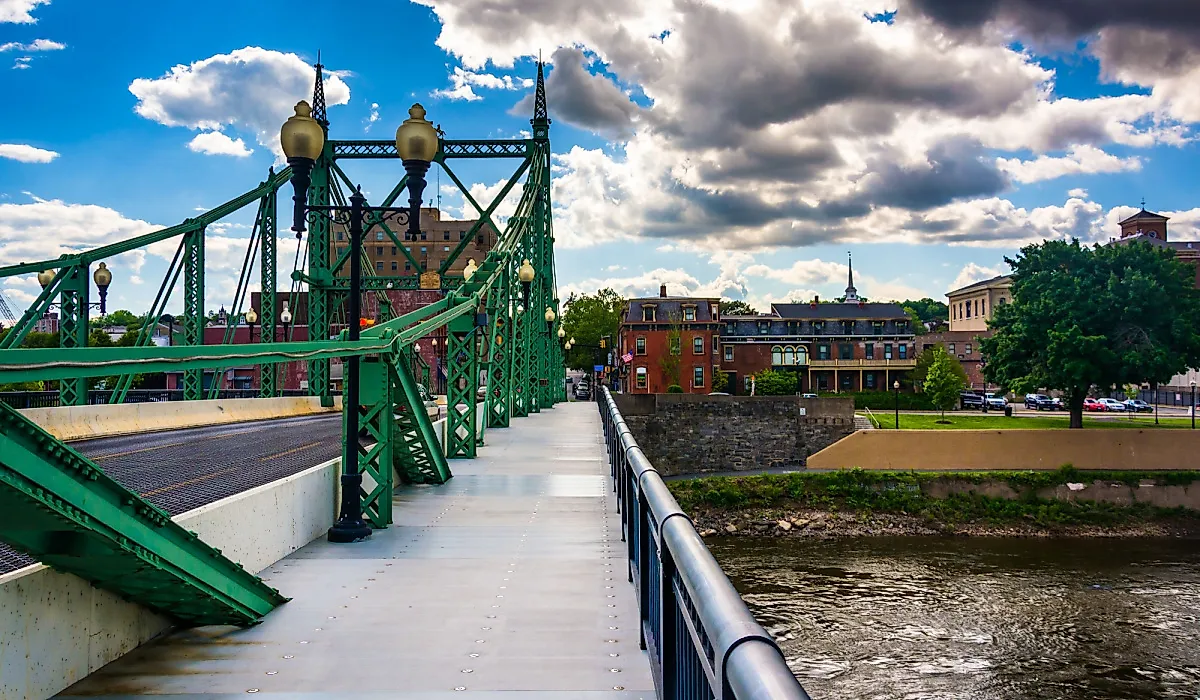
The town of Easton is located where the Lehigh and Delaware Rivers meet. This location has long been known to the Lenape people and was surveyed by Thomas Penn and Benjamin Eastburn in 1752 for the establishment of a new town, according to the Thousand Acre Tract. Easton was laid out that year as the seat of the newly established Northampton County. During the American Revolution, Easton became one of the first places in the colonies to read and declare the Declaration of Independence publicly. It was formally incorporated as a borough in 1789, thanks to population and economic growth.
Today, Easton is a lively town that offers incredible experiences for those who love the arts. Visitors can catch live productions at the State Theatre Center for the Arts, or spend time outside by hiking the Karl Stirner Arts Trail. The trail is short and features artwork and sculptures along the way. For a quirky arts-related outing, head to Crayola Experience at 30 Centre Square to see a 1,500-pound crayon. Visitors can also make and name their own Crayola crayon and create a melted wax artwork to take home.
Bristol

The Bristol borough was founded as Buckingham in 1681 when Samuel Clift received a land grant and established a settlement along the Delaware River. The Pennsylvania Charter was issued that same year. The newly established borough became a port and ferry hub linking Pennsylvania with New Jersey. The provincial council ordered a town plan in 1697, and a formal petition for incorporation was granted in 1702, after which the name was changed to Bristol. Bristol is one of Pennsylvania’s earliest boroughs, after its official incorporation in 1702. In 2026, its historic waterfront and colonial buildings still reflect its fascinating history.
This small town is the place to be if you want to be near the water. There are two floating docks here and a fishing area near Bristol Wharf. For visitors who want to explore some more, take a self-guided walking tour that includes 910 Radcliffe Street. This address boasts the oldest home in Bristol. Take in some of the historic atmosphere at King George II Inn and stay for a great lunch; it's been reported that visitors might even spot a ghost or two while there.
Chester

Swedish settlers founded Chester in 1644 as Upland. It was the first European settlement and city in the commonwealth before William Penn arrived in 1682 and renamed it Chester. Penn also held Pennsylvania’s first provincial assembly here. The community became an official borough in 1701, making Chester the oldest town in the state. The borough served as a county seat and continued to grow through colonial times. Later, it became an industrial and shipbuilding center, especially during the 19th century, mainly due to its location along the Delaware River.
As one of Pennsylvania's most historic places, it is not surprising that one of the most popular activities for visitors is a self-guided ghost hunt tour in downtown Chester. All visitors must do is download an app and solve riddles or answer trivia questions along the way. This will earn each team points, allowing everyone to learn more about the local Chester ghost legends simultaneously. Tourists who want to experience more of the history and less of the paranormal can visit the spot where William Penn first set foot in the state, as well as the 1724 Chester Courthouse. Another popular pastime is to trace Chester’s evolution over the centuries at the Chester History Museum.
Going in Search of Pennsylvania’s Living History
Visiting these historic Pennsylvania towns is a great way to see how the state grew from a colonial frontier to a massive industrial powerhouse. Each town offers another perspective on the state's heritage. Whether sightseers want to see Revolutionary War sites or old railroad history, it can all be found throughout these towns. The best part is that these are not just outdoor museums that can be walked around in an hour. The history is everywhere in these towns, allowing visitors to eat at a centuries-old inn or hike along trails that follow old trade routes. Travelers planning a Pennsylvania trip in the near future will experience history in the spots where it actually happened, and can also attend events and festivals that celebrate each town’s role in American history.