6 Classic Americana Downtowns In Louisiana
In Louisiana, downtown streets run parallel to bayous and riverfronts where painted brick storefronts and cast-iron galleries recall the state’s riverboat commerce on the Mississippi River and the Atchafalaya River. Parish courthouses with classical columns and broad, live oak-shaded squares anchor civic life in small towns from the Acadian Prairie to the River Parishes. Locally owned bakeries still sell beignets and boudin, while family-run syrup mills and rice warehouses reflect the sugarcane and rice economies that shaped downtown storefronts. Pressed-tin ceilings, decorative brick cornices, and transom windows reveal building campaigns from the late 1800s and early 1900s when river trade and rail lines brought goods and civic investment to brick main streets. On summer evenings in these classic Americana towns, the sounds of brass bands and Cajun fiddle music may be heard outside restored theaters and neighborhood bars, while murals, painted signage, and historic markers point to the stories of Creole, Acadian, African American, and immigrant communities that have shaped each block.
Franklin

Franklin preserves a brick-and-bayou downtown where late 19th-century commercial facades stand shoulder to shoulder with antebellum homes that line Bayou Teche. The Franklin Historic District includes more than 400 historic structures, and the downtown runs parallel to the bayou, giving storefronts a waterfront face that merchants used when river traffic supplied the town, and later when rail arrived. Stroll under the trademark cast-iron lampposts and step inside the Teche Theatre for a locally produced play or concert, then browse the shelves and local crafts at Gather On Main Vintage Market.
Stop for espresso or a small-plate lunch at Lamp Lighter Coffee House & Bistro, and see rotating local art at Sacred Oak Art Collective before taking an architectural walking tour that highlights turn-of-the-century commercial design.
Crowley

Crowley’s commercial core shows the confidence of a 1900s prairie town that built ornate brick blocks and grand performance houses for weekly civic life. The Grand Opera House of the South anchors North Parkerson Avenue with red-brick arches and pressed-plaster balconies, and the Historic Rice Theatre presents films and live music beneath an Art Deco marquee. For a morning treat, pick up a coffee at The Vanilla Bean, a locally owned and operated coffee house, then wander specialty stores and antique shops that occupy buildings with decorative cornices and transom windows.

Sample local small-batch brews at Reggie’s Microbrewery, where the bar is situated beneath original pressed-tin ceilings and the beer showcases local Crowley Rice in every brew. The downtown walking guide and Main Street Crowley organization provide maps that point to Rice-industry history exhibits and a restored Ford manufacturing display, so visitors may pair architecture with local industrial stories.
Donaldsonville

Donaldsonville retains a river-town downtown with Italianate and Romanesque commercial buildings that testify to its early importance on Bayou Lafourche and the Mississippi River. The Donaldsonville Historic District contains a significant concentration of 19th-century masonry commercial blocks, and several architecturally notable storefronts face a wide, tree-lined Main Street. Visit Grapevine Cafe and Gallery inside a restored early 20th-century building for regionally influenced Creole dishes and rotating exhibits by local artists, then pop into antique shops and specialist galleries that occupy second-floor spaces above original storefronts.

Historic religious architecture, such as Ascension of Our Lord Catholic Church, punctuates the downtown fabric and offers a contrast to the commercial masonry. Nearby, the River Road African American Museum preserves community history and provides context for buildings that once housed long-running Black-owned businesses and civic groups.
Abbeville

Abbeville’s downtown square centers on a white-columned Vermilion Parish Courthouse, whose classical portico faces a small public plaza and live oaks. The courthouse and the adjacent commercial rows present a mix of early 20th-century brickwork and mid-century civic architecture, and a short walk from the square leads to the long-running C S Steen Syrup Mill, whose painted storage tanks have become a recognizable downtown marker.

For food drawn from the bayou and the parish’s farms, book a table at RiverFront A Louisiana Grill, or order local seafood and steaks at Dupuy’s Seafood and Steak, both businesses that operate within blocks of the historic downtown.
Thibodaux

Thibodaux places an early 20th-century courthouse and a National Historic Landmark house close to a concentrated downtown of storefronts and independent shops. The Lafourche Parish Courthouse stands as a monumental Beaux-Arts presence at the center of downtown, and the nearby E. D. White Historic Site preserves a raised Creole cottage associated with a former Louisiana governor and a United States Supreme Court justice. On street level, downtown merchants operate galleries, bead and boutique shops such as the Beadhive and Sugar Boutique, and neighborhood restaurants that serve regional Creole dishes.

For hands-on local culture, the Bayou Country Children’s Museum and nearby plantation interpretations give added context to the downtown’s architecture and the daily lives that produced it.
Covington

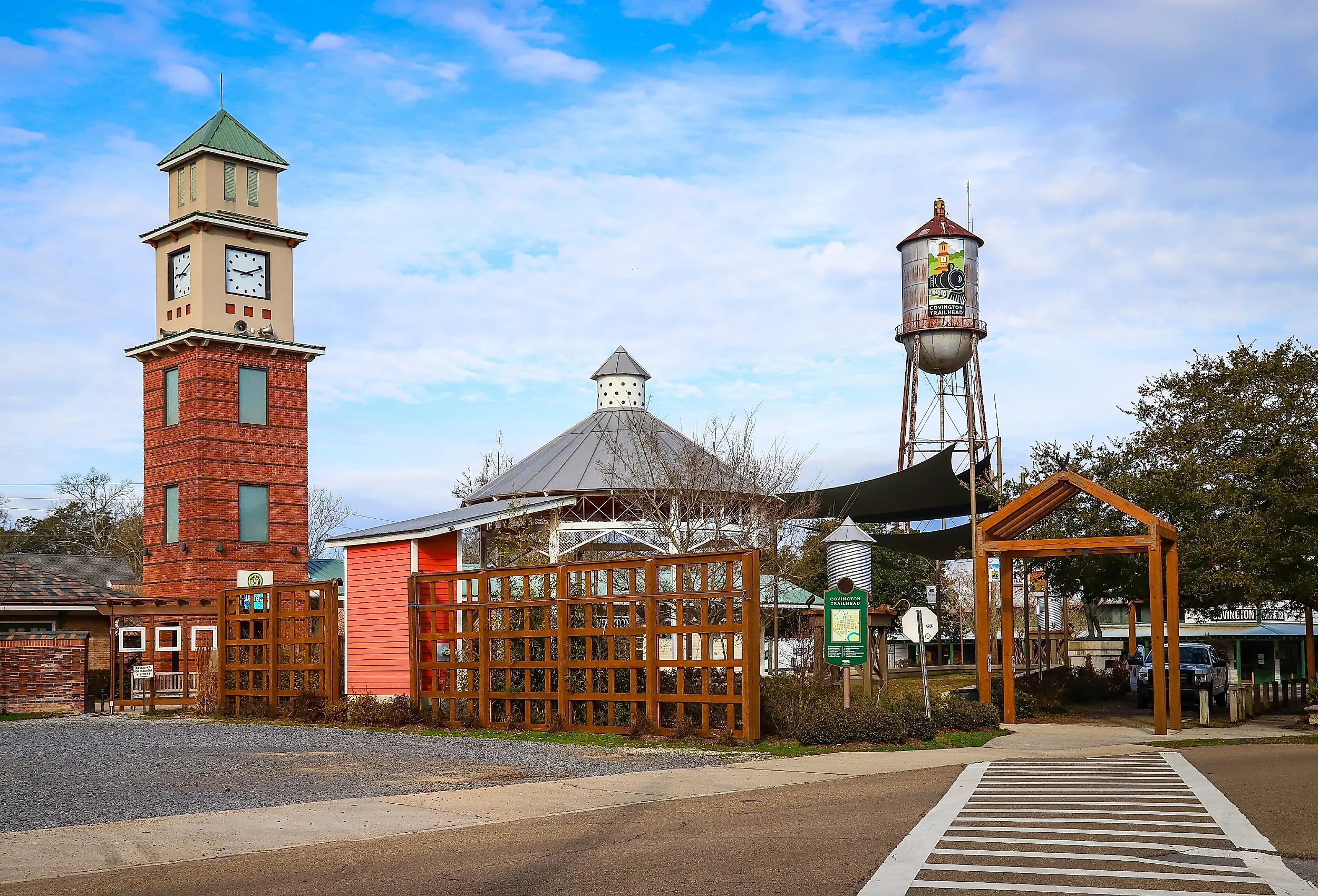
Covington’s downtown is shaped by ox-lot planning and river trade, where early 20th-century brick storefronts and pressed-tin interiors meet the live-oak-lined ox lots unique to St. Tammany Parish. The St. Tammany Parish Courthouse and the restored mission-style Southern Hotel anchor Boston Street and give the downtown a civic and hospitality focus that visitors can observe in building dates and cornice work. On street level, a family-run general store and working museum will remind visitors of the history of the town’s local commerce: H.J. Smith & Sons General Store and Museum operates out of a long-standing masonry block and preserves hardware, ledgers, and stories from the town’s trading-post era.

For coffee and European-style pastries, Tournesol Cafe and Bakery occupies a small storefront close to the ox lots and offers breads and croissants made on site, while Del Porto Ristorante brings house-made pasta and regionally sourced ingredients to an early commercial building on Boston Street. Galleries and independent gift shops line short blocks between the courthouse and the river, and the Tammany Trace rail-to-trail and the Bogue Falaya River make the downtown’s connection to rivers and trails immediately visible from the sidewalks.
Small-Town Main Streets That Endure
Across these Louisiana towns, brick commercial blocks and courthouse squares continue to reflect the economic and cultural forces that shaped them, from sugarcane fields near Abbeville to rice country around Crowley and river commerce in Franklin and Donaldsonville. Early 20th-century theaters, locally owned cafes, and long-running specialty shops occupy buildings whose pressed-tin ceilings and decorative cornices remain part of daily life rather than museum displays. Parish courthouses still dominate downtown sightlines, reinforcing how civic life organized commercial streets in Louisiana differently from states built around county systems. Together, these downtowns show how classic Americana in Louisiana remains tied to bayous, river trade, Creole and Acadian traditions, and family-run businesses that continue to operate inside historic brick storefronts.