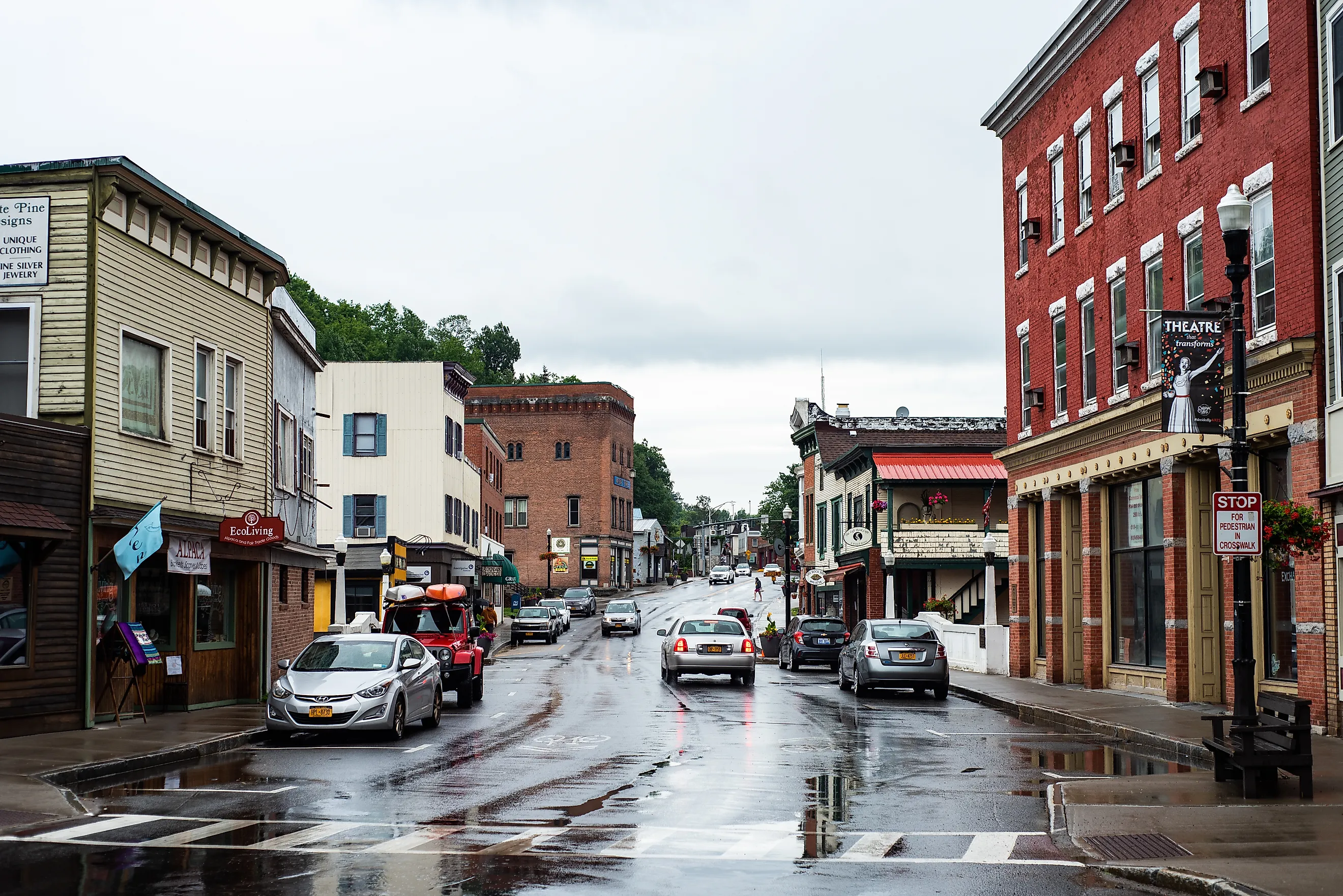
6 Adirondack Mountain Towns Where Time Stands Still
The Adirondack Mountains developed at a different pace than much of the Northeast. Protected by one of the largest wilderness preserves in the contiguous United States, the region of northern New York avoided the dense industrial growth seen elsewhere. Its communities emerged instead from logging camps, guide services, tuberculosis sanatoriums, and seasonal lake settlements rather than factories or major rail hubs. Many Adirondack towns remain intentionally small, with layouts and economies closely tied to surrounding forests, waterways, and terrain.
In these places, historic buildings sit near trailheads and boat launches, and daily activity unfolds in close proximity to land that has remained largely intact for centuries. The following six towns maintain particularly strong visual and cultural ties to the Adirondacks’ earlier eras, where history is embedded in the landscape rather than preserved behind glass.
Saranac Lake

Saranac Lake, in New York’s Adirondack Mountains, became a town by accident and by experiment. In the late nineteenth century, Dr. Edward Livingston Trudeau arrived seeking relief from tuberculosis and stayed to test an idea. He believed that fresh air, rest, and cold weather could slow the disease. In 1884, he founded what became the Adirondack Cottage Sanitarium, and the small settlement soon drew patients and physicians from across the United States and Europe. Cure cottages, built with wide porches where patients once spent hours outdoors, remain part of the town’s residential streets.

Each winter, the town returns to one of its longest-running traditions. The Saranac Lake Winter Carnival, first held in 1897, continues to revolve around a hand-built ice palace erected along the lake’s edge. Residents and visitors gather for weeks of events that feel continuous rather than commemorative. Even the local dining scene reflects this continuity. Restaurants often focus on regional ingredients and familiar settings, favoring comfort and consistency over trend-driven presentation. In Saranac Lake, history remains present without being staged.
Elizabethtown

Elizabethtown enjoys a cozy setting in the beautiful Boquet River Valley, surrounded by gentle peaks and lush, forested slopes that give the town a warm, welcoming feel. Founded in 1797 and named after Elizabeth Gilliland, the wife of early settler William Gilliland, it proudly serves as the heart of Essex County. This is beautifully reflected in the historic county courthouse and the well-planned streets that give the town its organized charm. Unlike some of the more tourist-focused spots in the Adirondacks, Elizabethtown has a practical, homey atmosphere, shaped by community life rather than seasonal influxes.
The Adirondack History Museum is conveniently located near the heart of the village, housed in a charming former school built in 1916. Its engaging rotating exhibits beautifully highlight Indigenous history, early settlement, logging, and daily life in Essex County, giving a warm, local perspective to the wider Adirondack story. Not far away, the historic Deer’s Head Inn continues to be a beloved gathering spot, offering delicious regional cuisine in a cozy dining room that beautifully echoes the area’s rich agricultural heritage.
Just outside the village, Split Rock Falls creates a stunning waterfall where the Boquet River takes a dramatic plunge, tumbling over exposed bedrock in a series of charming cascades. This beautiful spot attracts visitors year-round, and it's especially breathtaking in spring and fall, when the fresh runoff and vibrant fall foliage highlight the area's fascinating geology.
Schroon Lake

Schroon Lake grew along a long, narrow body of water that has always been one of the easiest routes between Lake Champlain and the heart of the Adirondacks. French explorers passed through this area in the seventeenth century, but it wasn't until the nineteenth century that the village really started to take shape, with hotels, boarding houses, and steamboat landings popping up along the shoreline. Many of these features are still visible today. The public beach and marina are conveniently located near the heart of the village, highlighting the close relationship between town and lake that has remained much the same over the years.
The Strand Theater, built in 1926 and beautifully restored to preserve its charming Art Deco details, continues to be a lively heart of Main Street. Its glowing marquee, single screen, and beautifully revamped interior evoke a wonderful bygone era when movie theaters were beloved community hubs just as much as places for entertainment. Besides film showings, the theater warmly welcomes live music performances, intimate theatrical productions, and festive seasonal events. Just nearby, the Schroon-North Hudson Historical Museum shares fascinating stories about the area's rich history, including its past in logging, rail transport, and the growth of seasonal tourism around the lake.
Just beyond the village, Severance Mountain gently rises above the surrounding lowlands, inviting explorers to discover its beauty. The trail makes a steady ascent through a charming mix of hardwood and evergreen trees, leading to a welcoming summit with breathtaking views of Schroon Lake and the Adirondack foothills. Throughout the year, the landscape transforms beautifully—from the lively, high spring waters in the streams to the crisp lines of ridges and valleys that become visible after the leaves fall, offering a constantly changing panorama that nature lovers will surely appreciate.
Tupper Lake

Tupper Lake is nestled in the western Adirondacks, where it first became known in the nineteenth century as a lively logging town connected by the expanding railroad. Back then, timber and transportation were the heart of the local economy, attracting workers and industry to what was once a quiet, sparsely populated area. As the large-scale logging boom slowed down, the town gracefully adapted rather than fading away, carrying its historic character into new times. Today, you can still see signs of that transition in the way the village is laid out and in how its community repurposes the beautiful surrounding landscape.
One of the most vivid examples of this change is The Wild Center, a charming natural history museum located just outside the village. Its indoor exhibits beautifully explore Adirondack ecosystems by blending engaging scientific displays with inviting live-animal habitats, featuring native birds and aquatic species. Outside, a friendly network of trails and elevated walkways guides visitors through the forest, ending at a raised canopy structure that provides a stunning view above the treetops and across the peaceful nearby lake.
Just a short distance away, the Adirondack Sky Center & Observatory beautifully showcases how the region’s natural environment is being thoughtfully used. With its dark skies, the facility invites everyone to enjoy public observing sessions, educational programs, and engaging presentations in a portable planetarium. These vibrant sites highlight how Tupper Lake has creatively reimagined its relationship with the environment, shifting from industrial exploitation to one rooted in learning and wonder, inspired by the very setting that once fueled industry.

Tupper Lake is also popular for its winters that transform the lakes into ice fishing playgrounds, where anglers brave frozen waters, pop flags, and test skills against the region’s trophy fish.
Paul Smiths

Paul Smiths is a small hamlet defined less by streets than by water, forest, and the historic legacy of wilderness hospitality. Named after the 19th-century hotelier and guide Paul Smith, the area became a destination for sportsmen and city dwellers seeking the Adirondacks’ backcountry charm. Today, the community remains closely tied to its natural surroundings.

Paul Smith’s College is a large part of the hamlet, offering trails and interpretive programs through forests and wetlands, perfect for family hiking or birdwatching. Canoe and kayak routes on Lower and Upper St. Regis Lakes allow visitors to explore islands, inlets, and hidden coves much as early guides would have. You can explore White Pine Camp, a historic and expansive Great Camp that once served as a Summer White House, with guided tours revealing its preserved architecture, landscaped grounds, and lakeside vistas. If you visit in June, be sure to experience the Great Adirondack Birding Celebration, a festival celebrating the region’s migratory birds through guided walks, talks, and family activities. Even without a commercial downtown, Paul Smiths exudes a quiet wilderness charm, where outdoor exploration and wildlife observation are impeccable.
Keene Valley

Settled among the tallest mountains east of the Rockies, Keene Valley is rightly known as “The Home of the High Peaks.” The town is a gateway to some of the most majestic wilderness in the Adirondacks. Early settlers arrived in the early 1800s, but the area’s identity crystallized with the rise of mountaineering and guiding culture in the late 19th century.
Trails begin directly from village roads, offering access to iconic peaks like Mount Marcy, as well as shorter hikes like the Cascade Lakes Trail, perfect for a half-day adventure. The Holt House on Marcy Field preserves artifacts and documents from early mountain life, grounding the region’s adventure culture in its agricultural and domestic roots.
Many rock climbers and ice climbers flock to sites like the famous Beer Walls, also called Chapel Pond Canyon, where routes are whimsically named after beer, including Frosted Mug and Seven Ounces, just a short walk from Chapel Pond. With an estimated 72 lean-tos sprinkled throughout the High Peaks Wilderness, overnight treks are possible for those seeking immersive backcountry experiences. In winter, snowshoeing and cross-country skiing are popular activities along nearby trails.
From cascading waters of Split Rock Falls near Elizabethtown or the High Peaks rising above Keene Valley, the Adirondack towns listed here capture a striking blend of natural beauty and historical depth. Stately Gilded Age camps, centuries-old trails, and preserved village centers reveal a region shaped by preservation efforts over the years. Seasonal events, panoramic lookouts, and quiet waterways highlight the landscape's grandeur while connecting visitors to the region’s rich heritage. These towns offer more than scenery; they offer an experience of the Adirondacks as it has existed for generations, where history, architecture, and wilderness converge in places that feel both timeless and breathtaking.