11 Michigan Towns Where Time Stands Still
Michigan is home to approximately 2,000 sites listed on the National Register of Historic Places, reflecting the state's rich history. These highlight everything from the enduring Great Lakes maritime heritage, landmark American wars, indigenous legacy dating back to the Ojibwe and Potawatomi nations, and the massive iron and copper mining booms that once fueled the economy. Beyond famous cities, quiet towns preserve this past through walkable main streets, century-old storefronts, lighthouses, forts, and lovingly maintained homes. From the maritime charm in Alpena to the Bavarian ancestry in Frankenmuth, these lovely communities maintain landscapes that largely remain unchanged.
The following list explores Michigan towns where time stands still. Here, history lives on, inviting visitors to pause, look more closely, and experience moments that feel beautifully untouched by time, where stories are passed down across generations to this day.
Mackinac Island

Mackinac Island was once a sacred site for Native American tribes, a popular hub for French fur traders, and a critical military outpost. In the late 19th century, the town banned cars to preserve its Victorian charm and became known for its horse-drawn buggies. A visit to Fort Holmes offers an excellent idea of Mackinac Island's military history. This wood-and-earthen fortification was constructed by the British army for the War of 1812 and features several viewing towers overlooking the beautiful Straits of Mackinac. One of the best ways to discover the Victorian downtown is through a ride on the Mackinac Island Carriage Tours. Their one-hour and 45-minute narrated tours take visitors to several notable stops in the town square, offering an immersive historic experience.
Meanwhile, Mackinac Island State Park welcomes visitors to explore its open spaces in the state's oldest state park. Spanning more than 1,000 acres, the reserve is punctuated by quiet forests, mystical rock formations, pleasant nature trails, and breathtaking vistas from high limestone bluffs. Its serene atmosphere is perfect for escaping the crowds and bikes in downtown.
Manistee

Manistee was a Native American settlement before French explorers started arriving in the 1600s. It became a lumbering trading post and had to rebuild after a catastrophic fire in 1871. The Manistee North Pier Lighthouse, built in 1872, symbolizes the town's maritime heritage. It rises 39 feet and features a wooden catwalk where people stroll and admire the enchanting views of Lake Michigan. Those who want to relax by the water can head to First Street Beach, which also doubles as the largest recreation area in the town. It boasts several playgrounds, baseball diamonds, tennis courts, and basketball courts, attracting all ages in the community.
Manistee is also home to the Ramsdell Regional Center for the Arts. This century-old community theater hosts more than 200 events annually, including diverse performances by Manistee Civic Players. The young and old gather here to watch captivating music concerts, plays, dance recitals, and classes.
Marquette

The discovery of iron ore in 1844 transformed Marquette from a French missionary settlement into a booming hub for iron mining and Great Lakes shipping. Today, people know the town for its arts and exciting recreational opportunities, including the DeVos Art Museum. This state-of-the-art visual art museum boasts 5,000 square feet of display space, where regional, national, and international artists host rotating exhibitions. There is also a permanent collection featuring Japanese, Native American, and photographic art. The Upper Peninsula Children's Museum excites vacationing families with interactive exhibits. It provides an engaging space for kids to learn, play, and create through hands-on experiences and fun times with peers.
Adventurers in Marquette naturally gravitate towards Presque Isle Park. The 323-acre wilderness along the shores of Lake Superior provides year-round recreation for kayakers, hikers, and wildlife watchers. It is unique for its dramatic sandstone cliffs and more than 100 rare native plant species.
Calumet

Calumet is steeped in mining heritage and was at the center of the 19th-century Upper Peninsula copper mining boom. It experienced a copper rush in the 1860s, attracting scores of immigrants and transforming into a vibrant town with a thriving economy. At the Keweenaw National Historical Park, newcomers can explore this copper heritage through leftover mines, old machinery, and stories at more than 20 different heritage sites. The historic Calumet Theatre hosts more than 60 events annually, dedicated to providing artistic, entertainment, and cultural opportunities inside a 1900 venue. It is an essential convergence spot that also allows self-guided tours during box office hours.
The sleepy downtown area invites uninterrupted walks for those seeking to discover hidden gems. Shute's 1890 Saloon is one such location, an original backbar just next to the theater. It is one of the state's oldest bars, maintaining rustic charm while serving delicious cocktails and live music in an accommodating atmosphere.
Chelsea

Chelsea's growth was spurred by the arrival of the Michigan Central Railroad in the 1840s, turning a once sleepy village into a bustling hub for wool and produce. Tourists in Chelsea will notice its impressively preserved architecture and lively art scene, embodied by the Purple Rose Theatre Company. This premier professional theatre venue hosts one-of-a-kind performances to entertain audiences, while nurturing local talent in a buzzing artistic atmosphere. Chelsea is also home to the biggest park in the Lower Peninsula. The Waterloo Recreation Area spans over 20,000 acres of campgrounds, hiking trails, swimming beaches, and picnic sites. It is a popular escape for mountain bikers, fishermen, hunters, and hikers looking to explore the Waterloo-Pinckney Trail.
Every August, the residents welcome visitors from around the state for the annual Chelsea Community Fair. This beloved event celebrates the area's agriculture, featuring numerous fun activities for all ages, including tractor pulls, Ferris wheels, produce exhibitions, horse shows, crafts, and food.
Marshall

The Ketchum brothers founded Marshall in the 1830s as an agricultural community, but the town later became a major station on the Michigan Central Railroad. Marshall also played a role during the Underground Railroad days and at the height of the patent medicine industry boom. Its old town district is awash with unique buildings, such as the Honolulu House Museum. This beautiful home, built in 1860, features a blend of Polynesian, Italianate, and Gothic Revival elements. A nine-bay porch, raised veranda, and vertical wood siding are examples of Victorian opulence applied to the structure's design.
Marshall allows souvenir lovers to leave with a piece of local history when they visit Amazing Grace Antiques. This downtown store boasts three floors of vintage finds, ranging from old clothing and jewelry to furniture and similar collectibles. Elsewhere, outdoorsy vacationers can take a leisurely trek along the Marshall Riverwalk for a change of scenery. This 1.6-mile route has paved pathways, pedestrian bridges, an elevated boardwalk, and access to the Kalamazoo River via boat and kayak launches.
Holland

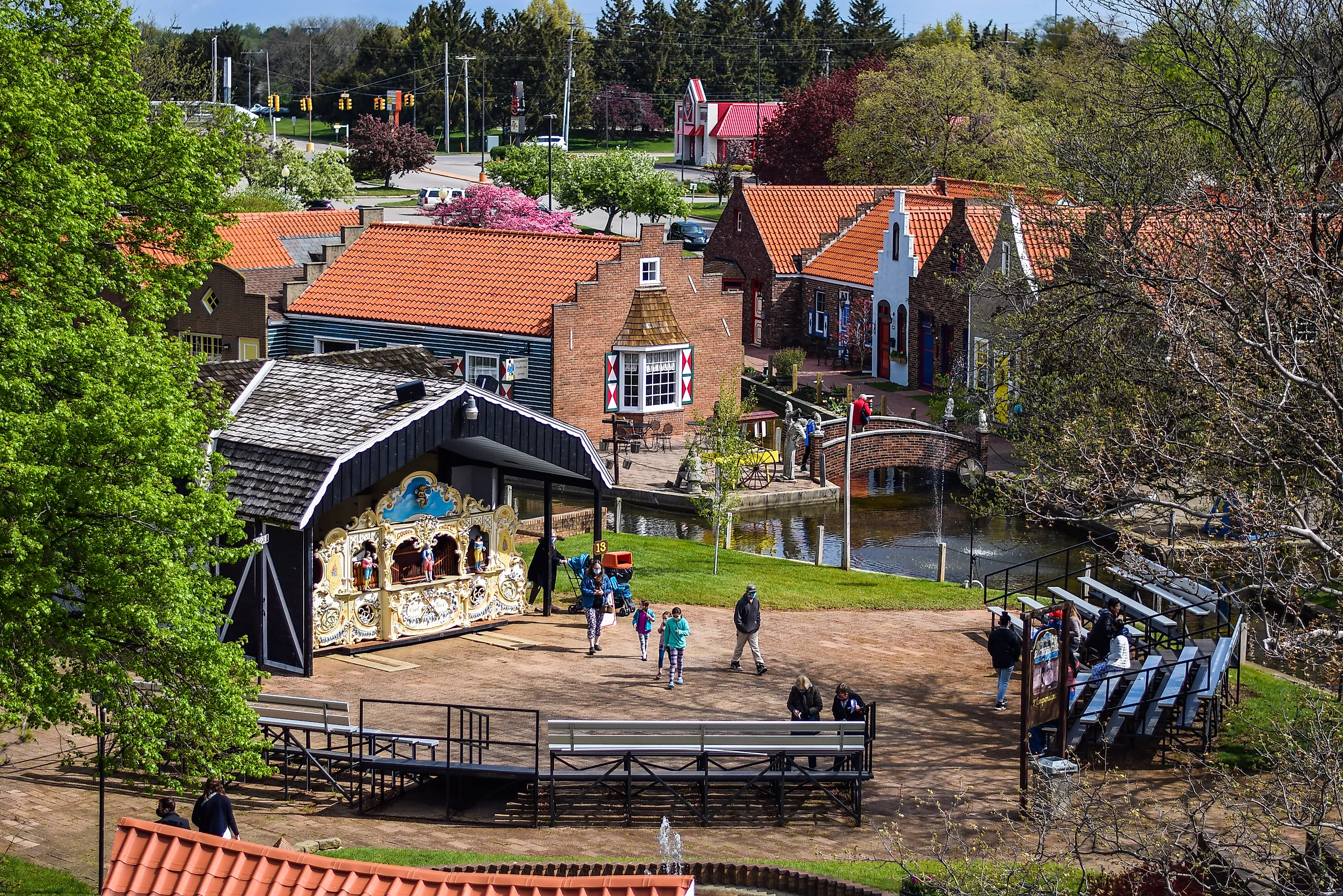
Holland was established in the 1840s by Dutch immigrants seeking religious freedom and fleeing persecution in the Netherlands. The town grew on the back of lumber, agriculture, and manufacturing industries, and continues to honor its Dutch ancestry through events like the annual Tulip Time Festival. Thousands gather in downtown Holland during the blooming season to celebrate local tradition through folk songs and dances, games, crafts, food, parades, marches, and more than 5 million tulips that add color to the town. The Holland Museum preserves the community's history since the arrival of the Dutch. Nearby, numerous artifacts and memorabilia are displayed across two historic homes, the Settlers House and Cappon House.
A 24-acre oasis beckons nature lovers at Kollen Park, which offers a laid-back, picturesque walkway along the shores of Lake Macatawa. The site also contains an expansive picnic shelter, a lakeside gazebo, boat launches, a playground, a bandshell, and fishing decks. This makes it a popular outdoor gathering spot designed for relaxation.
Sault Ste. Marie

Popularly known as the state's oldest city, Sault Ste. Marie is prominent among Michigan towns where time stands still, founded in 1668 by French missionaries as a vital fur trade center. It developed into an essential shipping hub after the construction of the Soo Locks. The Great Lakes Shipwreck Museum welcomes visitors from May to October to explore this history through artifacts that illustrate the perils of the Great Lakes. It shares photographs and stories behind the numerous shipwrecks lining the lakeshore. Meanwhile, outdoor fans often head to Rotary Island Park for a picnic and to get lost in the breathtaking views of the St. Marys River.
However, visitors seeking an easygoing pastime after hours can pop into Soo Brewing Company and 1668 Winery, where residents meet to catch up while sampling delicious craft beers and wines. It is a relaxed hangout spot with live music and the perfect atmosphere for conversation.
Frankenmuth

Frankenmuth's deep German roots stem from its German missionary pioneers, who established the community in 1845. The town grew through farming, and its unique heritage made it a popular tourist destination after WWII. Travelers continue to flow to Frankenmuth to explore its European heritage at the Frankenmuth Historical Museum. This immersive facility contains more than 30,000 precious artifacts that document the arrival of the early settlers and the evolution of the town. Guests can examine an original log house and 10 galleries of interactive exhibits.
The Frankenmuth Farmers Market offers fun social opportunities, with a vibrant gathering for tourists to enjoy delicious German baked goods, shop for farm produce, and interact with local vendors. Holidaymakers who love the open spaces usually converge at Heritage Park. This expansive outdoor space has grassy grounds for picnics, playgrounds, sports fields, and a pleasant atmosphere with immediate river access.
Copper Harbor

From its name, Copper Harbor was a major player at the height of the 19th-century copper rush in the Upper Peninsula. It became a vital hub for copper extraction and established multiple mining sites. Today, travelers will get a feel for local history while touring the Astor House Museum. Stored inside is a collection of relics and antiques from the region's earliest settlers, copper miners, the Civil War era, and salvaged shipwrecks, documenting the town's history. Elsewhere, Hunter's Point Park provides an excellent reason to venture outdoors in Copper Harbor. This 9.4-acre reserve sits on a high bluff overlooking Lake Superior and is perfect for birdwatching, nature photography, and relaxing.
Finally, the Keweenaw Adventure Company delivers exciting recreational activities for adventurous vacationers. The local outfitter is especially popular among paddlers, who can enjoy exciting kayaking and canoeing trips to nearby Isle Royale National Park.
Alpena

Alpena is a historic fishing village and indigenous settlement that grew into a bustling lumbering center in the middle of the 19th century. Its convenient location on the waters of Thunder Bay also made it an important Great Lakes port. Alpena's rich nautical history is extensively documented and interpreted by the Great Lakes Maritime Heritage Center. Some of its notable exhibits include shipwreck relics, a life-size schooner, and other relics salvaged from Lake Huron.
The town is also famous for its art scene, with fans coming to watch magnetic performances at the Thunder Bay Theatre. This professional venue stages comedies, musicals, dramas, and other events in a family-centric environment. Food lovers and craft beer enthusiasts are free to stop by Austin Brothers Beer Company and sample delicious brewpub flavors. This downtown spot serves tasty brews on 12 taps from its high-quality production room, alongside burgers, sandwiches, and other comfort food.
Michigan Towns Where Time Is Frozen
Whether interested in the copper mining stories in Calumet or drawn by the war folklore in Mackinac Island, these Michigan towns where time stands still make ideal destinations for travelers seeking depth over speed. Their preserved architecture, quiet streets, and enduring traditions invite reflection, learning, and connection with friendly locals. Visiting them offers more than sightseeing; it provides perspective on resilience, community, and change. Ultimately, visitors rediscover the value of history and the pleasure of experiencing life in the United States.