10 Wallet-Friendly Small Towns To Retire In Northern California
California, for many, is a dream retirement destination. While the median sale price for homes across the state is $838,000, there are many communities and small towns in Northern California where your dollar can go further, and you do not have to sacrifice quality of life to live well. From strolling the Arcata Plaza and walking redwood trails to exploring Gold Rush landmarks in Placerville and Nevada City, each town brings something distinct. Coastal communities like Eureka and Crescent City offer maritime history and wildlife encounters, while inland towns such as Grass Valley and Sonora blend festivals, museums, and scenic foothill landscapes, many of which are free and wildly abundant. Read on to discover 10 wallet-friendly towns in Northern California where you can settle down without settling for less.
Arcata

Located between San Francisco and the Oregon border, this small city lies along the Pacific coast, surrounded by hilly countryside, forests, and the Mad River and Humboldt Bay. Discovery of gold in 1848 brought settlers to the area, and Arcata grew into an urban hub for mining interests and the commercial activity associated with its coastal location. Ranches soon began to appear in the surrounding countryside, and the area became an important part of the lumber industry as well. With its access to redwood forests, the lumber barons' exploitation gave way to a strong environmental ethos in the past few decades, and that mindset remains a big part of the community today. For retirees looking for a strong community spirit, as well as access to outdoor activities on land and on the water while still living on a budget, Arcata is a good choice, with median housing sale prices at $447,500, almost half of the California state median.
The center of Arcata is the commercial district called the Arcata Plaza. The area is filled with local businesses, restaurants, cafes, bars, bookstores, and galleries. Arcata’s environmental reputation is on full display in the Arcata Marsh & Wildlife Sanctuary, a constructed wetland built around the wastewater treatment plant. The marsh is home to over 300 bird species and offers trails for hiking and cycling. To experience the majesty of the area's redwoods, the Arcata Community Forest offers a series of trails through 790 acres of woodland, as does Redwood Park, set among the trees, featuring spaces for picnics, indoor and outdoor facilities for events, and a recently renovated playground with accessible equipment.
Grass Valley

Grass Valley sits at an elevation of 2,500 feet in the Sierra Nevada mountain range. Its geographic location is a big part of Grass Valley’s heritage and identity, particularly its history in gold mining. When gold was discovered in the mid-19th century, the town grew to accommodate the influx of prospectors. In particular, Grass Valley is famed for the tin miners from Cornwall, United Kingdom, who arrived in the area between 1860 and 1895, and made up three-quarters of the area’s population. That Cornish heritage is still evident today with Grass Valley’s annual Cornish Christmas and St. Piran's Day celebrations, as well as the Cornish cuisine passed down through the generations, with Cornish pasties being a local specialty. The welcoming spirit of Grass Valley is matched by its affordability, with a median housing sale price of $493,000, which is well below the state median.
The area is in the heart of the Sierra Foothills wine country, so there are many vineyards and wineries in the surrounding countryside, with wine tastings and hiking trails at several locations. The Empire Mine State Historic Park is the site of California’s oldest gold mine, and it offers trails for hiking, cycling, and horseback riding. The North Star Powerhouse Mining Museum is also devoted to the mining history of the area, while the Nevada County Fairgrounds hosts the annual Nevada County Fair, taking place over five days in August, as well as the Country Christmas Faire. The fairgrounds are also famous for their tall pines.
Eureka

Eureka is the largest urban area between San Francisco and Portland, Oregon, with a population of around 26,000. Its history is closely tied to its port, with commercial and recreational fishing, and its role in the lumber industry, which began in the 19th century. That lumber heritage is reflected in the Victorian architecture of Old Town, with examples of the Queen Anne style of architecture. That former lumber industry has given way to an environmentally conscious community determined to preserve the area's redwoods. This eco-friendly atmosphere is a big part of Eureka’s appeal, and this sense of community is matched by its affordability. For those looking for a coastal retreat for their retirement, Eureka’s median housing sale price is $370,750, less than half of the state median.
Old Town is the historic and commercial district and is listed on the United States National Register of Historic Places, spanning 350 acres and boasting over 150 Victorian-era buildings that represent a range of 19th-century architectural styles. Located in Old Town is the Clarke Museum, housed in the 1911 Bank of Eureka Building. To experience the redwoods up close, the Redwood Sky Walk at the Sequoia Park Zoo sits 100 feet above the forest floor, where you can take in the old-growth and mature second-growth redwood trees from a different vantage point. It is the longest skywalk in the Western United States at a quarter of a mile. The skywalk is also accessible and accommodates visitors with different needs. The Sequoia Park Zoo itself is nestled in the redwoods and features pandas, primates, an aviary, and a petting zoo, along with redwood forest education.
Sutter Creek

This town of 2,614 is most famous for its historic Main Street. Built during Sutter Creek's gold mining heyday, its row of 19th-century buildings features filigreed balconies and intricate metal works that hang over the sidewalks. The charm of its past makes for a friendly and welcoming town, and its median housing sale price of $495,000 is relatively affordable for those on a fixed income or limited budget. Nestled in Amador County wine country, Sutter Creek boasts many tasting rooms along Main Street, and with wine culture, you will find excellent dining options here as well. Miller Wine Works is a popular spot for sips and snacks.
The Knight Foundry is a 19th-century industrial site and national historic landmark, dating back to 1873. It is the country's last water-powered foundry and machine shop, and is open for those curious to see the blacksmithing forge in operation. Monteverde Store Museum is the town's former general store, originally opened in 1896. For more Gold Rush era history, the 18-stop Gold Mine Trail is a self-guided driving tour of the area’s gold mining landmarks. Meanwhile, the Historic Sutter Creek Ragtime Festival runs annually over three days in early August. The official festival takes place at eight locations in town, with a Saturday evening concert and a closing Sunday afternoon concert. Other venues and locations take part as well, with ragtime music featured in many bars and other spaces.
Crescent City

Close to the Oregon border, Crescent City is a coastal community, and maritime history is a big part of its identity. In fact, Crescent City is home to the northernmost lighthouse stations in California. The town’s harbor is watched over by the Battery Point Lighthouse, built in 1856 on a small island that is accessible on foot during low tide when a causeway appears, allowing visitors to cross and climb a spiral staircase to the lighthouse, offering 360-degree views. Less accessible is the area’s other lighthouse, built 6 miles offshore on St. George Reef. The Del Norte County Historical Society's Main Museum focuses on the area’s maritime history and displays the St. George Reef lighthouse’s original Fresnel lens. This area’s rich sea heritage and coastal lifestyle are also quite affordable, with a median housing sale price of $400,000.
The small-town charm of Crescent City is evident in its two-day Fourth of July celebration at Beachfront Park, featuring free hot-air balloon rides, a 5K run along the Crescent Harbor Trail, fireworks, and a parade. The Northcoast Marine Mammal Center is a refuge for injured elephant seals and sea lions who are released back into the wild after rehabilitation. If you are interested in gemstones, Pebble Beach is a great location for searching out agates and other semi-precious stones while exploring the beautiful coastline.
Placerville

Historic Downtown Placerville features historic buildings in use as shops, restaurants, cafes, antique dealers, and galleries. The oldest building on downtown’s Main Street houses the Fountain & Tallman Museum. Built in 1852, the rock-rubble structure was the former site of a soda works that supplied miners with soda water. The friendly sense of community is also reflected in its affordability, with a median housing sale price of just $382,500, well below the California median.
The Gold Bug Park and Mine is a former operation from the late 19th century that offers hands-on exhibits and the experience of descending into the mines. Located near Lake Tahoe, Placerville is also part of the El Dorado Wine Region, one of the oldest in the state. There are over 20 wineries close to the downtown core to choose from. Wakamatsu Farm is the original site of the Wakamatsu Tea and Silk Farm Colony. This was the first Japanese settlement in California, offering tours as well as lovely spots for a walk or a picnic.
Winters

Founded in 1875 in the Sacramento Valley, Winters has long been a commercial center for agriculture and passenger rail. The Historic District features Victorian architecture, now home to unique restaurants, cafes, and shops. The Winters Opera House, located on Main Street, was built in 1876 and is now the home of the Winters Theatre Company. The town's agricultural heritage has deep roots, with a thriving restaurant scene focused on Northern California cuisine in sweet spots like Preserve, which offers seasonal menus featuring local produce and ingredients. For retirees looking for community and affordability, Winters offers both, with a median housing sale price of $567,500.
The Mediterranean climate of the Sacramento Valley is also a big draw, and the area is known for its vineyards, wineries, and a growing craft brewery scene. Wineries include Turkovich Family Wines and Berryessa Gap, while Berryessa Brewing Co. is a great stop for local craft beer. The climate is also perfect for olive growing, and the Bondolio Olive Oil farm offers tours and tastings. Located near the Monticello Dam, the Stebbins Canyon Natural Reserve is popular for its kayaking, fishing, and hiking trails at Putah Creek and Lake Berryessa. Lake Solano Park also offers opportunities for fishing, kayaking, and camping.
Nevada City

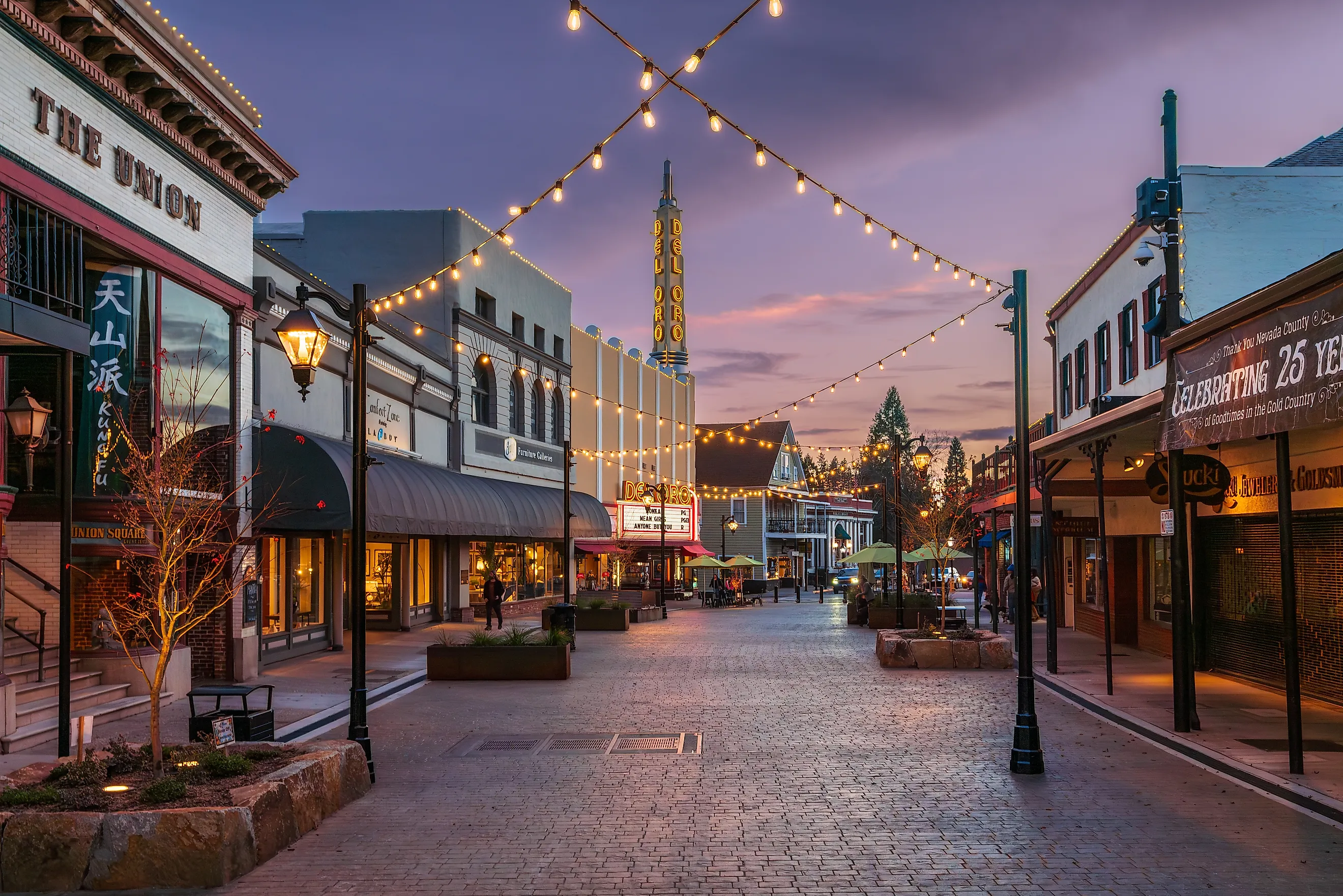
A town of artists and artisans, there is a thriving gallery and studio scene to explore in Nevada City. Considered to be California’s best-preserved Gold Rush town, Nevada City was listed on the National Register of Historic Places in 1985. The downtown commercial district centers along Broad Street and features boutiques, restaurants, cafes, and bars. The 19th-century National Exchange Hotel has been preserved as a boutique hotel, while the Nevada Theatre, established in 1865, is California’s oldest existing theatre building. For retirees, Nevada City is an attractive option from a financial perspective as well, with a median housing sale price of $525,000.
South Yuba River State Park offers hiking trails and historic bridges, as well as a historic Shell Gas Station near the visitor center. Scotts Flat Lake is located just outside of town, with hiking trails, fishing, camping, and a wide range of wildlife, including bears, deer, and eagles. The Malakoff Diggins State Historic Park was once home to the largest hydraulic mining site in the world. The park features North Bloomfield, a Gold Rush-era town that was once home to thousands, as well as over 18 miles of hiking trails for all skill and experience levels.
Fort Bragg

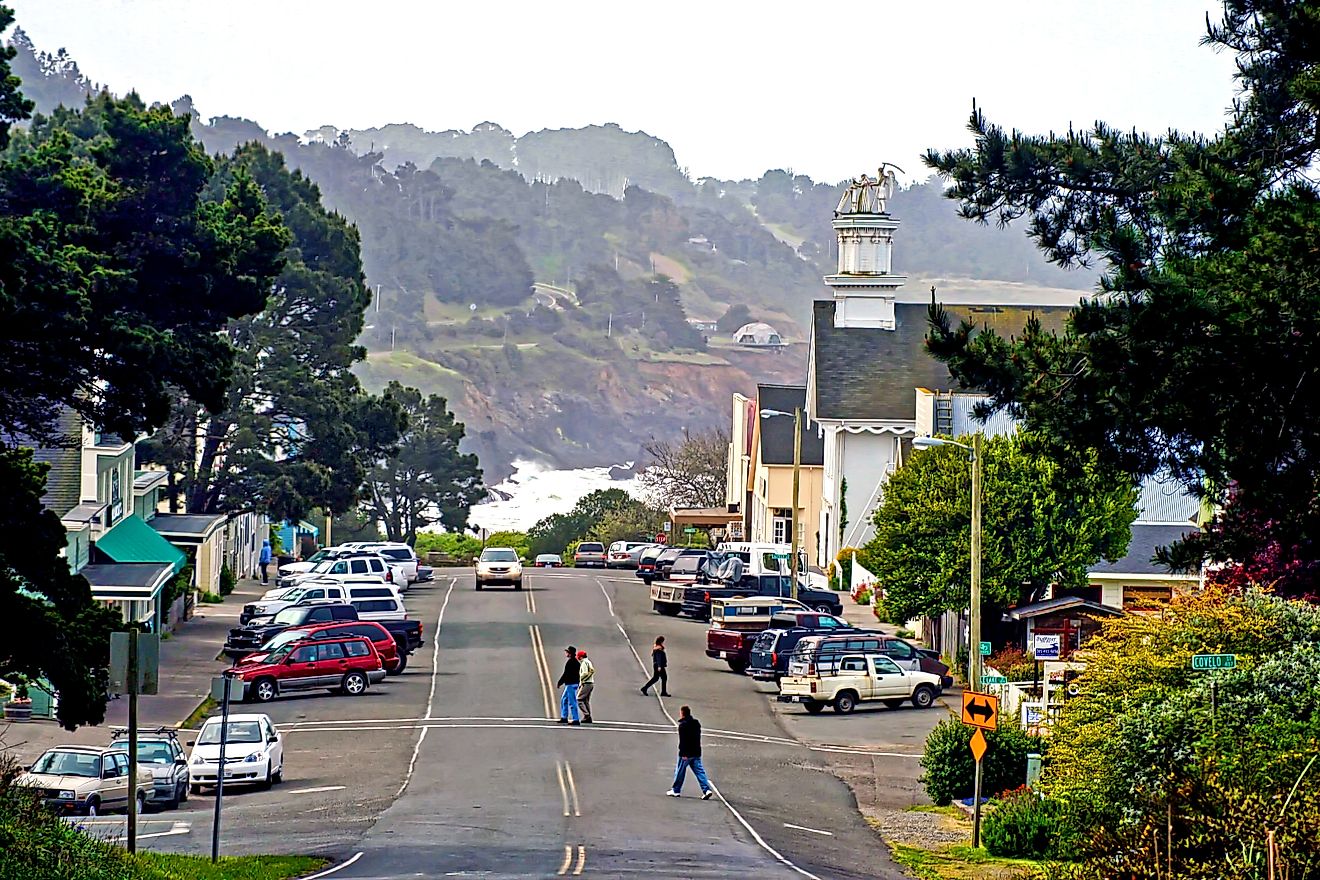
Much like the military base in North Carolina, Fort Bragg has a history as a garrison and was named for the same military officer, Braxton Bragg. California's Fort Bragg was also a lumber town, and its location on the north coast has provided it with a rich maritime history as well. As a place to retire, its small-town coastal charm is matched by its affordability, thanks to its median housing sale price of $507,500.
Fort Bragg’s Skunk Train is a heritage railroad, following the same route as it did when it started in 1885. Themed excursions, such as the Pumpkin Express and the Christmas Tree Train, are offered throughout the year, and railbikes are also available, which are one- or two-person rail vehicles operated by foot pedals along the tracks. Remnants of Fort Bragg’s lumber industry past are also still in use, such as the Company Store building on Redwood and Main, where lumber employees shopped for provisions. Today, the building has been transformed into boutiques and galleries, as well as cheese and vintners’ shops. Meanwhile, MacKerricher State Park features bluffs, dunes, tide pools, forests, and wetlands. It is also a great place for seal watching, fishing, hiking, horseback riding, and birdwatching, with over 90 species of birds calling it home.
Sonora

This town of nearly 5,000 is surrounded by the foothills of the Sierra Nevada mountains and combines its history in the Gold Rush with more modern small-town charm. The historic downtown area is lined with preserved 19th-century buildings, now home to galleries and theaters, as well as the annual Sonora Celtic Faire in March, which is the largest of its kind on the West Coast and features all manner of celebration in honor of the region's Celtic cultures. The Sierra Nevada offers beautiful landscapes, hiking trails, and access to lakes and rivers, and you are just about an hour from the legendary Yosemite National Park. As a retirement option, Sonora offers history and culture, a friendly community, and affordable housing, with a reasonably low median house sale price of $314,000.
Get to know your new hometown on the Downtown Sonora Walking Tour, which features 21 landmarks along a one-mile route, including the Sonora Chinatown Memorial, honoring the Chinese community that thrived during the Gold Rush. Sonora’s Opera Hall was originally built as a flour mill in 1879 and has been lovingly repurposed and restored to its 19th-century glory as a concert hall and event venue. In addition to Yosemite, Sonora provides access to the 898,000-acre Stanislaus National Forest, which boasts 78 lakes, over 1000 miles of hiking trails, and 811 miles of streams and rivers. For something less daunting and closer to home, the Dragoon Gulch Trail Head is a 2.5-mile hiking trail system winding through 35 acres of oak woodland.
Northern California Is An Idyllic Region for the Budget-Conscious Retiree
California is a state with many different faces, from huge cities and sunny beaches to deserts, mountains, wine country, redwood forests, and small seaside towns. For those seeking a peaceful retirement setting, the cost of living is a key factor. In Northern California, you will find an affordable version of California, with a variety of climates, lifestyles, and amenities. Whether you want to live by the ocean or in the foothills of the Sierra Nevada, Northern California offers many welcoming and affordable options for retirees.