10 Of The Most Adorable Small Towns In Tasmania
Tasmania is celebrated for its natural beauty, welcoming communities, and small towns filled with character. In places like Cygnet and Bothwell, visitors encounter lively festivals, historic landmarks, and traditions shaped by the island’s landscapes and heritage. Each of these Australian towns reflects its own story, from riverfront settings to rural villages shaped by Scottish settlers, showcasing Tasmania’s charm and offering travelers memorable experiences rooted in culture, history, and scenic surroundings.
Cygnet

The town of Cygnet is set between the D'Entrecasteaux Channel and the Huon River, and in January, it hosts over 350 musical acts at the Cygnet Folk Festival. Cygnet is also home to the Harvest Festival, featuring art exhibits, films, and a dance show. Steeped in fertile soil due to its surrounding waters, Cygnet's inhabitants value whole foods, showcased at their market on the first and third Sunday of each month, and work hand in hand to bring farm-to-table food to local restaurants, such as the Conservatory Café in Cygnet Old Bank.
Visitors can enjoy the local scenery at Burtons Reserve, which features a walking track, playground, and barbecue area. They can then head to the Hartzview Vineyard and Heritage Pickers Hut Village, a cellar door and historic museum that showcases what life was like for orchard workers and their families during the early part of the century.
Bothwell

Settled by Scottish farmers, Bothwell features tartan lurking around every corner. Home to over 50 heritage listed buildings, many of which still serve their original purpose today, Bothwell uniquely boasts tartan street signs alongside preserved Georgian and Victorian architecture. Bothwell Tartan is Tasmania's official tartan. Designed and developed by Isabella Sarock, it was inspired by the hues of the local landscape. Unsurprisingly, Bothwell hosts the Highlands Bushfest every year, an event celebrating the outdoors and country living. The festive weekend is full of hands-on demos, with local know-how and family fun.
Ratho Farm is Australia's oldest golf course. It was established on a working sheep farm, and the course was originally laid out in the 1830s by Scottish settlers who were homesick. Ratho Farm also offers boutique accommodation. St Luke's Uniting Church is one of the oldest churches in the country, built in 1831, and a landmark with a historic cemetery nestled in one of the most important and oldest settlements in Tasmania. There are two sculptures of male and female faces on either side of the entrance beneath the bell tower, sculpted by convict stonemason Daniel Herbert, the very same stonemason who has carvings that remain on the well-known Ross Bridge.
Evandale

The historic town of Evandale lies along the South Esk River, and is home to beautifully preserved historic buildings that line the streets with late Georgian and early Victorian architecture dating back as far as 1809. Evandale's High Street is considered one of Australia's most beautiful streets. Evandale hosts the National Penny Farthing Championship, where riders and fans have been flocking to the race every February since 1983.
Clarendon Estate features stunning gardens and riverfrontage, as well as a double-story portico. The pastoral homestead includes more than 17 acres of riverside parklands, where visitors can explore walled gardens, rural outbuildings, convict quarters, and a beautiful elm avenue. Also at Clarendon is the Australian Fly Fishing Museum, which celebrates the history of the sport with exhibits on equipment and artifacts. The museum is a draw for anglers looking to learn about fly casting techniques, fishing etiquette, as well as local ecology and aquatic insects.
Bicheno

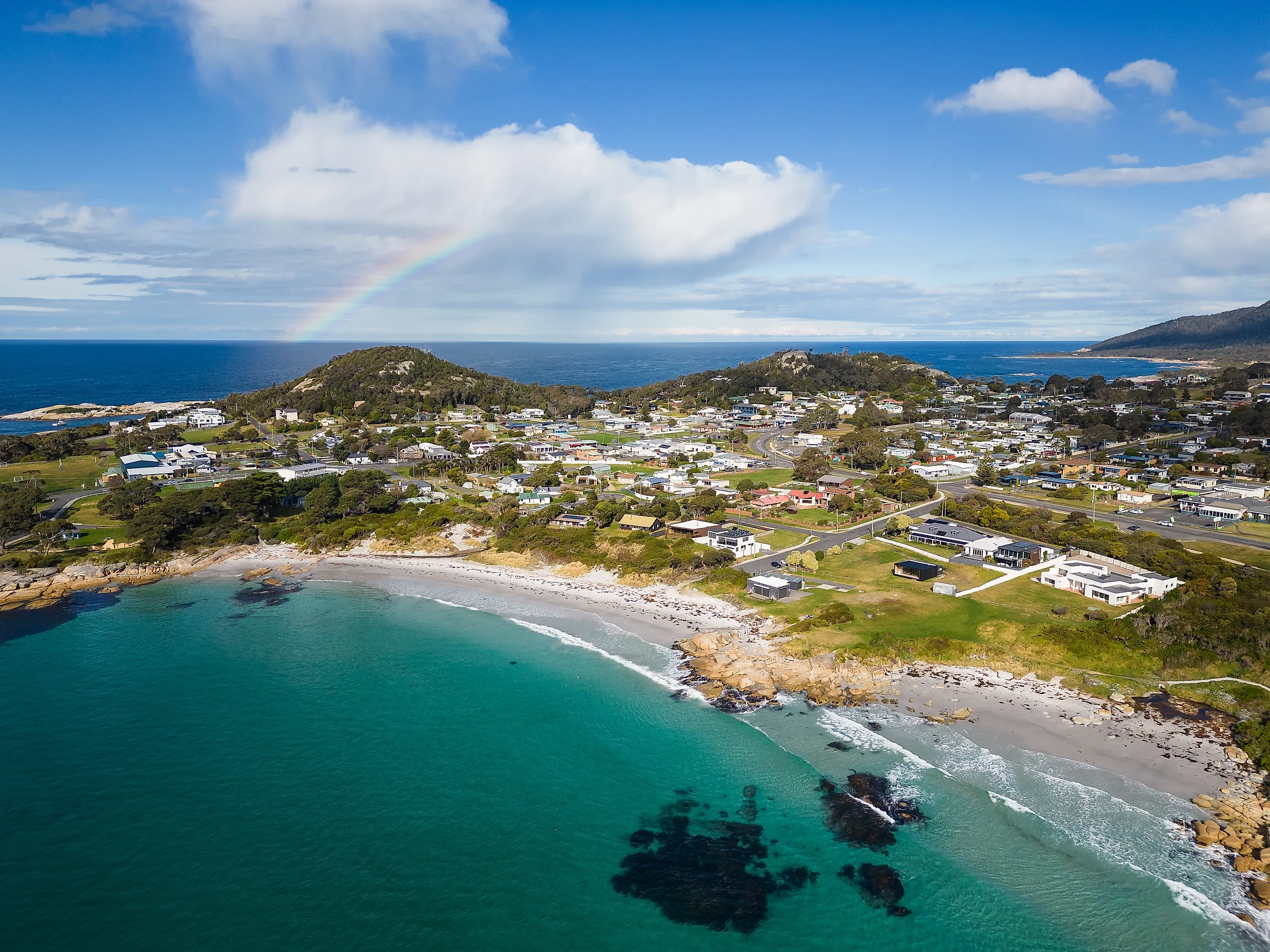
Tucked between two national parks, Bicheno is considered one of the best diving spots in Australia. Home to Governor Island Marine Reserve just offshore, stunning colorful reefs are filled with kelp and sponges. Bicheno offers glass-bottomed boat rides to see the marine reserve for those who still want to experience the underwater beauty, but are not equipped to dive. Bicheno also has a population of fairy penguins that can be seen when they return to their burrows after fishing. The Blowhole is another popular attraction in Tasmania, offering fantastic photo opportunities when the waves spray and crash into the orange rocks.
Douglas-Apsley National Park features waterfalls, native forests, and stunning walks that showcase many rare and endangered species, as well as a fantastic river gorge full of hidden swimming holes and Nichols Needles, a towering dolerite spire. The park is also a designated Important Bird Area and hosts 11 of Tasmania's 12 endemic species, including the flame robin, pink robin, and swift parrot. Freycinet National Park is home to one of Tasmania's most photographed spots along the white-sand beaches of Wineglass Bay. It is Tasmania's oldest park and is home to 49 species that are unique to Tasmania.
Wynyard

The riverside town of Wynyard is beloved by tourists and artists alike. One of the best times to visit is during the Wynyard Tulip Festival each year in October, a showcase of local art, culture, and flowers that is punctuated by a finale of fireworks and attracts tens of thousands of attendees. The town is also home to the Table Cape Sound Walk that winds between the lookout and Table Cape Lighthouse. Designed as a self-guided tour triggered by geo-location, Tasmanian artist Rachel Meyers composed the soundscape to be experienced as a multi-sensory walk through the vibrant landscape.
Visitors can also explore Fossil Bluff for a unique adventure. The 23-million-year-old coastal sandstone headland features bands of prehistoric fossils revealed in the cliffside as the tide rolls out on the swimming beach. Small pebbles of granite, chert, quartz, jasper, and agate can all be found in the sediment and on the beach. At nearby Doctors Rocks, you'll find a peaceful place to stop and admire the local flora and fauna where Seabrook Creek enters Bass Strait, as well as a colony of little penguins.
Strahan

On the banks of Macquarie Harbor, seated on the cusp of UNESCO World Heritage wilderness, is Strahan. The area provides habitat for eastern barred bandicoots, little penguins, platypus, wallabies, white-bellied sea-eagles, and bottlenose dolphins. This ancient rainforest is considered rugged and untouched land that has been home to the Toogee Aboriginal people for over 35,000 years.
Horsetail Falls is a 50-meter waterfall that is the keystone feature of a short walk that runs along the side of Mount Owen. Visitors looking to spot some of Tasmania's more unique creatures can take Nocturnal Wildlife Spotting Tours with Whitmore's Wild, or even experience an abandoned railway passage by visiting the Spray Tunnel. For a truly one-of-a-kind venture, visitors can go tobogganing at Henty Dunes, renting sleds to slide down the 30-meter sand dunes formed by the westerly winds, a phenomenon called the Roaring Forties that occurs between 40 and 50 degrees south of the equator.
Stanley

Stanley is a town lined with preserved stone cottages, colonial houses, and beautiful views. Visitors can wander through the self-guided Stanley Heritage Walk that explores the town's architecture, history, and culture through an interactive, multilingual tour. The tour gives a unique glimpse into the fishing village and is marked with interpretive signs for each of the landmarks throughout the town.
Highfield Historic Site is a 19th-century home that stands as it would have in the 1830s. With its Regency Period architecture, the house has been restored and preserved by the state government. The site marks the first European occupation in North-West Tasmania, and the 9.5-acre property once comprised 350,000 acres of agricultural land. Visitors can explore the old homestead, as well as its surrounding buildings and gardens. A local landmark beloved by residents and visitors alike is a feature known as the Nut, a volcanic plug that stands 150 meters above the water, showcasing panoramic views from the top. Visitors can make the challenging hike or take a chairlift to the top of this defining feature in Stanley's skyline.
Grindelwald

Tucked into the Tamar Valley is Grindelwald, a town styled in the unique architecture characteristic of a Swiss village. Surrounding an artificial Lake Serene, the town is home to the Tamar Valley Resort with a shopping arcade that includes a diverse range of shops, an 18-hole mini-golf course, as well as its newest attraction, Splash Golf, where players try to hit at floating targets across the lake. Visitors can also rent paddle boats and canoes to explore the water, and Alpenrose Lakeside Bistro offers a wide array of dishes to suit every taste.
In the heart of town, the award-winning Village Olive Grove is a family-run orchard cultivating hundreds of Frantoio olive trees, a prized Tuscan variety known for producing robust, high-quality oil. Benefiting from the region’s warm, sunny climate and well-drained soil, the grove harvests early in the season and delivers its fruit quickly to a local press, ensuring maximum freshness, flavour, and overall quality.
Rosebery

In the shadows of Mount Black, Rosebery is a rainforest town whose history revolves around mining. Gold was discovered here in 1893, and its mine remains one of the area’s richest. Each year, the town hosts the Rosebery Festival, a four-day event featuring live theatre, music, poetry, parades, markets, exhibitions, and evening fireworks, all designed to showcase the spirit and achievements of the West Coast community. A highlight is the Colour Run, in which participants are doused with vibrant powder in a true expression of joy and celebration.
No matter the season, visitors can explore Montezuma Falls, just outside of Rosebery. The falls are among the tallest in Tasmania and have a suspension bridge that can be traversed from either side. Meanwhile, mountain bikers flock to the town to ride the Sterling Valley Track that winds down Mt. Murchison into Rosebery, and more leisurely adventures await at Rosebery Golf Club, a 9-hole course that's said to be the steepest in Australia.
Deloraine

Deloraine is bordered by the Meander River and features picturesque historic buildings showcasing Georgian and Victorian architecture. Its variety of bakeries, restaurants, and cafes is also a draw for tourists and locals alike. The town also hosts the largest working craft fair in the entire Southern Hemisphere! The Tasmanian Craft Fair spans three days across four venues, with more than 225 vendors showcasing their work. The riverside town is also home to the Deloraine & Districts Folk Museum, set inside a house built in 1856. The original family cottage was converted into an inn in 1863, and now tours of the establishment offer a glimpse through the cottage, pub, the Jimmy Possum snug, and an exhibition gallery. There is also a blacksmith shop, vehicle shed, garden, and small dairy outside to experience.
On display year-round is YARNS, an artwork created by over 300 locals. The piece is comprised of over 650 feet of hand-dyed silk and took over 10,000 hours to complete. Visitors can attend an audiovisual presentation about the installation that loops every thirty minutes and tells the story of the region's history. The Great Western Tiers Sculpture Trail is another art installation that winds through the town and along the riverbank to a variety of statues, celebrating the region's diverse natural beauty. There is also the Kooparoona Niara Cultural Trail that features artworks, native plantings, and bush tucker inspired by Tasmanian Aboriginal cultures.
Tasmania, Where Beauty and Community Collide
Travelers exploring Tasmania will find unforgettable moments in towns such as Evandale and Stanley, where preserved architecture, cultural celebrations, and striking landscapes shape the local scene. These communities offer a chance to slow down, appreciate regional history, and connect with the island’s creative spirit. Each destination provides a warm welcome and reveals a different facet of Tasmania’s distinctive small-town appeal.