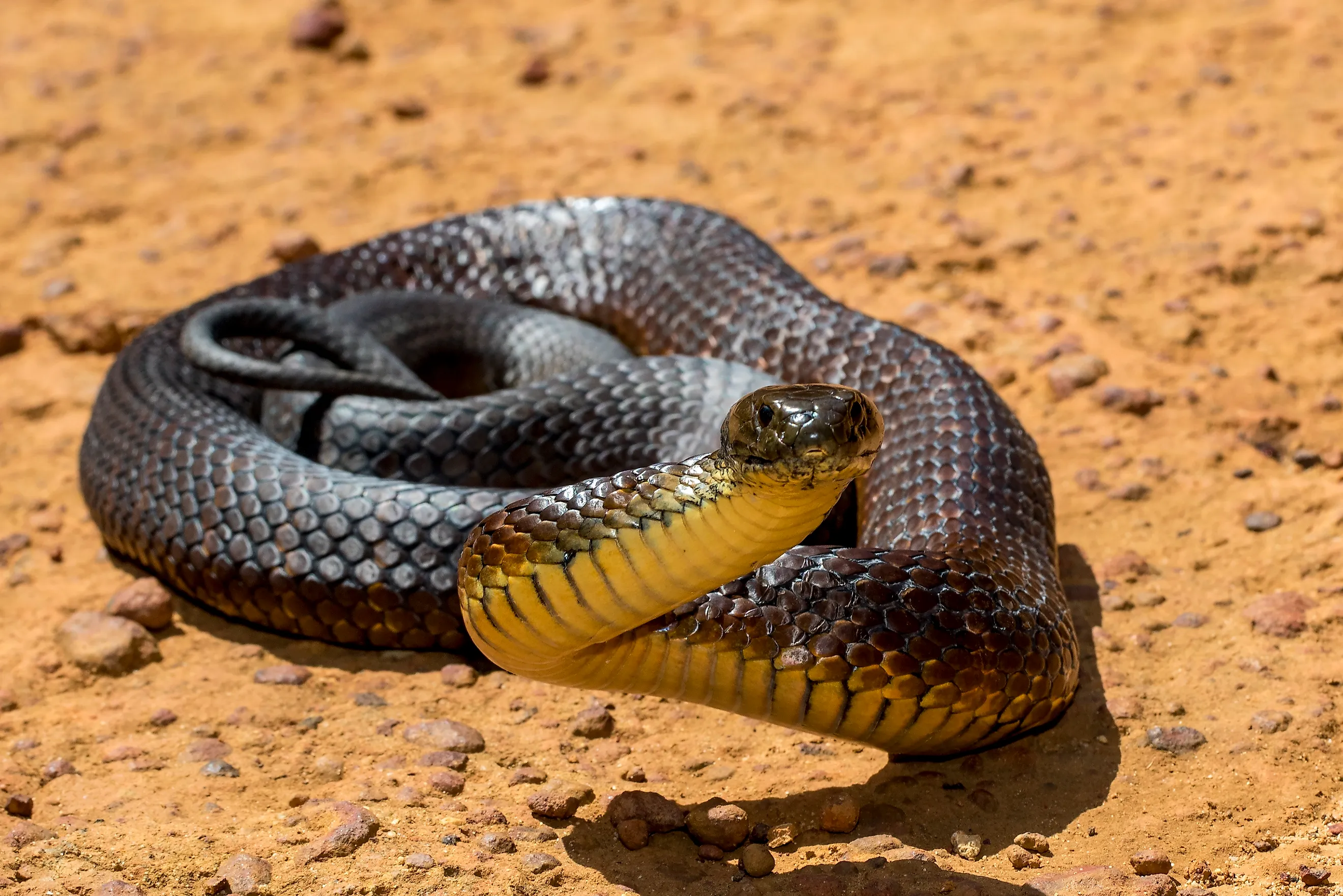
Tiger Snake
Found in various areas of Australia, Tasmania, and offshore surrounding islands, is an amazing species known as the tiger snake (Notchis scutatus). This serpent is the Australian cousin of the cobra family and is known for its multiple variations and powerful venom. Recognized subspecies of the tiger snake include the Eastern tiger snake (Notechis scutatus scutatus), the Black tiger snake (Notechis ater occidentalis), Krefft’s tiger snake (Notechis ater ater), Peninsular Tiger snake (Notechis ater niger), Tasmanian tiger snake (Notechis ater humphreysi), and the Chappell Island tiger snake (Notechis ater serventyi). This proliferation of subspecies is due to geological and climate changes over the past 6,000 to 10,000 years. Similar to what Darwin observed in the Galapagos, these isolated populations respond to different environments, leading to changes in their color patterns, sizes, and ecologies. Read on to learn more about this diverse and fascinating species.
Range And Habitat

Tiger snakes can be found in many different places, including southern areas of mainland Australia, most habitats in Tasmania, and offshore islands like Mount Chappell Island, Chalky Island, and Great Dog Island, to name a few. Generally speaking, tiger snakes can be found in wet marshes, creeks, and habitats surrounding waterways, as well as rocky areas and grasslands. If you see a tiger snake and think you might run into the same snake again in a week, think again. Tiger snakes generally don’t stay in the same place for more than 15 days. Since tiger snakes, like other reptiles, cannot regulate a constant body temperature, they often warm themself on rocks and even roads. Can’t seem to find any snakes during the winter? That would be because tiger snakes become inactive over the winter months, entering a state called brumation and retreating into rodent burrows, hollow logs, and tree stumps. There have been times when up to 26 juvenile snakes have been found in the same place sharing a shelter through these cold months.
Physical Description

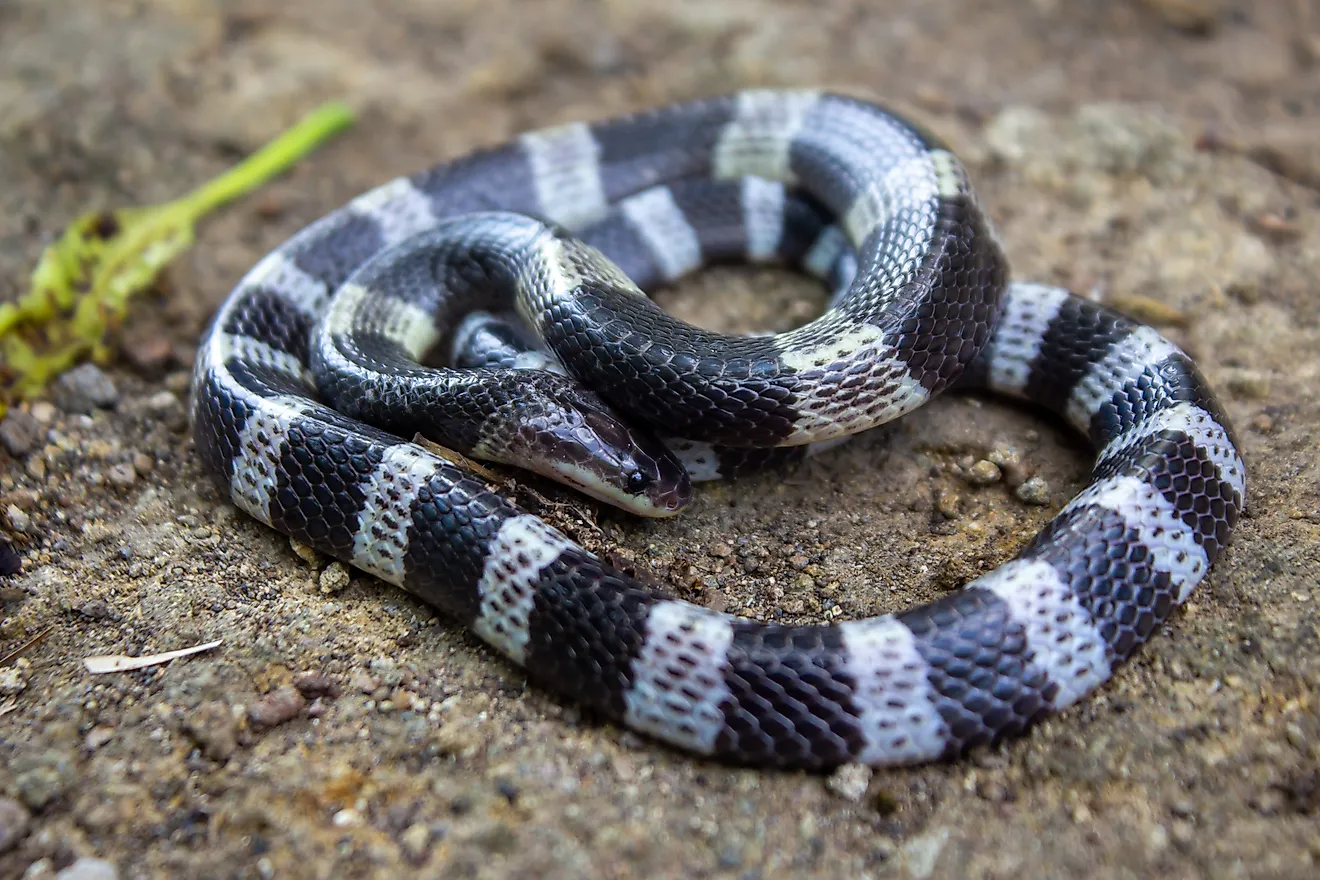
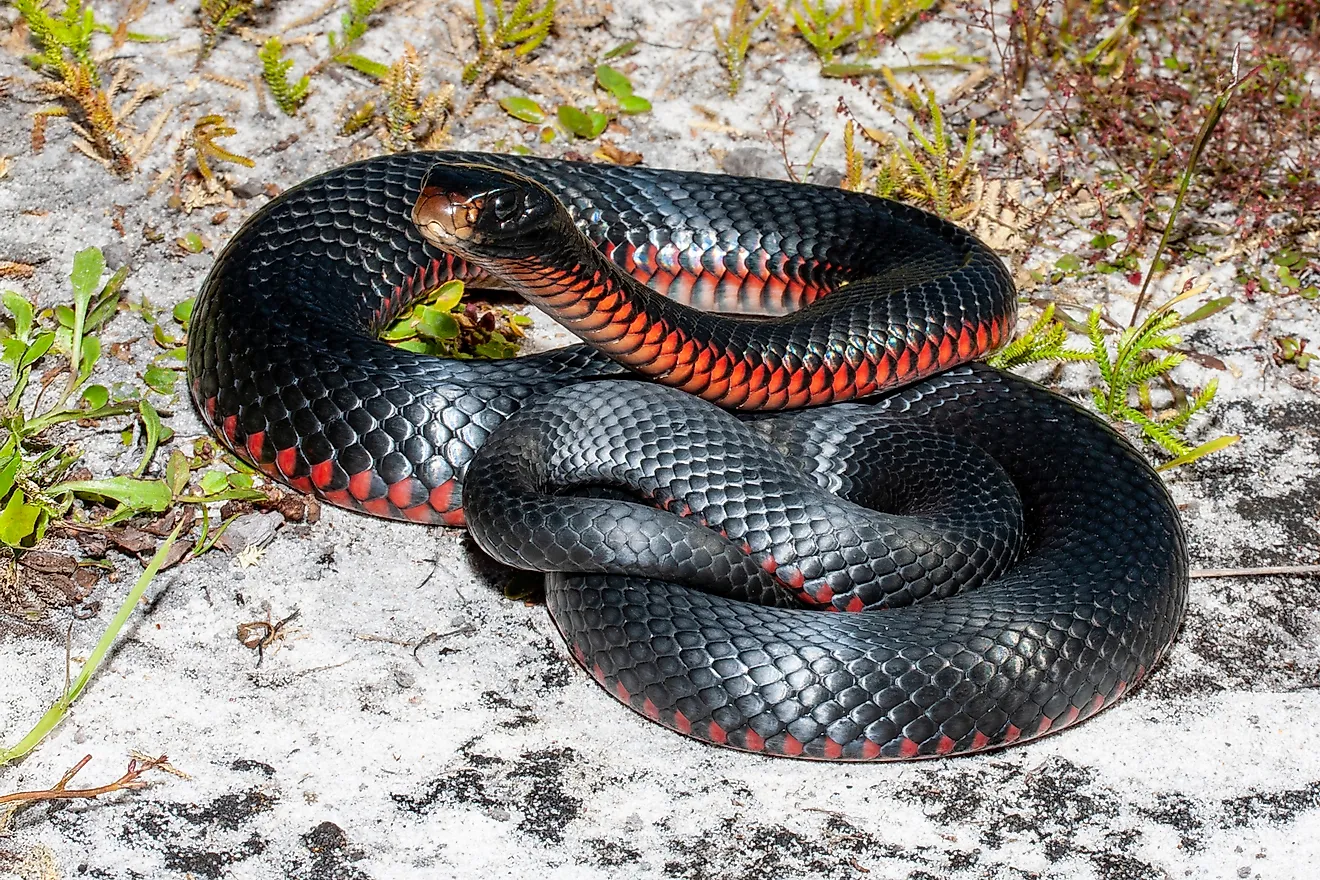
Tiger snakes, as varied as they are, also do not have a uniform look. The coloration of tiger snakes varies from black to yellow or orange with grey bands, to sandy grey with no bands. There are black tiger snakes with no bands or faint yellow to cream bands. There are also dark olive snakes with yellow bands. Generally, most tiger snakes have bellies that are pale yellow, white, or grey. Sometimes these snakes get confused with a copperhead snake due to overlapping size descriptions and habitat preferences. Speaking of sizes, in Tasmania, tiger snakes can reach up to nearly five feet in length. Meanwhile, on Chappell Island, Tiger snakes can grow up to a whopping six feet. On average, male tiger snakes grow larger than females and have larger heads. Their appearance can also change based on the season and the maturity of the snake.
Venom

Due to their proximity to humans, tiger snake bites are among the most common snake bites in Australia. Getting bitten by one is not something to be taken lightly. The tiger snake has venom that is considered extremely dangerous, and they have a lot of it. The average yield of venom is around 35mg, and the record amount of venom yielded was 180mg. This venom is both neurotoxic and a coagulant, meaning that the venom can affect the central nervous system, cause muscle damage, and cause blood clotting. This breakdown of muscle tissue can also lead to kidney failure. If untreated, within the first 30 minutes to two hours after being bitten, victims experience tingling and numbness, excessive sweating, nausea, vomiting, headache, and dizziness. Symptoms then become drastically worse if the bite is untreated after two to six hours. Victims will begin to have difficulty breathing, progressive paralysis, blood clotting, muscle breakdown, and kidney damage. This may go without saying, but if bitten, immediately get to an emergency room.
Behavior

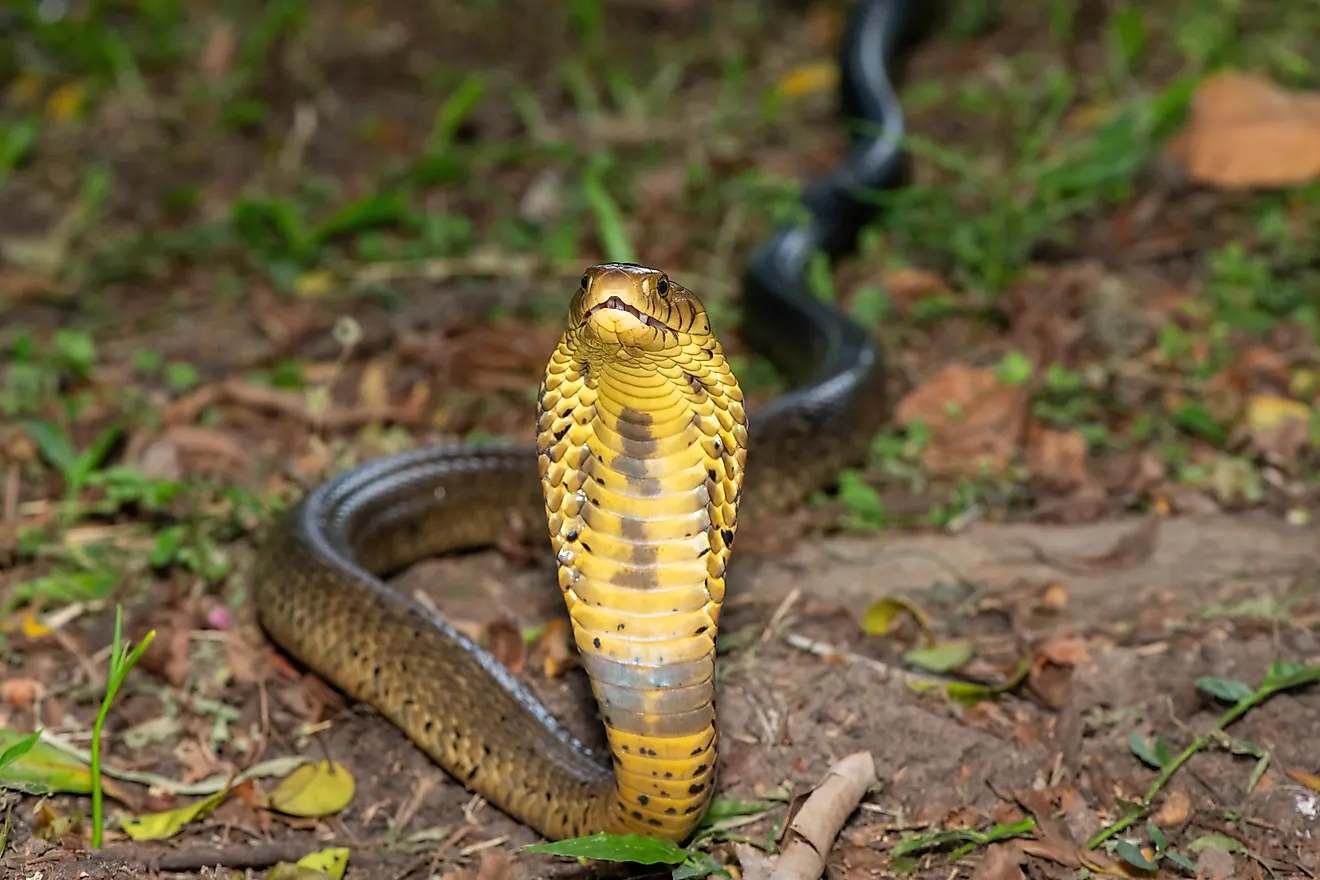
Despite the reputation tiger snakes have for being deadly, they are generally shy and prefer escape over conflict. If someone tries to provoke a tiger snake, it will first cower, trying to find a way out of the situation. If running is not an option, it will then try to bluff and scare whatever is provoking it. To accomplish this, a tiger snake will hiss loudly and inflate and deflate its body, flattening its head area to look larger. If bluffing does not work, a tiger snake will strike and try to bite to defend itself. While not an aggressive snake, it is still important to let it alone and avoid provoking it.
Food

Tiger snakes feed on a multitude of different species, reflecting the vast number of environments they can be found in. In areas where water is prevalent, tiger snakes feast on vertebrates, including lizards, smaller snakes, frogs, and sometimes fish. They are also known to eat small mammals such as rats, mice, and rabbits, as well as small birds. On some occasions, tiger snakes have been known to raid bird nests and will scale trees to get to them. If a person finds themselves walking in the woods in southeastern Australia and suddenly hears alarm calls from small birds, there is most likely a tiger snake in the trees. On offshore islands, some tiger snakes feed on small lizards and then later switch to muttonbird chicks, which sometimes is the only food source available. While these snakes are highly venomous, they have been observed constricting their prey.
Reproduction

So, how do these tiger snakes multiply? Well, sexual activity is sporadic throughout the summer but reaches a peak in late January and February. Mating may last for up to 7 hours. Unlike human mom-to-be's who often crave different foods, female tiger snakes stop eating around three to four weeks before giving birth. Tiger snakes are ovoviviparous, meaning they will hold eggs in their abdomen until they hatch and then will give birth to their young live. Typically, the litter size is often related to the mother snake's body size. One litter size has been recorded as high as 126 young, but on average is around 30. How does a tiger snake mom tend to their babies? Very easily, because they do not. There is no maternal care for tiger snakes, but the little ones are just fine, figuring out the whole survival thing quickly.
Importance to the World

Tiger snakes are considered keystone predators, and they keep populations of small animals and amphibians in check. Without their presence, the overall health of the habitats they reside in would be at risk. Due to how important they are within their ecosystem, they are a protected species. Tiger snakes don’t just help their environment, but they also handle pest problems that humans have, preying on rodents like rats and mice. Medically, tiger snakes also play a role. Their venom, while dangerous, is also highly complex and can be used to neutralize snakebites in humans, even if the snake that bit the person wasn’t a tiger snake.
Threats

While its venom is deadly, there are many animals that prey on tiger snakes. These predators include elapid snakes, butcherbirds, goshawks, harriers, ibises, kites, and kookaburras. Nesting gulls have been known to attack tiger snakes. On Carnac Island, 6.7% of tiger snakes were blind in one eye and 7% were blind in both eyes, and this is believed to be due to these nesting birds. Aside from other animals, tiger snakes also have parasites to worry about. These snakes can be a host for ticks, tapeworms, roundworms, tongue worms, and flukes. Unfortunately, one of the biggest threats to tiger snakes is humans. Even though tiger snakes are legally protected, humans fear snakes and will often kill a snake if given the chance. Tiger snakes are also at risk of being run over by cars while they sun themselves on the warm asphalt. Humans need to be good stewards of the environment and let these creatures be.
Beautiful Creatures
While some consider tiger snakes to be incredibly frightening, it is important to remember just how important they are to our planet. Without them, we might watch biodiversity in some of the most lush environments dwindle and die. It is important that these snakes remain protected, and for humans to try our best to give these creatures some space and respect.