This Historic Virginia All-American Road Is the Ultimate US Road Trip
If you’re considering taking a road trip to celebrate America’s 250th birthday this year, be sure to include Virginia’s Colonial Parkway on your shortlist. Though just 23 miles long, this scenic route traverses four centuries of fascinating history and passes through destinations that played crucial roles in the development of the United States.
Stretching across Virginia's Historic Triangle from the York River at Yorktown to the James River at Jamestown, the highway links America's earliest English settlement to the decisive victory over the British that led to independence.

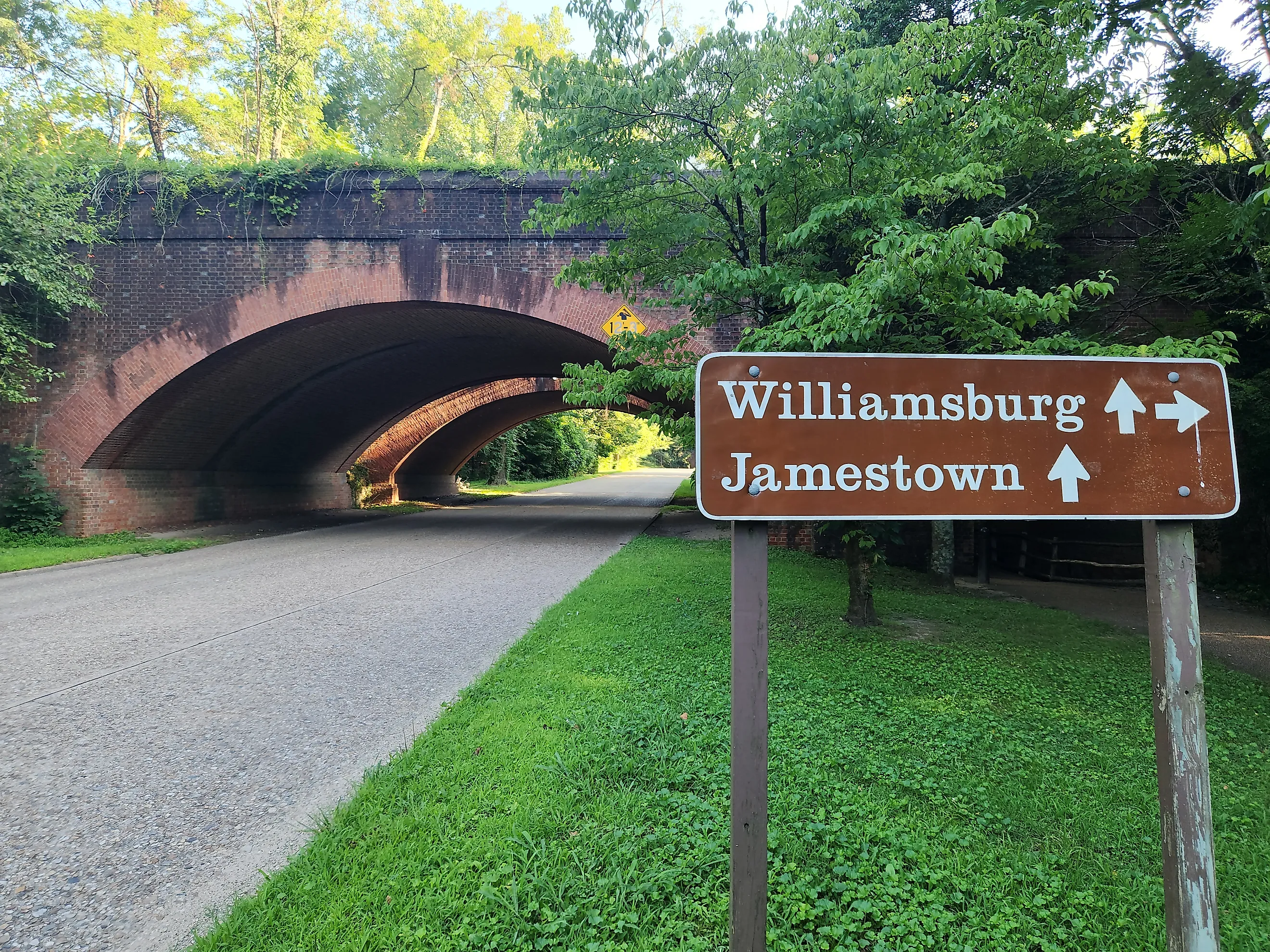
The roadway itself is a historic treasure. Designed and constructed by the National Park Service between 1931 and 1957, its sweeping curves and picture-perfect brick bridges were deliberately crafted to evoke a Colonial-era aesthetic. And as the road has no billboards, nor modern eyesores to distract you, it really is a one-of-a-kind drive.
The parkway also slices through the Colonial National Historical Park, an area that preserves historic sites and natural areas along the James and York Rivers. Multiple pull-offs along the route offer panoramic river views, while informative historical markers provide plenty of context. So, buckle up, take your time, stop often, and discover why Virginia is a must-visit in America’s semiquincentennial year.
Jamestown: Where America Began

Start your exploration of the Colonial Parkway at its western terminus: Jamestown Island. It was here in May 1607 that colonists established England's first permanent settlement in North America. Now part of Colonial National Historic Park, heritage site Historic Jamestowne occupies the original area of James Fort, with reconstructions and original building foundations providing a sense of its layout.

A highlight of a visit to Historic Jamestowne is the Archaearium. This state-of-the-art museum features displays of thousands of artifacts recovered from ongoing excavations, including weapons, tools, and personal items from the earliest colonists. Several skeletal remains from this first expedition, including a teenage boy whom researchers believe is Richard Mutton, bring home the hardships and tragedies of the colony’s early years. Ongoing archeological digs continue to reveal more clues about Jamestown’s early years.

Other notable sites here include the impressive Jamestown Tercentennial Monument, built in 1907 to commemorate the settlement’s 300th anniversary, along with bronze statues of Captain John Smith and Pocahontas. Island Drive, a scenic loop through marshes and woodlands departing from the Jamestowne Visitors Center, is a detour worth taking for its panoramic views and possible bald eagle sightings.
A short drive from Historic Jamestowne, the Jamestown Settlement features life-size re-creations of the original James Fort, a Powhatan Indian village, and reproductions of the three ships that carried the colonists across the Atlantic: the Susan Constant, Godspeed, and Discovery. Just before you get there, you’ll see the Jamestown Glasshouse with its demonstrations of traditional glass-making techniques.
Colonial Williamsburg

With Jamestown in the rearview mirror, follow the parkway along the James River and through dense forests of sycamore and oak. Tidal channels and marshes at Halfway Creek and King Creek offer opportunities to watch for birds such as herons and egrets, as well as to read the informative panels that explain the region’s historic and ecological significance.
The midpoint of the Colonial Parkway, Williamsburg was Virginia's colonial capital from 1699 to 1780. Set on a sprawling 301-acre site, Colonial Williamsburg is a fun place to stretch your legs. More than 600 buildings have been restored or reconstructed, with some of the best highlights located along the town’s car-free main thoroughfare, Duke of Gloucester Street.

Stroll along this mile-long cobblestone avenue, and you’ll have the chance to interact with countless costumed interpreters, many of them adopting the names and roles of real people known to have lived in Williamsburg in colonial times.
The Governor's Palace, constructed from 1706 to 1722, was home to seven royal governors and two early Virginia governors, including Patrick Henry and Thomas Jefferson. Other highlights include the Capitol, where legislators debated ideas that would eventually lead to the Declaration of Independence. Authentic workshops are also held here, where blacksmiths, silversmiths, tin makers, and tailors demonstrate traditional 18th-century skills.
Yorktown And The Battle That Won The War

The final leg of the journey heads east from Williamsburg toward the York River and Yorktown. It was here during the Battle of Yorktown that General George Washington and allied French troops forced the surrender of Britain’s Lord Cornwallis on October 19, 1781, effectively ending the Revolutionary War.
Located just before the town itself, the Yorktown Battlefield Visitor Center features displays of artifacts, including portions of Washington's headquarters tents used in the war. Self-guided tours lead past siege lines and earthworks, including Surrender Field and Moore House, where capitulation terms were negotiated. Across town, the American Revolution Museum at Yorktown offers immersive exhibits, a 180-degree surround-screen film, and outdoor recreations of a Continental Army encampment and a Revolution-era farm.

Riverwalk Landing on Yorktown’s waterfront offers a pleasant end to the adventure. This waterfront district features locally owned restaurants like the Water Street Grille and Riverwalk Restaurant, serving fresh seafood with great views of the Coleman Bridge and the York River. Bronze statues of Washington, Lafayette, Rochambeau, and de Grasse can also be found here, making for an ideal selfie to commemorate your road trip.
Take A Drive Through History
No scenic drive in America does a better job of immersing travelers in the country’s formative years than the Colonial Parkway. This unique Virginia scenic route provides an excellent opportunity not just to see some of the country’s prettiest preserved scenery, but also to spend a day (or a weekend) experiencing a little of what life was like before Independence. Though just 23 miles long, this journey through Virginia's Historic Triangle offers travelers a glimpse of pivotal parts of early American history that few other roads can match.