Where is the Oldest Bridge in the United States?
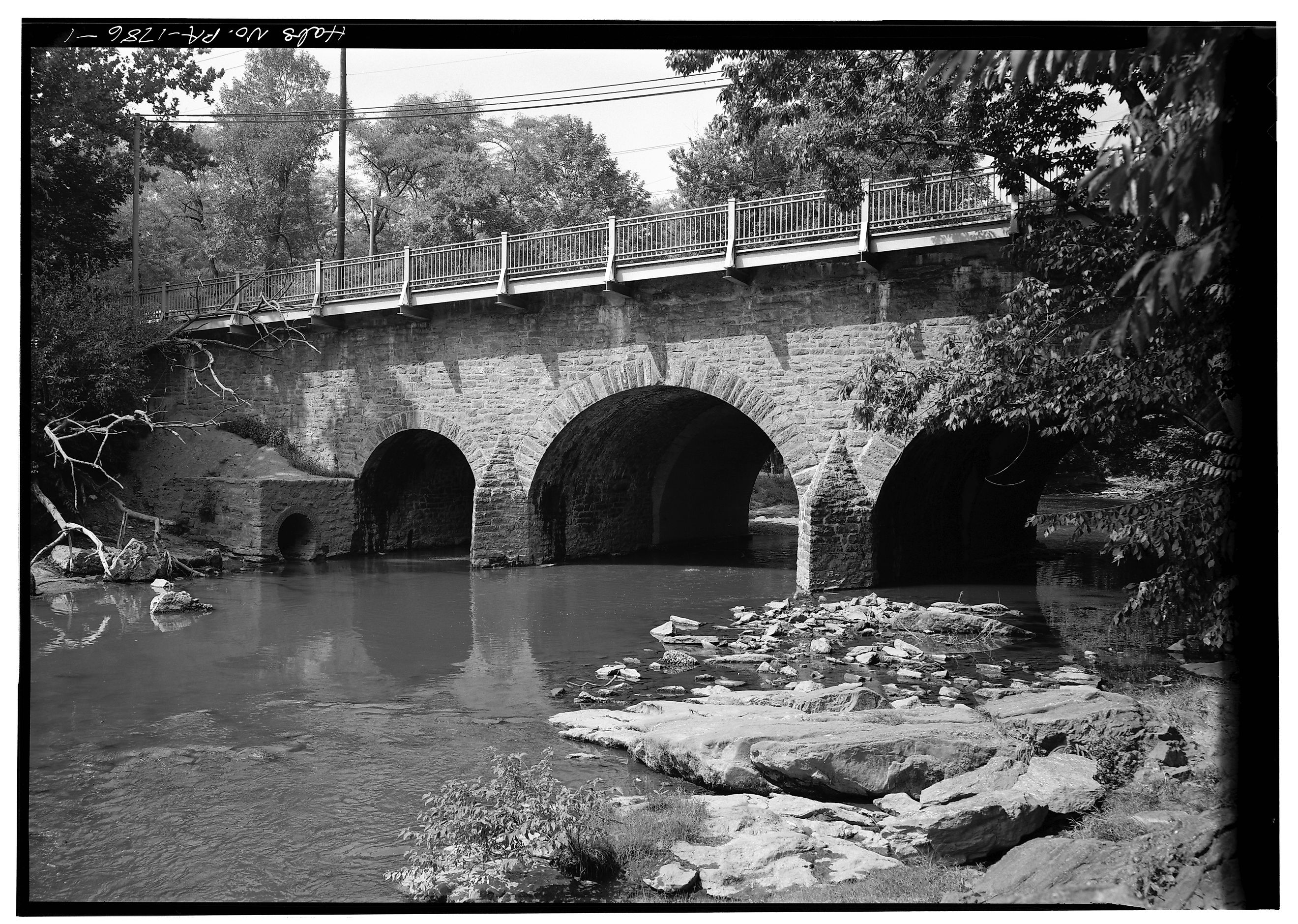
The Frankford Avenue Bridge, also called the King's Highway Bridge, the Holmesburg Bridge, the Pennypack Bridge, or the Pennypack Creek Bridge, is the oldest surviving roadway bridge in the United States. Built in 1697, the three-span, 73-foot twin stone arch carries Frankford Avenue (US Route 13) over Pennypack Creek, just north of Solly Avenue, in the Holmesburg section of Northeast Philadelphia. The American Society of Civil Engineers describes it as the first stone arch bridge built in the country and most likely the oldest stone bridge anywhere in the United States. That phrasing is worth pausing on, because "the oldest bridge in America" can mean several different things depending on what you are counting.
Construction Of The Frankford Avenue Bridge

The bridge was built after William Penn, the English founder of Pennsylvania, appealed to the colonial court in 1683 for a crossing to connect his estate to the growing city of Philadelphia. The General Assembly passed a measure on March 10, 1683, directing that bridges be raised over the creeks and rivers along the King's Highway, the colonial road running north from the southern reaches of Sussex County (now part of Delaware) toward the falls of the Delaware.
Every bridge was to be finished within eighteen months and built ten feet wide with railings on both sides, leaving room for cart and horse traffic. The work fell to the men living nearby, and anyone who refused to take part faced a fine of twenty shillings. The men of Holmesburg built the Pennypack crossing, which linked Philadelphia to northern towns such as Trenton, New York, and Boston.
Notable Travelers Who Crossed The Bridge

For much of the eighteenth century, travelers moving by coach or horseback between the New England colonies and Philadelphia passed over the Pennypack, among them Continental Congress delegates such as John Adams. The first stagecoach service between Philadelphia and New York began in 1756 and took three days; by 1783, a faster coach known as the Flying Machine had trimmed the trip to a single day. On April 24, 1775, at five o'clock in the afternoon, an express rider from Boston, five days on the road, is said to have crossed the bridge with news of the Battle of Lexington and the start of the American Revolution. In 1789, George Washington traveled the same route north to New York for the first presidential inauguration.
Improvements

A toll booth went up at the bridge's south end when the Frankford and Bristol Turnpike opened in 1803, and the road was paved the same year. The booth stayed in service until the city of Philadelphia took over the road in 1892. The original crossing was too narrow for two coaches to pass, so it was widened in 1893 to make room for trolley traffic, then widened again in 1950 for automobiles.
The bridge was named a National Historic Civil Engineering Landmark in 1970 and added to the National Register of Historic Places in 1988. It closed for about five months during a rehabilitation between March and September 2018, when crews rebuilt the sidewalks, repointed the stone masonry, and reconstructed the northern spandrel wall. The bridge reopened once the work was complete and remains in use today.
What Counts As The Oldest Bridge

Part of what makes the title slippery is that "oldest bridge" can point to very different structures depending on the kind of bridge in question. The Frankford Avenue Bridge holds the broad claim as the oldest surviving roadway bridge, but several other early bridges are still standing, and each owns a narrower record.
The Choate Bridge in Ipswich, Massachusetts, built in 1764, is generally regarded as the oldest documented two-span stone arch bridge in the country. Wooden bridges had crossed the same spot since 1641, but the stone structure has carried traffic for more than 250 years and joined the National Register of Historic Places in 1972.
For covered bridges, the record belongs to the Hyde Hall Covered Bridge in Glimmerglass State Park near Cooperstown, New York. Built in 1825, its 53-foot single span uses a Burr arch truss and is considered the oldest documented covered bridge in the United States, possibly tied with the Hassenplug Bridge in Union County, Pennsylvania, which dates to the same year.
The oldest metal bridge is Dunlap's Creek Bridge in Brownsville, Pennsylvania. Completed in 1839, it was the first cast iron arch bridge built in the country, designed by Richard Delafield and constructed by the US Army Corps of Engineers as part of the National Road.
The Oldest Bridge You Can Drive On

Age and accessibility are not the same thing. Many early American bridges survive only as footpaths, park features, or preserved landmarks that cars no longer use. The Hyde Hall Covered Bridge, for instance, now sits inside a state park rather than on a working highway. That raises a separate question: what is the oldest bridge you can still drive across?
The answer is again the Frankford Avenue Bridge. More than 320 years after it was built, it still carries US Route 13 over Pennypack Creek under a twenty-ton weight limit, which means the single oldest surviving roadway bridge in the country is also one you can drive a car across today. It is not alone in that respect. The Choate Bridge still carries a main street through Ipswich, and Dunlap's Creek Bridge still supports Market Street along the path of the historic National Road in Brownsville. But neither can match 1697.