5 Copperhead Snake Hotspots In Oklahoma
Oklahoma is quite a snake haven, hosting 46 native species, 7 of which are venomous. These mainly include rattlesnakes and, of course, copperheads, which can be found primarily along the state's eastern half, a region that more heavily features hills and woodlands as opposed to the dry prairies out west.
Today, we will highlight some of the most infested copperhead hotspots in Oklahoma, so that you can travel safely while also increasing your knowledge of this flyover state's underrated natural environment. How many of these destinations did you know have significant numbers of these cold-blooded predators?
Tallgrass Prairie Preserve

One of Oklahoma’s prime copperhead hotspots is the Tallgrass Prairie Preserve near Pawhuska. Known for its rolling hills and expansive grasslands, this area provides ideal habitat for copperheads, as well as a number of other snake species and kinds of reptiles that thrive in prairie environments and scattered wooded areas.
Especially popular with nature photographers, all visitors should be cautious during spring and early summer when snakes are most active in popular walking areas. But beyond snake spotting, the preserve is home to one of the country's few bison herds as well as hundreds of bird species.
Local hiking trails wind through the prairie, offering scenic views and opportunities to explore Oklahoma’s native flora and fauna. For those interested in history, Pawhuska also features the Osage Nation Museum and art galleries, making the region a true blend of natural and cultural exploration. Just watch your step!
Ouachita National Forest

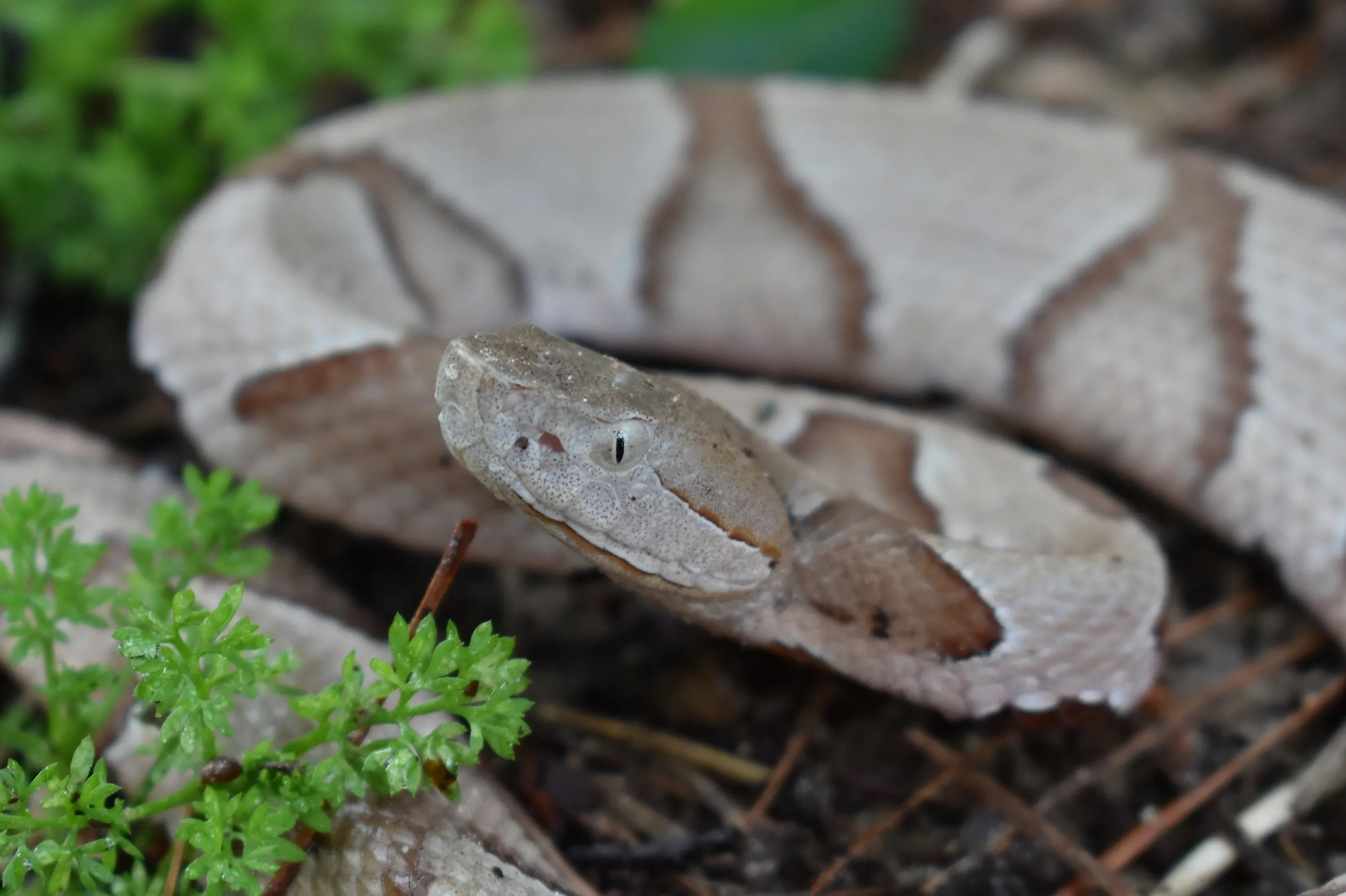
Mainly situated in the neighboring state of Arkansas, the Ouachita National Forest does, in fact, touch part of Oklahoma's southeast corner, too. The forest’s steep ridges, quiet waterways, and mixed pine-hardwood stands harbor a variety of snakes, with resident eastern copperheads favoring bouldered areas, fallen logs, and leaf litter where they can remain camouflaged and ambush small mammals and amphibians.
Popular hiking routes around Winding Stair Mountain and along the Talimena Scenic Drive pass through prime habitat, so stepping carefully around rock ledges and sun-warmed clearings is essential. Moreover, the region’s high humidity and dense understory also support other reptiles, from lizards to turtles dwelling in its scattered ponds and lakes, making it one of Oklahoma’s most biologically diverse landscapes.
Beavers Bend State Park

Another notable copperhead hotspot near the previously mentioned national forest is Beavers Bend State Park. The park’s dense hardwood forest and craggy terrain along the Mountain Fork River create textbook habitat for snakes and many other wild critters.
Copperheads, as mentioned, rely on leaf fall, tight rock crevices, and shaded trail edges for concealment that you simply don't get in the state's western prairies very often, particularly in late spring and early fall when temperatures are more moderate. Furthermore, local campsites, woodpiles, and lakeside paths can also attract rodents, which in turn draw snakes out in the open.
Footpaths around the river corridor and through the park’s backcountry pass directly through some of Oklahoma's most remote wilderness, so watching footing near logs and sun-warmed stones, regardless of where you are, is important, as help is not always close at hand here.
Wichita Mountains Wildlife Refuge

The Wichita Mountains Wildlife Refuge in southwestern Oklahoma is another key copperhead habitat, this time full of rocky ridges, wooded ravines, and grassy meadows, each of which creates perfect cover for these venomous snakes. Spring and summer are when activity periods at this locale are at their height, coinciding with peak hiking and camping season, so caution is advised on trails and near water sources.
The refuge also attracts climbers and wildlife watchers, offering panoramic views high above its notably rugged terrain and populations of bison, elk, and white-tailed deer. Birdwatchers can also look up to the sky to spot golden eagles and a variety of songbirds, as well as wild turkeys.
Robbers Cave State Park

One more known copperhead habitat is the Robbers Cave State Park just east of McAlester. The park’s sandstone cliffs, talus slopes, and wooded hillsides provide a deeply layered home where copperheads can easily survive and multiply. Like with most of the state, activity typically increases outside the height of summer, particularly on mild evenings when snakes move between basking sites and feeding areas, typically around the park's collection of lakes.
Understand before you head out that the network of trails that weave through local boulder fields and along scenic ridgelines pass directly through some of Robbers Cave's wildest zones, while campsites near wooded edges can also overlap with snake movement corridors. With that, it is highly advised that you try to stay on marked paths and within open spaces free of tall grass and/or brush.
Watchout for these Copperhead Habitats in Oklahoma's Wildernesses
Copperheads are clearly well established across Oklahoma’s eastern forests, hills, and water bodies, as well as select locations out west. Along with their nice scenery, this varied terrain provides consistent shelter and food for these venomous, cold-blooded reptiles. Given that their bites can be deadly without quick medical attention, awareness of their behaviours and favored habitats is a vital factor for visitors. As said before, stay on marked trails, watch your footing near rocks and logs, and remain alert during warm months when reptile activity increases.