4 Rattlesnake Hotspots In West Virginia
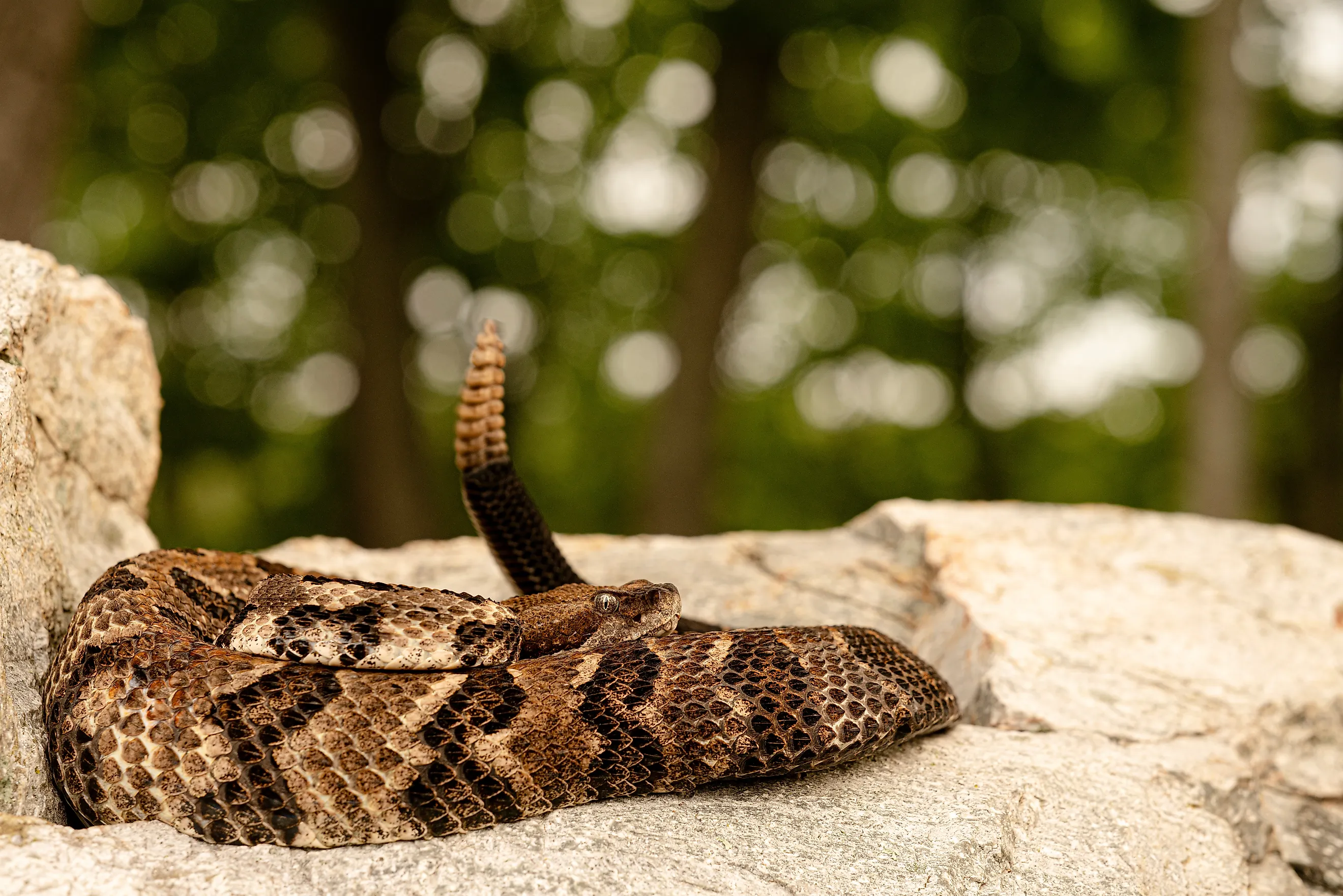
Given that around 78% of West Virginia is forest, it’s no wonder the state is a prime habitat for Timber Rattlesnakes, whose ideal territory is forested mountains. Contrary to their scary reputation, these vipers are reclusive by nature and like to tuck themselves away in areas with plenty of natural cover, such as the forest floor, rock crevices, and hidey holes under logs. While your chances of encountering a rattler in the parks and preserves of West Virginia are low, there are some areas where they are more prevalent than others. Below, we list the state’s rattlesnake hotspots so you can take precautions if visiting these scenic attractions.
Monongahela National Forest

Located in the Allegheny Mountains, the dense wilderness of Monongahela National Forest is ideal for Timber Rattlesnakes. The vipers are found throughout the forest, which spans nearly a million acres of unspoilt natural beauty and includes Spruce Knob, West Virginia’s highest peak at 4,861ft.
There are many ways to enjoy the stunning views and landscapes of the Monongahela National Forest, which contains recreation areas, campsites, lakes, and picnic facilities. There are two visitor centers in the park, Cranberry Mountain Nature Center and Seneca Rocks Discovery Center to help visitors plan their trip.

If you’re exploring the forest’s many hiking trails or recreation areas, stay on marked paths and watch where you put your hands and feet. On warm days, rattlers may be found basking in open areas, but they typically prefer to hide where they can’t be seen. You may hear them before you see them; their rattle provides a warning that you’re too close, so if you hear it, stop, try to identify where the snake is, and give it plenty of space.
New River Gorge National Park & Preserve

The New River Gorge National Park & Preserve protects over 70,000 acres of forested canyons and one of the oldest rivers on the continent. From whitewater rafting to climbing and from scenic drives to night sky viewing, there are plenty of attractions to choose from in the park. Highlights include the cascading beauty of the Sandstone Falls, the 1400ft high Grandview Overlook, and the New River Gorge Bridge. The latter is one of the most photographed places in the state.

There are two venomous snake species found at New River Gorge, the Northern Copperhead and the Timber Rattlesnake. Both are protected, meaning it is illegal to harm them. If you see a snake in the park and are wondering if it’s venomous, look at the shape of its head and eyes. Copperhead and rattlers both have broad, arrow-shaped heads with narrow necks and elliptical eyes. Be mindful when exploring the wooded, rocky, and mountainous areas of the park, as this is where rattlers are most commonly found.
Coopers Rock State Forest

Established in 1936 in West Virginia’s Cheat River Gorge area, Coopers Rock State Forest contains 11 structures listed on the National Register of Historic Places. It also boasts some of the most stunning views in the state, courtesy of high elevation overlooks dotted among the limestone cliffs. The park is open year-round and offers nearly 50 miles of hiking and biking trails, as well as cross-country ski routes. One of the more unusual sights at the park is the historic Henry Clay Iron Furnace, built in the 1800s and now accessible from a trail that winds through the forest to the grassy glade where the remnants of the furnace still stand.

Coopers Rock State Forest is a known hub for Timber Rattlesnakes, so much so that it’s been the focus of several studies led by the Division of Natural Resources, which found healthy populations within the park. Data from these studies is being used to find methods of safely relocating rattlers away from high-use areas to safer, more secluded habitats.
Canaan Valley Wildlife Refuge

Known as ‘A Little Bit of Canada Gone Astray’, the Canaan Valley Wildlife Refuge preserves the wetlands and uplands of a high-elevation valley in the Alleghany Mountains. Considered the most important wetland in the state, the park’s unique environment supports 288 animal species, including the Timber Rattlesnake, which is very at home in its higher-elevation mountainous terrain.
If you’re visiting the refuge, stop by the Visitors Center to pick up a trail map or check the events schedule. The park regularly runs educational tours and talks, including bird walks and winter hikes. There are 29 miles of hiking trails and a boardwalk in the park; routes range from the beginner-friendly 0.3-mile Wilderness Way, which travels through Red Spruce forest, to the more challenging 2-mile Brown Mountain Overlook, which has breathtaking views across the valley’s wetlands. Visitors can also fish, kayak, canoe, and paddle on the 14-mile stretch of the Blackwater River that flows through the refuge.
Respect For Rattlers
If you encounter a rattler in West Virginia, keep your distance, give it space to move away, and report your sighting to the Division of Natural Resources, which tracks populations throughout the state. As the state reptile, the Timber Rattlesnake plays an important role in West Virginia’s ecology, history, and heritage. Not only do they keep rodent populations in check and contribute to forest regeneration, but they are also a symbol of independence and resilience. With their numbers declining due to habitat loss and predation, West Virginia conservationists are working to better map their populations and behaviours so these remarkable creatures can continue to find a home in the mountain state.