4 Rattlesnake Hotspots In Virginia
Virginia’s rocky peaks, dense forests, and dramatic mountain ridges are a paradise for hikers and other outdoor enthusiasts, but they’re popular with another creature too. The Timber Rattlesnake is one of three venomous snakes found in Virginia and can be found in alpine areas as well as low-lying forests. There are two populations in the state. One is in the mountains of western Virginia, and the other is in southeastern Virginia, where they are known as Canebrake Rattlesnakes.
Despite their intimidating reputation, rattlesnakes are shy creatures. They prefer to avoid humans where possible and typically only bite when threatened. Reclusive and quiet, these snakes aren’t looking for a confrontation. If you’re visiting a rattlesnake hotspot in Virginia, it’s a good idea to learn their habits and behaviours so you can give them their space. The parks, preserves, and wilderness areas listed below are among the most beautiful destinations in Virginia. With some common-sense precautions, they can be enjoyed by both human visitors and the local wildlife.
Shenandoah National Park

Covering over 200,000 acres of pristine wilderness in the stunning Blue Ridge Mountains, Shenandoah National Park welcomes around 1.4 million visitors every year to wander its 500 miles of hiking trails, drive the iconic Skyline Drive, and explore the breathtaking backcountry of the Shenandoah Valley.

There are 18 snake species within the park, including the Timber Rattlesnake. Common throughout the park, they can be found in forest habitats, rocky crevices, and under leaf litter. If you’re hiking the trails, it’s essential to watch your step and be mindful that rattlers often curl up under logs and other natural debris. If you’re driving the scenic route along Skyline Drive, particularly after dusk, be careful, as you may see a rattlesnake slithering across the road in front of you.
Prince William Forest Park

The deep canopy of Prince William Forest Park in northern Virginia gives its resident rattlesnakes plenty of places to hide. The 15,000 acres of piedmont forest also cover part of Quantico Creek and are among the largest undeveloped parcels of land in the region. It’s a popular destination for both locals and visitors with 37 miles of hiking trails, paved cycle paths, camping and picnic facilities, and 18 miles of streams and man-made lakes perfect for fishing.

You may spot a rattlesnake sunning itself on rocks by the creek, tucked away in rocky crevices, or curled up on the forest floor. As always, give it plenty of room and move away slowly. When hiking, stick to the marked trails and watch where you place your hands and feet.
The Great Dismal Swamp

A huge wetland in southeastern Virginia’s coastal plain, the Great Dismal Swamp is a prehistoric ecosystem that preserves some of the most unique wildlife habitats in the mid-Atlantic region of the United States. There are multiple entrances to the Great Dismal Swamp National Wildlife Refuge, which contains boardwalks, trails, and roads. One of the best ways to view the refuge is from the Lake Drummond Wildlife Drive, a 6-mile self-guided driving tour that passes three boardwalks and takes visitors to Lake Drummond in the heart of the swamp.

Covering 113,000 acres, the Great Dismal Swamp National Wildlife Refuge contains cypress swamps, evergreen shrubs, and marshes that provide ideal habitat for the Canebrake Rattlesnake, which thrives in swamps, moist woodlands, and floodplains. Canebrakes feed on squirrels, rats, mice, and birds. They are active during the day in the cooler months of spring and fall, but mainly venture out at dusk and night during summer to avoid the heat.
Douthat State Park

Virginia’s park system owes a lot to Douthat State Park. Established in 1936, the park served as a design template for others across the state, earning it a place on the National Register of Historic Places.

Located outside Millboro in western Virginia, the preserve is a well-equipped recreation area with gorgeous mountain views, a 50-acre lake, a swimming beach, hiking trails, cabins, a gift shop, playgrounds, and picnic areas. There’s a lot of wildlife in the park, including bears and two venomous snake species, copperheads and rattlesnakes. If you’re exploring the park’s 40 miles of hiking trails, watch your step and stay on the trails. Pets are allowed on the trails, but must be kept leashed.
Snake Safety

Rattlesnake populations in Virginia have declined due to habitat loss and human predation. These unique snakes are now a state-endangered species in Virginia, meaning it is illegal to harm or kill them unless you are in imminent danger. And that’s very unlikely. Rattlesnake bites are rare in Virginia. In fact, only 15 deaths have been attributed to snakebites in Virginia over the last 30 years. Even if a snake bites you, you are very unlikely to die from the encounter, as most bites are treatable with prompt medical attention.

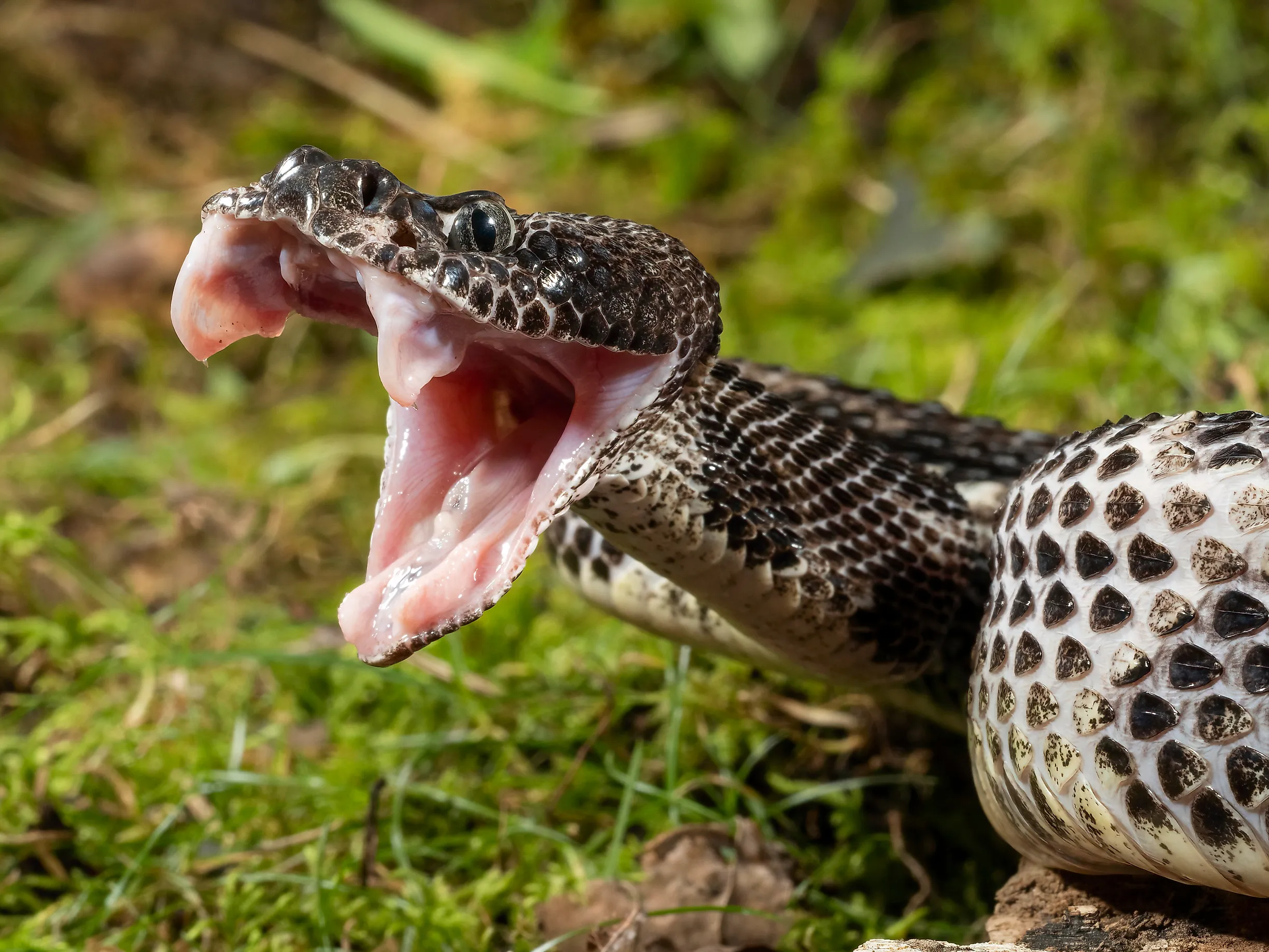
The rattlesnake risk is small, but not non-existent, so it’s essential to be mindful of your surroundings when enjoying Virginia’s natural attractions. Thankfully, rattlesnakes are easy to spot. Look for the signature rattle at the end of their tail, and also note their thick bodies, which can reach up to 5ft long. The snakes also have distinctive dark bands across their body. You can also identify a rattlesnake by its sound. The snake’s husky, dry rattle is a warning sound, produced by its vibrating tail. If you hear this noise, stop. Try to identify where the snake is, and back away to give it plenty of space to escape.
Virginia’s snakes play a vital role in maintaining the state’s vibrant biodiversity and the health of its natural environment. If you spot one in the wild, treat it with respect and enjoy the moment; seeing these fascinating creatures is a gift many tourists miss!