4 Rattlesnake Hotspots In New Jersey
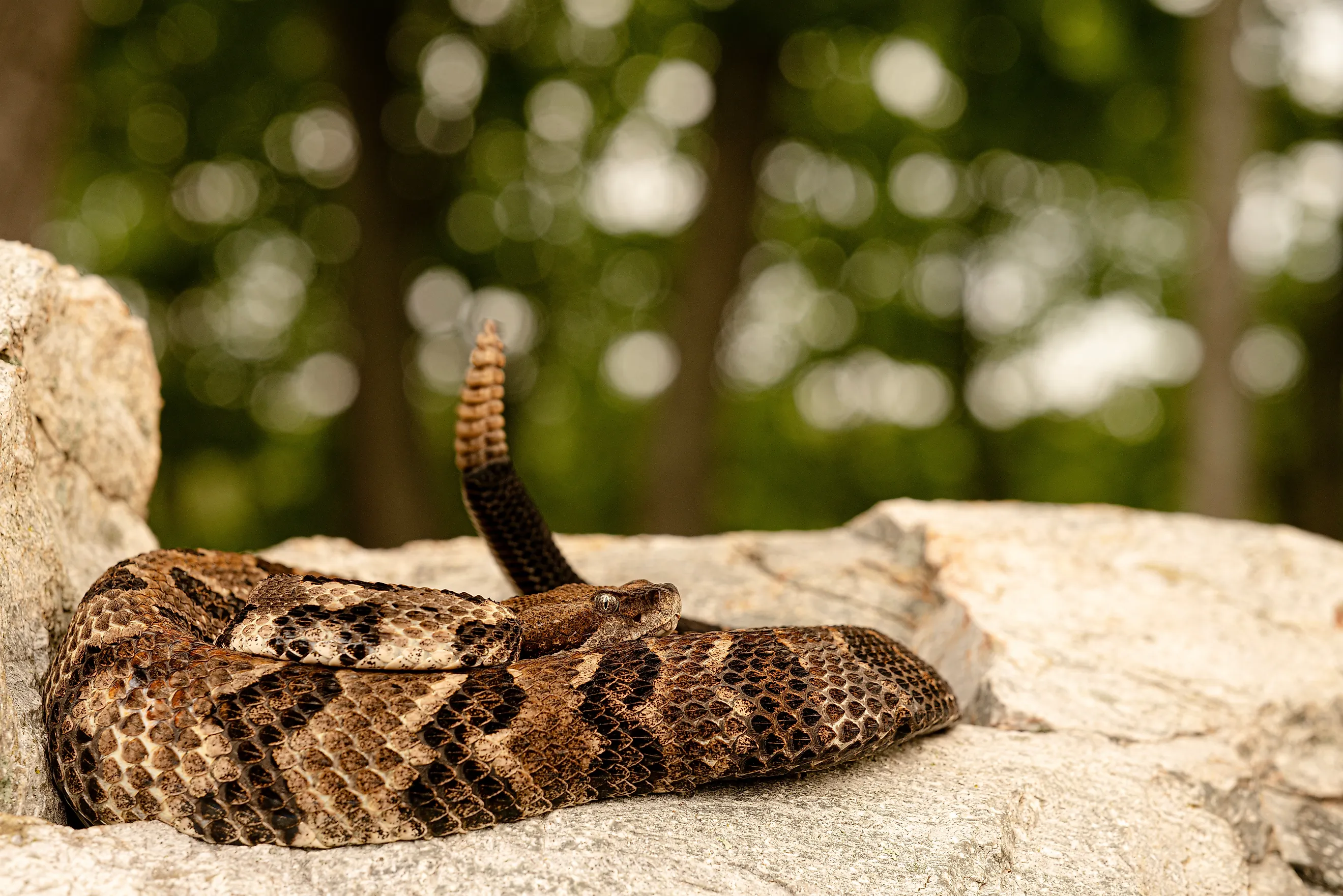
New Jersey's forests and rocky highlands support a stable population of timber rattlesnakes. Concentrated primarily in the northern and western parts of the state, these cold-blooded predators can often be seen sharing some of New Jersey's most popular outdoor recreation spaces with human visitors. Though timber rattlesnakes are listed as an endangered species in New Jersey, they remain active across several protected landscapes, and understanding where suitable habitat for these animals exists helps you stay safe from a potentially harmful bite. Appreciating these reptiles and their habitats also highlights the narrow geographic zones where true wilderness still persists in this otherwise urban state.
Delaware Water Gap National Recreation Area

Perhaps the best place to encounter rattlesnakes in New Jersey is the rugged terrain of Delaware Water Gap National Recreation Area. Stretching along the Delaware River on the state’s far northwestern edge, this wonderful landscape of forest-blanketed ridges, rock-covered outcrops, and steep slopes provides ideal denning and basking habitat for the timber rattlesnake in particular.
This species especially favors south-facing slopes where sunlight warms exposed stone. Generally, rattlesnakes here are most active between spring and early fall. With that, hikers exploring Mount Tammany or the Appalachian Trail segments that pass through the park should remain alert on warm days.

Its relatively low level of development and continuous forest cover make this national recreation area one of the state’s most significant strongholds for a wide range of wildlife, including snakes. The area spans more than 70,000 acres and includes a heavy concentration of waterfalls, historic sites, and extensive backcountry trails worth checking out for any East Coast outdoor adventurer.
Wawayanda State Park

Another established rattlesnake hotspot in northern New Jersey is Wawayanda State Park in Sussex and Passaic Counties. While rattlesnake encounters remain relatively uncommon here, the habitat is considered to be prime within the state’s upper range.
This park lies within the Highlands region, where rolling mountains, glacial boulder fields, and an abundance of exposed ledges again provide suitable habitat for the timber rattlesnake. The species often uses rocky ridgelines and secluded talus slopes for denning sites, emerging in late spring after snowy winters to bask on sunlit stone until later next fall. Additionally, local trails around Wawayanda Mountain and Bearfort Mountain pass through areas known for historic sightings, particularly during warmer months.
Including Wawayanda Lake, a lengthy network of hiking routes, and segments of the Appalachian Trail, Wawayanda's combination of terrain draws crowds of tourists, along with its surprising number of snakes.
Worthington State Forest

A lesser-known home for rattlesnakes is Worthington State Forest, located along the Kittatinny Ridge in Warren County. This forest contains many of the steep slopes, rocky clearings, and dense woodlands that are well-suited for rattlesnakes to thrive in. Sections of the Appalachian Trail pass through the forest here and cross typical ecosystems where these snakes commonly hunt and nest, so hikers should remain on the lookout.
Sharing space with Delaware Water Gap, Worthington State Forest also features the challenging climb up Mount Tammany, one of the most popular hikes in the region. Just watch where you place your hands and feet, as getting help in case of a bite is a bit tricky in this remote corner of the state.
Pyramid Mountain Natural Historic Area

Also rising above the Highlands in Morris County, Pyramid Mountain Natural Historic Area offers a different rattlesnake setting than the more remote forests of northwestern New Jersey. Sitting just about 25 miles outside of Newark and only slightly further from New York City, resident timber rattlesnakes tend to occupy the area's fractured rock faces scattered between popular loop trails. The area’s glacial erratics, including the well-known Tripod Rock, create pockets of exposed stone that often function as temporary basking sites.
Covering roughly 1,675 acres, Pyramid Mountain's proximity to densely populated metro areas makes it one of the more surprising places in New Jersey where snakes of any kind persist. Because the preserve sits closer to suburban development than many other strongholds, wildlife managers here also more closely monitor snake activity and discourage off-trail travel. However, most observations occur early in the morning, when temperatures are moderate, and foot traffic is lighter.
Rattlesnakes You Might See On A Hike in New Jersey
Rattlesnakes certainly remain confined to specific pockets in New Jersey, relying on its few intact forests and unique rock formations to survive. While run-ins are uncommon, as mentioned, awareness still matters in these vital ecological zones. These hotspots show off how even a densely populated state can still support a species often associated with wilder, more extreme regions of the country.