4 Rattlesnake Hotspots In Kansas
Last year was a good year for rattlesnakes in Kansas. A period of warm, wet weather in late summer meant the snakes were more active than usual, prompting the Kansas Department of Wildlife and Parks to issue a warning. Even in an average year, it’s a good idea to watch where you step in the Sunflower State. Kansas is home to four rattlesnake species: the timber rattlesnake, the prairie rattlesnake, the western massasauga, and the western diamond-backed rattlesnake. All are venomous and have a nasty bite, which can cause a severe reaction and, in rare cases, death.
While rattlesnake encounters aren’t common, and these snakes are more defensive than aggressive, it’s a good idea to know where they typically hang out and how to avoid them. Below, we list some of Kansas’s rattlesnake hotspots so you can be snake-smart while exploring the beautiful landscapes of America’s Midwest.
Kanopolis State Park

Kanopolis State Park in central Kansas has long been known as a rattler hotspot thanks to its mix of rattlesnake-friendly habitats, including woodlands, rocky bluffs, and secluded canyons. The rocky crevices of Horsethief Canyon are a particular draw for the snakes. Western diamond-backed rattlesnakes were illegally introduced to this area in the 1990s and are now sighted regularly in the park.

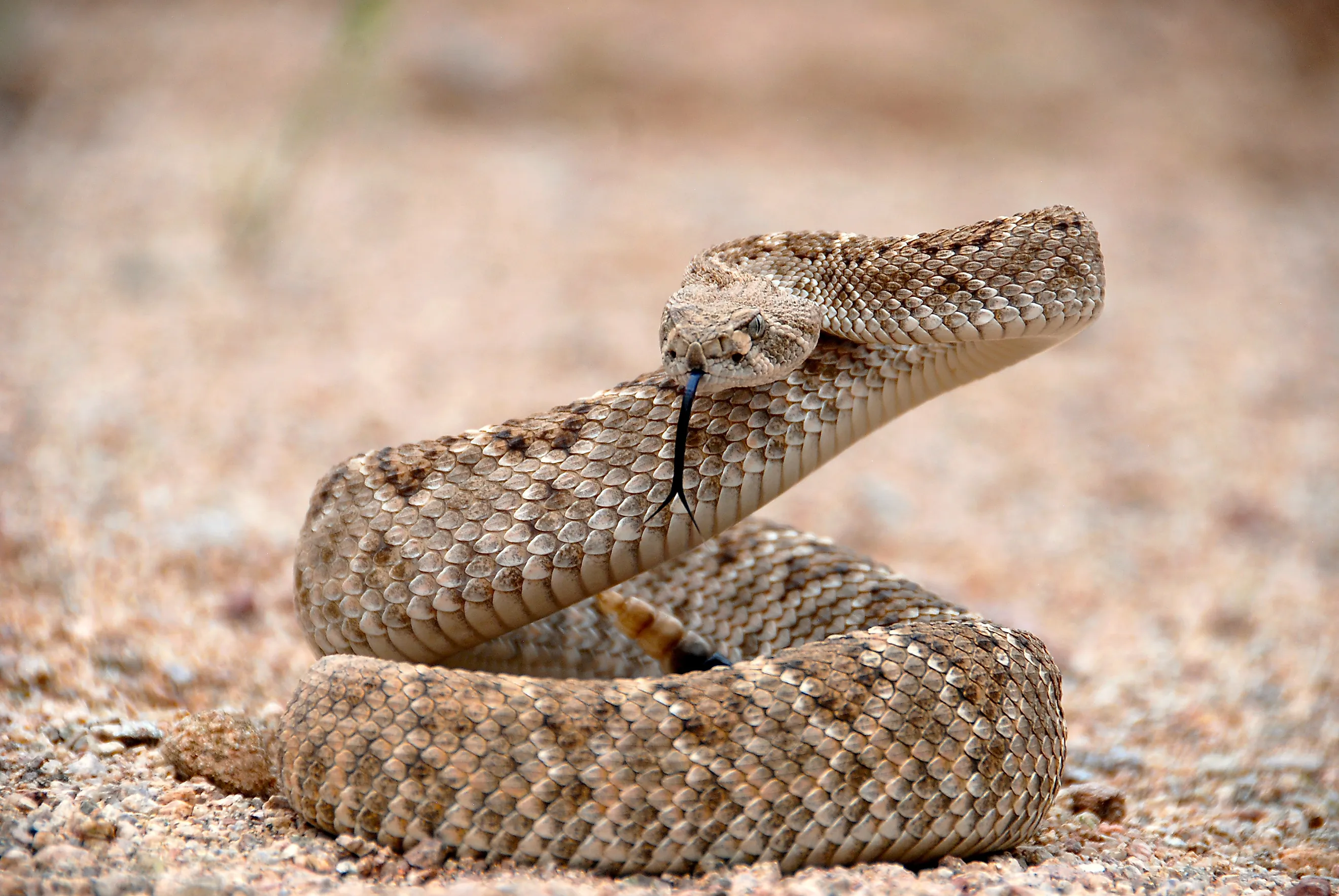
Western diamond-backed rattlers are named for the diamond-shaped blotches that run along their spine. Like most rattlesnakes, they are thick-bodied with triangular or arrow-shaped heads. They feed mostly on small rodents and are known to be one of the more aggressive rattlesnakes, standing their ground when disturbed rather than slithering away. You can reduce your chances of an encounter by staying on marked trails, paying attention to any rattlesnake warnings posted throughout the park, and wearing sturdy footwear that covers your ankles. If you see a rattler in the park, alert a ranger so they can safely move it away from high-traffic areas.
Tallgrass Prairie National Preserve

Kansas’ Flint Hills region is a very special place. One of the few remaining expanses of tallgrass prairie in North America, this unique ecosystem is protected by the Tallgrass Prairie National Preserve. Covering nearly 11,000 acres, the preserve contains open prairie, wildflower meadows, nature trails, a resident bison herd, an 1881 ranch house, and a historic one-room schoolhouse, which operated from 1882 to 1930.

The tall grasslands of the prairie make ideal habitats for Western Massasauga rattlesnakes, which have been sighted on the preserve. The snakes may be found in some of the park’s historic structures as well as on or near the trails, so it’s important to be vigilant wherever you are in the park. Rattlesnakes are most active between April and October and may be tucked into crevices or other hiding spots around rock walls, fences and in tall grass. Kansas’s smallest rattler, the massasauga, has a grey or light brown body and distinctive dark blotches along its back. They typically grow up to 30 inches long and are common throughout the eastern part of the state.
Clinton State Park

Douglas County, where you’ll find the 1,500-acre Clinton State Park, has the highest occurrence of timber rattlesnake sightings in Kansas. And no wonder. The limestone bluffs, wooded shorelines, and tallgrass prairie of the Clinton Reservoir and surrounding parkland make this an ideal habitat for rattlers.

The park has more than 20 miles of trails, scenic overlooks, a marina, a golf course, campgrounds, and a three-acre trout pond. It’s known as a birding hotspot with bald eagles, red-tailed hawks and American kestrels all found in the area. The Clinton Wildlife Area, at the north end of the lake, is a haven for animals such as deer, coyotes, bobcats, beavers, and mink. Timber rattlesnakes have been spotted on the trails in this area, so be careful where you step. Timber rattlers are the largest rattlesnake species in Kansas, growing up to 74.5 inches long. They have dark bands across their body and, often, a red stripe running down their spine. Typically shy and reclusive, these snakes prefer hiding away in forested hillsides or rocky outcrops. They are active during the day in the cooler seasons of spring and fall but become nocturnal in summer to try to avoid the intense daytime heat.
Cheyenne Bottoms Wildlife Area

Covering almost 20,000 acres of marshlands northeast of Great Bend in central Kansas, the Cheyenne Bottoms Wildlife Area is a tranquil preserve that’s particularly popular with birders. The refuge’s high concentration of migratory species, including waterfowl, sandhill cranes, bald eagles, great blue herons, and egrets, has earned it a reputation as one of the best birding spots in the state.

Visitors can also camp, fish, or walk the trails to enjoy this pristine wetland, but be careful, the area is also home to two Kansas rattlesnakes, the prairie rattlesnake and the western massasauga, so take care if walking in grassy areas around the wetlands. Of the two species, massasaugas are the most common — one researcher even recorded seeing a dozen of the vipers in a single day.
Being Snake-Aware

There are a lot of myths and misconceptions about rattlesnakes. Contrary to their scary appearance and reputation, the snakes aren’t typically aggressive. They would much prefer to get out of your way than to bite you. If they’re disturbed, they will often, but not always, rattle their tail as a warning sign. If you hear that noise while on the trail, stop and try to locate the snake. Move away and keep your distance while giving it time to escape. If you are bitten, don’t panic. Most medical facilities in Kansas carry antivenom, and bites are rarely fatal when treated promptly.
There’s no reason to avoid the outdoors in Kansas. Staying observant, watching where you put your hands and feet, and sticking to marked trails will ensure both humans and snakes can safely share the state’s many parks and preserves.