5 National & State Parks In Kansas You Have To Visit
Kansas, a diverse midwestern state, has so much to offer visitors, from the pastoral beauty of the gently rolling Smoky Hills to the ethereal magic of the Badlands. Get to know the sunflower state’s unspoilt wilderness areas and rich heritage with a trip to one of its many parks and preserves. Kansas is home to 28 state parks and five sites managed by the National Park Service. Below, we take a look at some of the highlights of its park system, uncovering the hidden gems that you might miss. Whether you’ve an afternoon to spare or a few days to look around, it’s well worth putting these parks on your Kansas itinerary.
Wilson State Park, Sylvan Grove

Nestled in the rolling Smoky Hills of northern Kansas, Wilson State Park is known as one of the best water recreation destinations in the state thanks to its pristine reservoir. The park has more to offer than swimming and boating, however. The mile-long Cedar Trail is a year-round accessible walking path with gorgeous views over the lake. It’s an easy hike perfect for daytrippers. If you’re looking for more of a challenge, bring or rent a bike and test your skills on the 22-mile Switchgrass Mountain Bike Trail, known as one of the best mountain biking routes in the state.
If you are visiting the park to get in the water, there are two swimming beaches; one is located in the Otoe Area by the Yarrow Campground, and the other is on the south shore by the Wheatgrass Campground. You’ll find the Lake Wilson Marina in the Hell Creek Area, which provides boat rentals, camping, and fishing gear. Knotheads Bait and Tackle, located on Shoreline Drive, provides kayak, paddleboard, and canoe rentals, as well as fishing supplies. Wilson State Park is open year-round, and the park office is open Monday through Friday, 8 am to 4 pm. Visitors need a permit for park use and overnight stays.
Brown vs Board of Education National Historic Site, Topeka

In 1954, the US Supreme Court ended racial segregation in public schools with a landmark ruling in the case of Brown vs Board of Education. This significant moment, a major victory in the push for desegregation across the country, is commemorated at the Brown vs Board of Education National Historical Park in Topeka.
The park’s visitor center is housed in the Monroe Elementary School, the all-black school at the center of the Brown case. Learn more at the park’s extensive exhibit gallery that follows a detailed timeline of the events leading up to the Brown vs Board of Education decision and its aftermath. The park also has a gift store, nature trail, and picnic facilities. Entry to the park is free and the site is open year-round, from Tuesday to Saturday.
Mushroom Rock State Park, Marquette

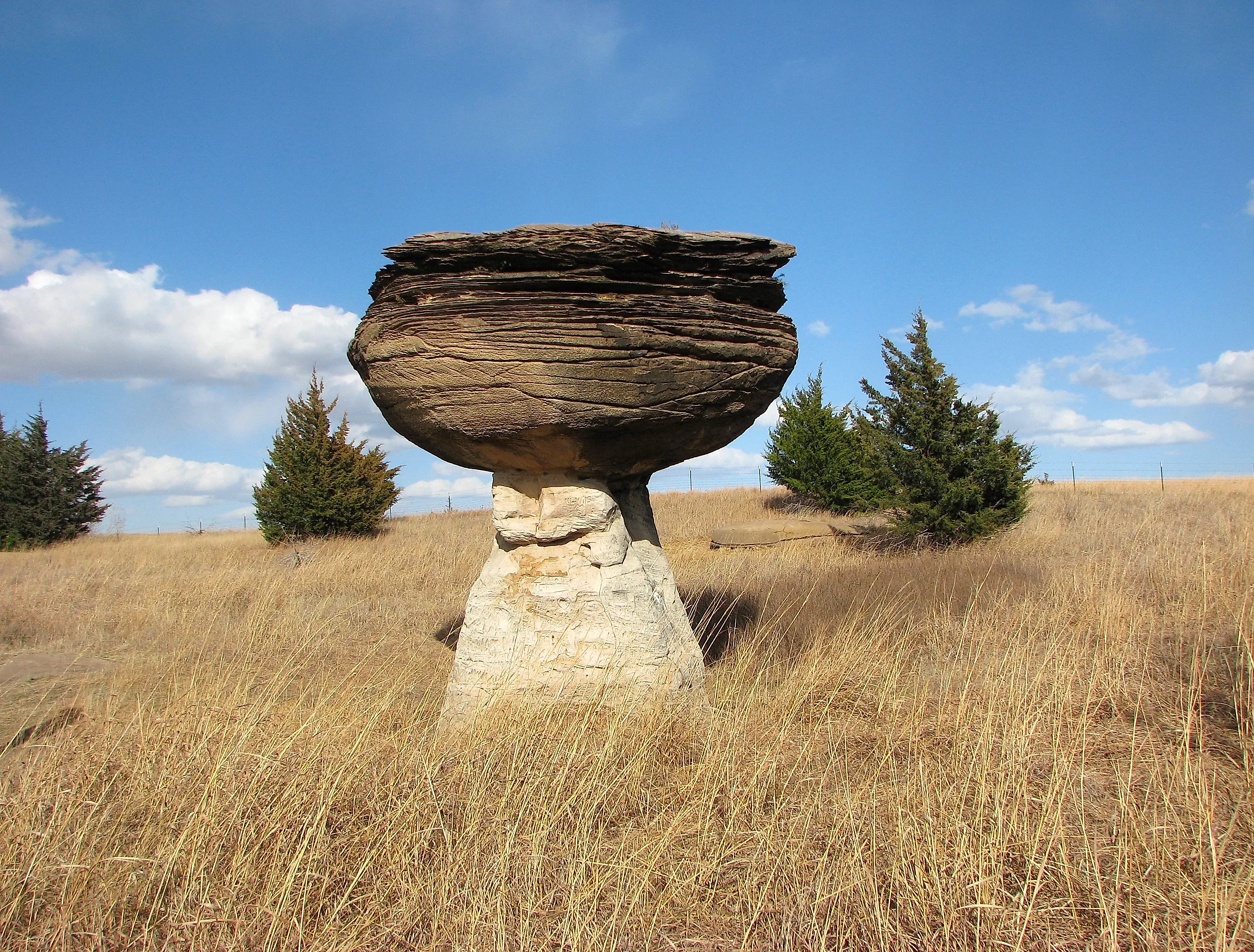
Mushroom Rock may be Kansas’ smallest state park at only 5 acres, but it’s also one of the state’s most unique. Located along the Prairie Trail Scenic Byway, the park contains several bizarre-looking rock formations that resemble classic toadstool mushrooms.
Known as the Dakota Formations, the fungi-like forms can trace their history back millions of years to the Cretaceous Period. Over time, the sandstone and sedimentary rock that make up the “mushrooms” eroded at different rates, producing their quirky shapes. The unusual site has attracted many Native American tribes, explorers, and historians over the years.
There are two trails to see the rocks, one travelling north through the park and one south. Each is around a mile long, so they can be easily combined to see all the structures in one trip. If you’re short on time, take the southern path to see the park’s largest mushroom rock. The park is day-use only. It's open year-round and entry is free.
Little Jerusalem Badlands State Park, Oakley

The otherworldly beauty of the Kansas badlands is on full display at Little Jerusalem Badlands State Park. This 332-acre park contains 220 acres of arid badlands and a mile-long stretch of 100-foot-tall chalk spires and cliffs, formed millions of years ago.
There are two hiking trails in the park, each promising some incredible photography opportunities of the unusual rock formations. The 0.25-mile Overlook Trail is suitable for beginners with gentle gradients and accessible terrain, while the 1.5-mile Life on the Rocks Trail is a little more challenging but rewards hikers with two scenic overlooks.

Camping is not permitted at Little Jerusalem Badlands State Park, which is open year-round from sunrise to sunset. Vehicle permits are required to enter. The fragile environment of the badlands makes the park a ‘leave no trace’ area and visitors are asked to always stay on marked paths and trails. Guided tours of the park interior are available but must be booked in advance.
Nicodemus National Historic Site, Nicodemus

The oldest remaining black settlement west of the Mississippi River, Nicodemus was founded in 1877 by black homesteaders. The town is still a residential community but is preserved by the National Parks Service in honor of its historical significance. Visitors are welcome to explore the five historic buildings that make up the park. These include the Township Hall, which was built in 1939 and houses the Visitor Center, the St Francis Hotel, which served as the town’s first post office and school, and the First Baptist Church, whose congregation began in a dugout in 1877.
The park is free and open year-round but closed on Tuesdays and Wednesdays. The Visitor Center, which contains a park store and several interpretative exhibits, is open from 9am to 5pm and closed on holidays.
Tips For Visiting Kansas Parks
The operating hours listed above are subject to change, so always check before you set out. You may also want to check the events schedule at the parks, as many run regular workshops, presentations, and seasonal activities. Summer temperatures in Kansas can reach over 90°F, so if you’re hiking, wear sunscreen, stay hydrated, and try to hit the trails in the early morning when it’s cooler.
Spend a few days camping by the lakeshore, lose an afternoon hiking the badlands, discover the stories of black homesteaders in the 1800s, be transported to one of the most important pressure points of the 1950s Civil Rights Movement. Kansas’ parks are much more than a nice day out and a few pretty photographs. These vacation must-sees showcase the best of the state’s heritage, history, and habitats to leave visitors with unforgettable Midwest memories.