7 Most Beautiful Gothic Churches In Rhode Island
Rhode Island's history is dense and deeply layered. Founded in the 1600s on ideas of religious freedom and independence, the state grew through seafaring trade, early industry, and close-knit communities built around churches and meetinghouses. As towns expanded during the 18th and 19th centuries, church architecture became a visual marker of cultural identity, faith, and craftsmanship.
Gothic churches across Rhode Island feature the style's signature pointed arches, stained glass windows, tall towers, and detailed stone or woodwork, making them stand out against their surroundings, where they often serve as local landmarks. With that, here are some of the most beautiful churches that show how the Gothic tradition took different forms across Rhode Island.
Cathedral of Saints Peter and Paul - Providence

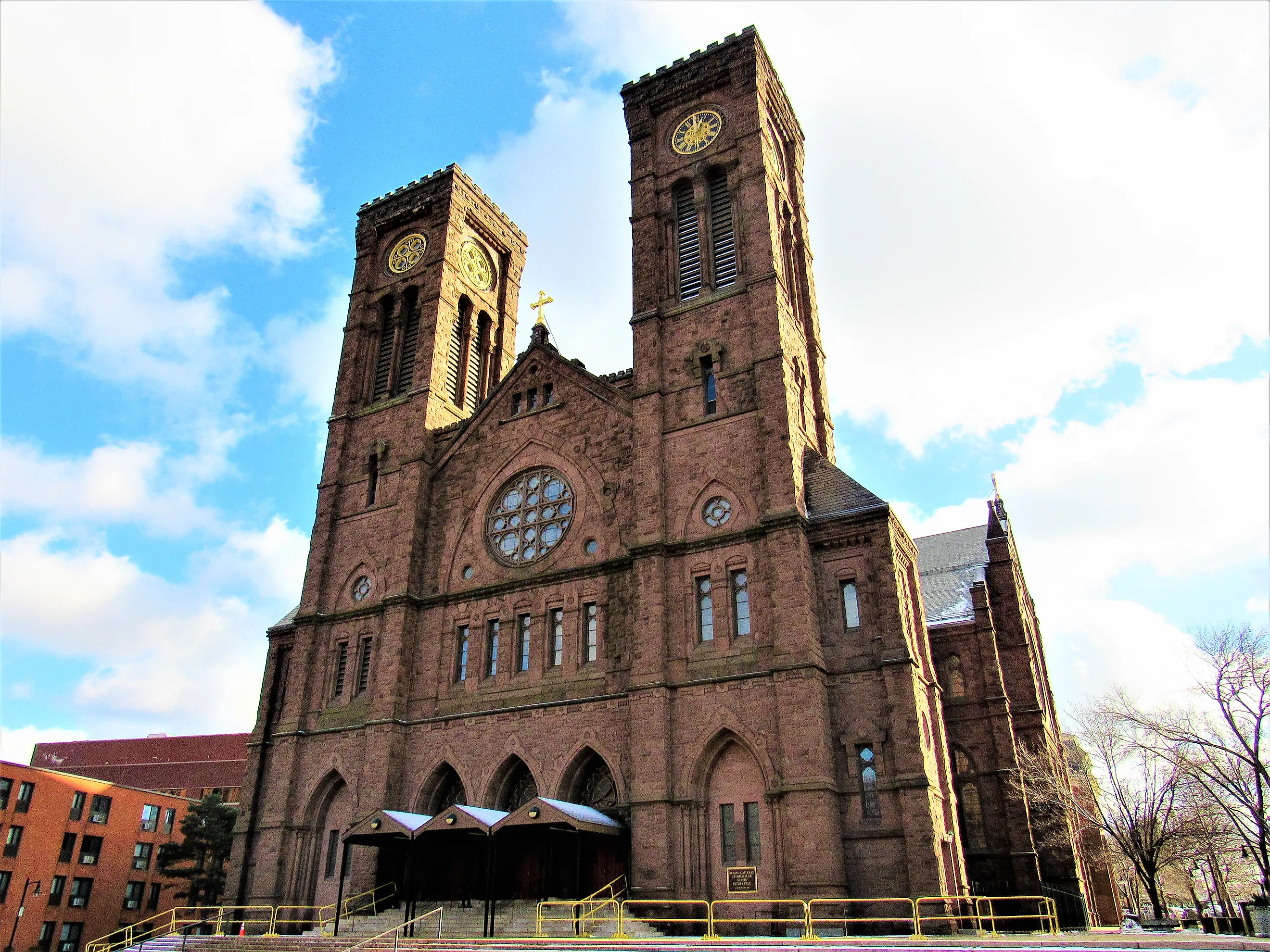
The Cathedral of Saints Peter and Paul is one of the most recognizable Gothic Revival church buildings in Rhode Island and a central landmark for the state’s Roman Catholic community. Designed by Irish-American architect Patrick Keely, construction began in 1873, and the cathedral was consecrated in 1889. The building follows a cruciform plan with two towers, each about 156 feet tall, that frame the main entrance. The exterior is built from Connecticut brownstone, with rough-faced stone blocks, carved watercourses, and decorative details.
Inside, the cathedral features a wood-paneled, vaulted ceiling, green marble columns, and stained-glass windows installed during a major renovation in the 1970s. The Casavant organ, with over 6,600 pipes, is one of the largest of its kind in North America. The cathedral was added to the National Register of Historic Places in 1975.
Grace Episcopal Church - Providence

Built in 1846 and designed by Richard Upjohn, this church is widely recognized as the first asymmetrical Gothic Revival church in the United States. Its single tower rises above the street, topped with a broached spire that gives the building a distinctive profile against the city skyline. Pointed arches, strong vertical lines, and detailed stonework reflect classic Gothic design without feeling heavy or overdone, though the church began in far humbler circumstances.
In the early 1800s, Providence was expanding west of the Providence River. A small group of parishioners from St. John’s Episcopal Church asked permission to form a new parish to serve the growing area. With limited funds, they purchased and remodeled the old Providence Theatre on this site. Under the leadership of Rev. John A. Clark, the congregation grew quickly, making a new building necessary by the 1840s. Later, in 1912, architect Ralph Adams Cram designed the current chancel, making Grace Church the only known church shaped by both architects.
Church of the Holy Cross - Middletown

The Church of the Holy Cross in Middletown is a small wooden Carpenter Gothic church that quietly stands out once you notice the details. Built in 1845, it shows how Gothic architecture could be adapted from heavy stone cathedrals into affordable wooden churches for rural communities. The design is an early example of architect Richard Upjohn’s work in this style, later shared widely through his book Rural Architecture. The church is a one-story structure with patterned shingle siding, pointed stained glass windows, and a simple square belfry at the front.
Holy Cross began as a mission effort led by local residents who wanted services closer to home. Early gatherings were held in homes and schoolhouses until the growing congregation supported building a chapel on Aquidneck Island. Bishop Henshaw praised the church at its consecration for its careful proportions and suitability for worship.
Emmanuel Church - Newport

Completed between 1900 and 1902, Emmanuel Church was designed by the architectural firm Cram, Goodhue & Ferguson, with Ralph Adams Cram leading the vision. This Tudor Gothic Revival structure has pointed arches, lancet windows, and a strong central tower. The church was funded by Natalie Bayard Brown as a memorial to her husband, John Nicholas Brown Sr., and it remains one of Newport’s most important historic buildings. It is listed on the National Register of Historic Places.
Founded in 1841 as Emmanuel Free Church, it welcomed anyone who wished to attend. At a time when many churches required payment for pews, Emmanuel allowed free seating. This made it a shared space for mill workers, fishermen, domestic servants, merchants, teachers, lawyers, and bankers alike. That reputation led to its long-standing nickname, “the church of the people.”
St. Mary's Catholic Church - Providence

The church was designed by Irish-born architect James Murphy, and construction began in 1864, during a period when Irish immigrants were reshaping the city’s workforce and neighborhoods. Many Irish families from Ulster came to Providence to work in textile mills, including those in nearby Olneyville. Much of the labor was done by members of the congregation themselves. After long shifts in the mills, they dug foundations and cut stone for the building in an act of faith and community.
The church was consecrated in 1869 and built from Westerly granite, giving it a solid and lasting presence. Inside, rib-vaulted ceilings and pointed arches define the space and reflect classic Gothic Revival design. Today, Mass is held in both English and Spanish, and a chapel displays Peruvian icons brought by newer members of the congregation.
St. Mary's Church - Newport

Built in the Gothic Revival style, the church features pointed arches, ribbed vaulting, and tall stained glass windows that bring color and light into the interior throughout the day. St. Mary’s is the oldest Catholic parish in Rhode Island. The parish was founded in 1828 to serve a growing Catholic population, many of whom were immigrants from Ireland working on nearby Fort Adams.
The current church building was designed by Irish-American architect Patrick Keely. In 1848, construction began, and the church was dedicated in 1852 to The Holy Name of Mary, Our Lady of the Isle. In 1953, John F. Kennedy and the future First Lady, Jacqueline Bouvier, were married here. The church was named a National Historic Shrine in 1968 and added to the National Register of Historic Places in 2008.
St. Stephen's Episcopal Church - Providence

The parish began in 1837, when a small group of worshippers separated from nearby churches to form a new community focused on Christian worship and service. In 1862, the congregation moved to its current location and commissioned architect Richard Upjohn, one of the leading figures of Gothic Revival architecture in the United States.
The church is built of gray stone with brownstone trim and features a tall corner tower added in 1900. St. Stephen’s also holds an important place in American church history. In the 1850s, it welcomed members of Christ Church, an African American parish, marking one of the early examples of integration within the Episcopal Church. Under the leadership of Henry Waterman and George McClellan Fiske, the parish became known for sacramental worship in the Catholic tradition. Today, St. Stephen's is listed on the National Register of Historic Places.
Rhode Island’s Gothic churches show how architectural tradition adapted to different communities, budgets, and landscapes. From large stone cathedrals in Providence to small wooden churches in Middletown, each building reflects the people who built it and the era in which it rose. Gothic Revival designs brought height, light, and structure to growing cities, while Carpenter Gothic made the same ideas practical for rural congregations. These churches were not built as monuments alone. They were shaped by immigrant labor, local craftsmanship, and changing ideas about worship and access. Today, they remain active landmarks that connect Rhode Island’s past to its present.