5 Strange Discoveries Hidden Under the Streets of Paris
Beneath Paris is a vast network of tunnels carved from the limestone quarries that once supplied the city’s building stone. Over time, these underground passages took on new uses. In the late eighteenth century, millions of human remains were transferred here from overcrowded cemeteries, creating the bone-lined galleries now known as the catacombs. Other sections of the tunnels have revealed unexpected discoveries, including hidden rooms built by underground explorers, a secret screening space and bar uncovered by police in the early 2000s, and stories tied to a lost video camera found deep in the maze. These findings have helped shape the catacombs’ reputation as one of the most unusual places beneath a major city.
The Catacombs That Turned Paris Into an Underground Cemetery
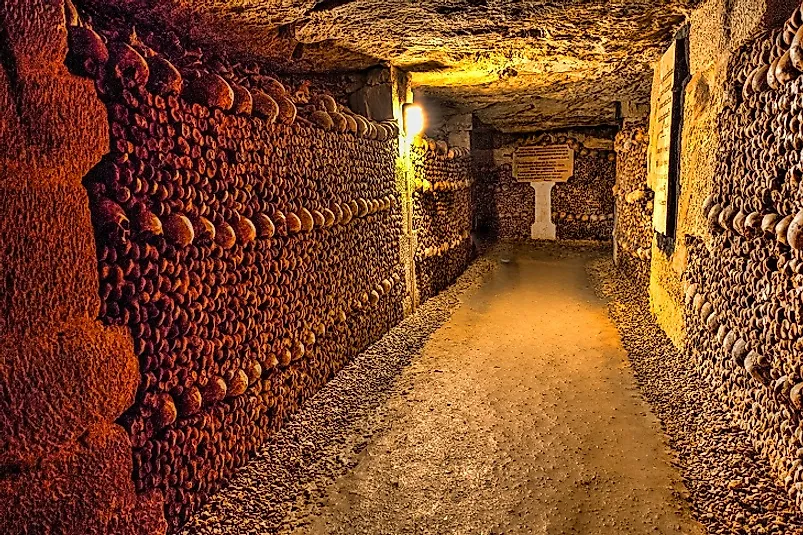
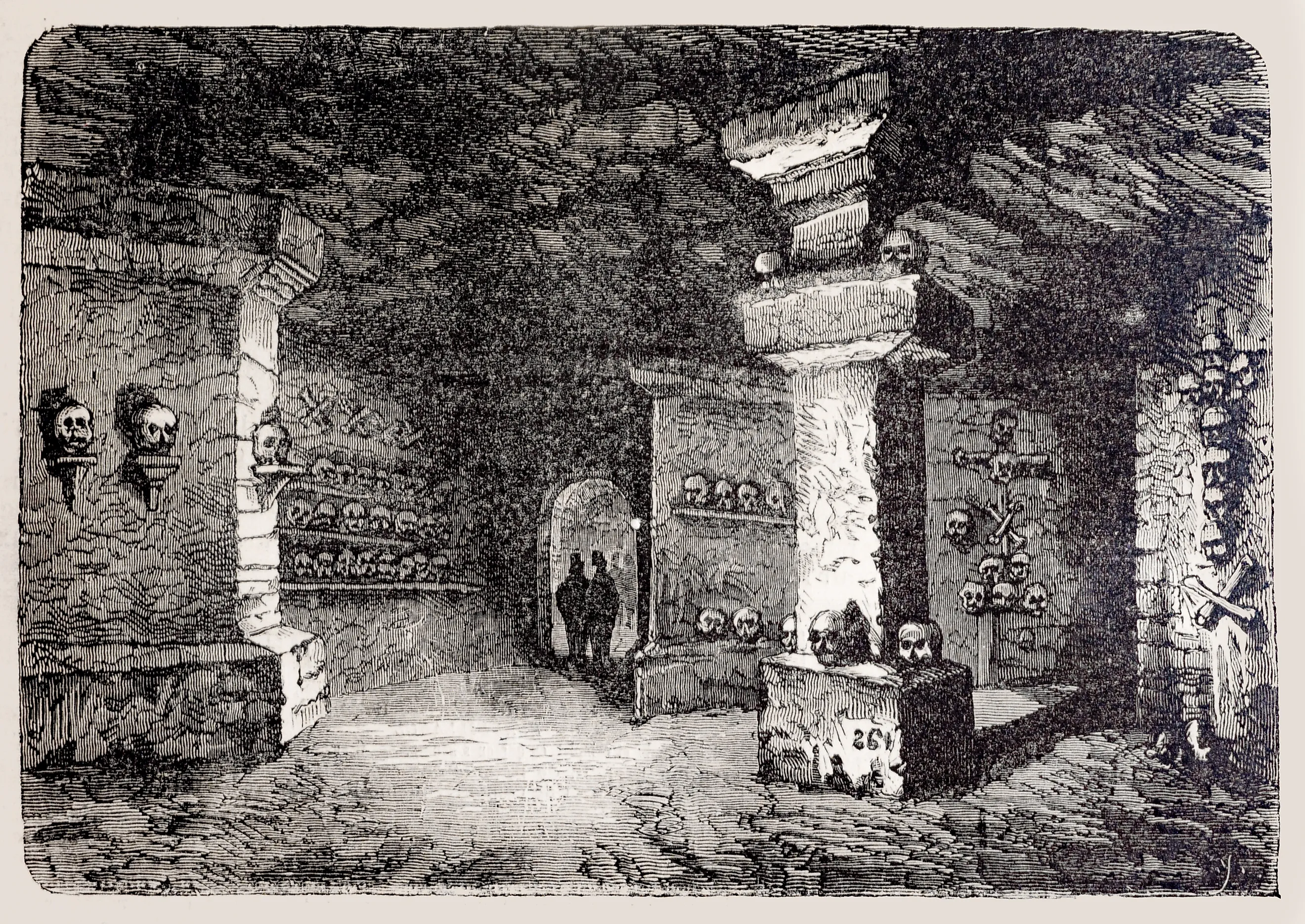
Few underground sites are as unsettling, enormous in scale, and as historically significant as the Paris Catacombs. Extending for upwards of 200 miles (about 300 kilometers) beneath many of the city’s oldest districts, this vast ossuary holds the remains of more than six million people!
The tunnels began as limestone quarries during the Roman era, centuries later supplying stone for landmarks such as Notre-Dame Cathedral and the Louvre. But beginning in the late 18th century, overflowing cemeteries like that of Saints-Innocents posed serious health risks in an already congested cityscape, prompting authorities to transfer bones to these underground spaces in a carefully organized process that lasted years. These human remains, when not thrown into random piles, were used in many sections to literally build the walls and create famous skill-and-bone patterns.
Today, a small section is open to the public, where walls are visibly stacked with skulls and femurs. But beyond the official route lies a maze of restricted passages, regularly explored illegally by “cataphiles.” Unfortunately, some of these daring explorers have even gotten lost or died in the catacombs, having become disoriented in the restricted areas.
Periodically, authorities uncover new hidden chambers, art installations, and even makeshift cinemas within. In 2024, rock band Queens of the Stone Age held a concert down below, with the tight, uneven space said to have a particularly pleasant acoustic signature.
A Secret Wartime Bunker Found Beneath the City

Beneath the train platforms of Gare de l'Est lies a little-known reinforced and airtight bunker, built in 1939 as Europe moved toward World War II. Designed as a secure command post for the French national railway, the underground complex was intended to maintain rail coordination during potential aerial bombardments.
Its location was indeed quite strategic, as Gare de l’Est handles critical eastbound lines toward Germany and the rest of central Europe. Constructed with thick concrete walls, blast doors, and independent power and ventilation systems, the bunker allowed officials to continue directing traffic even if the station above was damaged. It was vital for troop and supply movements, but ironically didn't see much of its intended use as France fell not long after Nazi Germany's Blitzkrieg.
The bunker remained largely sealed and forgotten for decades. When reopened during renovation work, it offered a nicely preserved window into civil defense planning beneath one of Paris’s past and present busiest transport hubs.
A Deeply Exclusive Cinema & Bar

In 2004, Paris police investigating reports of unauthorized activity in the city’s underground tunnels uncovered a fully equipped secret cinema and bar hidden beneath the Palais de Chaillot. The discovery was made within a section of the sprawling quarries connected to the Paris Catacombs network. Officers found a projection screen, seating carved from stone, a stocked bar, electricity routed from the surface, and even a telephone line. What a great spot to catch a horror flick!

The installation appeared to have been carefully planned and maintained, but when authorities returned days later to dismantle it, most of the equipment had vanished, leaving behind a note reading, "Ne cherchez pas," or “Do not search for us.” The operation was widely attributed to members of the underground exploration community known as "Les UX," who are known for navigating and repurposing restricted tunnels since the 1980s.
Seemingly Lost Footage of the Paris Catacombs

One of the most debated finds in the Paris Catacombs is the so-called “lost camera,” allegedly discovered in the early 1990s. A video camera was reportedly recovered deep within an unmapped section of the tunnels with its tape intact. The disturbing footage shows an unidentified man navigating the narrow passages alone, moving steadily at first before appearing increasingly disoriented. At one point, he begins to run, the frame jolting as he passes bone-lined walls and dark junctions. The recording ends abruptly after the camera eerily drops to the ground, still filming.
No verified public record confirms the identity of the person behind the lens, and the circumstances of the camera’s recovery remain unclear. Yet it endures as one of Paris' most famous urban legends, and the story gained wider attention years later through online circulation and various documentaries.
Regardless of its origins, the footage reinforced the catacombs’ reputation as a disorienting maze, where even experienced explorers can quickly lose their way beneath the otherwise bustling streets of France's capital city.
A Whole Underground Lake

Beneath the grand staircase and gilded auditorium of the Palais Garnier lies a truly unexpected feature: an underground, man-made water reservoir often described as a hidden lake. The structure was created in the 1860s during the construction of the opera house, when engineers encountered a high water table and unstable soil. Rather than attempt to drain the groundwater entirely, architect Charles Garnier incorporated a permanent cistern into the building’s foundations to stabilize pressure and prevent flooding.

This roughly 10,000 cubic-meter "lake," to be exact, is a masonry-lined chamber filled with water, not a natural lake, although it does have a self-sustaining population of fish! It remains inaccessible to the public and is used by the Paris fire brigade for training exercises in low-visibility diving conditions. The existence of this subterranean pool also may have helped inspire elements of Gaston Leroux’s 1910 novel The Phantom of the Opera.
What Else Dwells Underneath Paris?
The sites already uncovered beneath Paris suggest the underground city is far from fully documented. Abandoned quarries, sealed military spaces, forgotten infrastructure, Roman ruins, and undocumented chambers still thread beneath, and as construction and restoration projects continue, new finds very well may remain possible, if not inevitable. Will you look for any signs of Paris' secret underground world during your next vacation to France?