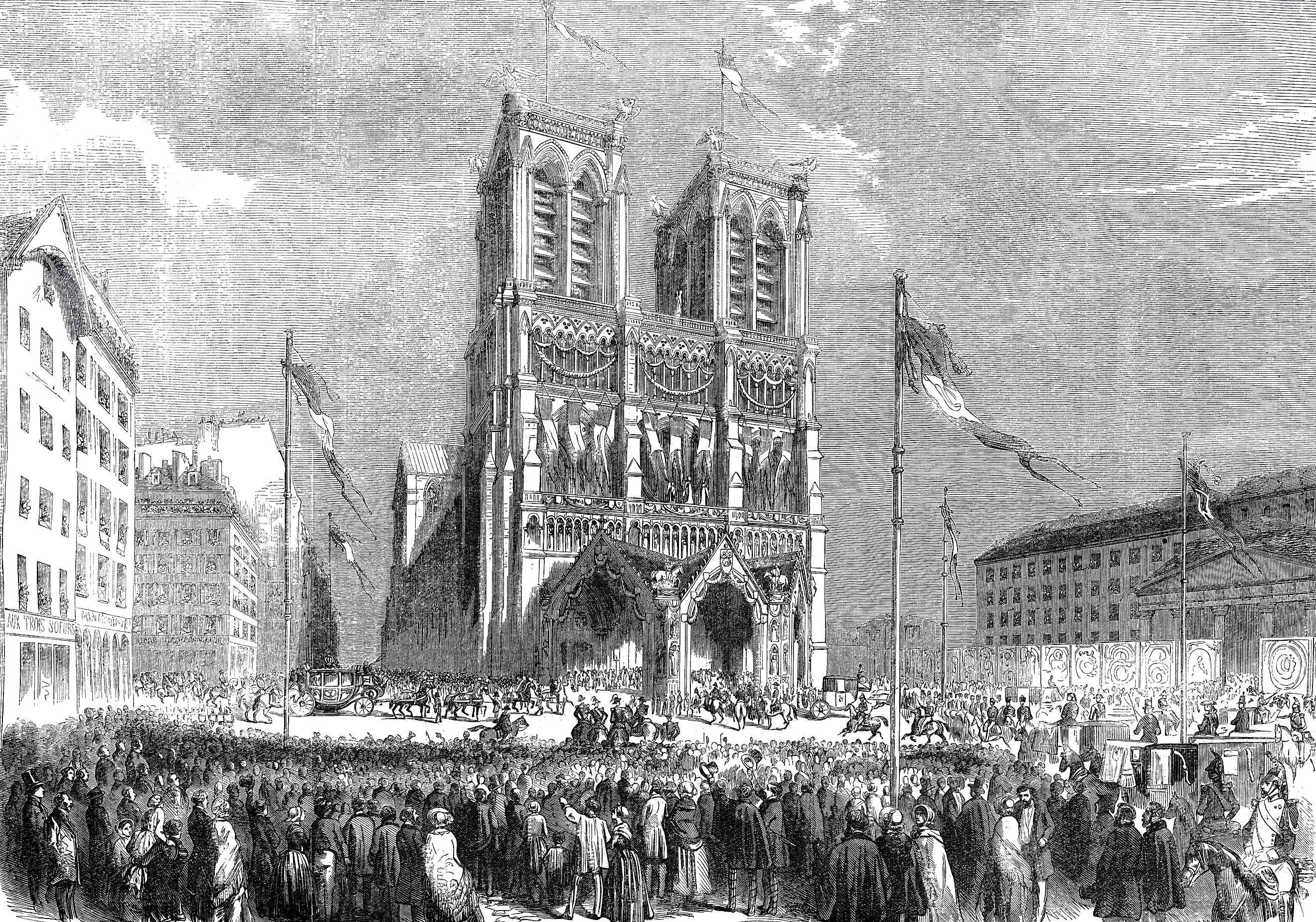
5 Strange Discoveries About Notre-Dame Cathedral
Few churches in the world are as instantly recognizable as Notre-Dame Cathedral. Rising from Paris’s Île de la Cité, this masterpiece of French Gothic architecture has dominated the city skyline since the Middle Ages. Construction began in the 12th century and continued for roughly 200 years, producing one of Europe’s most celebrated religious landmarks. Over the centuries, Notre-Dame has witnessed coronations, revolutions, desecration, restoration, and fire, all while remaining a powerful symbol of French history and culture.
Yet for all its fame, Notre-Dame has not surrendered all its secrets. Recent restoration work, especially after the devastating 2019 fire, gave archaeologists a rare opportunity to look beneath and within the cathedral in ways that had not been possible for generations. These investigations uncovered burials, ancient architectural features, traces of lost decoration, and even evidence of far older history buried nearby. Some discoveries answered long-standing questions about how the cathedral was built and used, while others only deepened the mystery. The following are five of the strangest discoveries about Notre-Dame Cathedral uncovered so far.
A Lead Sarcophagus Unearthed Beneath The Cathedral Floor

During the Notre Dame restoration efforts in 2022, archaeologists discovered two ancient burial sites that may never have been found had it not been for the 2019 fire. While preparing to rebuild the cathedral’s spire, two human-shaped, lead sarcophagi were unearthed from deep beneath the floor. One was easily identified by an epitaph on an affixed plaque reading “Canon Antoine de La Porte.” However, the second sarcophagus remained shrouded in mystery, with its identity unknown. Questions quickly overtook the scientific community and public spheres alike. Who was this unknown figure buried beneath the most famous church in the world?

The answer became an obsession for impassioned archaeologists and historians, desperate to know who this mystery figure was. La Porte, his neighbor in death, was a high-ranking priest who passed away in 1710. Records show the former canon was a respected patron of the arts, having supplied his wealth and influence to support Notre Dame's choir. Presumably, the neighboring sarcophagus must hold someone important, which intrigued truthseekers. Moreover, both sarcophagi were constructed from lead, a favored casket material of the elite for its ability to keep out moisture and delay decomposition.

As research continued, more clues emerged. Researchers estimated the mystery man had passed away in his 30s, suffering from tuberculosis and meningitis. Additionally, his skeletal deformities suggested he was an avid horse rider, earning him a nickname of “the horseman.” After two years of scrutinous research, scholars finally suspected the name of their mystery man: Joachim du Bellay. The life and death of the esteemed 16th-century poet aligned with the horseman, and the consensus was celebrated as a fascinating finale.
Painted Sculpture Fragments That Prove Notre-Dame Was Once Colorful

Today, the Notre Dame we know awes onlookers with its pristine cream-coloured limestone. Conversely, in the wake of the 2019 fire, researchers painted a different picture of the cathedral’s past. As clean-up crews worked tirelessly to remove smoke and soot from Notre Dame’s walls, archaeologists discovered artifacts that would forever change our view of the architectural wonder. Beneath its floor, 13th-century statues were unveiled and studied for remnants of paint, proving the cathedral was once a colorful contrast to the church we see today.
The long-hidden statue fragments, believed to have been dismantled in the early 18th century, point to the cathedral’s earlier aesthetic. The statues were a part of its former “rood screen,” an ornately carved wooden partition that once divided the church’s sanctuary and choir from its aisles. Countless fragments contained faint remnants of their original paint, showcasing hues such as red, gold, silver, and blue. Subject matter ranged from Gothic floral patterns to famous biblical scenes, unveiling a once unknown history with every speck of color and design.
An Iron “Skeleton” In The Cathedral’s Foundation

Just as modern humans once pondered how Egypt’s pyramids came to be, many of us wonder how Notre Dame still stands tall more than 800 years after its construction. The grand Gothic church has survived the test of time, albeit preserved through protective efforts and restoration. Still, its medieval engineering is considered nothing short of masterful, and human nature strives to understand. Ironically, the very fire that damaged Notre Dame helped us realize why the cathedral is so unwavering.

Examining areas revealed by the fire, archeologists uncovered massive iron staples binding the cathedral’s stone foundation. Using radiocarbon dating, researchers dated many of the staples back to the cathedral’s early 12th-century construction. In turn, Notre Dame’s structural integrity is now heavily attributed to these once-unknown iron clamps, whose durability allows the building to retain its stable height and delicate aesthetic. This discovery also sets Notre Dame builders apart as architectural trailblazers, as it is the first Gothic cathedral in Europe to use iron as a major form of structural integrity.
100 Forgotten Graves Beneath Notre Dame

While Notre Dame’s lead sarcophagi earned worldwide attention, less is known about the 100 additional mystery graves unearthed after the 2019 fire. Like other Catholic cathedrals, Notre Dame is known for burying its dead within the church rather than opting for an external cemetery. Before 2019, historians knew of an estimated 400 gravesites in Notre Dame, but the number has since risen to over 500. Of the 100 graves discovered in the cathedral’s basement, 80 have been excavated and studied, according to the National Institute for Preventive Archaeological Research.
In contrast to the two elaborate lead sarcophagi, many of the 100 gravesites featured more traditional wood coffins and simpler stone tanks. The Catholic Church confirmed the graves facing east were former members of the clergy, while the majority were buried with a west orientation, meaning they were faithful members of the church. All but one grave featured male remains, and signs of skeletal aging suggest that the graves belonged to high-status Catholic figures. Ultimately, these hidden graves offer a fascinating glimpse at medieval funeral practices, but also leave us with questions. Why were these once-important people forgotten? And what other secrets are buried beneath Notre Dame?
A 2,000-Year-Old Roman Town Under The Cathedral

Notre Dame’s discoveries also extend beyond the cathedral’s walls and far further back than 2019. In 1964, construction began on an underground parking lot beneath the courtyard just outside the cathedral. To everyone’s shock, excavations soon uncovered ancient Roman ruins. Hidden for centuries, archeologists discovered dramatic remnants of Lutetia, a Gallo-Roman town. After years of careful excavation and preservation, the crypt was opened to the public in 1980 as the Crypte Archéologique. While the parking lot was lost to history, an epic museum was born in its place.
Over 19,000 square feet in size, the Crypte Archéologique is the largest crypt in Europe, preserving 2,000 years of history. Much like the discoveries beneath Notre Dame, this landmark feat was discovered by chance, making it a strange and wonderful gift from fate. The underground museum features 4th-century walls, bathhouse ruins, and Medieval street remains, making it a must-see attraction and perfect follow-up to Notre Dame.
Discovering Notre Dame’s Lost History

History has shown that disasters can spur exploration. The cathedral’s history as an archeological site stretches back to the 1840s, then mirrored again after the 2019 fire. Conversely, chance would allow the discovery of Lutetia beneath Notre Dame’s courtyard. These opportunistic and accidental discoveries ultimately prove that fate plays a prominent role in understanding history. Even more, they prove that we truly have no way of knowing what other secrets Notre Dame currently hides.