5 Most Beautiful Gothic Churches In Minnesota
You may not know much about the history of Gothic architecture, but you’ve definitely seen it. Gothic craftsmen built some of the world’s most iconic tourist attractions. The Cathedral of Notre-Dame in Paris, Westminster Abbey, and Cologne Cathedral are all stunning examples of this captivating style, popular in medieval Europe from the 12th to the 16th century.
When Europeans arrived in the New World, they brought their love of ornate spires, stained glass, and high archways with them. American Gothic, as it became known, emerged in the mid-1800s and had its own distinctive look. Also called Carpenter Gothic, architects emulated the Gothic features they admired from Europe but added their own twist, using local lumber to create intricate wood carvings.
You can find many well-preserved Gothic buildings throughout Minnesota, particularly in its churches, which have worked to preserve their heritage. Below are some beautiful examples of this centuries-old architecture that range from towering urban cathedrals to quaint small-town chapels. Whether you’re a history lover, an admirer of antique architecture, or just a tourist planning a day out, these remarkable buildings are a Minnesota must-see.
The Cathedral of Our Merciful Saviour, Faribault

The congregation of the Cathedral of Our Merciful Saviour in Faribault, in southeastern Minnesota, first came together in 1855, meeting in a tiny wooden church downtown. As the congregation grew, so did the need for a larger, more impressive building. Construction began in 1862 under the direction of architect James Renwick Jr., who also designed the Smithsonian Institution Building in Washington DC.
The result is a Gothic Revival masterpiece, built using local limestone and formed in the shape of a Latin Cross. The building, which is listed on the National Register of Historic Places, has undergone many renovations and additions over the years, but has kept its Gothic character. The soaring roof over the nave of the cathedral, narrow stained glass windows, and stone tower with jutting spires are typical of the Gothic style. The church also features some interesting English Gothic elements, such as delicately carved trefoils and quatrefoils on the pews, pulpit, and altar. Designed to look like overlapping petals or circles, these motifs were common in English Gothic churches.
Church of the Holy Trinity, Rollingstone

Holy Trinity Roman Catholic Church in Rollingstone, Minnesota. Editorial credit: Johnathunder - own work, CC BY-SA 3.0, via Wikimedia Commons
Dominating the Main Street of the tiny town of Rollingstone, the Church of the Holy Trinity is a Gothic Revival structure built by the parish in 1869. At that time, the small community was mostly composed of immigrants from Luxembourg who brought their strong Catholic faith to their new home and were eager to help build a grand church.
Listed on the National Register of Historic Places, the church features limestone walls, wooden detailing, and an unusual-looking bell tower topped with a wooden belfry. While the inside of the church was renovated as it celebrated its centennial in 1969, much of the outside, including its unique tower, has remained untouched since the church was built.
Westminster Presbyterian, Minneapolis

Incorporating elements of both Gothic and Romanesque styles, Westminster Presbyterian Church isn’t just an impressive part of the Minneapolis skyline. It’s also a window into a fascinating era in the city’s history. Home to one of the oldest and largest Presbyterian congregations in the country, the present church opened its doors in 1897. From the beginning, the church had a strong focus on welcoming immigrants. It became a vital hub for Minneapolis’ Chinese American community, helping them learn English, start businesses, and integrate into Minneapolis society.
Aside from its role in city history, the church is also known as a stunning example of Gothic architecture, which is immediately apparent in its two-tower facade. Between the towers, over the door, is another telltale feature of Gothic style, a large rose window. Known as the Nicollet Mall Rose Window, this eye-catching statement piece is 16 feet across and features eight large petals and eight triangular panels. It contains more than 4,000 glass fragments and 672 jewels. In 1998, the window was removed and repaired by the Kokomo Opalescent Glass Company, the same manufacturer that had provided the original glass more than a century before.
Nora Unitarian Church, Hanska

Formerly known as Nora Free Christian Church, Nora Unitarian was established in 1881 in the small community of Hanska in southern Minnesota. Located in an area known for its Norwegian heritage, the church was founded by Norwegian reformers who broke away from the Lutheran church in search of a more liberal form of worship.
The congregation’s church opened its doors in 1883, with the first service taking place on July 8th. Barely two weeks later, a tornado swept through the area, demolishing the structure. Undeterred, the reformers rebuilt. The present building, a simple wood-frame Gothic chapel listed on the National Register of Historic Places, was completed in 1884. It features a gabled roof, arched windows, and a square belfry. Situated on a wooded hillside on the outskirts of Hanska, the property also includes a cemetery with graves dating back to 1883.
Church of the Holy Communion, St. Peter

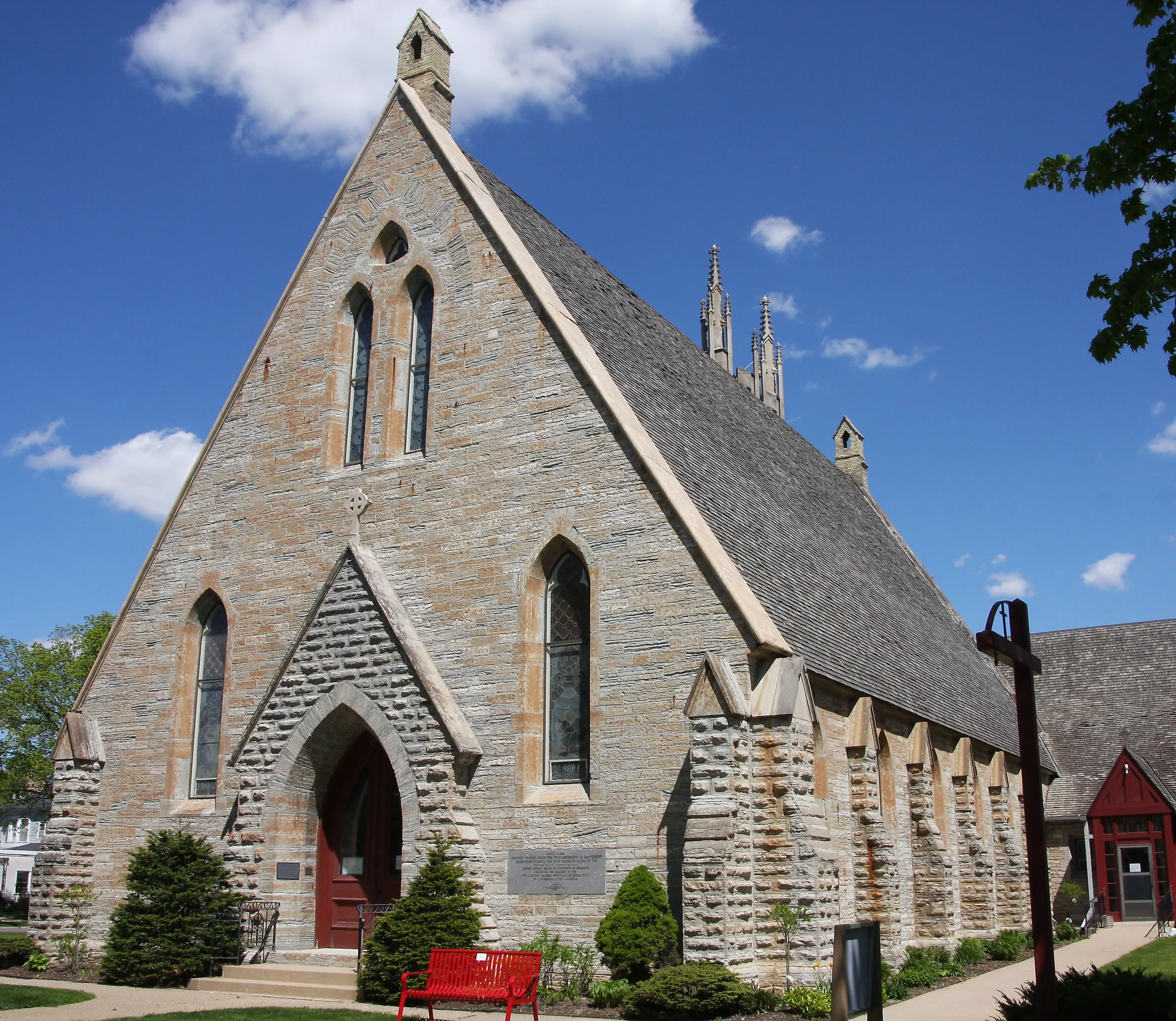
Tucked away in the historic town of St. Peter, the Episcopal Church of the Holy Communion is an architectural gem in the Late Gothic Revival style. Built between 1869 and 1870, the striking A-frame church has a bright red door and is made entirely of yellow Kasota stone. The church was consecrated by Rt. Rev. Bishop Henry Whipple, who, in 1870, proclaimed it to be “the prettiest village or rural church I have ever seen."
Unlike other Episcopal churches in that period and area, Holy Communion was built by stone masons rather than using board-and-batten construction. It was designed by the renowned New York architect Henry Congdon, who was responsible for its striking arches, gable dormers, belfry, and buttresses. If you’re visiting the property, take a walk behind the church. This is where you’ll find the grave of St. Peter’s founder, Captain William Dodd, and his family.
Minnesota Masterpieces
Gothic wasn’t just a fad. The genre lasted for over three centuries, spawning many different interpretations and evolutions, including English Gothic, Revival Gothic, High Gothic, and American Gothic. There’s a reason the style was so popular on both sides of the Atlantic. Its signature high arches, vaulted ceilings, jagged spires, and dazzling stained glass windows were all designed to draw the eyes upward in worship, connecting occupants with the heavenly realms. Minnesota’s Gothic churches are the legacy of the enterprising settlers who built flourishing communities across the Midwest. Centuries later, their churches remain not just places of worship but works of art and monuments to the past.