The Best Small Towns in Ohio to Chill Out
In parts of Ohio, the pace softens almost without notice. Mornings stretch out near the water, afternoons drift between historic streets and shaded trails, and evenings settle in places that have been around long enough to feel familiar. College greens double as living rooms, antique shops invite wandering without a plan, and parks and riverbanks make it easy to stop moving for a while. The towns that follow share that quiet ease. Each offers its own setting, but all leave room for time to pass naturally, without schedules, pressure, or the sense that you need to be anywhere else. If you need to chill, these towns know the drill!
Logan

Anglers often arrive in Logan with one thing in mind: water. Lake Logan State Park, set just outside town, is one of Hocking County’s most reliable fishing spots, with calm waters that support northern pike, bass, bluegill, crappie, catfish, and saugeye. As a day-use park, it also has picnic areas and walking paths that pass through the wooded hills of southeastern Ohio. That outdoor focus continues in nearby Hocking Hills State Park, the area most closely tied to Logan’s reputation. Trails like Old Man’s Cave, named for a hermit who once lived there, and Rock House, with its natural stone windows, are larger than many visitors expect. Waterfalls, rugged cliffs, and open overlooks shape every hike. Back in town, Logan Antique Mall, open since 1994, offers a different kind of exploration, with long aisles of vintage furniture, collectible toys, and decorative keepsakes that give the space a strong sense of history.
Granville

Granville’s New England-style streets and historic architecture give the village a clearly defined character within central Ohio’s Licking County. Denison University plays a visible role in daily life, adding intellectual energy and cultural activity. The hilltop campus invites wandering past classic buildings, overlooks, galleries, and performance spaces, with lectures and concerts sometimes open to the public. Nature is close at hand as well. Spring Valley Nature Preserve protects more than 100 acres of forest, wetland, and prairie, with marked trails popular for birdwatching and seasonal changes. Just beyond town, the Alligator Mound connects Granville to a much older story. Built by the Fort Ancient people, this hilltop earthwork outlines a four-legged animal and is believed to have served a ceremonial purpose, overlooking Raccoon Creek with a strong connection to the region’s earliest inhabitants.
Yellow Springs

Creative and closely tied to Ohio’s natural landscapes, Yellow Springs is one of the state’s most recognizable small towns. Nature shapes daily life here, with protected green spaces beginning just beyond the village streets. At Glen Helen Nature Preserve, the Yellow Spring is reached via the 1.5-mile Inman Trail, which passes a beaver dam and a small waterfall along Birch Creek. The preserve also includes a raptor center, outdoor education facilities, more than 15 miles of trails, and a historic water-powered grist mill on the Little Miami River that now operates as an inn. A short drive away, Clifton Mill highlights the region’s early industrial history. Founded in 1802, it remains one of the largest operating water-powered mills in the country and is well known for its Legendary Lights display, which transforms the site each winter. Back in town, Sunrise Café rounds out the experience with from-scratch cooking made with locally sourced ingredients, pairing familiar comfort dishes with global influences.
Marietta

At the meeting point of the Ohio and Muskingum rivers lies Marietta, a town that reflects the feel of the early American frontier through its historic streets and river views. A ferry ride across the Ohio River leads to Blennerhassett Island State Park, where a restored historic mansion and open lawns allow for an easy afternoon of wandering or a relaxed picnic by the water. Throughout Marietta, a strong commitment to preserving parks and riverfront spaces keeps nature woven into everyday life, adding to the town’s appeal. Founded in the late 18th century as the first permanent American settlement in the Northwest Territory, the town’s heritage is presented at the Campus Martius Museum. Its exhibits include historic buildings and artifacts that mirror the layout of the original frontier stockade, including the Rufus Putnam House, a preserved 1780s structure that remains sheltered within the museum’s walls.
Oberlin

With tree-lined streets and a strong creative pulse, Oberlin carries a classic college-town identity that feels relaxed and intellectually active. Much of that energy comes from Oberlin College and Conservatory, one of the nation’s oldest liberal arts institutions, whose presence fills the town with music, ideas, and a steady pattern of cultural events. Concerts, lectures, and student performances spill naturally into everyday life, shaping the town’s atmosphere. Art plays an equally visible role at the Allen Memorial Art Museum, which houses more than 15,000 works spanning centuries, from classical pieces to contemporary art. Just across the street, Tappan Square serves as the town’s unofficial living room, a broad green where students spread out with books, locals walk their dogs, and conversations linger beneath century-old trees. The Oberlin Farmers Market adds to the town’s weekly routine, bringing together growers, makers, and neighbors in a gathering that reflects the area’s shared pace.
Port Clinton

One of the most recognizable landmarks in Port Clinton is the Port Clinton Lighthouse, a 19th-century beacon that now serves as a lookout point with wide views across Lake Erie and a clear sense of the town’s maritime roots. Along the shoreline, Lakeview Park provides an easy place to slow down. Lawns and walking paths invite lingering, while the beach across the street draws swimmers and sunset watchers when the weather allows. Fishing remains central to daily life here, and that influence carries straight to the table. Fresh Lake Erie walleye is a local staple, often served at longtime spots like Jolly Rogers Seafood House, where the menu reflects the town’s close relationship with the water. For a deeper look at how that history developed, the Ottawa County Museum adds context with exhibits that trace the region’s maritime, agricultural, and community past.
Lebanon

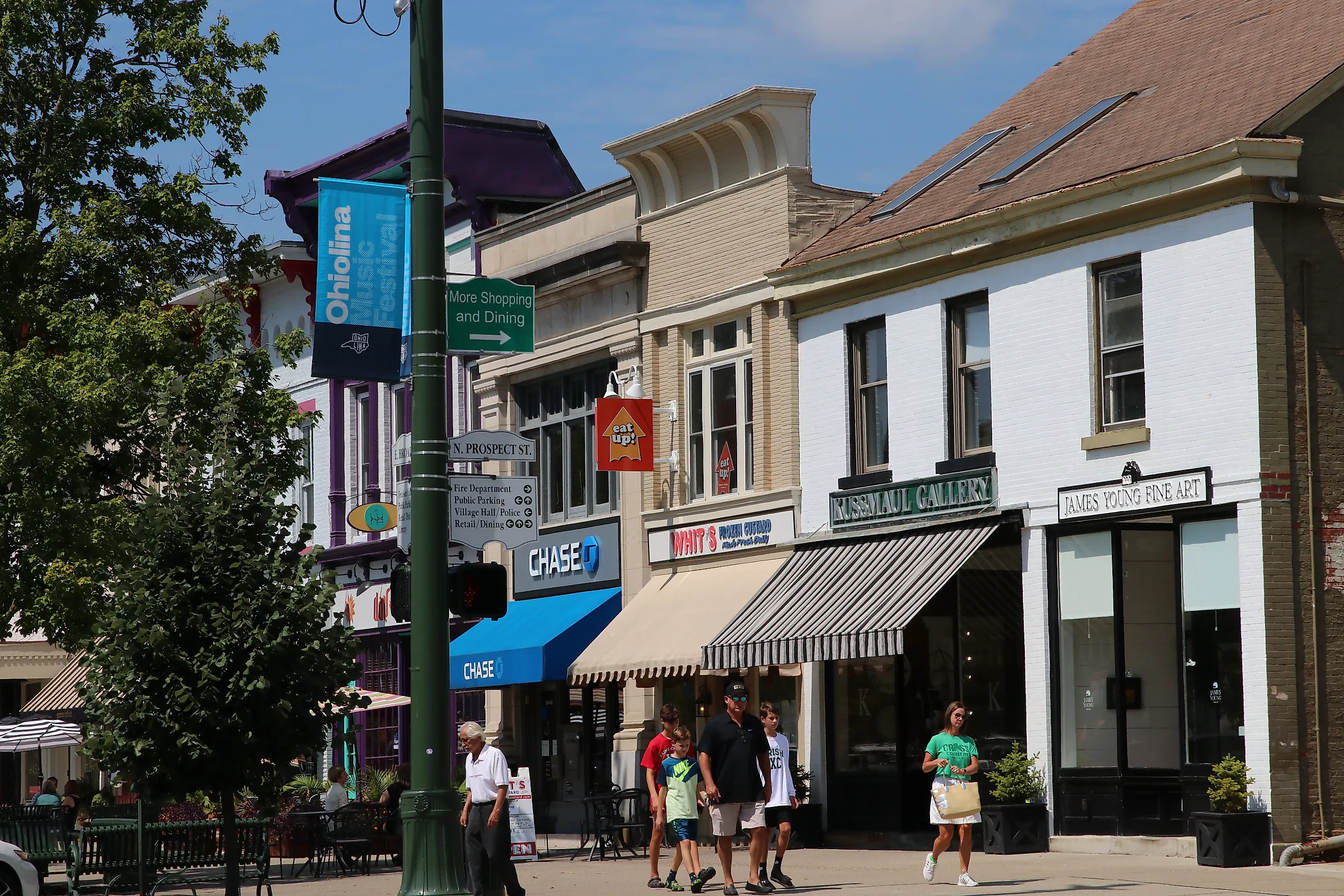
With a walkable downtown and a full calendar of community events, Lebanon blends a friendly atmosphere with a deep sense of history. Founded in the early 1800s, the town has preserved much of its identity, especially along its historic streets, where brick storefronts, courthouse-era buildings, and independent businesses create a lived-in feel. The Warren County History Center, also known as the Harmon Museum, traces Lebanon’s development through exhibits housed in restored historic structures. For those who prefer moving at their own pace, Lebanon’s antiques scene sets the tone, with downtown blocks lined with long-running antique shops and vintage stores. Longtime spots like the Village Ice Cream Parlor offer a familiar pause. At the same time, the historic Golden Lamb Inn, considered Ohio’s oldest continuously operating inn and hotel, provides a comfortable place to settle in for a meal or an overnight stay.
Taking It Easy in Ohio
Chilling out in Ohio is not about running around to see everything. It is about selectively choosing places where you don't feel rushed, where your spirit can just breathe a sigh of relief and let go. Places where a walk, a park bench, a quiet museum, or a long meal can be the entire plan. Each town we've suggested offers a leisurely pace and enough character to make slowing down feel natural and restorative, shaped by the landscape, the history, and the people who live there.