The Best Cities To Retire In The Great Lakes
The Great Lakes cities in this list grew up around freight water, and that working infrastructure left its impact in surprisingly practical ways.
For retirees who choose the Great Lakes region to spend their golden years, walks stay scenic because they follow old dock lines and rail grades, and errands stay quick because neighborhoods formed around compact waterfront districts. Green
Bay shows that civic life can still revolve around one shared place, with Lambeau Field and the Titletown District turning ordinary afternoons into something communal. These towns reward retirees who like repeatable days anchored by shoreline habits and familiar local rituals.
Duluth, Minnesota

Duluth functions as a working port built into a hillside, where ocean-scale vessels move through freshwater on fixed schedules and shape daily timekeeping. Ore boats glide past the harbor walls beneath the Aerial Lift Bridge, close enough for horn blasts to mark mornings and evenings. Streets rise quickly from the water, creating neighborhoods oriented toward the lake. The climate, light, and routines revolve around Lake Superior, producing days structured by wind shifts, ship traffic, and long shoreline walks.

The Lakewalk supports daily walking and cycling along ore docks, beaches, and lighthouse views through a continuous waterfront route. The North Shore Scenic Railroad turns a half-day into a seated lake-level journey along cliffs and rivers, used regularly as part of the local calendar. Spirit Mountain anchors year-round recreation with downhill skiing, lift-served mountain biking, and fall chairlift rides overlooking the harbor. Cultural time concentrates at the Duluth Art Institute, where rotating exhibitions and lectures fit easily into weekday schedules. Together, these routines support a retirement defined by movement, water access, and repeatable, place-specific habits.
Green Bay, Wisconsin

Green Bay operates on a civic structure shaped by a single institution and a shared calendar. Game schedules at Lambeau Field structure traffic, conversation, and seasonal anticipation throughout the year. Neighborhoods sit close to the Fox River and the bay itself, keeping daily errands short and familiar. The city’s scale supports routines built around repetition and established habits.
The Titletown District functions as an everyday gathering ground with walking paths, winter skating, lawn events, and regular outdoor programming tied to the stadium next door. Bay Beach Amusement Park provides a lakeside ritual built around classic rides, evening walks, and seasonal openings. The Fox River State Trail supports daily cycling and long, uninterrupted walks through river towns and wetlands across the metro area. Local history and mechanical craft anchor time spent at the National Railroad Museum, where restored locomotives and rotating exhibits support repeat visits.
Milwaukee, Wisconsin

Milwaukee follows a shoreline calendar shaped by Lake Michigan and a summer-long sequence of public gatherings that occupy the waterfront. Former industrial land now concentrates daily life along the harbor, where morning walks and evening events take place within a compact, navigable core. Neighborhoods feed directly into the lakefront and rivers, allowing routines to stay close and predictable.
The Milwaukee RiverWalk supports daily movement past boat slips, cafes, and public art through a continuous downtown corridor. Summer time often centers on the Summerfest Grounds, used year-round for ethnic festivals, evening concerts, and lakefront walks during off-stage hours. The Milwaukee Art Museum functions as a repeat destination through rotating exhibitions and its operable lakefront wing that opens and closes on a lake-driven schedule. Mechanical history anchors indoor days at the Harley-Davidson Museum, where archives, restored bikes, and riverfront grounds support regular visits.
Grand Rapids, Michigan

Grand Rapids organizes daily life around a working river and a downtown shaped by design and density. The Grand River cuts directly through the city center, setting a steady visual anchor for neighborhoods built on former furniture-industry wealth and manufacturing precision. That legacy remains visible in streets laid out for walking and civic spaces engineered for regular use.
Frederik Meijer Gardens & Sculpture Park supports repeat visits through seasonal greenhouse cycles, rotating sculpture installations, and outdoor concerts that fit neatly into weekday evenings. Every fall, ArtPrize turns sidewalks, bridges, and storefronts into a walkable exhibition that defines the city’s annual cycle of activity. The Grand River itself becomes a routine outlet, with kayaking launches and riverside walking concentrated near Ah-Nab-Awen Park and downtown crossings. Social habits often center at Founders Brewing Co., where scheduled releases, communal tables, and live music establish predictable gathering patterns.
Ann Arbor, Michigan

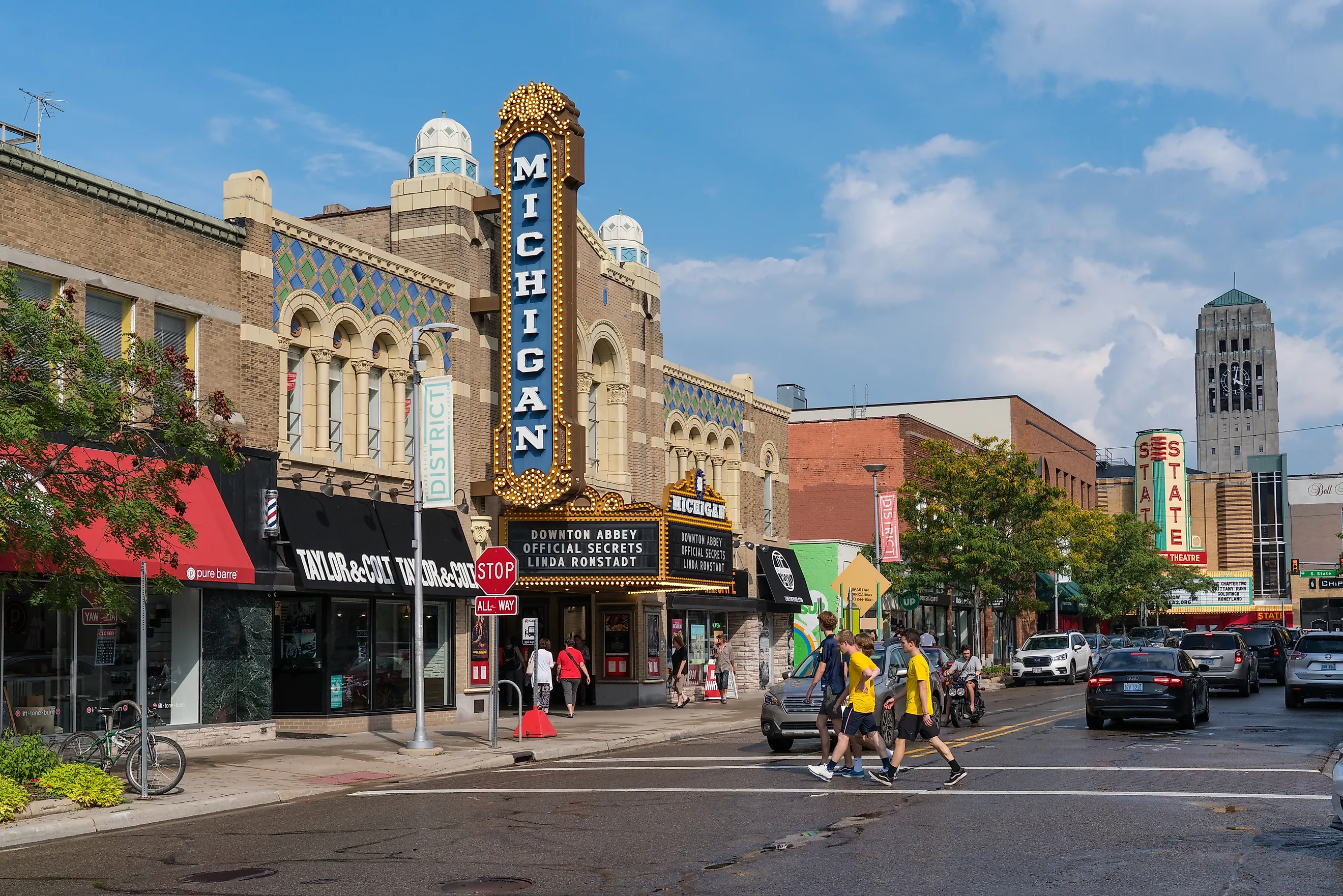
Ann Arbor operates as a university town where academic schedules quietly set the pace of daily life. Lectures, rehearsals, and seasonal breaks shape traffic patterns and neighborhood routines. Streets curve around historic campus buildings and residential pockets that stay active throughout the year. Retirement here settles into a predictable structure tied to the University of Michigan’s calendar, with intellectual activity remaining visible and accessible.
Performances at Hill Auditorium anchor evenings with orchestral concerts, visiting speakers, and university events that fit easily into weekday schedules. The Nichols Arboretum supports repeat walking routes along the Huron River, with seasonal draws like the peony garden shaping spring routines. Daily errands often route through Kerrytown Market & Shops, where the Ann Arbor Farmers Market, Monahan’s Seafood Market, and Zingerman’s Delicatessen turn groceries into a social pattern. Outdoor recreation stays local at the Argo Cascades, where tubing, kayaking, and riverside paths offer structured activity. Healthcare access stands out through Michigan Medicine, nationally recognized for patient care and specialty treatment, supporting long-term confidence in place.
Kalamazoo, Michigan

Kalamazoo developed around rail lines, paper mills, and pharmaceutical research, leaving a city scaled for daily use. Streets converge downtown in short blocks that keep routines compact. The presence of Western Michigan University sets a steady calendar of performances and lectures that integrates into surrounding neighborhoods.
Bell’s Eccentric Café functions as a regular gathering point through scheduled live music, seasonal beer releases, and communal tables that support familiar social patterns. The Air Zoo Aerospace & Science Museum provides hands-on exhibits and preserved aircraft that reward repeat visits and intergenerational outings. Daily movement often follows the Kalamazoo River Valley Trail, offering uninterrupted walking and cycling through wetlands, river crossings, and connected townships. Weekend excursions frequently center on the Gilmore Car Museum, a campus of barns and restored streetscapes that supports slow exploration.
Toledo, Ohio

Toledo grew outward from a river port where lake freighters arrive deep inland, giving daily life a working-waterfront orientation. The Maumee River widens as it meets Lake Erie, creating long sightlines, steady ship traffic, and neighborhoods arranged for access. Glass manufacturing and shipping built the city’s identity, and that industrial clarity continues to shape its pace.
The National Museum of the Great Lakes anchors the riverfront with restored freighters, tugboats, and exhibits focused entirely on inland shipping culture, supporting repeat visits. Evenings often align with home games for the Toledo Mud Hens at Fifth Third Field, where games fit easily into weekly routines. Walking and wildlife observation concentrate at Maumee Bay State Park, offering boardwalks through marshland and wide-open lake views. Cultural habits return to the Toledo Museum of Art Glass Pavilion, where live glassblowing and rotating exhibitions reflect the city’s manufacturing roots.
Cleveland, Ohio

Cleveland occupies a position where a major freshwater shoreline meets a city built from compact, self-contained neighborhoods. Lake Erie defines daily orientation, with working harbors, breakwalls, and public beaches sitting minutes from residential streets. The city’s structure favors routines rooted in specific districts.

The West Side Market structures weekly routines through fixed vendors, early-morning hours, and walkable surrounding streets. Cultural evenings center at Playhouse Square, where a concentrated cluster of historic theaters supports regular attendance. Daily outdoor movement often follows the Cleveland Metroparks, a connected system of river valleys and lakefront paths running directly through residential areas. Lake access remains immediate at Edgewater Beach, used for walking, shoreline fishing, and evening lake views. Healthcare stands out through Cleveland Clinic, internationally recognized for cardiac care and specialty treatment, supporting long-term confidence in remaining in place.
Erie, Pennsylvania

Erie occupies a narrow strip of land where a natural harbor shelters a deep-water Great Lakes port, giving the city a shoreline that functions as daily infrastructure. Presque Isle Bay softens the lake’s scale, creating calm water, predictable breezes, and a horizon visible from many neighborhoods. The city’s layout favors short trips and familiar routes, with residential streets feeding directly toward the water.
Presque Isle State Park forms the center of daily activity, with a continuous loop road, bike paths, and swimmable beaches used repeatedly. Summer evenings often include games at UPMC Park with the Erie SeaWolves, where schedules stay consistent through the season. Waterfront history anchors time spent at the Erie Maritime Museum, paired with the U.S. Brig Niagara docked nearby. Generational outings return to Waldameer & Water World, a lakeside park organized around seasonal operating schedules.
Buffalo, New York

Buffalo sits at the eastern edge of Lake Erie where freshwater shipping meets monumental infrastructure. The city’s scale reflects its role as a former canal terminus, with broad avenues, early skyscrapers, and neighborhoods designed for foot traffic. Grain elevators line the waterfront like preserved machinery, and proximity to Niagara Falls keeps moving water central to daily awareness.
Weekly routines often start at the Broadway Market on the East Side, where longtime vendors, early hours, and surrounding streets turn grocery shopping into a fixed social pattern. Waterfront time concentrates at Canalside, used for walking loops, seasonal events, and ice skating tied to the former Erie Canal footprint. Architectural exploration remains active through the Darwin D. Martin House, part of a cluster of Wright-designed homes that support repeat visits. Cultural evenings align with the Buffalo Philharmonic Orchestra at Kleinhans Music Hall. Healthcare access stands out through Roswell Park Comprehensive Cancer Center, nationally recognized for oncology outcomes and long-term patient care, supporting confidence in staying rooted long term.
Rochester, New York

Rochester is shaped by moving water. The Genesee River drops over a series of waterfalls directly through the city before emptying into Lake Ontario, placing heavy industry history and natural force side by side. Former milling corridors now structure neighborhoods built for daily circulation, with residential streets feeding into the river gorge and lakefront.
Daily walking routes often follow the Genesee Riverway Trail toward High Falls, where the river cuts through downtown as a fixed visual anchor. Weekly errands anchor at the Rochester Public Market, structured around long-standing vendors, set hours, and surrounding neighborhood streets. Evening schedules frequently include performances at Eastman Theatre, home to the Eastman School of Music and a steady calendar of orchestral and chamber programs. Lake access shapes warm-weather routines at Charlotte Beach, where walking paths, lighthouse views, and boat traffic provide repeatable shoreline time.
Evanston, Illinois

Evanston functions as a lakefront town organized around academic calendars and shoreline access. Residential streets lead directly to Lake Michigan, giving daily life a coastal orientation uncommon this close to Chicago. The presence of Northwestern University shapes the pace, with performances, lectures, and seasonal shifts establishing a predictable civic pattern.
Leisure centers on experiences specific to Evanston’s layout and institutions. Daily walking often follows the shoreline at Dawes Park, where paved paths, concrete steps, and open lake views support regular movement. Swimming and beach walks anchor warmer months at Lighthouse Beach, used by residents. Cultural schedules frequently align with concerts and talks at Northwestern University, with performances spread across venues like Pick-Staiger Concert Hall. Quiet afternoons often return to the Bahá’í House of Worship, a short walk north, where gardens and interior hours structure repeat visits.
Duluth’s Lakewalk and Aerial Lift Bridge keep Lake Superior in view. Green Bay’s Titletown District and Bay Beach provide regular gatherings. Milwaukee’s RiverWalk leads straight to the Summerfest Grounds. Grand Rapids turns fall into an ArtPrize walking tour, and Ann Arbor schedules evenings at Hill Auditorium. Erie delivers Presque Isle loops, and Buffalo pairs Canalside with the Broadway Market’s indoor stalls.