Best College Towns On The Pacific Coast
Bellingham students can walk from a morning lecture to a bayfront sunset in about fifteen minutes, and that, more or less, is the pitch for this entire list. College towns in the Pacific Coast states come with perks that landlocked campuses cannot match: whale migrations during finals week, surf before class, and downtowns where students and locals share the same coffee counters. Not every campus here touches the sand, since Santa Rosa anchors wine country and San Marcos sits a few hills back from the ocean, but each of these seven towns pairs real higher education with a coastal life that keeps going long after orientation week ends.
Newport Beach, California

Yes, Newport Beach is the expensive one. Around 85,000 people live here, and the town earns its reputation through sheer waterfront: two piers (Newport and Balboa, both free, both open year-round), a surf-fishing scene that locals treat like a second job, and gray whales sliding past offshore during the winter migration if you time it right. Eighteen minutes inland, the Crystal Cove State Park backcountry opens up the Moro Canyon trail network, where the reward for a sweaty climb is a panoramic look back at the ocean. The catch is that the nearest campus quad belongs to the University of California, Irvine, a few miles up the road, but with dozens of other campuses scattered across Orange County, the student crowd finds its way to this sand anyway.
Bellingham, Washington

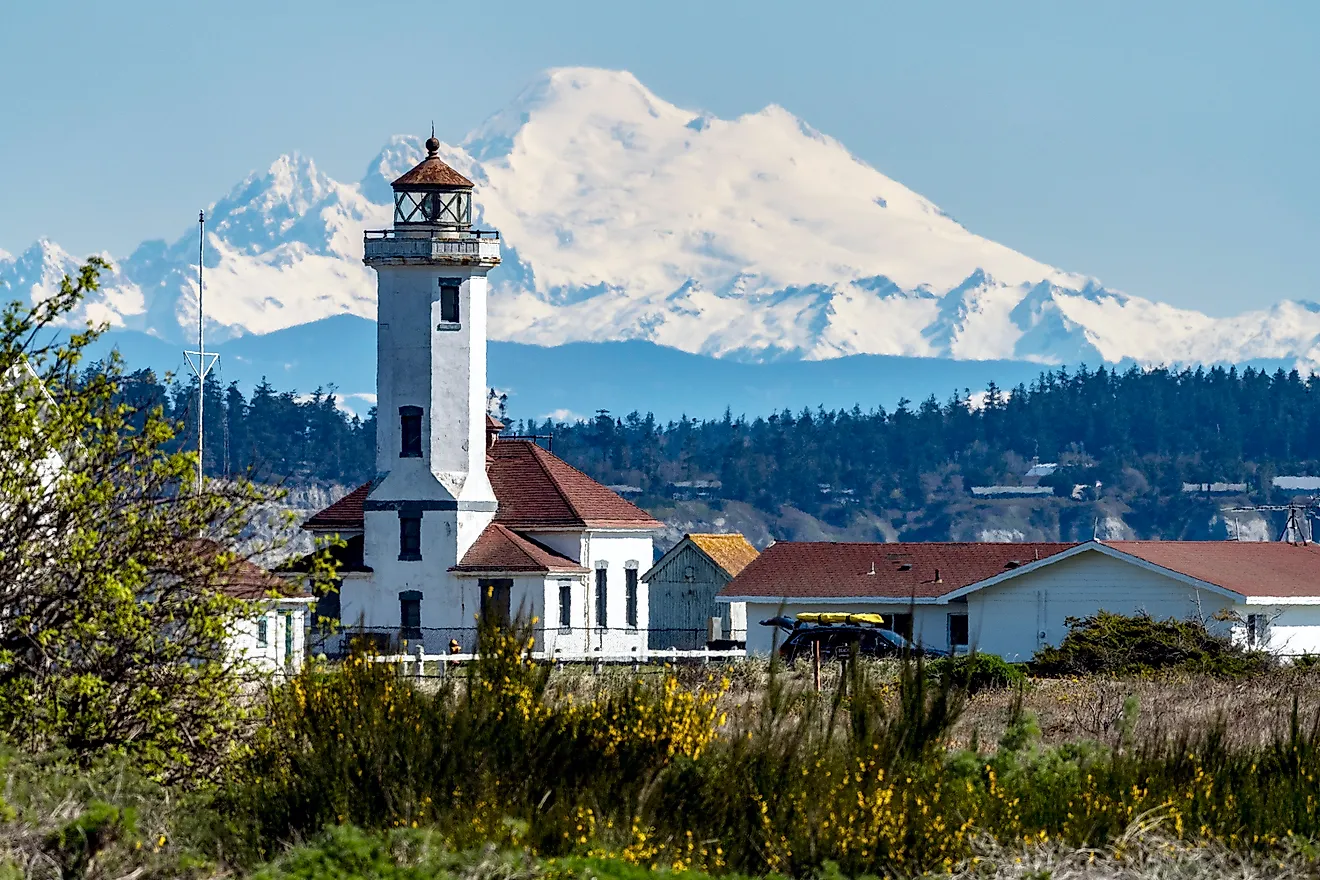
Bellingham might be the strongest pure college town on this list. Western Washington University shares the city with Northwest Indian College, Bellingham Technical College, and Whatcom Community College, which means a real chunk of the population is studying something at any given moment. The geography does not hurt either: Bellingham Bay handles the sunsets while 10,781-foot Mount Baker glows pink to the east, and the Stimpson Family Nature Reserve protects 350 acres of mature second-growth forest with quiet hiking trails just east of town. Downtown holds up its end with coffee shops, bars, and restaurants, plus Downtown Sounds, a free summer concert series, and a First Friday Art Walk that runs every month of the year, rain included.
Coos Bay, Oregon

Here is a fact that surprises people: Coos Bay, with just over 15,000 residents, is the most populated city on the entire Oregon Coast. It is also one of the oldest towns in the region, founded in 1854 and known as Marshfield for its first ninety years. The student side is small but real, split between Southwestern Oregon Community College and the Oregon Institute of Marine Biology, a University of Oregon marine station where the lab is the actual ocean. The surrounding coast is the main event, with the Oregon Dunes National Recreation Area to the north, the headlands of Cape Arago State Park to the southwest, and tide pools that the local outfit Wavecrest Discoveries will walk you through, naming everything that moves. Back in town, 7 Devils Brewing Co. pours its own beer a couple of blocks from the boardwalk.
Santa Rosa, California

Santa Rosa is the list's confession: it sits a solid 40-minute drive from the actual Pacific, anchoring Sonoma wine country instead. What it offers in exchange is the City of Roses' downtown, where the Museum of Sonoma County has been showing art and regional history since 1985 and now keeps a collection of more than 18,000 objects. The wine economy means restaurants and bars run deeper here than in most cities this size, which students notice quickly. On the education side, Santa Rosa Junior College has anchored the city since 1918 and remains one of California's larger community colleges, while Sonoma State University sits just south in Rohnert Park, close enough that its students treat Santa Rosa's downtown as their own.
Port Angeles, Washington

Port Angeles works a different angle. Peninsula College keeps things practical with professional-technical degrees and certificates, and the town's real campus is Olympic National Park, the gateway attraction that pulls around three million visitors a year. The Olympic Mountains stand directly behind town, the Strait of Juan de Fuca sits out front, and the mild marine climate keeps hiking and fishing on the calendar most of the year. For something quieter, the Port Angeles Fine Arts Center occupies the former hilltop home of painter Esther Webster, whose bequest created the center, and its galleries and outdoor sculpture park look out over the town she spent her life painting.
San Marcos, California

San Marcos calls itself the Valley of Discovery, and for once the nickname does some work. California State University San Marcos and Palomar College sit in the same town, and the CSUSM Cougars field more than a dozen NCAA Division II teams in the California Collegiate Athletic Association, which gives the place an actual home team and the crowds to match. The ocean is about ten miles west, close enough for a study-break beach run. Downtown, Wake the Dead Coffee House handles the morning caffeine and then flips into open mics, comedy nights, and live shows after dark, which is exactly the kind of third space a college town needs.
Tacoma, Washington

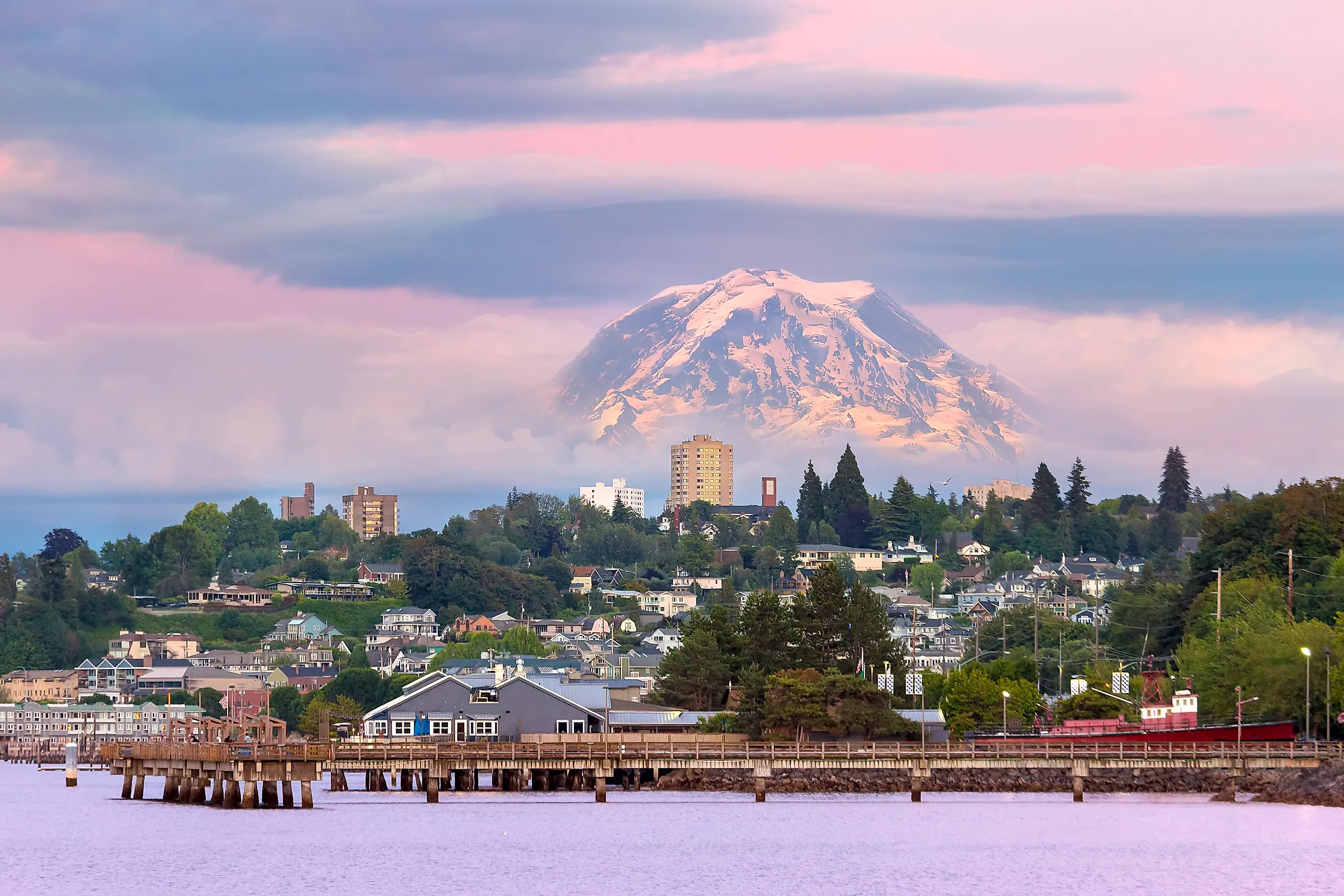
Tacoma is the big-city entry, and it leans into the nickname Grit City rather than apologizing for it. The University of Washington Tacoma, the University of Puget Sound, Pacific Lutheran University, and Tacoma Community College give it the largest student population on this list, and downtown rewards them with a Museum District that packs six major museums into a few walkable blocks, glass art and vintage cars included. The Pantages Theater, opened in 1918 inside the Jones Building, has been staging concerts, plays, and comedy for over a century. On a clear day, Mount Rainier fills the end of the street, which is the kind of view Tacoma residents pretend to be used to.
Where Coastal Campus Life Lands
The honest takeaway is that "college town" means something different at every stop on this list. Bellingham and San Marcos are the textbook versions, with campuses woven into daily life. Tacoma scales the idea up to four schools and six museums, Coos Bay shrinks it down to a marine lab and a brewery, and Newport Beach simply lets the students come to the sand. What they share is the part that matters: a working downtown, water close enough to organize a life around, and a calendar that does not empty out when the semester does.