9 Unforgettable Small Towns to Visit in Kansas
Kansas has many small communities built around experiences found nowhere else in the country. Throughout the state, towns shaped by whimsy and wonder invite visitors to slow down and take in what is right in front of them, whether through art, historical heritage, or unique landscapes that defy expectations. What makes these towns stand out is how naturally those experiences appear. You might wander into a backyard turned art environment, follow a road that once carried wagon trains, or find yourself hundreds of feet underground in a place that was never meant to be a museum. This list highlights nine towns that offer memorable moments for travelers willing to venture off the beaten path and seek them out.
Lucas

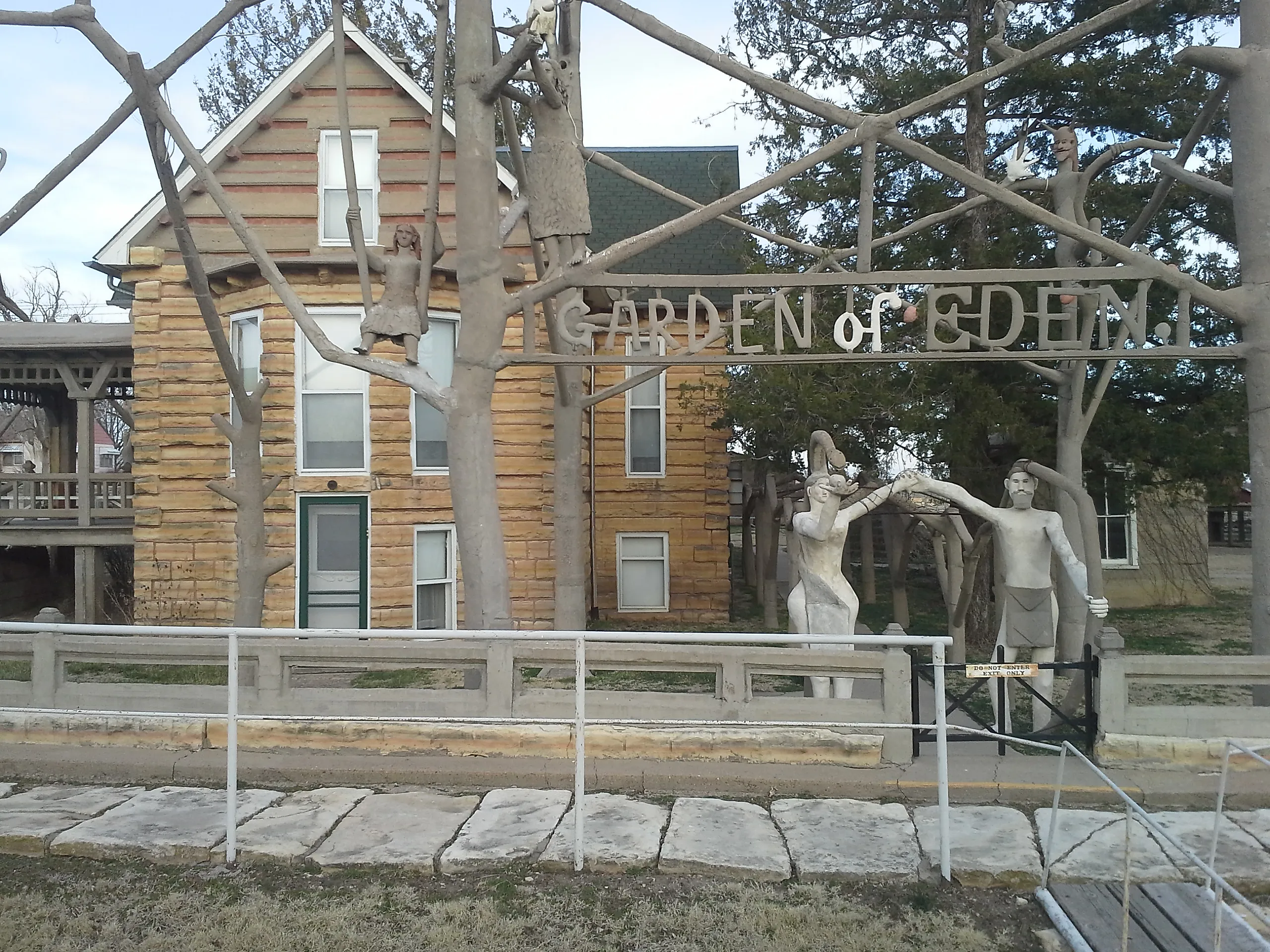
Lucas revels in quirky folk art that appears almost everywhere, from front yards to public spaces. The town’s defining landmark, the Garden of Eden, ranks among the most unusual art environments in the United States. Civil War veteran Samuel P. Dinsmoor constructed the limestone-and-concrete home in the early 1900s, filling it with sculpted figures, biblical scenes, and political commentary.
That same creative spirit extends across the rest of town. The Grassroots Art Center preserves Kansas folk art traditions through rotating exhibits that spotlight self-taught artists working outside the mainstream. Public art appears throughout the community, with sculpted yards and mosaic details set directly into sidewalks. One of the town’s most talked-about landmarks, The Bowl Plaza, transforms a former public restroom into a fully tiled art installation, turning an everyday necessity into a point of curiosity.
Lindsborg

Lindsborg is known as Little Sweden, and that identity shapes the town in ways visitors can instantly recognize. The community honors its Swedish heritage with blue-and-yellow flags and banners, hand-painted Dala horses, and local artwork scattered throughout downtown. Hemslojd, a long-standing shop devoted to Scandinavian crafts, woodwork, and imported goods, helps keep Swedish traditions visible and current. Every other year, the town celebrates its heritage during Svensk Hyllningsfest, a multi-day festival featuring folk dancing, parades, traditional dress, and music that transforms the community into a living expression of its roots.

Art anchors the experience at the Birger Sandzén Memorial Gallery, home to the bold, color-driven landscapes of the Swedish-American painter who helped define regional modernism. His work draws heavily from the surrounding Smoky Valley, using saturated hues and strong movement to reflect both place and heritage. The Red Barn Studio Museum preserves the tools, sketches, and teaching spaces of artists who helped shape the town’s creative identity. With Old World cafes, butchers, and craft shops, the town keeps its heritage active and firmly rooted in everyday life.
Hutchinson

Hutchinson grew through industry and agriculture, but its identity today reflects innovation and engineering just as clearly as prairie roots. That story begins underground at Strataca, a working salt mine turned museum more than 600 feet below the surface. Visitors descend by elevator into an immense network of tunnels carved entirely from salt, where mining equipment, preserved artifacts, and geologic formations reveal a world few people expect to encounter.

Above ground, the town’s reach expands further at the Cosmosphere, regarded as one of the most important space museums in the country. Original spacecraft, Apollo-era artifacts, and Cold War technology connect Hutchinson to the history of American space exploration. Downtown stops like Bogey’s keep the experience rooted in everyday life, with comfort food and a steady local crowd.
Cawker City

Cawker City embraces one idea so completely that it became nationally known for it. The town is home to the World’s Largest Ball of Twine, a roadside landmark that began in 1953 when local farmer Frank Stoeber decided to start rolling twine and never stopped. Today, the massive ball sits in a dedicated pavilion in the center of town, weighing more than 20,000 pounds and still growing. Visitors are encouraged to add their own piece of twine, making it one of the few landmarks in the country that remains unfinished by design.
Main Street stays closely tied to the landmark. The Wisconsin Street Trading Post and Travel Plaza sits across the street, serving as an informal gathering point with a cafe, soda shop, and local souvenirs. Each August, the town hosts the Twine-A-Thon, a community celebration where residents and visitors gather to wrap the ball together and keep the tradition going.
Wamego

Wamego has built a strong sense of identity around one of Hollywood’s most enduring stories, allowing The Wizard of Oz films to shape its community spirit and public spaces. At the center of it all is the Oz Museum, which houses one of the most extensive Wizard of Oz collections in the country. Original film memorabilia, costumes, first-edition books, and immersive exhibits trace the story’s influence beyond the movie screen.

Just down the street, the Oz Winery adds a local touch. Wine tastings feature labels inspired by characters and scenes from the film, giving visitors a relaxed way to continue the theme. Downtown includes small statues of Dorothy’s dog, Toto, and a yellow brick sidewalk that winds through the area. Afterward, the Friendship House Coffee Shop offers simple food, strong coffee, and freshly-baked goods.
Marysville

If there was ever a town in Kansas that forged an identity from a simple curiosity, it is Marysville. Known as Black Squirrel City, the town embraced its resident black squirrels and made them the town mascot. The squirrels dart across streets, gather in tree-lined parks, and appear in murals and signage, turning a small detail into a shared point of pride. That identity comes into focus at Black Squirrel City, where shaded walking paths and open green space make squirrel sightings common. Sculptures and subtle references reinforce the nickname, while the park functions as a community hub.

Every autumn, the Black Squirrel Fall Fest celebrates the town's famous squirrel population with food, music, games, costume contests, and local vendors. Just outside town, Alcove Spring Historic Park highlights the natural spring that once sustained wagon trains and Oregon Trail emigrants and remains one of the most intact trail sites in the region.
Dodge City

Dodge City does not shy away from the reputation that made it famous. Long associated with lawmen, cattle drives, and frontier life, the town openly embraces its place in the Wild West story. The defining experience is Boot Hill Museum, one of the most recognizable frontier museums in the country. Set on the site of the original cemetery, the museum brings the era to life through authentic artifacts, restored buildings, and live demonstrations.

Just a short walk away, the El Capitan statue, a towering bronze longhorn, stands as a symbol of Dodge City’s cattle-trading legacy. Downtown activity centers on places like Central Station Bar & Grill, a longtime local favorite near Front Street known for classic American fare.
West Mineral

West Mineral built its identity around a machine so large it permanently reshaped the surrounding landscape. The primary attraction is Big Brutus, one of the largest electric shovels ever built and one of the most imposing industrial landmarks in the United States. Rising more than 16 stories tall and weighing over 11 million pounds, the machine once stripped coal from the earth at a scale that becomes clear when standing beneath it. Visitors can tour the outdoor museum, climb into the cab, walk along the boom, and look out across reclaimed mining land.
Big Brutus may dominate the skyline, but the land it worked now tells a quieter story. Reclamation efforts created a network of lakes and ponds across former strip pits, many of which sit within the Mined Lands Wildlife Area. Anglers, campers, and hikers now use these spaces for unhurried outdoor recreation. Nearby, the Big Brutus RV Park places visitors close to both the shovel and the water.
Atchison

Atchison built its identity around one of the most enduring mysteries of the twentieth century. The town is the hometown of Amelia Earhart, whose disappearance during her 1937 flight continues to draw interest worldwide. The town connects that legacy to her early life through the Amelia Earhart Birthplace Museum. The Gothic Revival home preserves original furnishings, family photographs, and personal artifacts related to the aviator.

Atchison adds another layer through its reputation as one of Kansas's most haunted towns. Seasonal Haunted Trolley Tours and other guided ghost tours lead visitors through historic neighborhoods and downtown streets after dark, sharing stories passed down through generations. The experience often centers on McInteer Villa, a Victorian mansion long associated with reports of unexplained activity.
Towns That Define Kansas Through Distinct Identities
Kansas is best known for towns that commit fully to their identity. Across the state, these communities protect stories that cannot be replicated elsewhere, whether expressed through folk art carvings, places built underground, or long-standing traditions. Each town on this list offers a defining experience that shapes how the place is remembered after a visit. Together, they show how Kansas rewards curiosity by encouraging travelers to slow down, look closer, and engage with places that remain distinctly themselves.