9 Of The Best Affordable Towns To Retire In South Carolina
South Carolina's retirement dream is usually painted in oceanfront colors: condos, fairways, and crowds. The more revealing story lives inland, in working towns that quietly do the unglamorous things well: keep hospitals open, streets maintained, and housing tied to local paychecks instead of vacation demand.
We will focus on nine of those places, from Greenwood and Seneca to Conway and Cheraw. They were built to serve teachers, mill workers, lawyers, and nurses long before anyone used the phrase "active adult community."
Here, a state park or riverwalk is simply part of the week, not a brochure backdrop. Retirement in these towns feels less like downsizing and more like finally living on a human scale.
Greenwood

Greenwood sits at the intersection of textile history, lake country, and the quieter edge of the South Carolina Upstate. Long before retirement lists discovered it, Greenwood functioned as a regional anchor town, large enough to support healthcare, courts, and commerce, yet small enough that daily life still revolves around a recognizable core. Its downtown remains intact and active, shaped by early 20th-century prosperity rather than recent reinvention. That legacy shows in the street layout, civic buildings, and the absence of resort gloss. Housing remains attainable, with recent median home sale prices around $210,000, and the town's role as a county and medical hub gives it stability that many small towns lack.
Daily life here centers on a short list of places that matter. Lake Greenwood State Park provides direct access to a broad, undeveloped shoreline where walking trails, fishing piers, and quiet coves define the pace of the week. Self Regional Healthcare is a full-service regional hospital, eliminating the need to travel for routine or specialized care. The Dixie Drive-In has operated since 1959, functioning as a living artifact of local dining habits rather than nostalgia marketing. Emerald Farm offers open pastureland, event space, and walking paths that preserve Greenwood's agricultural identity without turning it into spectacle.
Seneca

Seneca occupies a narrow band of ground between Lake Keowee and the foothills of the Blue Ridge, and that geography defines the town's character. Seneca was never built as a resort; it grew as a service and mill town, which explains why its downtown still functions as a working center rather than a weekend attraction. The street grid is compact, the scale is manageable, and daily life unfolds within a few square miles. Proximity to Clemson University adds activity without overwhelming the town, while housing costs remain grounded in local wages rather than tourism demand, with a median home price of about $230,000 that still feels tied to local paychecks instead of speculative waves.
The most visible anchor is Ram Cat Alley, a short downtown corridor of restored brick buildings that supports independent shops and long-standing eateries rather than chains. Lake Keowee sits minutes from town, offering public boat ramps and shoreline access without gated-community barriers. Prisma Health Oconee Memorial Hospital provides full inpatient and outpatient services, reinforcing Seneca's role as a regional center rather than a bedroom town. Although currently closed to regular visitors, the Lunney Museum—a restored early-20th-century bungalow listed on the National Register—has traditionally interpreted Seneca’s railroad, industrial, and everyday life through guided tours and exhibits.
Newberry

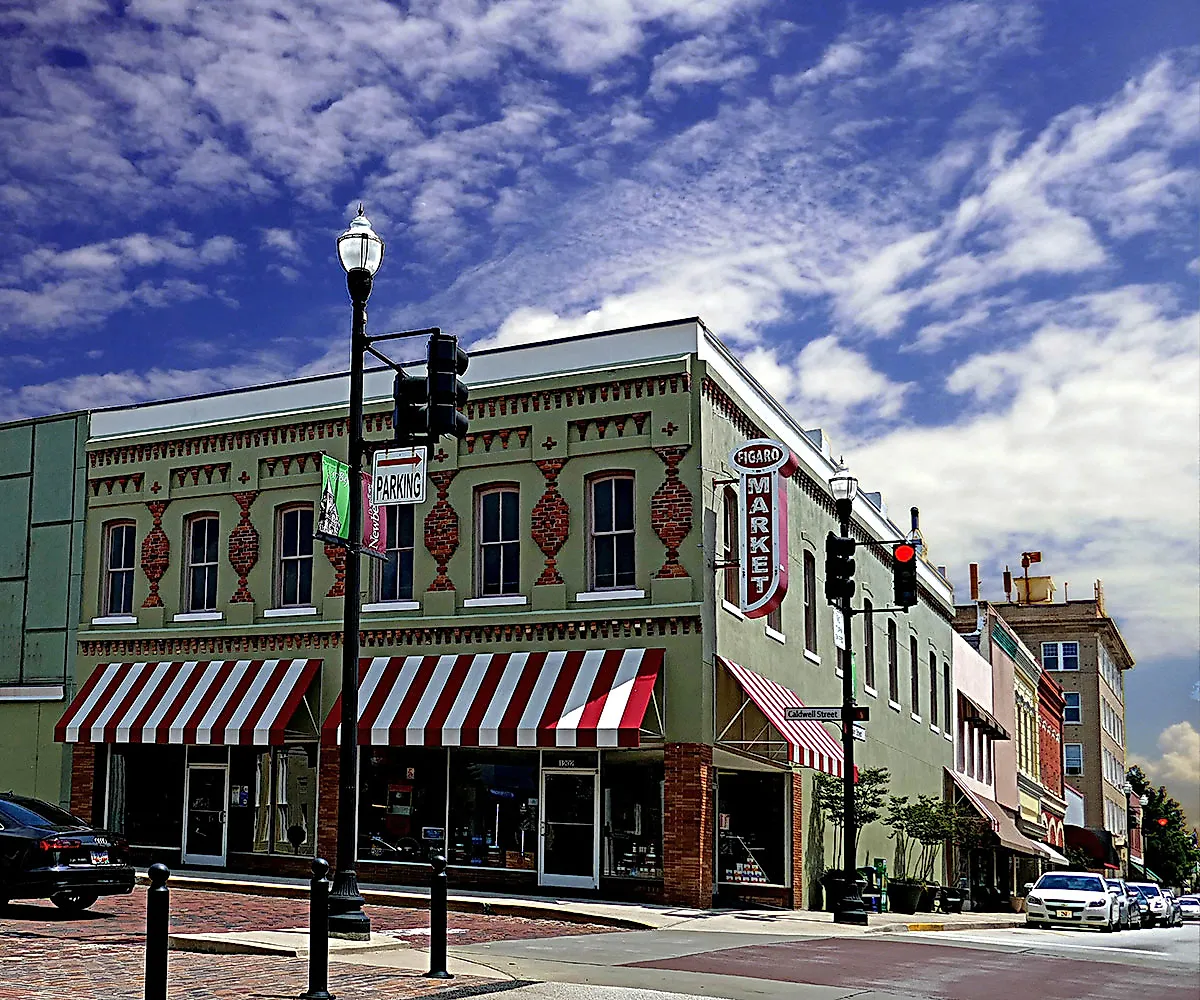
Newberry stands out for a reason few small towns can claim: it was built around a professional opera house that still functions as the town's cultural center more than a century later. Incorporated in 1789 and shaped by German settlement, Newberry developed as a county seat and trading hub rather than a mill village, which explains its orderly downtown and civic scale. The town remains compact, locally governed, and anchored by long-standing institutions. Housing costs reflect that stability rather than outside demand, with a median home sale price in the mid-$200,000s keeping Newberry within reach for retirees who need predictability more than flash.
The Newberry Opera House continues to host touring musicians, speakers, and stage productions, giving retirees consistent access to live programming without leaving town. Wells Japanese Garden operates as a quiet city park just off downtown, offering maintained paths and water features rather than event-driven crowds. Newberry College contributes lectures, performances, and athletic events that are open to the public and integrated into town life. Figaro The Dining Room occupies a restored historic bank building downtown and functions as a local dining anchor rather than a destination concept, reinforcing the town's everyday rhythm.
Camden

Camden occupies a rare position in South Carolina: it is the state's oldest inland town and one of its most historically intact. Founded in 1730, Camden developed as a courthouse and trading center rather than a mill or resort town, which explains its measured pace and civic layout. The town is nationally known for its long association with steeplechase racing, an identity that shapes the local calendar without turning daily life into spectacle. Retirement here benefits from that balance, heritage is present and visible, and a median home price of roughly $280,000 keeps Camden more attainable than many of the state's coastal markets.
Historic Camden anchors the town's identity, preserving original structures and battlefield land tied directly to the Revolutionary War, with programming that favors interpretation over reenactment theatrics. Springdale Race Course functions as open green space most of the year, becoming active only during sanctioned race meets that locals treat as civic tradition rather than tourist draw. Camden Archives and Museum documents the town's military, legal, and equestrian past with research-level depth. Sam Kendall's operates inside a restored historic building on Broad Street and serves as a reliable dining institution rather than a rotating concept, reinforcing Camden's steady, long-term character.
Hartsville

Hartsville developed as a planned industrial town rather than a railroad stop or county seat, and that origin still governs how it functions today. Built around early 20th-century manufacturing wealth, Hartsville has a defined center, intact neighborhoods, and a scale that supports daily living without sprawl. The town never pivoted toward tourism, which helps explain why housing prices remain grounded and civic institutions remain locally focused, with median home sale prices hovering near $230,000 and reflecting paychecks rather than speculation.
The most distinctive public space is Kalmia Gardens, a 35-acre botanical preserve anchored by the Thomas Hart House, where maintained paths follow Black Creek through native plantings rather than ornamental displays. Hartsville Museum documents the town's industrial and civic development with permanent exhibits that emphasize manufacturing and philanthropy. Byerly Park provides walking tracks, open fields, and senior programming space, functioning as a daily-use facility rather than a destination park.
Spartanburg

Spartanburg occupies an unusual middle ground in the Upstate: it functions like a regional city while retaining the footprint of a large town. Historically shaped by railroads, textiles, and later advanced manufacturing, Spartanburg never leaned on tourism to define itself. That legacy shows in its street grid, industrial reuse projects, and concentration of civic institutions downtown. Retirement here benefits from scale, there is enough population to sustain healthcare, arts, and public infrastructure, yet recent median sale prices around $259,000 still sit below many fast-growing Southern metros.
The clearest cultural anchor is the Chapman Cultural Center, which houses galleries, performance space, and the Spartanburg Art Museum under one roof, allowing regular programming without fragmented travel. The Mary Black Rail Trail converts former rail lines into a paved walking corridor that links neighborhoods, schools, and parks rather than existing as a scenic loop. Spartanburg Regional Healthcare System serves as a major medical provider for the western Carolinas, offering extensive inpatient and specialty care locally. The Kennedy operates in a restored downtown building and functions as a consistent neighborhood dining institution rather than a trend-driven venue.
Laurens

Laurens exists largely outside South Carolina's growth corridors, and that separation defines its appeal. Established as a courthouse town in the 18th century, Laurens developed around law, agriculture, and local commerce rather than industry or tourism. The downtown still reflects that purpose-driven origin, with government buildings, banks, and family-run businesses occupying the same blocks for generations. There is no seasonal economy to distort housing costs or daily rhythms. Retirement here aligns with permanence: modest housing prices, with median sales currently in the mid-$240,000s, predictable traffic patterns, and a town structure designed for residents rather than visitors.
The Laurens County Museum functions as a research-oriented institution, emphasizing genealogy, regional military history, and archival exhibits that connect newcomers to the county's long record. Veterans Memorial Park anchors the civic center and serves as a gathering space for ceremonies rather than recreation-driven crowds. Little River Park provides maintained walking paths and river access that locals use as part of routine life. Downtown Laurens' cluster of long-running cafés and restaurants housed in former bank and storefront buildings operates as a stable dining core, reinforcing the town's preference for continuity over reinvention.
Cheraw

Cheraw carries an identity few towns its size can claim: it is the birthplace of jazz musician Dizzy Gillespie and one of the most intact colonial-era towns in the Pee Dee region. Founded in the 1730s, Cheraw developed as a river port and courthouse center rather than an industrial hub, which preserved its street layout and residential scale. That early foundation still governs daily life, traffic remains light, neighborhoods are close to the town core, and housing prices reflect local use rather than outside demand; Cheraw’s median home price hovers near $200,000, matching its reputation for accessibility over flash.
Cheraw State Park sits directly outside downtown and combines forest trails, a large lake, and a championship golf course that operates within protected parkland rather than private development. Dizzy Gillespie Birthplace Park marks the town's cultural legacy and functions as a civic landmark rather than a themed attraction. Old St. David's Episcopal Church remains one of the oldest active churches in the state, anchoring the historic district with documented continuity. Rivers Edge Restaurant operates in a restored downtown building near the river and serves as a consistent social center rather than a transient dining concept.
Conway

Conway was a river town long before it was a coastal alternative. Founded in 1732 on the Waccamaw River, Conway developed as a courthouse and agricultural trading center, which insulated it from the boom-and-bust cycles that reshaped nearby beach communities. That history is still visible in its brick downtown, navigable street grid, and year-round residential character. Unlike resort-driven markets minutes away, Conway's housing prices reflect local demand rather than seasonal pressure, and a recent median sale price of about $314,000 keeps it noticeably less expensive than neighboring beach communities while still offering coastal access.
The Conway Riverwalk serves as the town’s spine, running along the Waccamaw River and functioning as both daily walking space and the site of civic events rather than tourism staging. Horry County Museum documents the region’s river commerce, rice cultivation, and settlement patterns with permanent exhibits rooted in county records. Coastal Carolina University contributes lectures, performances, and athletic events that remain accessible to the public and integrated into town life. Rivertown Bistro occupies a restored downtown building and operates as a consistent dining institution tied to local patrons rather than beach traffic.
These nine towns outline a different version of retirement in South Carolina: grounded in county seats, medical hubs, and everyday institutions rather than gated entries and speculative prices. Each offers a functioning core, attainable housing, and named places that shape the week instead of the vacation calendar. For retirees, the real luxury here is predictability, and the chance to grow older in places built to last.