8 Of The Quietest Minnesota Towns
Some of the best places to unwind in Minnesota are towns most people drive right past. Lanesboro built itself along the Root River and became a cycling and fishing destination because of it. Grand Marais grew up on the shore of Lake Superior, and Ely exists largely because the Boundary Waters start at its doorstep. Further south, Pipestone's identity is tied to the catlinite deposits that Indigenous Plains tribes have quarried for centuries, while Crosby reinvented itself around the flooded iron mines that now draw mountain bikers and scuba divers. Life in these nine towns stays close to home, where the day is built around whatever river, lake, or trail sits nearest.
Lanesboro

The Root River runs directly through Lanesboro, shaping both its layout and its role as a regional recreation hub. The Root River State Trail intersects the town near the 1868 Stone Dam, a limestone structure that continues to regulate water flow. This section of the trail supports cycling traffic that moves consistently through the downtown area during warmer months.

The Lanesboro Fish Hatchery is one of Minnesota’s largest coldwater production hatcheries. It uses spring-fed water directed through a network of concrete raceways. Nearby, Sylvan Park includes maintained green space, picnic areas, and fishing ponds. The town’s annual Rhubarb Festival and the presence of the Commonweal Theatre contribute to a local economy that blends tourism with small-scale cultural production.

Many of the commercial buildings along Parkway Avenue date to the late 1800s and have been preserved or adapted for current use. A storytelling phone booth installed within the town operates as a public history feature, playing recorded narratives by locals to share historical stories.
Grand Marais

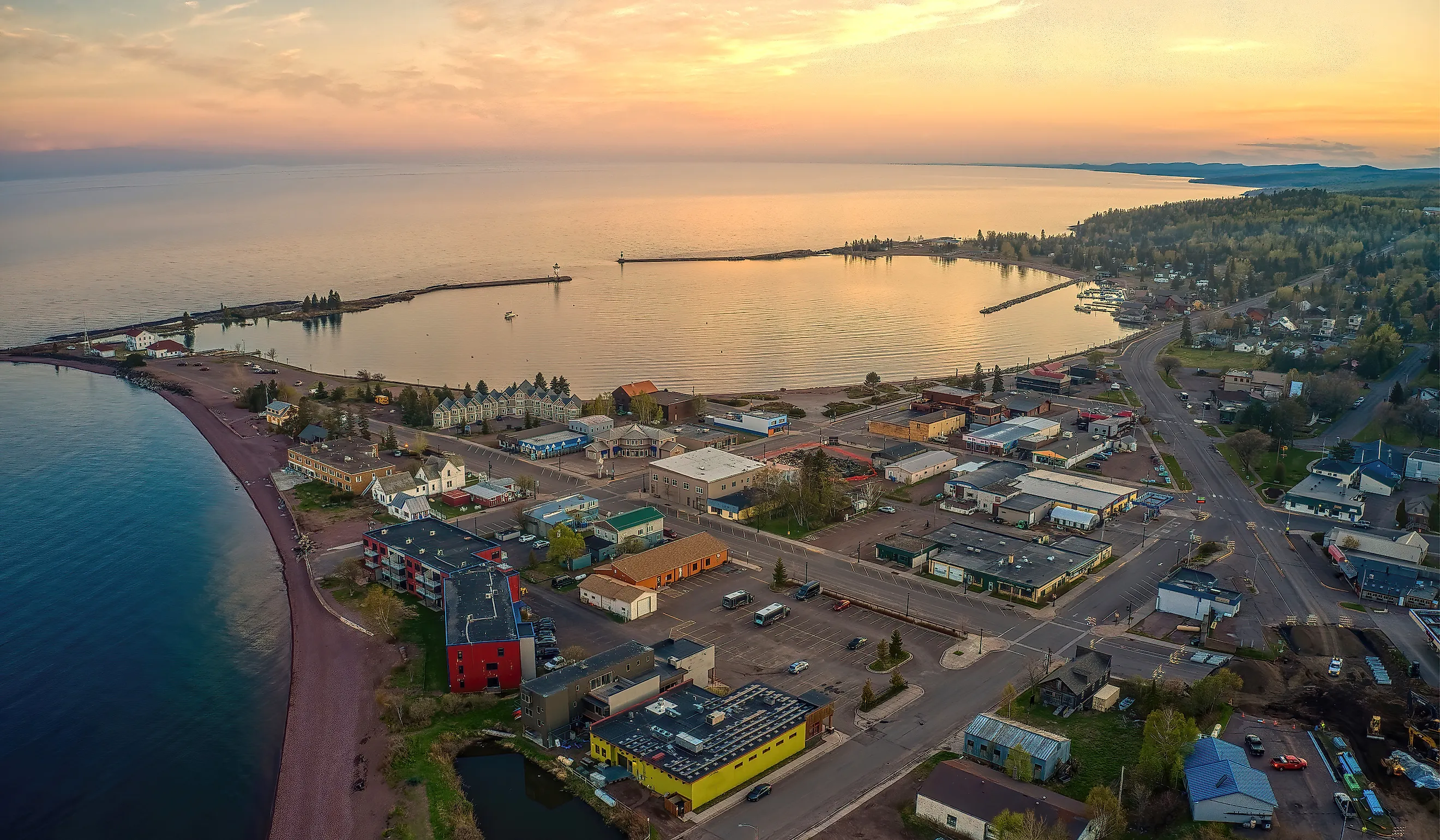
Grand Marais is positioned along the shore of Lake Superior, with a harbor that provides opportunities for fishing and recreational use. The breakwater and the rocky formation known as Artist’s Point extend into the lake, forming a natural boundary.

The Grand Marais Lighthouse, located at the end of the breakwater, dates to the early 20th century. After your time by the water, check out the North House Folk School, which offers instruction in traditional crafts such as woodworking, boatbuilding, and fiber arts, reflecting the region’s historical reliance on manual trades. The Johnson Heritage Post Art Gallery exhibits work by regional artists, often tied to the landscapes and materials of the North Shore. The Lightkeeper’s House functions as a museum, preserving aspects of maritime history connected to the harbor.
Ely

Ely is a primary gateway to the Boundary Waters Canoe Area Wilderness, a federally protected network of lakes and forest spanning over one million acres. The International Wolf Center and the North American Bear Center are both located in Ely, offering educational exhibits and observation areas focused on native wildlife species. The Dorothy Molter Museum preserves the cabins and artifacts of a long-term resident of the Boundary Waters, who was lovingly nicknamed 'the Nightingale of the Wilderness.' Kawishiwi Falls, located a short distance from Ely, features a series of cascades over exposed bedrock, accessible via a trail.
Pipestone

Pipestone is located within a tallgrass prairie landscape in southwestern Minnesota. The town is centered around Pipestone National Monument, which protects deposits of catlinite, a soft red stone historically used by Indigenous Plains tribes for ceremonial pipe carving. The park offers cultural demonstrations, winter snowshoeing, and even a free junior ranger program for kids that lets them earn a Jr. Ranger badge.

Many of Pipestone’s buildings incorporate Sioux Quartzite, a durable, locally sourced stone visible in various downtown structures. This material gives the town a consistent architectural appearance. The Casey Jones State Trail runs through the region as well, following a former rail corridor.
Taylors Falls

Situated along the St. Croix River, Taylors Falls is home to unique glacial potholes carved into basalt bedrock. Over 200 of these potholes are preserved within Interstate State Park, which spans both Minnesota and Wisconsin. The potholes vary in size and depth and are accessible via marked trails and observation points.

The town developed during the 19th century as part of the logging industry that operated along the St. Croix River. Structures such as the Folsom House, built in the 1850s, reflect this period and are maintained as part of the town’s historical record.
Henderson

Henderson is located along the Minnesota River, with a historic downtown that preserves several 19th-century brick storefronts. The Ney Nature Center, located nearby, is an immersive outdoor experience that highlights environmental education alongside hiking trails. The Hummingbird Trail also offers recreational trails and is set to open on May 30th, 2026, inviting visitors to explore local scenery. Allanson's Park is ideal for booking a campsite, featuring updated electrical hookups. Although it does not officially open for the season until May, visitors can start making reservations as early as February.
Marine on St. Croix

Marine on St. Croix is a small town developed along the St. Croix River as a milling settlement. The Marine Mill marks the location of Minnesota’s first commercial sawmill, established in the 1830s. Stone foundations from the original mill structures remain visible along the creek. The Marine General Store, in continuous operation since 1870, serves as a central commercial point within the town. Big Marine Lake Regional Park includes a large playground, a dock for fishing, and hiking and biking trails. A highlight found in town is the St. Croix Utility Box Mural Project, which celebrates local artists and honors the St. Croix River.
Crosby

Crosby is located within the Cuyuna Range, a region defined by its rich iron mining. Cuyuna Country State Recreation Area contains about a dozen iron mines and supports a range of recreational activities, including mountain biking, kayaking, and even scuba diving. Be sure to check for trail closures before visiting the park, as they can be impacted by snowfall. The Milford Mine Memorial Park commemorates a 1924 disaster in which flooding trapped and killed miners, marking a significant event in the region’s industrial history.

A close drive away is Ruttger's Lake Bay Resort, which offers everything from golf to a summer filled with live music. There are a number of additional events at the resort, including an annual Christmas Market, Oktoberfest, and a unique 'Poke the Bear Maple Tap Weekend' coming up in April.
Across these Minnesota towns, quietude guides lifestyle. Whether the day still revolves around a riverfront main street in Lanesboro, a harbor in Grand Marais, wilderness access in Ely, or reclaimed mine lakes in Crosby, life tends to move with a steady cadence shaped by geography and long-established community footprints. What these towns have in common is a lack of hurry. Errands remain local, outdoor spaces stay close at hand, and the day’s momentum is guided by seasons, trails, and waterways. Together, they reflect the quieter side of Minnesota where life remains grounded, intentional, and comfortably removed from the pressures of larger urban centers.