8 Most Breathtaking Towns In Wales
Wales packs a lot into a small country. Within its borders are three national parks, over 600 castles and castle ruins, and stretches of coastline and forest that rival anywhere in Europe for sheer beauty. The towns that sit among all of this tend to be small, walkable, and layered with history that goes back centuries. Some are built around medieval castles, others around rivers and canals, and a few exist mostly because the mountains surrounding them are too good to ignore. These eight are among the most rewarding.
Betws-y-Coed

Betws-y-Coed is a village of fewer than 500 people in Conwy County Borough, surrounded by rivers, forests, and the peaks of Eryri (Snowdonia) National Park, the largest national park in Wales. Welsh is widely spoken here, and the village functions as one of the main gateways for hikers heading to the summit of Yr Wyddfa (Snowdon), the highest peak in Wales at 1,085 meters. Zip World, with its zip lines, forest coasters, and free-fall experiences, adds a more adrenaline-driven option for visitors not set on a summit attempt.

On the ground, the Penmachno Mountain Bike Trails provide routes for cyclists of varying skill levels, and Gwydir Forest Park offers walking trails through landscapes of lakes, valleys, and mountain views. The village works well as a base for exploring the wider park, with enough cafes and outdoor shops to keep you supplied between excursions.
Llanrwst

Llanrwst is a historic market town of about 2,400 people in Conwy County Borough, set along the River Conwy with green hills rising on either side. The town's most recognizable landmark is Pont Fawr, a three-arched stone bridge dating to 1636 that spans the river at the center of town. Just outside the center, Gwydir Castle is a Tudor manor house dating from the late 15th century. It still functions as a private family home but also operates as a bed and breakfast with two guest rooms, tours of the gardens, and resident peacocks on the grounds.
Brecon

Brecon sits at the confluence of the Rivers Usk and Honddu, near the edge of Bannau Brycheiniog (Brecon Beacons) National Park. The town has been strategically important since the Norman period, and that military connection continues today with army training facilities nearby. The Royal Welsh Regimental Museum is a natural starting point for anyone interested in that history, with collections spanning uniforms, medals, weapons, and battlefield models.
Brecon Cathedral, founded as a Benedictine priory in 1093, is one of the town's oldest landmarks, and The Hours Café and Bookshop within the cathedral grounds makes for a good stop. Beyond the town, the Monmouthshire and Brecon Canal winds through the wooded Usk Valley and is widely regarded as one of the most scenic canals in Britain.
Hay-on-Wye (Y Gelli Gandryll)

Hay-on-Wye is a small market town of about 2,100 people in Powys, on the River Wye near the English border and within Bannau Brycheiniog National Park. It has been known as the "Town of Books" for decades, with independent bookshops concentrated throughout the town center. Beyond books, Hay has a strong arts and ideas culture, hosting the world-renowned HowTheLightGetsIn Festival, which combines philosophy, music, and debate, as well as music events through the Hay Music Trust.
Hay Castle, which has undergone extensive restoration and reopened with exhibition and event spaces, is one of the town's central landmarks. The Three Tuns, in a building believed to date to the 16th century, serves Italian-inspired food alongside locally crafted beer and is a reliable stop after a day of browsing.
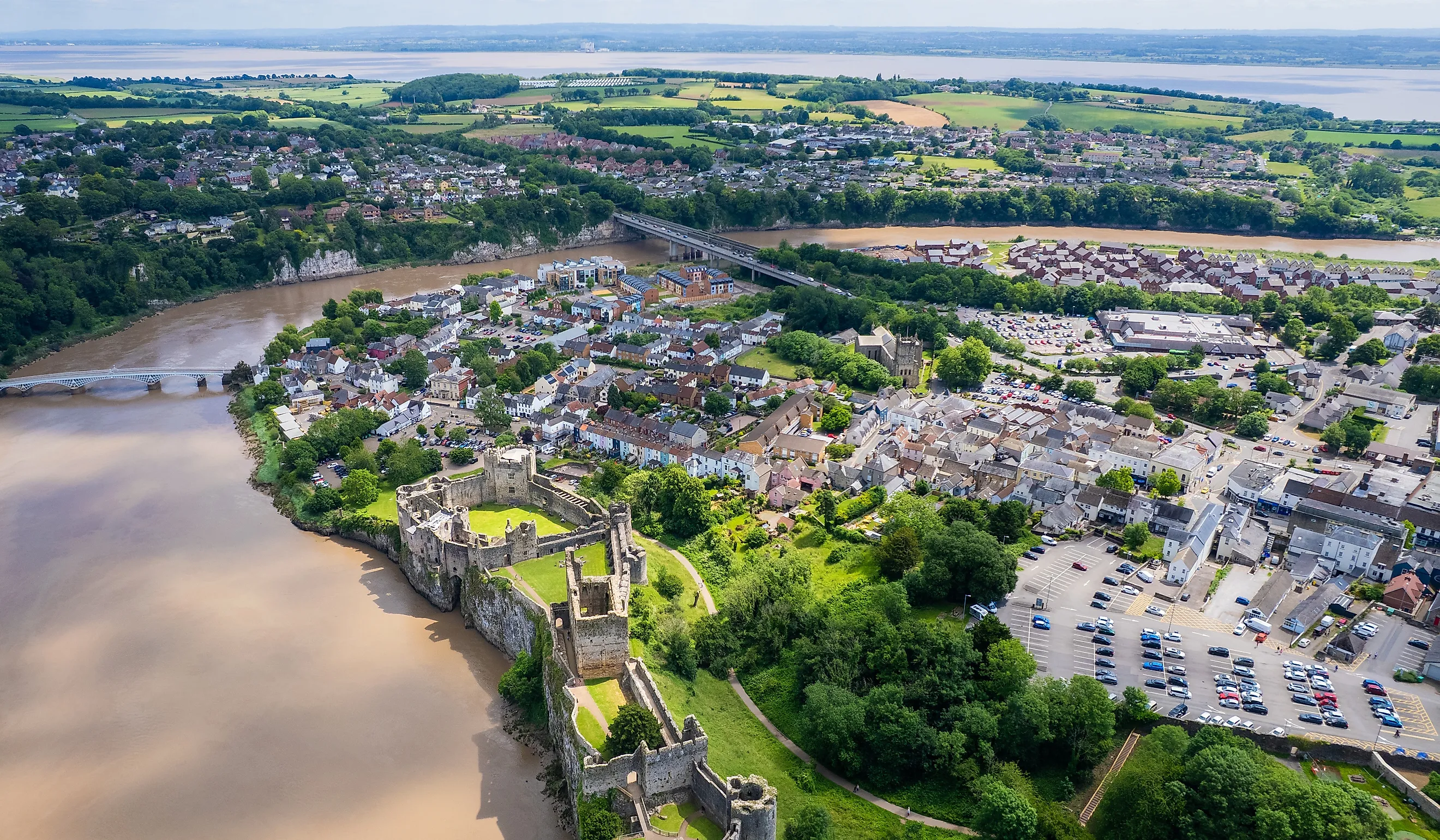
Chepstow

Chepstow sits just above the River Wye near the border with England, backed by limestone cliffs and dense woodland. The town's centerpiece is Chepstow Castle (Castell Cas-gwent), begun in 1067 and generally recognized as the oldest surviving post-Roman stone fortification in Britain. The castle hosts a variety of events throughout the year, from medieval wargaming sessions to family-friendly outdoor activities on the grounds.
Chepstow Museum, housed in an 18th-century townhouse, covers the town's history as a port, market center, and hub of shipbuilding and fishing. For something more contemporary, the Chepstow Racecourse hosts themed race nights and an annual Grand National Party Raceday with live jump racing.
Llangollen

Llangollen, a town of about 3,700 in the Dee Valley, is surrounded by rolling hills and the River Dee. The river is a draw in its own right: Llangollen Maelor Angling offers over 10 miles of fishing on the Dee, known for salmon, sea trout, and grayling, and outfitters like Bearded Men Adventures provide white-water rafting, river tubing, and canoeing for those looking for something faster-paced. On land, the Vale of Llangollen Golf Club is regarded as one of the best courses in Wales, with views over the valley from its fairways.
Victoria Promenade and Riverside Park follow the canal and river through town and connect to the Pontcysyllte Aqueduct, a UNESCO World Heritage Site that carries the canal across the Dee Valley at a height of 126 feet. It is one of the most impressive feats of engineering in Wales and can be walked across on foot.
Beaumaris

Beaumaris sits on the Isle of Anglesey along the Menai Strait, with the peaks of Eryri visible across the water. The town's pier stretches into the strait and is a popular spot for crabbing, birdwatching, and boat trips to nearby Puffin Island, where seabirds and seals can be seen. Beaumaris Castle, begun in 1295 by Edward I, is a UNESCO World Heritage Site and one of the finest examples of concentric castle design in Europe. It was never completed, which is why it is sometimes referred to as "the greatest castle never built." The castle hosts interactive events including knight school sessions and medieval reenactments.
The Spirit of Anglesey Distillery, an award-winning producer of gin, vodka, and rum, offers two-hour workshops where visitors can blend their own gin and take home a bottle.
Llanfairpwllgwyngyllgogerychwyrndrobwllllantysiliogogogoch

Llanfairpwll, as it's commonly shortened, is a village of about 3,100 on the Isle of Anglesey. The 58-character full name was coined in the 19th century to attract railway travelers and roughly translates to "The church of St. Mary in the hollow of white hazel trees near the rapid whirlpool by the church of St. Tysilio of the red cave." The railway station, opened in 1848, displays the full name on its platform sign and remains one of the most photographed spots in North Wales.
Beyond the name, Plas Newydd House and Gardens is the main draw. The National Trust property blends Classical and Gothic architecture, with interiors full of art and history, surrounded by 40 acres of curated gardens and 129 acres of woodland stretching down toward the Menai Strait.
History Runs Deep in Wales
What connects these eight towns is the way history sits right on the surface. A 1067 castle anchors one, a 1636 bridge defines another, and a 58-character railway sign draws crowds to a third. The forests, rivers, and mountains that surround them are just as much a part of the draw. Wales does not make you choose between natural beauty and built heritage, and these towns are proof of that.