8 Fairy-Tale Small Towns In France
Many of the fairy tales people grow up with were written down or shaped by French authors, and a lot of them draw on French settings and everyday life. Stories like Cinderella and Little Red Riding Hood helped fix the classic images of forests, villages, and stone-built towns in people’s minds, which is why parts of France can feel instantly familiar. The country’s long history and strong approach to preserving old places have left behind many small towns that still look much as they did centuries ago, making them feel storybook-like without being staged or artificial.
Mirepoix

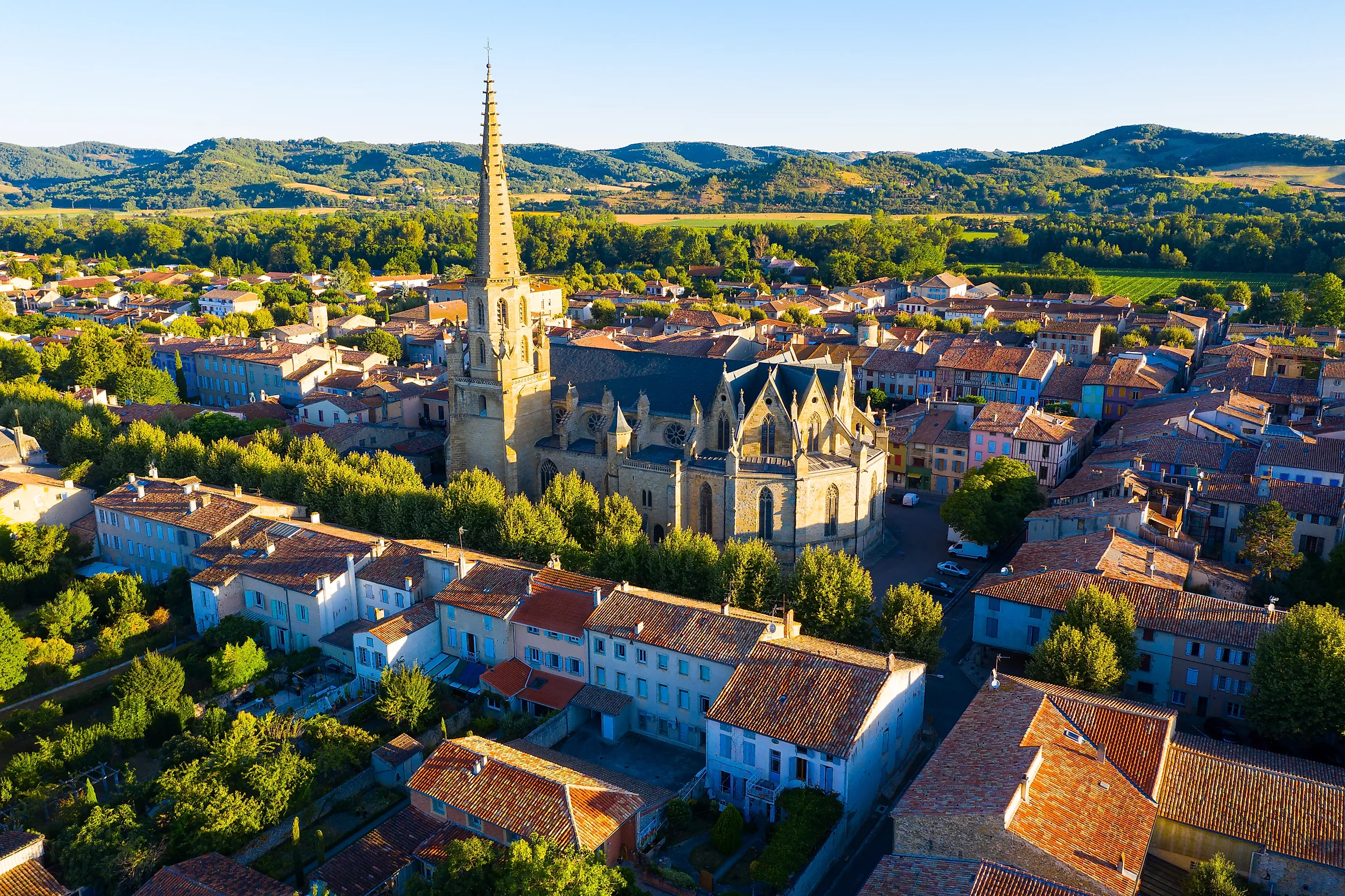
Located near the Pyrenees in southwestern France, Mirepoix sits outside the main tourist corridors yet draws travelers familiar with the region. This medieval bastide town was rebuilt on flat land beside the Hers River rather than on a defensive hilltop, giving it a layout that feels open and orderly. Arcaded squares and surviving fortifications still define the old center, reinforcing its storybook appearance. Cyclists often pass through the area on long-distance routes linked to Pyrenean riding, though the town itself is not a regular Tour de France stop.
Mirepoix is also known for its markets, particularly the long-running Monday market that fills the central square with regional produce. The colorfully carved House of Consuls reflects the town’s past as a merchant center, while Saint-Maurice Cathedral stands out for its unusually wide single nave. Together, these landmarks give a clear sense of Mirepoix’s medieval origins and lasting role in local trade.
Obernai

Alsace, a region in northeastern France along the German border, is well known for its half-timbered architecture and compact historic towns. Obernai offers a strong example without the congestion seen in some nearby destinations. Its old center retains a cohesive layout and a sense of daily life rather than display.
Begin at the Place du Marché, one of the town’s central gathering points, where cafes sit beside historic buildings and the belfry dominates the skyline. A walk along the remaining ramparts provides a clear view of how the town developed within its walls. Obernai also hosts a well-known Christmas market, and while the old center holds interest year-round, the town takes on a different atmosphere during December when seasonal decorations fill the streets.
Riquewihr

Riquewihr is a long-established wine town that dates back several centuries, with much of its growth occurring during the 16th and 17th centuries. Set among vineyard-covered hills in Alsace, it is closely associated with Riesling production and remains an important stop along the Alsace Wine Route. While many travelers pass through briefly, the town rewards a longer stay.
The historic center follows a mostly level main street lined with tightly packed half-timbered houses in varied colors. The Dolder Tower, which once served as a gate and defensive structure, now houses a small museum displaying medieval weapons and town artifacts. These fortifications explain why Riquewihr was so carefully protected. During December, the town’s Christmas market draws large crowds, building on traditions that reflect its long history.
Rocamadour

Rocamadour is built directly into a cliff face, creating one of the most unusual town layouts in France. It is best known as a pilgrimage destination tied to Saint Amadour, a medieval hermit, and to the Black Madonna housed within its sanctuary complex. For centuries, pilgrims climbed the 216 steps of the Grand Escalier to reach the chapels above.
Today, many people come primarily to walk through the stacked streets and passageways carved into the rock. The town rises in levels, with stone buildings appearing to grow out of the cliff itself. This arrangement gives Rocamadour a strong visual identity and a sense of enclosure that feels far removed from modern development.
Rochefort-en-Terre

Rochefort-en-Terre, located in Brittany, is defined by solid stone buildings with steeply pitched roofs. Its medieval castle ruins were partially restored during the 20th century by American painter Alfred Klots, adding another chapter to the town’s long history. The compact historic center reflects centuries of adaptation rather than large-scale redesign.
Just outside the village lies the Moulin Neuf lake, reached by a short walk or drive, where paths circle the water and offer clear views back toward the surrounding countryside. Rochefort-en-Terre is also known for its winter illumination events, when buildings and streets are lit during the holiday season. Evening walks at that time reveal a quieter side of the town after daytime crowds thin out.
Roussillon

Located in Provence, Roussillon is known for the ochre tones that define its buildings and cliffs. The town spreads across a hillside above iron-rich deposits that give the landscape its deep reds and oranges. Houses cluster closely together, creating a unified palette that reflects the materials beneath them.
Local legend attributes the color of the cliffs to a tragic love story involving a woman who leapt from the rocks, though the true cause lies in the area’s geology. The Sentier des Ocres allows walkers to explore former ochre quarries, while the Église Saint-Michel provides one of the highest viewpoints in town. The Conservatoire des Ocres et de la Couleur explains how these pigments shaped local building traditions.
Saint-Émilion

The Bordeaux region is closely tied to wine production, and Saint-Émilion reflects that connection in its layout and surrounding vineyards. Recognized as a UNESCO World Heritage Site, the area was designated for the close relationship between architecture and cultivated land. Wine tasting remains central to local life, though the town’s appeal extends beyond vineyards.
Saint-Émilion’s medieval center includes the underground Monolithic Church, carved directly into limestone, and the Maison de la Cadène, one of the oldest surviving timber-framed houses in town. Narrow streets wind past stone buildings that reflect centuries of religious and commercial activity tied to wine production.
Vézelay

Vézelay is a hill town in Burgundy with a long history as a pilgrimage center. Its Basilica of Sainte-Marie-Madeleine sits atop what is traditionally called the Eternal Hill and dominates the town below. The basilica is a major example of Romanesque architecture and once ranked among the most important pilgrimage destinations in medieval Europe, though its influence rose and fell over time.
The town developed around the abbey, with sloping streets leading upward through tightly grouped buildings. Walking these lanes reveals repeated viewpoints across the surrounding hills and vineyards, shaped by centuries of agricultural use. Vézelay’s preservation allows visitors to trace how religious travel shaped the settlement that remains today.
A Land of Contrasts

France shares a national culture, yet its regions differ sharply in landscape, building traditions, and local history. These towns reflect that range, with cliffside settlements, vineyard centers, hill towns, and market villages all shaped by distinct circumstances. Some resemble fortified strongholds, while others rely on color, layout, or setting to create their appeal. Together, they show how France’s literary legacy and physical geography continue to overlap, reminding us of stories passed down for generations, while inviting us to explore and develop our own life stories.