7 Welcoming Towns to Retire in New Zealand
New Zealand, an island country with just over five million people, is an ideal destination to enjoy a blissful retirement. The country is beautiful, relatively laid back, and peaceful, and most importantly, it is a developed nation. Yet, retiring in this beautiful country requires picking some charming and welcoming towns that fit the prospects for a perfect retirement destination. Thankfully, these towns tick all the boxes for a great retirement, such as low population, slow-paced life, low crime rate, affordable housing, access to healthcare facilities, and a good population of seniors. Saying goodbye to full-time work life and seeking the ideal destination for a peaceful retirement, here are seven welcoming towns in New Zealand to call home.
Kerikeri

Kerikeri is one of New Zealand’s most historically significant towns and a natural fit for retirees who value heritage and a slower pace of life. Often cited as the country’s earliest European settlement, Kerikeri was established in 1822 and remains closely tied to its missionary past. Nearly 29% of residents are aged 65 and over, crime rates are low, and average home prices remain relatively accessible compared with larger North Island centres.
The town’s history is easy to experience day to day. The Kerikeri Mission House, the oldest surviving building in New Zealand, sits beside the Stone Store, the country’s oldest stone building, along with St James Church, built in 1878. All three overlook the Kerikeri River, giving the area a setting locals often take for granted but visitors rarely forget. Nearby stands the historic pear tree, believed to be one of the oldest fruit trees in the country.
Beyond its heritage sites, Kerikeri offers easy access to nature. Charlie’s Rock Waterfall is a short, roughly 30-minute walk from town and leads to a popular swimming spot that locals use to cool off in warmer months. For those drawn to the arts, the Little Black Gallery showcases work by Northland artists and adds to the town’s strong local creative scene.
Clyde

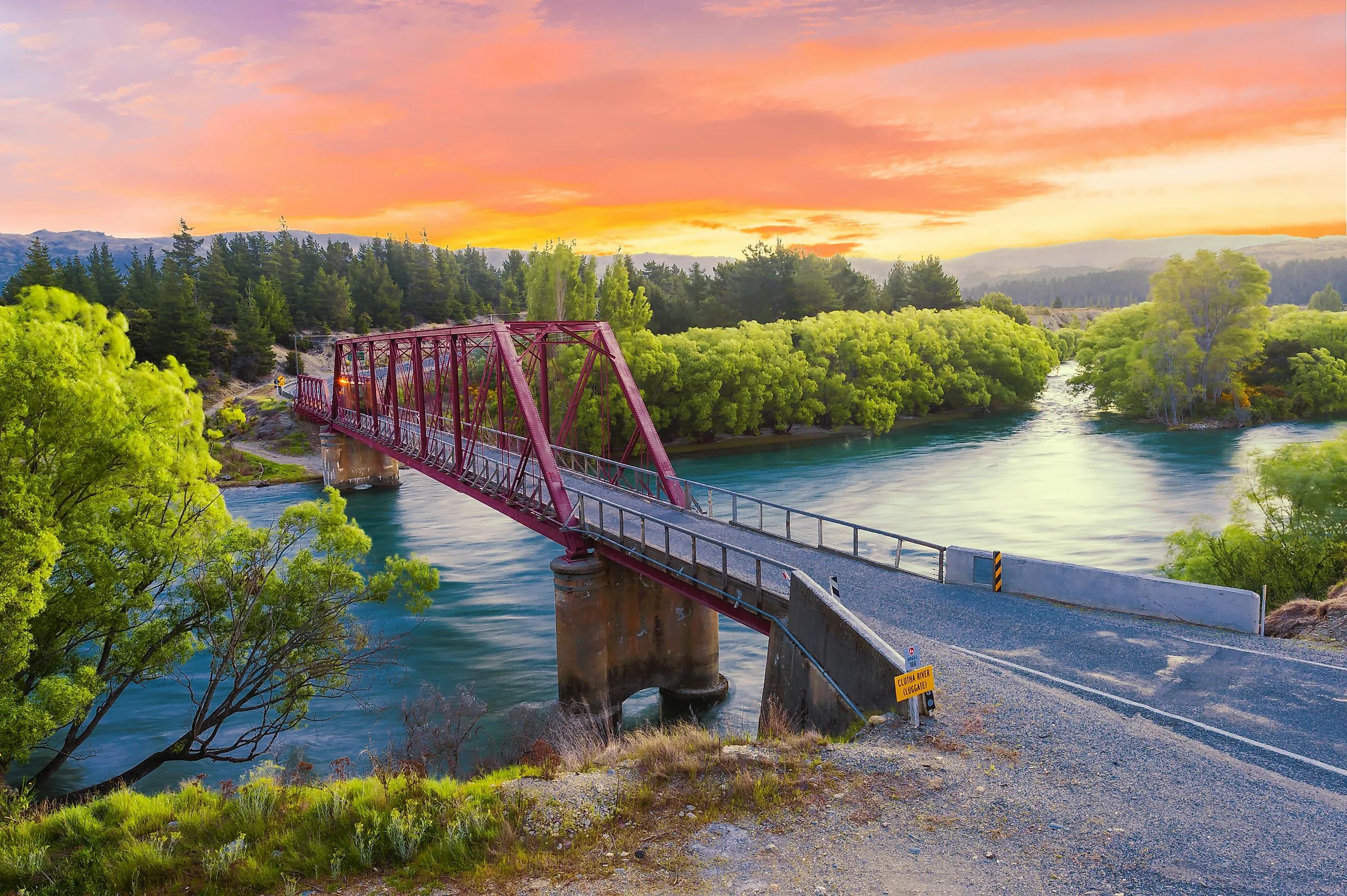
Clyde is a quiet, retirement-friendly town in Central Otago, set near Alexandra and along the banks of the Clutha River. With a population just over 1,000, it offers a calm, close-knit atmosphere and a low crime rate. Housing remains relatively affordable by Central Otago standards, and open landscapes begin almost at the edge of town.
Roughly 30% of Clyde’s residents are aged 65 and over, which shows in the town’s slower pace and strong sense of community. Day-to-day life is simple but far from dull. The Clyde Cinema remains a local favourite for an evening out, while nearby vineyards, including Clyde Village Vineyard, offer relaxed wine tastings without the crowds found in larger centres.
Outdoor access is one of Clyde’s biggest draws. The Clutha River provides easy spots for walking, picnicking, and quiet time by the water, while Lake Dunstan is popular for boating and fishing. For those interested in local history, the Clyde Historical Museum preserves the area’s gold-mining past through photographs, artefacts, and stories that reflect the town’s early settlement.
West Port

Westport is a small coastal town on the West Coast of New Zealand’s South Island, located at the mouth of the Buller River. Established in the early 1860s, it is the oldest European settlement on the West Coast and remains closely tied to the region’s mining and maritime history. With a population of roughly 4,200, Westport offers a quiet, manageable pace of life and generally low crime rates, making it appealing to retirees seeking calm surroundings.
Housing remains relatively affordable by New Zealand standards, with three- to four-bedroom homes averaging around $470,000. Easy access to the outdoors is part of daily life. The Buller River is a popular local spot for kayaking and boating, while short drives lead to Cape Foulwind and Tauranga Bay, where a fur seal colony can be viewed from coastal walking tracks. Carters Beach, just outside town, is commonly used for swimming, picnics, and relaxed time by the sea.
Westport’s history is preserved at the Coaltown Museum, which documents the area’s coal-mining past and its role in shaping the town’s development. For entertainment and community events, the NBS Theatre hosts visiting performances, films, and local productions, providing cultural activity without the need to travel far.
Masterton

Masterton is the largest town in the Wairarapa and serves as the region’s main service centre, yet it retains a calm, approachable pace of life that suits many retirees. The town has a sizeable senior population, a generally low crime rate, and housing costs that remain lower than those found in New Zealand’s major cities. Average home prices hover around $550,000, making Masterton a practical option for retirees who want access to amenities without big-city costs.
Green space plays an important role in daily life. Queen Elizabeth Park runs alongside the Waipoua River and is widely used for walking, sitting, and spending time outdoors. The park includes maintained gardens, a small lake with looping paths, and the long-running miniature railway that remains a familiar local feature. Henley Lake Park offers another easygoing outdoor setting, with flat walking trails circling the lake and open lawns commonly used for picnics and relaxed afternoons.
Masterton’s cultural life is centred around Aratoi Wairarapa Museum of Art and History, which holds a collection of more than 4,000 objects covering Māori heritage, regional history, and contemporary art. For entertainment, Regent 3 Cinemas provides a convenient local option for regular film screenings without the need to travel outside town.
Alexandra

Alexandra is a small but well-established town in Central Otago, set along the banks of the Clutha River. It has a higher-than-average proportion of older residents, with close to 30% of the population aged 65 and over, contributing to a pace of life that suits many retirees. The town generally experiences low crime levels and offers good access to healthcare services for a community of its size.
Outdoor space is central to daily life in Alexandra. The Clutha River runs alongside town and is commonly used for walking, cycling, and quiet time outdoors. Pioneer Park, one of the town’s main green spaces, features gardens, open lawns, playgrounds, and picnic areas and is a regular gathering place for residents.
Within Pioneer Park sits Central Stories Museum & Art Gallery, which documents the region’s gold-mining history while also showcasing local and regional artwork. Beyond town, vineyards are part of the surrounding landscape, with places like Grey Ridge Vineyard offering relaxed wine tastings that reflect Central Otago’s growing reputation for wine production.
Greymouth

Greymouth is a coastal town on the West Coast known for its dramatic landscapes and slower pace of life. Around 20% of the population is aged 65 and over, and the town generally experiences low crime levels. Housing remains relatively affordable, with median home prices sitting around $430,000, making Greymouth a realistic option for retirees seeking space and scenery.
Arts and culture play a steady role in the community. The Leftbank Art Gallery features rotating exhibitions, including notable pounamu collections that reflect the region’s strong connection to stone carving and Māori culture. Along the coast, Rapahoe Beach is a common spot for walking, sitting by the sea, and enjoying the open shoreline.
For those who enjoy longer outings, the Point Elizabeth Walkway stretches roughly 11 kilometres along the coast, passing remnants of historic gold-mining sites before reaching clifftop viewpoints overlooking the Tasman Sea. West Coast history is further explored at nearby Shantytown Heritage Park, a reconstructed 19th-century mining settlement where visitors can learn about early life on the coast and try traditional gold panning.
Coromandel

Coromandel Town offers a slower-paced lifestyle that appeals to many retirees, supported by a higher-than-average proportion of residents aged 65 and over. Set on the Coromandel Peninsula, the town is closely connected to its natural surroundings, with easy access to beaches, sheltered coves, and native forest.
Hot Water Beach is one of the area’s best-known natural features, where visitors can dig shallow pools in the sand and soak in naturally heated water during low tide. Coastal walking tracks around Coromandel provide regular opportunities to explore the shoreline and enjoy views across the Hauraki Gulf. A short drive away, Cathedral Cove is a popular launch point for kayaking and a well-known spot for snorkelling and diving.
Local attractions add to the town’s appeal. Driving Creek Railway, New Zealand’s only mountain railway, offers guided journeys through regenerating forest, crossing bridges and passing through tunnels while overlooking nearby islands and bushland. Together, these features support a relaxed lifestyle shaped by nature, light activity, and a strong connection to the local landscape.
Why These New Zealand Towns Are Ideal for Retirement
Retirement can be a misery or a heaven-on-earth experience, depending on the location. While New Zealand is, by far, a peaceful and blessed country to retire to, some towns are more perfect for seniors and retirees than others. The reason is that retirees have special needs like seamless access to healthcare, a company of fellow retirees, more intimacy with nature and history, and, of course, a peaceful environment. These towns tick all the boxes and provide a haven for seniors to spend the remainder of their work-free lives in joy, peace, and comfort.