7 Stunning Small Towns In Oklahoma
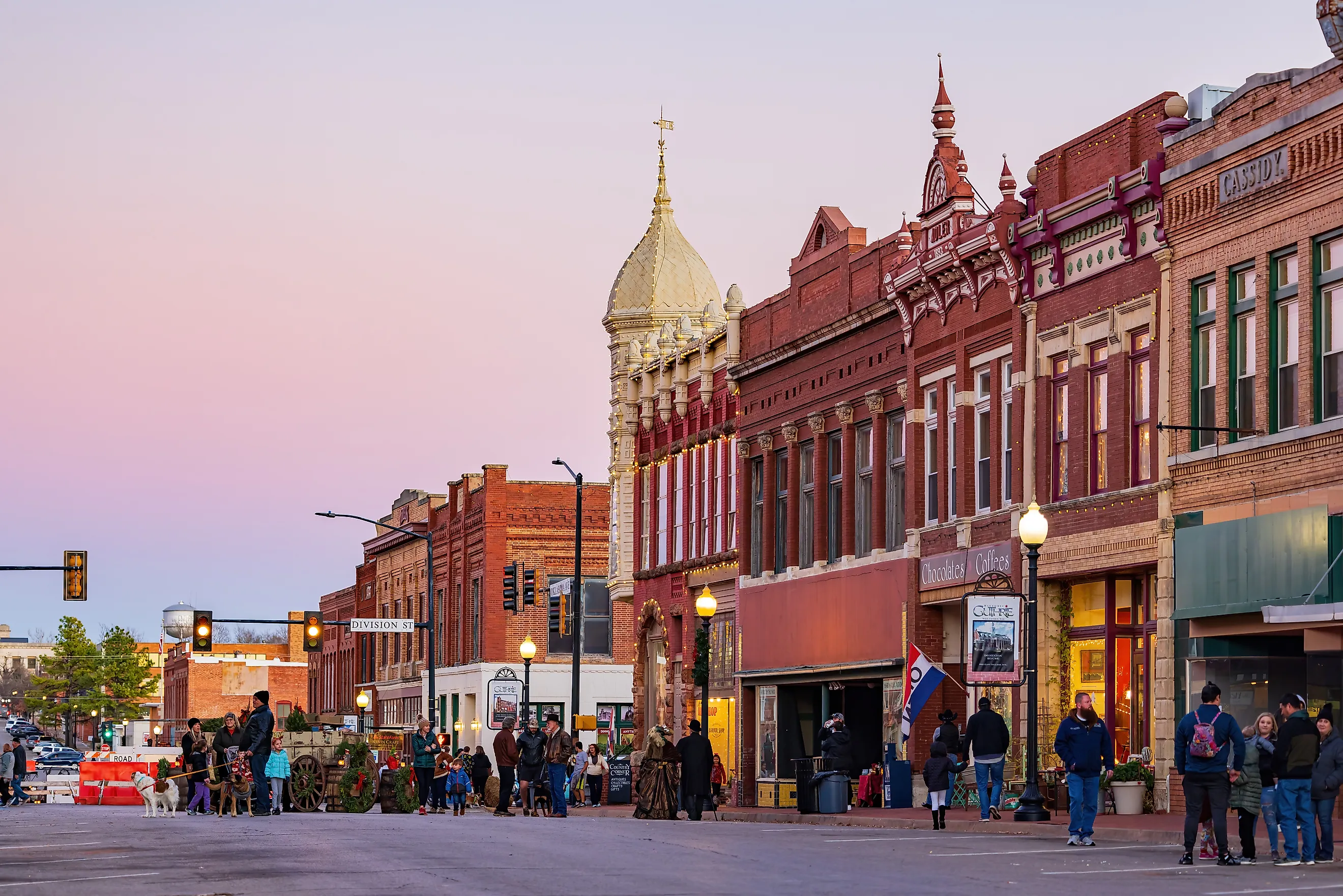
Some of Oklahoma's most memorable places sit in towns with just a few main streets and decades of layered history. In Guthrie, Victorian storefronts and museum exhibits trace the urgency of the 1889 Land Run. In Medicine Park, red cobblestone buildings line the water at Bath Lake, giving the town a look found nowhere else in the state.
Farther south, Sulphur’s mineral springs run through Chickasaw National Recreation Area, drawing visitors to shaded trails and clear swimming holes. Near Pawhuska, the tallgrass prairie opens wide beyond town limits, where bison still move across protected grasslands. Together, these places show how Oklahoma’s history and landscape remain closely tied to its small communities.
Guthrie

Guthrie, as a city, was born practically overnight during the Land Run of 1889, when 10,000 settlers flooded into the area and rapidly built it up. It was the territorial capital of Oklahoma and the state capital until 1910. Guthrie today is one of the state's historic destinations, housing the Oklahoma Territorial Museum and Carnegie Library, featuring living history performances and artifacts from the Land Run of 1889.

Guthrie also maintains the history of frontier drug stores with the Oklahoma Frontier Drugstore Museum, the site of Oklahoma Territory’s first drug store. The early frontier days were often chaotic, and officials often made mistakes. One of those errors is remembered in a tiny fenced plot behind the Guthrie Post Office, locally nicknamed the “Smallest National Park.” The parcel was reportedly intended to measure 100 feet on each side, but a clerk recorded it as 100 square feet instead, reducing it to a fraction of its planned size. After exploring the historic town, escape into an eastern garden with the Bamboo Satori, home to more than 35 types of bamboo.
Medicine Park

Sometimes the best medicine is finding a relaxing environment to settle down. Medicine Park is one such place. Sitting within the Lawton metro area, much of its infrastructure is made of red granite cobblestones from the Wichita Mountains, giving it a distinct vibe from other Oklahoma towns.

Another distinct feature is the Bath Lake Medicine Park, a swimming lake right in the center of town. After swimming, you can learn about more than 90 fish, amphibians, birds, reptiles, and mammals at the Medicine Park Aquarium & Natural Sciences Center. The aquarium offers turtle feeding and touch tanks for interacting with various sea creatures. Medicine Park has several locally owned restaurants and shops that reflect its resort atmosphere, such as the Discovery Outpost toy store and The Healthy Hippie Cafe.
Hinton

Hinton is a natural escape just 50 miles west of Oklahoma City, sitting at an elevation of 1,676 feet. Just a few blocks away from the town is the Red Rock Canyon Campground and Adventure Park. Its canyon walls change color with the sun's position and offer many activities, from glamping and picnicking to ziplining and hiking. The Red Rock Canyon Trail is the closest entry point to the adventure park, which circles the canyon's ridges. After exploring Red Rock, head into Hinton to visit the Hinton Historical Museum, which houses the largest horse-drawn carriage collection in the state, along with Native American items and a 1903 Oldsmobile. Oklahoma was once a major center for buffalo herds, and some are still available for viewing at the Sandy Springs Farm.
Lone Wolf

Just under 400 people call the town Lone Wolf home. It's named after a Kiowa Chief Lone Wolf, who was the principal chief of his tribe. His legacy lives on in this tiny community, which serves as a gateway to Quartz Mountain State Park. This park combines lakeside activities at Lake Altus-Lugert with challenging rock climbs at the Baldy Point climbing area, a 300-foot micro range in the middle of the prairie. Golfers also visit this park to play 18 holes at the Quartz Mountain Golf Course, while offroaders can take their ATVs out onto the lake shores at the Eagle's Roost ATV Area. One of the most interesting attractions in Lone Wolf is the GI Joe Museum and Repair Shop. This quirky museum has the largest public display of classic GI Joe army figures and also repairs old figures to tip-top shape.
Broken Bow

The southeastern Oklahoma town of Broken Bow was previously Choctaw land before being acquired by settlers. Broken Bow is naturally rich, with multiple parks and wildlife refuges to visit. The most popular destination is Beavers Bend State Park, which sits amid Broken Bow Lake and Mountain Fork River. In this park, you can go trout fishing, water skiing, hike the shores of Broken Bow Lake, or try your hand at an 18-hole Cedar Creek Golf Course.

The Beavers Bend Wildlife Heritage Museum teaches visitors about Oklahoma wildlife through dioramas and taxidermy, while the nearby Red Slough Wildlife Management Area provides habitat for more than 300 bird species. With so much to do, Broken Bow remains a central destination for outdoor recreation in southeastern Oklahoma.
Sulphur

As implied by the name of the town, Sulphur is a community defined by its sulfur mineral springs. The Native Americans called it the peaceful valley of rippling waters for the springs and streams, which you can see at the Chickasaw National Recreation Area. It is filled with vistas, including the mineral waters of Rock Creek and Lake of the Arbuckles, both open for swimming.

You can also hike along the mineral springs with the Antelope Springs Trail. Oklahoma has a rich, active Native American population, which you can learn about at the Chickasaw Cultural Center, featuring a traditional village, Holisso Research Center, theater, and more. After a day of cultural and natural enrichment, relax at the boutique Rusty Nail Winery.
Pawhuska

Pawhuska lies deep in the prairie, offering a blend of Osage Nation culture, bison herds, and delightful Western attractions. Founded in 1872, Pawhuska has been a filming location for major films. At the Ben Johnson Cowboy Museum, you can explore Osage County’s Western film heritage. You can be culturally enriched by native art and artifacts at the Osage Nation Museum or purchase souvenirs made by Natives at the Spurs & Arrows boutique.

One of Pawhuska's defining landmarks is the Joseph H. Williams Tallgrass Prairie Preserve, a 40,000-acre prairie that runs through the town and multiple ranches. By strolling through the prairie, you can see more than 2,100 American bison and more than 210 species of birds. If you drive five miles out, you can go to Lookout Mountain to get a scenic lookout over the town and see the burial site of Chief Fred Lookout.
Through the Prairies to the Mountains
Oklahoma’s landscape shifts from tallgrass prairie near Pawhuska to the granite peaks around Lone Wolf and the mineral springs of Sulphur. Most of the beauty can also be found in the people themselves, whether that's the Native Chickasaw or Osage people who keep their cultures alive and thriving through museums and cultural experiences, or the pioneer folk of Guthrie who built the town overnight. The next time you're traveling through the region, consider adding these Oklahoma communities to your itinerary.