5 of the Oldest Incorporated Towns in South Carolina
If you want to understand South Carolina, start with the historic towns that shaped it first.
Places like Beaufort, Georgetown, and Columbia are where history still does practical work. Stand in the right spots and the state’s big story tightens into focus.
This guide tracks those hinge points, town by town. It follows Beaufort from its Gullah Geechee roots out to barrier islands, reads Charleston through its streets, bookstores, and kitchens, and uses Camden to explain why the backcountry mattered long before interstates. We will outline where to go, what to look at, and how each stop explains why South Carolina looks the way it does today.
Beaufort

The town’s core, the Beaufort Historic District, is anchored by The Point, where tabby foundations and 18th- and 19th-century homes trace the story of early coastal settlement and the long aftermath of the Civil War. A few blocks away, the town opens onto water at Henry C. Chambers Waterfront Park, a linear stretch along the Beaufort River where shrimp boats tie up and the tidal marsh defines daily life. From here, it’s easy to understand why Beaufort grew as a port tied to sea islands and rivers rather than plantations inland.
That history deepens at Penn Center, just outside town on St. Helena Island, one of the most important Gullah Geechee cultural sites in the country, founded in 1862 as one of the first schools for formerly enslaved people. Back in Beaufort, modern life feels intentionally small-scale. Dinner at Old Bull Tavern delivers Lowcountry ingredients with precision rather than nostalgia, while a stop at McIntosh Book Shoppe keeps the town’s literary and local voices close at hand. For a natural counterpoint, locals point visitors toward Hunting Island State Park, where the Atlantic, shifting sands, and a historic lighthouse remind you how exposed—and essential—this coastline has always been.
Charleston

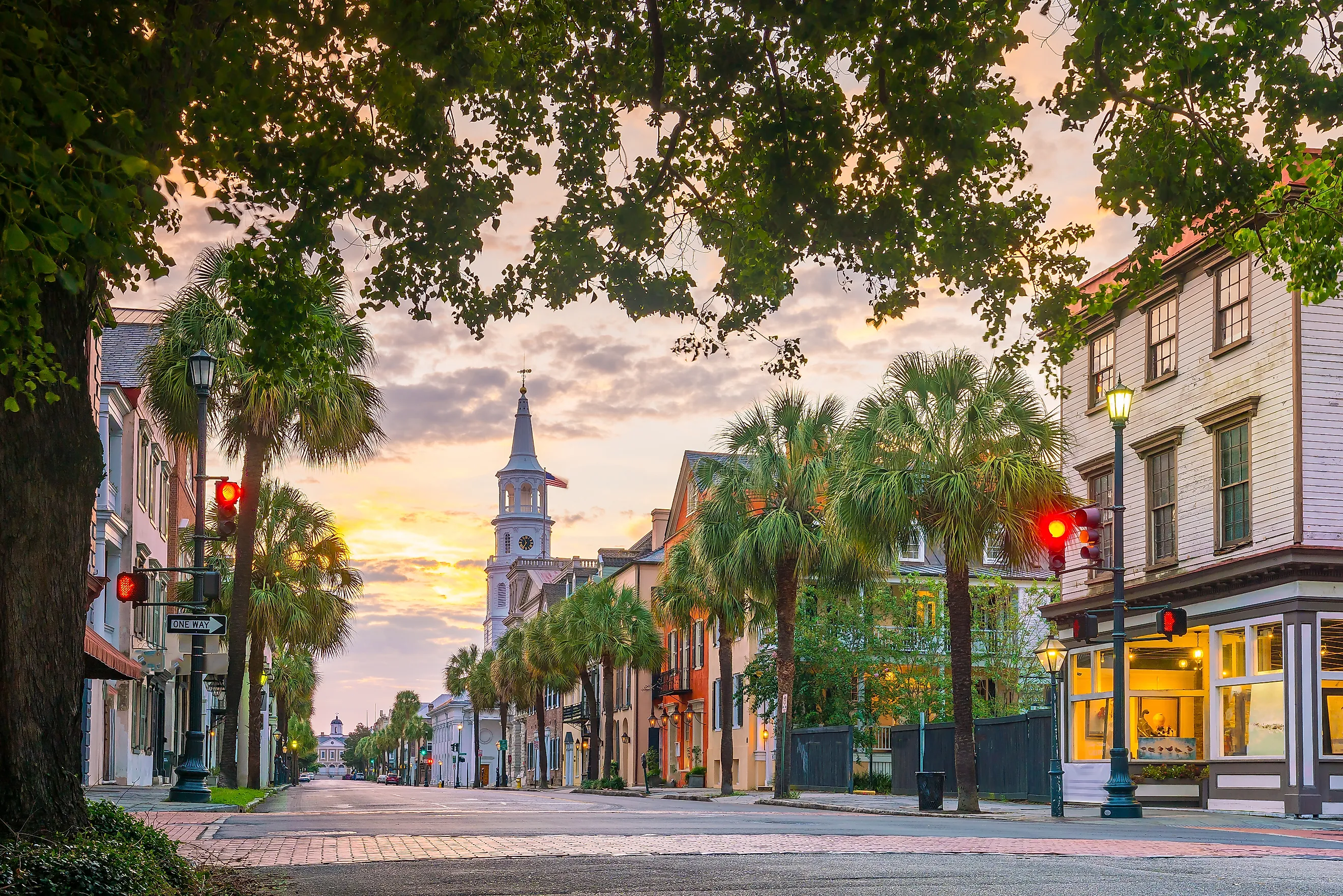
Charleston’s history is legible at street level, especially along The Battery, where antebellum houses face Charleston Harbor and the city’s strategic importance becomes unmistakable. A short walk north brings you to Rainbow Row, a restored line of 18th-century merchant houses whose pastel façades mask a harder story of colonial wealth and port trade. From there, the route bends toward the Cooper River at Waterfront Park, anchored by the Pineapple Fountain, where the harbor traffic and marsh edges explain why Charleston developed as a maritime capital rather than an inland town.
That continuity between past and present carries into the city’s commercial landmarks. Dinner at Husk grounds modern Southern cooking firmly in Lowcountry ingredients, pulling from Carolina rice, local seafood, and regional farms rather than trend-driven menus. A few blocks away, Blue Bicycle Books offers a quieter but equally telling stop, with shelves heavy on Southern history, coastal ecology, and regional fiction. To understand Charleston beyond architecture, time at Charleston City Market matters—not as a souvenir stop, but as a living reminder of the city’s role as a trading hub shaped by enslaved labor, craftsmanship, and coastal commerce that still defines the city’s rhythm today.
Camden
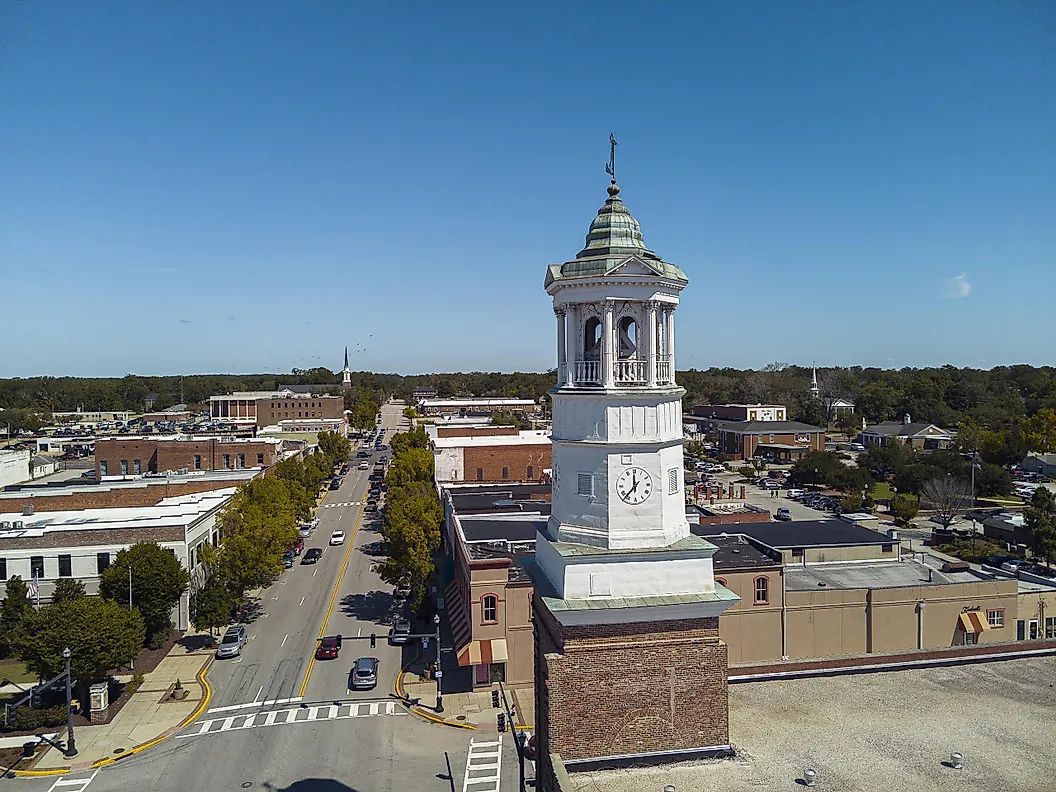
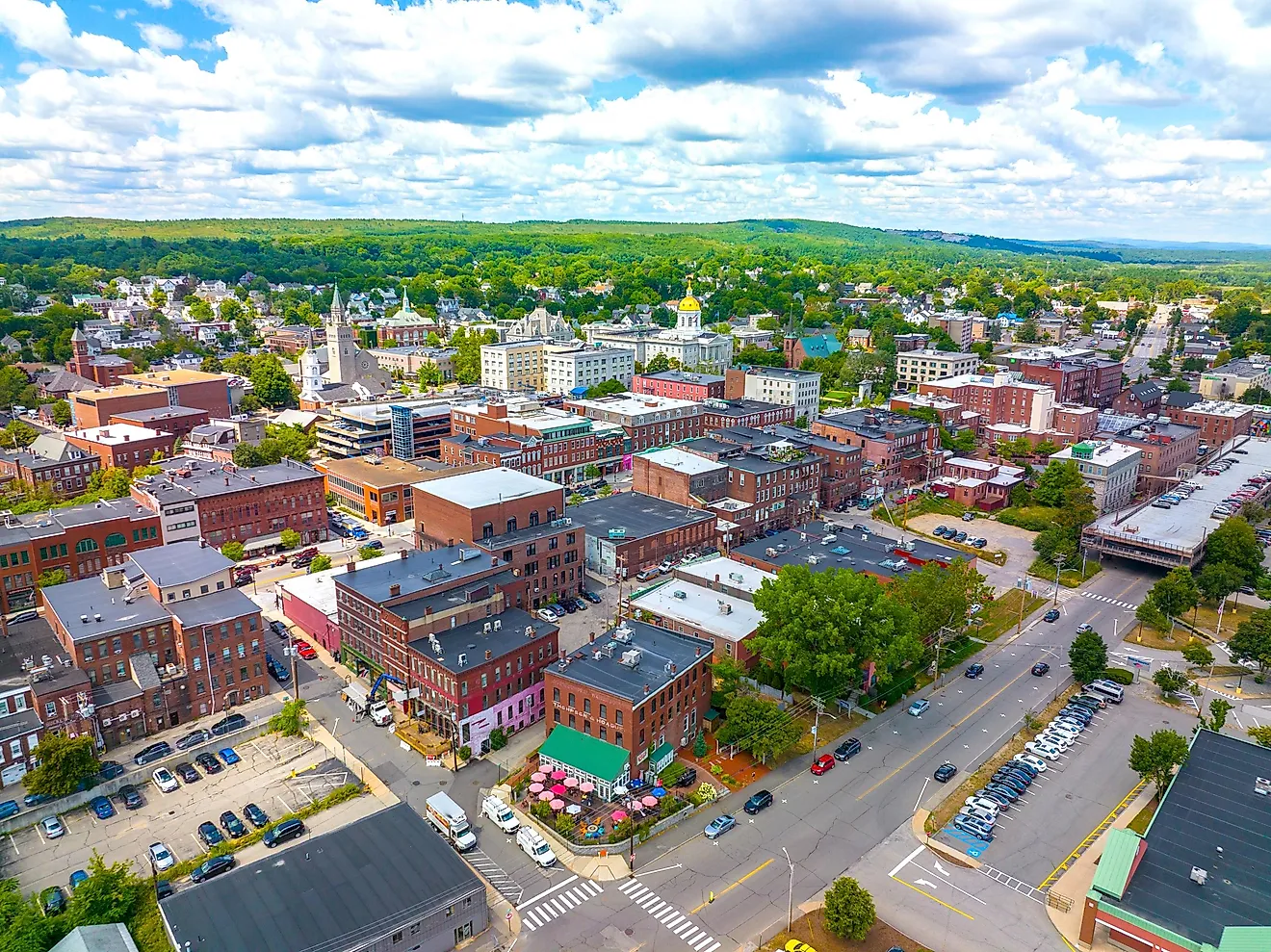
Camden’s story is inseparable from South Carolina’s early interior, and it comes into focus at Historic Camden Revolutionary War Site, where preserved earthworks, period houses, and reconstructed military buildings explain why this small town became a strategic flashpoint during the Revolutionary War. Nearby, Battle of Camden Historic Site marks the location of one of the war’s most consequential Southern defeats, a quiet landscape whose scale makes the conflict feel immediate rather than abstract. From there, Camden’s historic core pulls you toward Broad Street, where brick storefronts trace the town’s role as a colonial crossroads long before railroads reshaped inland South Carolina.
That continuity carries into Camden’s present-day landmarks. Sam Kendall’s anchors downtown dining, occupying a former bank building and serving as a long-standing gathering point for locals tied to the area’s legal and political history. A short walk away, Camden Archives and Museum deepens the narrative with artifacts that link frontier settlement to plantation life and early industry. Just outside town, Goodale State Park offers a natural counterpoint, where cypress-lined waterways reveal the Sandhills landscape that shaped Camden’s development and continues to define its sense of place.
Georgetown

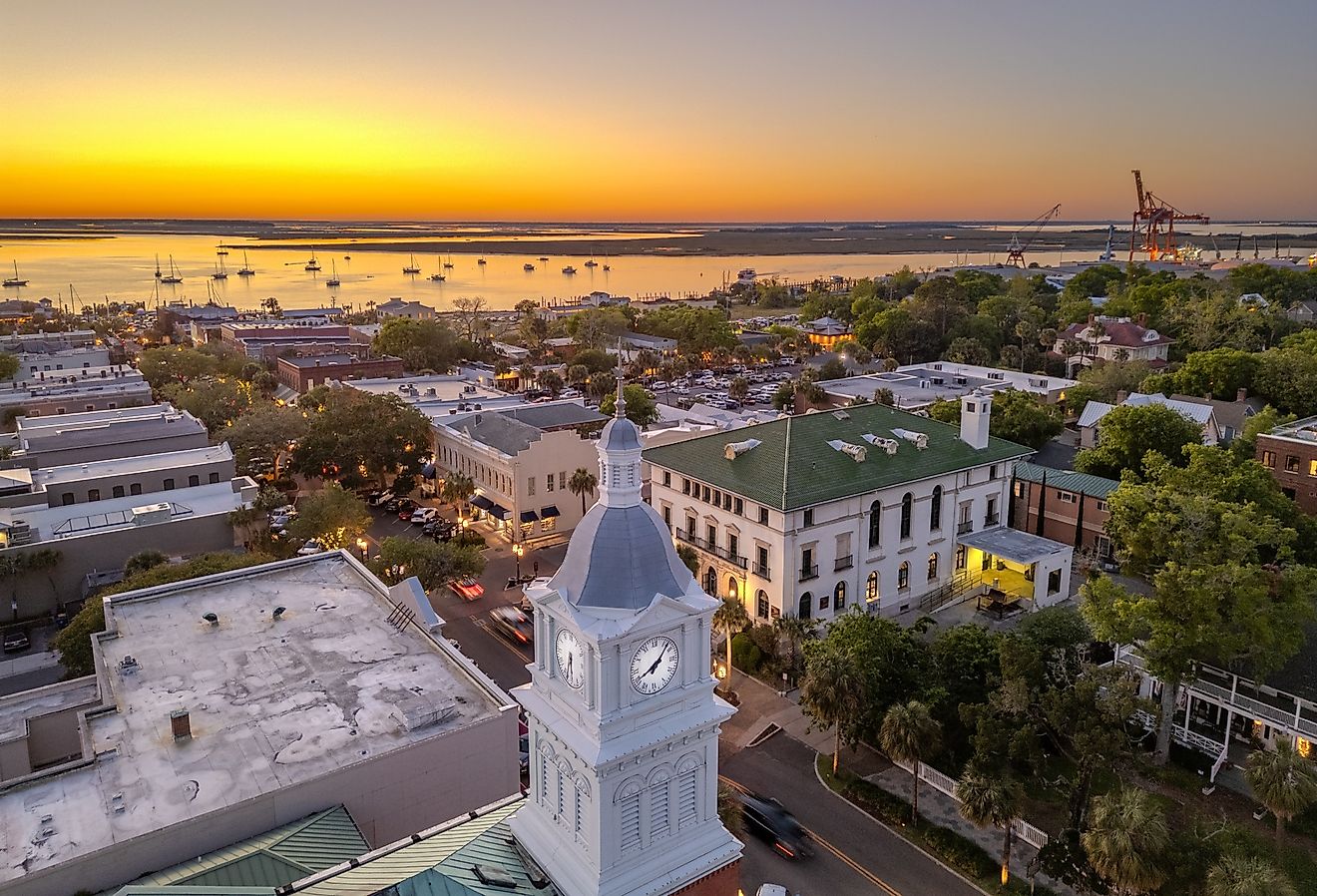
Georgetown’s identity is inseparable from water, and that relationship is clearest along the Georgetown Harborwalk, where boardwalk planks trace the edge of the Sampit River as it opens toward Winyah Bay. From here, the town’s former role as a rice-shipping port becomes tangible, especially when the walk leads inland to the Rice Museum, housed in the Old Market Building. Its exhibits focus tightly on the labor systems, engineering, and global trade that once made Georgetown one of the wealthiest towns in colonial South Carolina. A few blocks away, the Kaminski House Museum offers a different perspective, using preserved rooms and river views to show how that wealth translated into domestic life along the coast.
Today, Front Street keeps the town’s core active without rewriting it. Buzz’s Roost, perched directly over the river, has become a local institution for seafood pulled from nearby waters rather than a generic coastal menu. Just down the street, Waterfront Books continues the town’s tradition of quiet commerce, specializing in regional history and Lowcountry writing. To see why Georgetown developed here in the first place, time spent looking out across Winyah Bay—where rivers, marsh, and ocean converge—provides the clearest answer.
Columbia

Columbia’s identity is anchored by purpose-built landmarks rather than accident, starting with the South Carolina State House, where bronze star markers still show where Union shells struck during Sherman’s march. The grounds lead naturally toward Main Street, a corridor that reveals how the capital learned to balance politics with daily life. That transition becomes clearer along the Congaree Riverwalk, where the city meets moving water at the edge of downtown. The elevated path follows the Congaree River through floodplain forest, making visible why Columbia was planned at the fall line where inland trade once shifted to coastal routes.
That mix of civic gravity and lived-in culture defines Columbia’s essential stops. Dinner at Motor Supply Co. Bistro connects modern Southern cooking directly to regional farms, with menus that change according to what’s grown across the Midlands. Just a few blocks away, The Nickelodeon Theatre—South Carolina’s only nonprofit arthouse cinema—keeps independent film and local voices central to the city’s cultural life. To see Columbia step away from formality altogether, time spent at Riverbanks Zoo and Garden offers a rare combination of curated landscapes and native river terrain, reinforcing how deeply the city remains shaped by its natural setting.
Beaufort, Charleston, Camden, Georgetown, and Columbia show South Carolina as a state built at river mouths, harbor edges, and fall-line crossroads rather than on a single grand narrative. Each town turns history into walkable streets, working waterfronts, and rooms where decisions still echo. Use this guide less as a checklist and more as a framework: move slowly, ask questions, and let these older places clarify what newer South Carolina towns are still becoming, for any visitor today.