5 Classic Americana Downtowns In Idaho
Classic Americana downtowns feature main streets built in the early 20th century that remain in use today. Idaho contains the Snake River Plain, multiple north-south mountain ranges, and river valleys that concentrate towns along rail lines, irrigation canals, and highway routes. As the state developed in the late 19th and early 20th centuries, towns built American-style downtowns with brick storefronts, theaters, diners, and hotels, many later occupied by family-run businesses that continue today. The towns featured here retain their downtowns through intact architecture and independently owned businesses. Pack your bags, plan a drive across Idaho, and spend time walking these unique downtowns.
Rupert

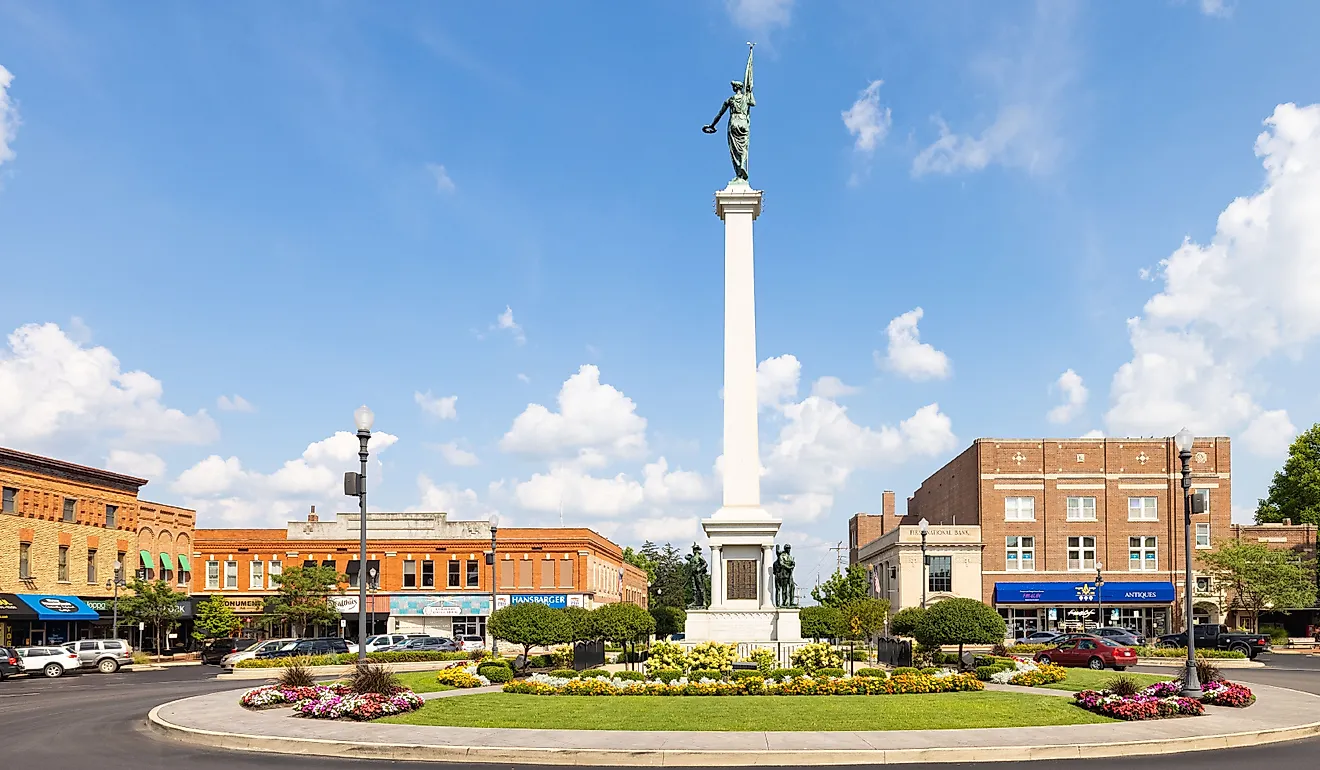
Rupert’s town square, listed on the National Register of Historic Places, represents a classic Americana downtown shaped by early-20th-century planning. When the Minidoka irrigation project opened nearby desert land to agriculture, Rupert was designed around a central square meant to concentrate commerce, services, and public life in one walkable place. Brick buildings soon replaced early wood storefronts. That intact layout frames many independent businesses, with Teedie’s Coffee & Ice Cream opening onto the historic core as a casual gathering spot and The Gathering Place filling more than 10,000 square feet inside a downtown building, ranking among the largest boutique quilt shops in the nation.

Moving outward from the square shows how this Americana streetscape continues to function beyond its center. Panadería Michoacán, a short walk from the historic district, reflects Rupert’s agricultural workforce through traditional baked goods tied to local foodways. Nearby, Mad River Laser operates as an independently run specialty shop focused on custom gifts and locally produced items, occupying a historic commercial space rather than a modern retail strip.
Soda Springs

An erupting geyser sets this small Americana downtown apart. The captive geyser in Geyser Park rises on a regular schedule, while nearby mineral sources such as Hooper Spring allow visitors to taste naturally carbonated water that gave the area its name. Around these landmarks, early-20th-century brick and masonry buildings formed a compact commercial core to serve railroad workers, ranching families, and travelers moving through southeastern Idaho. Two long-running independents continue that role today: Main Street Diner, a counter-and-booth stop for American comfort food, and Eastman Drug Store, Idaho’s oldest drugstore, which still operates an old-fashioned soda fountain and bottles its house “Iron Port” soft drink.

Beyond the park, the walkable core widens into small specialty shops and evening gathering spots. Til Then Boutique and Gift Shop occupies a historic storefront with boutique clothing and locally sourced gifts that keep foot traffic moving between blocks. A short stroll away, Porter’s Pub provides casual dining and a regular meeting place that keeps activity downtown after dark.
Wallace

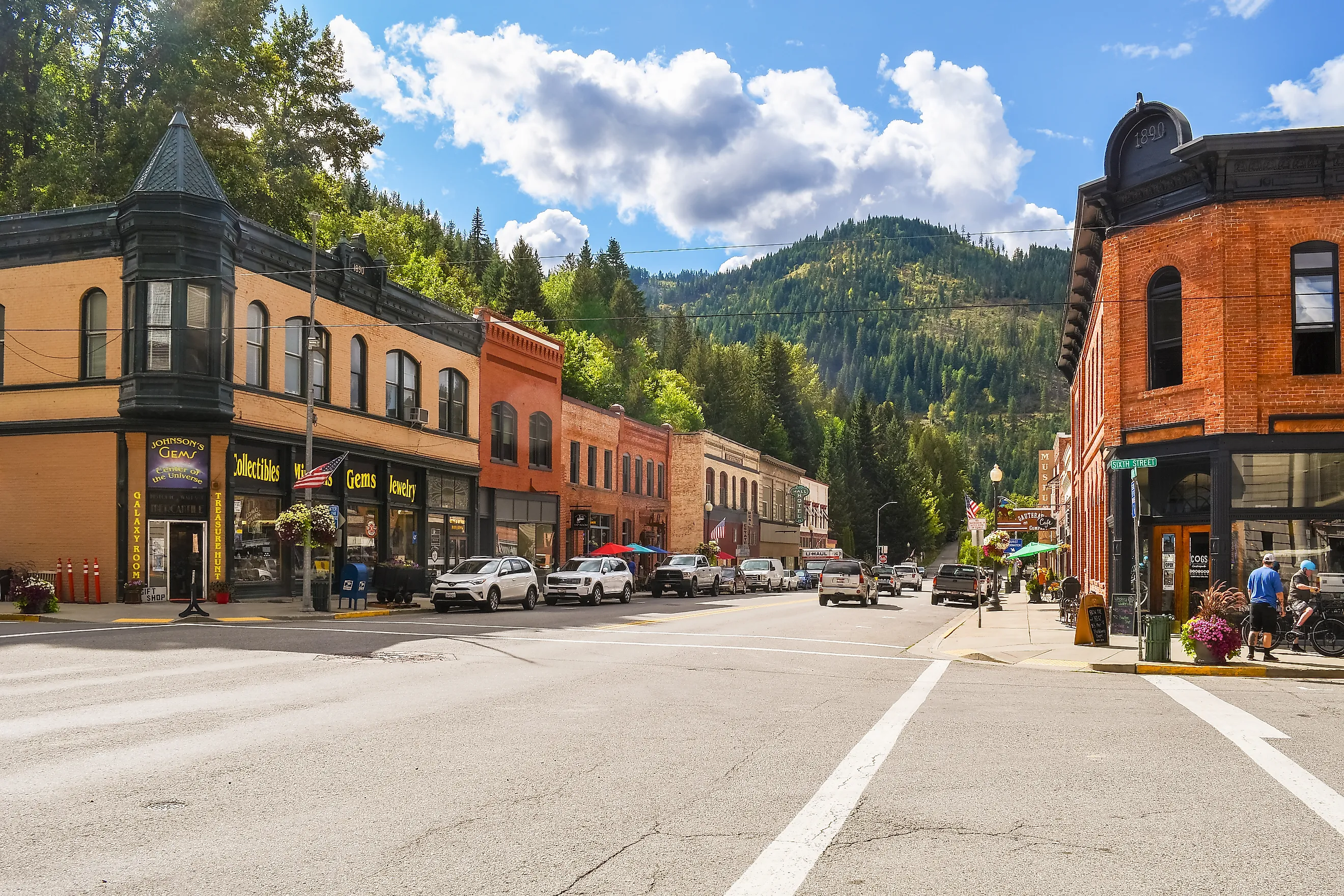
Tragedy hit this town, and it came back stronger and more beautiful than ever. The downtown area of this Silver Valley town is entirely listed on the National Register of Historic Places, preserving a concentrated collection of Victorian-era commercial architecture. After a major fire in 1890 destroyed much of the original wooden business district, the town rebuilt its core using brick and stone, following fire-resistant construction standards common in late-19th-century mining towns. Most of the buildings along Bank Street date from the 1890s through the early 20th century and retain original façades, upper-floor window patterns, and recessed storefront entrances. Because large-scale redevelopment never occurred, the downtown remains largely unchanged.

A walk through the center follows a natural daily rhythm shaped by independent businesses. Morning activity often begins at Blackboard Café, a locally owned coffee and breakfast spot operating from a historic storefront with original street-facing windows. A short stroll away, North Idaho Trading Company occupies another brick building, packed floor to ceiling with antiques and curiosities, from early mining tools to a full human skeleton that gives the shop its reputation as one of downtown’s strangest stops. By afternoon or evening, Sixth Street Theatre & Melodrama brings the street to life with locally produced stage shows inside a restored historic theater that has anchored Wallace’s entertainment scene for decades. The day often ends at The Fainting Goat Restaurant and Bar, popular for its great cocktails and outdoor seating option during summer.
Idaho City

Once the largest city in the Pacific Northwest during the 1860s gold rush, the town lost much of its original core to a series of fires in 1865, 1867, 1868, and 1871. Each time, the town rebuilt quickly to keep pace with mining traffic rather than redesigning itself, leaving a compact main street defined by frontier-era proportions and materials. The result survives today within the Idaho City Historic District, where narrow lots, false-front façades, and wood-frame storefronts record how a boomtown adapted after disaster without later large-scale redevelopment.

That history remains visible inside the town’s independent businesses. Diamond Lil’s Museum, Steakhouse & Saloon operates from a historic building and functions as both an exhibit space and a working saloon. Inside, the bar and ceiling are lined with currency left by visitors over decades, a visual record of stories, traditions, and repeat visits rather than curated décor. Just beyond the main street, The Smokejumper Tiny Home Resort repurposes compact lodging into a small, independently run stay tied to the region’s firefighting history. Back downtown, Photobomb Idaho Event Services adds a contemporary layer by offering staged photo experiences that play off the town’s preserved streetscape.
Bonners Ferry

What began as a simple river crossing in 1864, established by Edwin Bonner to help miners reach gold strikes in British Columbia, grew into a permanent settlement along the Kootenai River. Seasonal flooding influenced how the early business district was built, with downtown structures originally raised on stilts to withstand spring high water in the fertile Kootenai Valley, later known as the “Nile of the North.” As flood control improved in the early 20th century, those temporary buildings were replaced by brick commercial blocks along Main Street. Within this historic corridor, The Pearl Theater occupies a long-standing building and continues the town’s tradition of locally run entertainment tied directly to its early commercial center.

Life along Main Street continues through family-run businesses. Under the Sun is a mix of home goods, garden items, jewelry, women’s consignment clothing, coffee, and tea, with its breakfast burrito standing out as the most requested item. A short walk away, Kootenai Brewing Company uses another brick building to run a small, independent brewery connected to regional grain and hop production. On scheduled days, the Bonners Ferry Farmers Market brings growers and artisans into the downtown itself, reinforcing the valley’s long-standing role as one of northern Idaho’s most productive farming areas.
Idaho’s Enduring Americana
These Idaho towns show how classic Americana downtowns defied time, endured disasters, and continue through independent local businesses. In Wallace, a destructive fire led to a brick rebuild that still defines the downtown blocks today. Rupert grew from irrigation planning, with a town square that continues to organize daily commercial life. Gold rush traffic and repeated fires left Idaho City with a compact frontier downtown that never expanded beyond its original scale. A river crossing and fertile farmland supported the growth of Bonners Ferry, where brick storefronts replaced flood-prone early buildings. In Soda Springs, a captive geyser and mineral springs anchored a downtown built to serve travelers. Taken together, these towns show how Idaho’s main streets remain active through locally owned shops, cafés, theaters, and services that still operate from historic buildings.