4 Snake Hotspots In North Carolina
North Carolina is one of the most geographically varied regions of the United States, blending mountains, wetlands, coastal plains, beaches, and rivers. Its temperate climate and varied habitats also create ideal conditions for a wide spectrum of snake species, from copperheads to Timber rattlesnakes. Some areas offer more secluded environments where rare snakes survive, while others house more common species that visitors witness on a daily basis.
Regardless of where you are, staying aware of your surroundings allows you to appreciate the state’s numerous slithery reptiles safely. Knowing that, learn more about the biggest hotspots for snakes in North Carolina, from the shores of the Atlantic Ocean to the forested ridges of the interior.
Green Swamp Preserve

The Green Swamp Preserve in the extreme corner of southeastern North Carolina is a significant hotspot for snake diversity, thanks to its ideal habitats comprised of pine savannas, pocosin bogs, and wetlands. This highly varied landscape supports both common and rare species, making sightings in different environments very common for both researchers and regular visitors.

Venomous snakes such as the eastern diamondback rattlesnake and the pygmy rattlesnake inhabit the preserve’s drier pine flatwoods, while cottonmouths are more frequently found near dark, slow-moving waters. On the other hand, nonvenomous species like the eastern hognose snake, corn snake, and various watersnakes are widespread as well.
Interestingly, much of the preserve’s ecosystem depends on periodic wildfires to maintain its integrity, which benefits snakes by supporting healthy populations of prey that prefer grassy prairies and new growth forests, such as amphibians and small mammals. You should remain alert along grassy patches, boardwalks, and sandy trails, especially during warm months when snakes are actively looking for food in these spots as well.
Croatan National Forest

Croatan National Forest is another coastal parkland that offers a broad range of environments, making it a productive locale for snakes. Longleaf pine forests, swamps, tidal marshes, and blackwater streams create the kinds of conditions where both venomous and nonvenomous species thrive.
Cottonmouths are especially common in wet areas, including along the edges of creeks and ponds, while Timber rattlesnakes inhabit higher, drier terrain and can occasionally be seen basking near fallen timber or sandy clearings. This forest is also home to species such as the eastern kingsnake, black racer, rough green snake, and various watersnakes.

Dense vegetation and warm, humid weather throughout much of the year support near constant activity, so regardless of the season, snakes often can be spotted moving across hiking paths and forest roads (specifically, early morning or late afternoon). Furthermore, anyone exploring the area's abundant fishing spots, paddling routes, and more remote backcountry zones should stay observant and give any snake ample space. The same goes for the rest of the wildlife that calls the region home.
Great Smoky Mountains National Park

One of the country's most renowned outdoor spaces, the North Carolina side of the Great Smoky Mountains National Park boasts rugged Appalachian Mountains, incredibly lush forests, and a web of meandering streams that create a home for a variety of reptiles, including notable populations of salamanders and frogs, and 23 kinds of snakes. Because the park spans a wide elevation range, it supports different species in different zones, from woodland floors to high-elevation meadows.

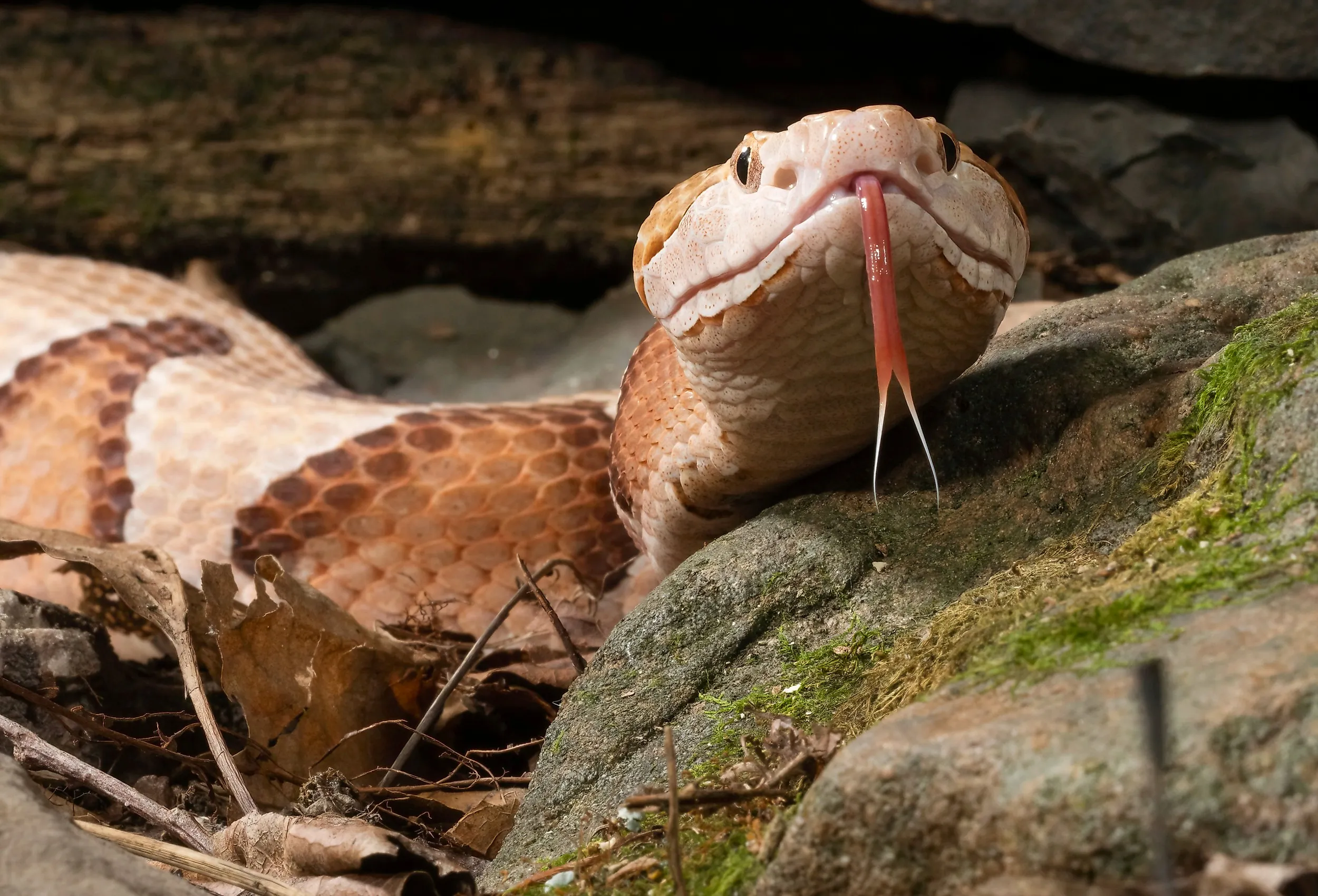
Timber rattlesnakes and copperheads are the primary venomous snakes here, usually found in rocky hillsides, forest openings, and sunny ledges where these cold-blooded creatures can warm up easily. Common nonvenomous snakes in the area that can also be sighted include the black racer, eastern garter snake, eastern milksnake, and ring-necked snake. And near the many creeks and wetlands within this national park, watersnakes are often active, especially during warmer months when frost and ice aren't a factor.
On the same note, consistently cooler temperatures at higher elevations mean snakes are most active in lower sections and valley areas, where most of the park's visitors also tend to congregate. Hikers should watch the edges of trails and rock piles, particularly during spring and summer when snake movement increases across the landscape.
Lumber River State Park

Lumber River State Park is best known for its lazy, blackwater river and surrounding floodplain forests. Cottonmouths are regularly seen near riverbanks, backwater channels, and the countless stands of cypress trees. Conversely, Copperheads occur in hilly areas and along forest margins that see less moisture, though they tend to remain more concealed in these places, too. Thick vegetation along paddling routes and hiking trails gives these snakes cover, but also means you are more likely to encounter them unexpectedly.
The park’s wetlands and sandy terrain also house nonvenomous species such as the banded watersnake, brown watersnake, black racer, and eastern ratsnake.

For humans who like to stick to the lakes and rivers, remember that seasonal flooding brings increased prey activity, thus drawing snakes closer to the water’s edge. Staying alert when launching kayaks, exploring wooded edges, or crossing boardwalks helps ensure safe viewing while minimizing disturbance to the wildlife that depends on this river corridor near the border of South Carolina.
Know Where to Find North Carolina's Snakes Today
North Carolina’s sheer variety of landscapes gives its snakes the resources they need to thrive, from wetlands rich in prey to sunlit uplands ideal for basking. Exploring the state’s top hotspots offers useful insight for both your average park visitor and biologists alike into how these reptiles fit into local ecosystems. By moving carefully and respecting wildlife (as you should do anywhere), you too can observe these wonderful critters responsibly while supporting the conservation of the habitats that sustain them.