2026's 10 Best Small Towns To Visit In Michigan
Some of the best afternoons in Michigan happen in towns most road maps barely register. A locomotive parked in Owosso once lent its whistle to a Christmas movie watched by millions. In Ionia, quarrymen cut a purple-and-pink sandstone found almost nowhere else in the Midwest. Greenville workers spent the war years riveting combat gliders where refrigerators used to roll off the line. In Marshall, a downtown museum is stuffed with Houdini's escape gear. Each of the ten towns below rewards a slow look, and each has a story worth the trip out.
Marshall

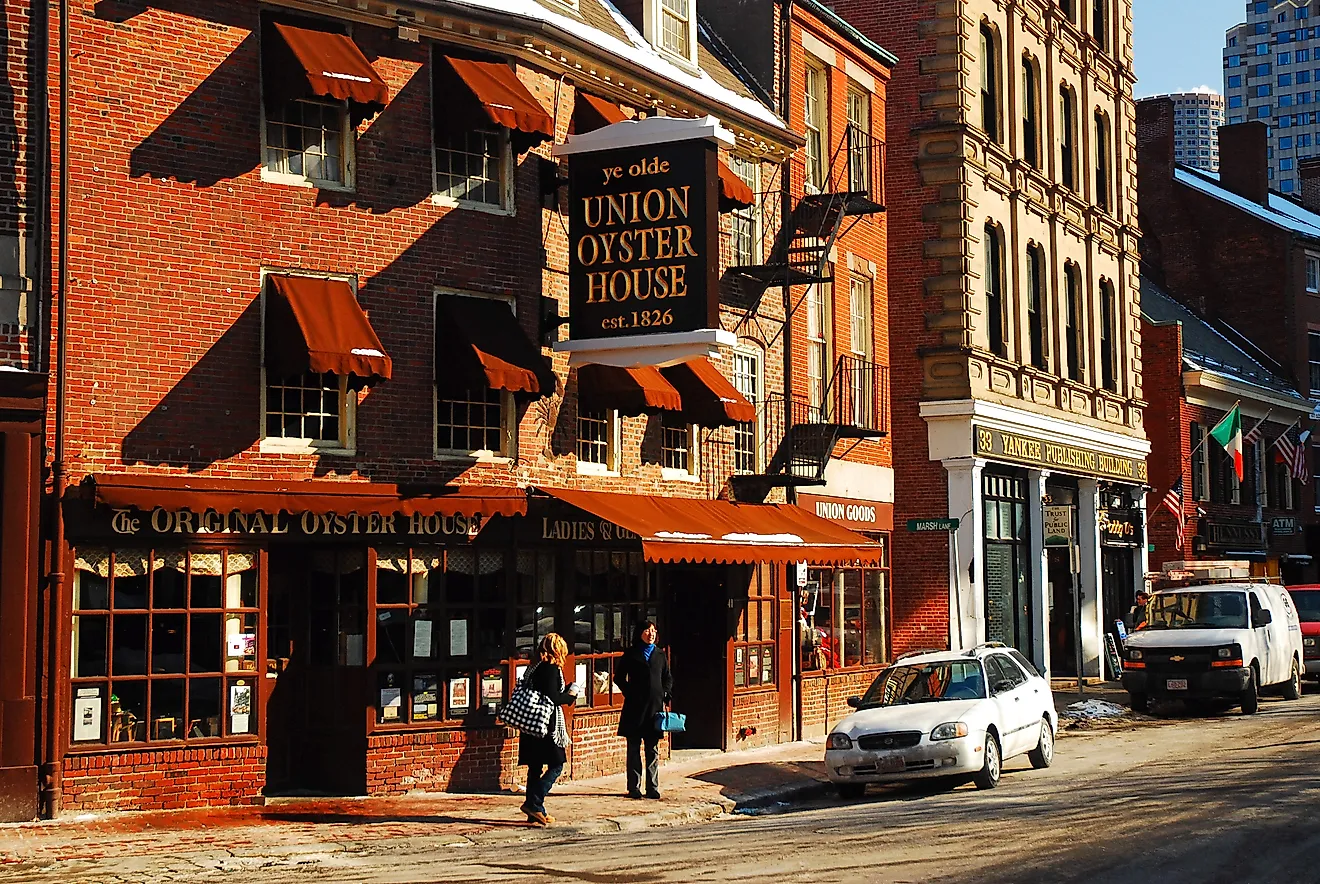
More than 800 buildings sit inside Marshall's National Historic Landmark District, one of the largest of its kind in the country, and much of it still looks the way it did in the 1800s. At the town center, the 1860 Honolulu House Museum mixes Gothic Revival, Polynesian, and Italianate details under one roof. Abner Pratt, a former U.S. Consul to the Sandwich Islands, built the mansion, which now holds a dining room on one side and a family parlor on the other. Seven minutes east on foot along Michigan Avenue stands the American Museum of Magic. Inside is the largest collection of magic artifacts on public display in the United States, including Harry Houdini's Milk Can escape apparatus and shelves of vintage lithograph posters.
On Eagle Street, Schuler's Restaurant & Pub has fed patrons since 1909, and regulars come back for the prime rib, the cheese spread, and the roasted turkey. Down on the banks of Rice Creek, Ketchum Park holds a playground, a skateboarding area, and covered picnic tables, with the Marshall Riverwalk a short stroll away.
Albion

Twelve miles east of Marshall, Albion pairs the grit of a 19th-century foundry town with the energy of an active college campus. The Bohm Theatre, built in 1929 and later restored, screens first-run films, thematic showings, and live music inside its old movie house. A few blocks over, the Gardner House Museum occupies a three-story Victorian brick residence, its rooms lined with pioneer textiles, wood-burning stoves, and period furniture.
The Albion River Trail follows the Kalamazoo River, and the paved path runs across town past riverfront farmland and wooded stretches before it reaches Victory Park at the eastern end. There, mature shade trees ring a castle-themed playground, a freshwater spring, and a waterfall dam.
Tecumseh

Tecumseh sits an hour southwest of Detroit, with a well-preserved 19th-century downtown and paddling along the River Raisin. At Pentamere Winery on East Chicago Boulevard, the crew ferments, ages, and bottles on-site, and an opening cut into the tasting room floor looks straight down into the basement cellar where the fermentation tanks sit. Along the same street, the Tecumseh Area Historical Museum occupies a Gothic-style fieldstone church, with exhibits on the town's stretch as the self-styled "Refrigeration Capital of the World" and a local miller's six-year wheat-growing project.
The Tecumseh Center for the Arts fills a 572-seat auditorium, and touring folk bands, youth ballets, and orchestra dates keep the calendar busy. Farther south, Globe Mill Pond opens onto calm water. Rent a kayak and paddle the shallows framed by native trees, or cast from the shore for largemouth bass and black crappie.
Hillsdale

West of Tecumseh, past open farm country, Hillsdale spreads across rolling glacial ridges, with Hillsdale College at its heart. On the campus, the Slayton Arboretum grew out of a former gravel pit. Fourteen acres now hold a hillside rock garden, a spring-fed pond dotted with water lilies, and stone gazebos. For more room, Baw Beese Lake stretches flat and wide at the edge of town. Paddleboarders and swimmers fill the 414-acre lake all summer, and the paved Baw Beese Trail heads north from the shore.
The Hillsdale County Historical Society Museum holds farm-history exhibits, a 1920s kitchen, and regional military artifacts. West on the road, Silos Fun Park has go-kart tracks, mini-golf, and a laser tag arena for families looking to burn an afternoon.
Three Rivers

Three Rivers takes its name from the meeting of the St. Joseph, Rocky, and Portage Rivers. At more than 18 acres, Scidmore Park is the city's largest, with footpaths winding past a seasonal petting zoo, a duck pond, and a playground. The Riverwalk Trail leads south into downtown and across into Memory Isle Park, where three bridges span the Rocky River. A boardwalk gives birdwatchers a place to stand, and a boat launch puts kayakers and canoeists on the water quickly.
In the historic district, the Sue Silliman House Museum occupies a former blacksmith's home, and free docent-led tours cover the original blacksmith shop and the family living quarters set up to reflect daily life in the 1800s. On Main Street, the Riviera Theatre & Bar rounds out the day. Built in 1925 as a vaudeville house, it now runs independent films and live music, with a full bar behind the seats.
Ionia

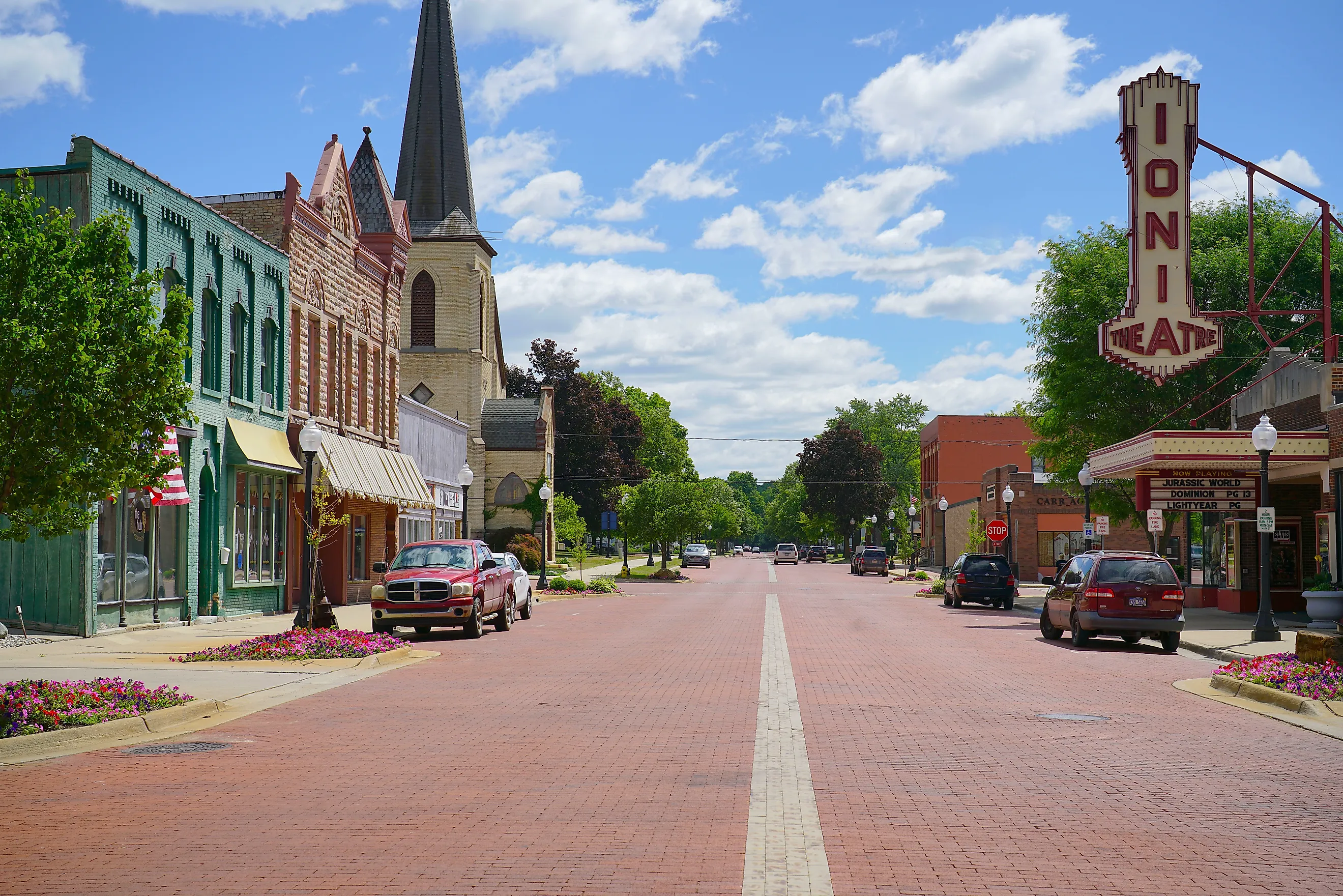
Quarrymen in Ionia cut a rare swirling purple-and-pink sandstone found almost nowhere else across the Midwest, and it shaped the look of the town's buildings. No one showed the stone off better than John C. Blanchard, who co-owned the quarry and built the residence that is now the John C. Blanchard House Museum. The Italianate mansion holds Victorian parlor antiques, with vintage tools out in the carriage house. On the same road, the 1931 Ionia Theatre, behind a restored Art Deco facade, runs first-run movies, live concerts, and community theater.
Along the Grand River, the Ionia River Trail runs three paved miles down a former rail corridor, past a restored railroad bridge and a wooded stretch that draws walkers, runners, and cyclists. On Main Street, the Brick House Tavern makes a good place to end the day, with a different special most nights, from Tuesday tacos to Friday karaoke.
Greenville

Northeast of Grand Rapids, Greenville sits at the center of an odd chapter of aviation history: during World War II, workers at its appliance factories switched to building combat assault gliders. That story fills a single room at the Fighting Falcon Military Museum, where a full-scale, hand-rebuilt CG-4A glider replica takes up most of the floor, left open on one side so visitors can see the frame underneath. On East Franklin Street, the Flat River Historical Museum covers the town's lumber boom, with early-settler exhibits on the main floor and a recreated streetscape upstairs.
Tower Park caps a wooded hill above the river, and its paved paths drop down to meet the Fred Meijer Flat River Trail, an 8-mile loop around the community. On the east side of town, the 18-hole Glenkerry Golf Course runs across open ground in a Scottish links layout.
Owosso

Owosso has a castle on its riverbank, a theater rebuilt after a fire, and a steam locomotive that Hollywood borrowed for a Christmas movie. The French Norman chateau-style Curwood Castle stands above the Shiawassee River, once the writing studio of novelist James Oliver Curwood, and it still holds his original writing desk and manuscripts. A few blocks away on East Main Street, the Lebowsky Center for Performing Arts hosts full-scale Broadway musicals, touring concerts, and comedy nights.
The Steam Railroading Institute occupies the former Ann Arbor Railroad yards and keeps Michigan's rail history alive. Its showpiece is the Pere Marquette 1225, a 1941 steam locomotive that inspired the train in The Polar Express. North of town, the DeVries Nature Conservancy spreads farm fields and restored prairies across more than four miles of trails, with a launch for kayaks and canoes and nine ambassador turtles living inside the nature center.
Escanaba

Escanaba runs from quiet freshwater beaches to deep-water fishing, and old buildings around town have found new uses. The Delta County Historical Museum, for one, used to be a radio station, and its Railroad Room sits on a cupola salvaged from an old train depot. A logging sleigh, a shipwreck rudder, and an antique school bell fill out the displays. A few doors down, Leigh's Garden Winery occupies a building that has been a cigar shop and a nightclub since 1884, and the current owners press wines in the on-site cellar from cold-climate grapes and local fruit.
Ludington Park wraps around Little Bay de Noc along a coastal greenway, with a fitness circuit, an 18-hole disc golf course, and the Karas Memorial Bandshell, where free concerts run all summer. For a quieter shoreline, Portage Point Beach skips the amenities entirely: a mile of soft sand and calm water, where early risers often share the shore with migratory birds rather than a crowd.
Kalkaska

Kalkaska carries two titles: self-declared Trout Capital of Michigan and official Trail Town. The first is hard to miss. The National Trout Memorial, a roughly 18-foot fiberglass brook trout raised over a fountain, marks the town's sport-fishing heritage right along US 131. The second title ties to the North Country National Scenic Trail, which passes southeast of Traverse City through the Pere Marquette State Forest and Fife Lake before reaching town.
The commercial heart of Kalkaska is Railroad Square, where an open-air timber pavilion holds a seasonal farmers' market, food trucks, and community gatherings. The Kalkaska County Historical Museum shares the same block, set inside an 1873 wooden train depot filled with vintage automobiles, a one-room cottage replica, and a recreated ticket agent's office with an original desk.
The Quieter Side Of Michigan
What ties these ten towns together is how much of the past they have kept in working order. Real businesses still fill Marshall's storefronts. Curwood's original desk still sits in the Owosso castle. Albion's old movie house still screens films, and a former blacksmith's home in Three Rivers now holds a museum. Step off the main sidewalk in any of them and you land on uncrowded lakefront beaches, paved trails laid over former rail lines, and fishing spots that rarely draw a line. History and landscape share the frame here, and neither has been smoothed into a postcard.