11 Stunning Small Towns In Georgia
Georgia's small towns don't all look the same, and that's the point. Some sit on shrimp docks and barrier islands along the coast. Others are built around courthouse squares lined with antebellum homes. A few have enough open land for vineyards and farms to shape the local character. What connects them is that each one runs on its own identity. These are ten of the best small towns in the state to visit in 2026.
Blue Ridge

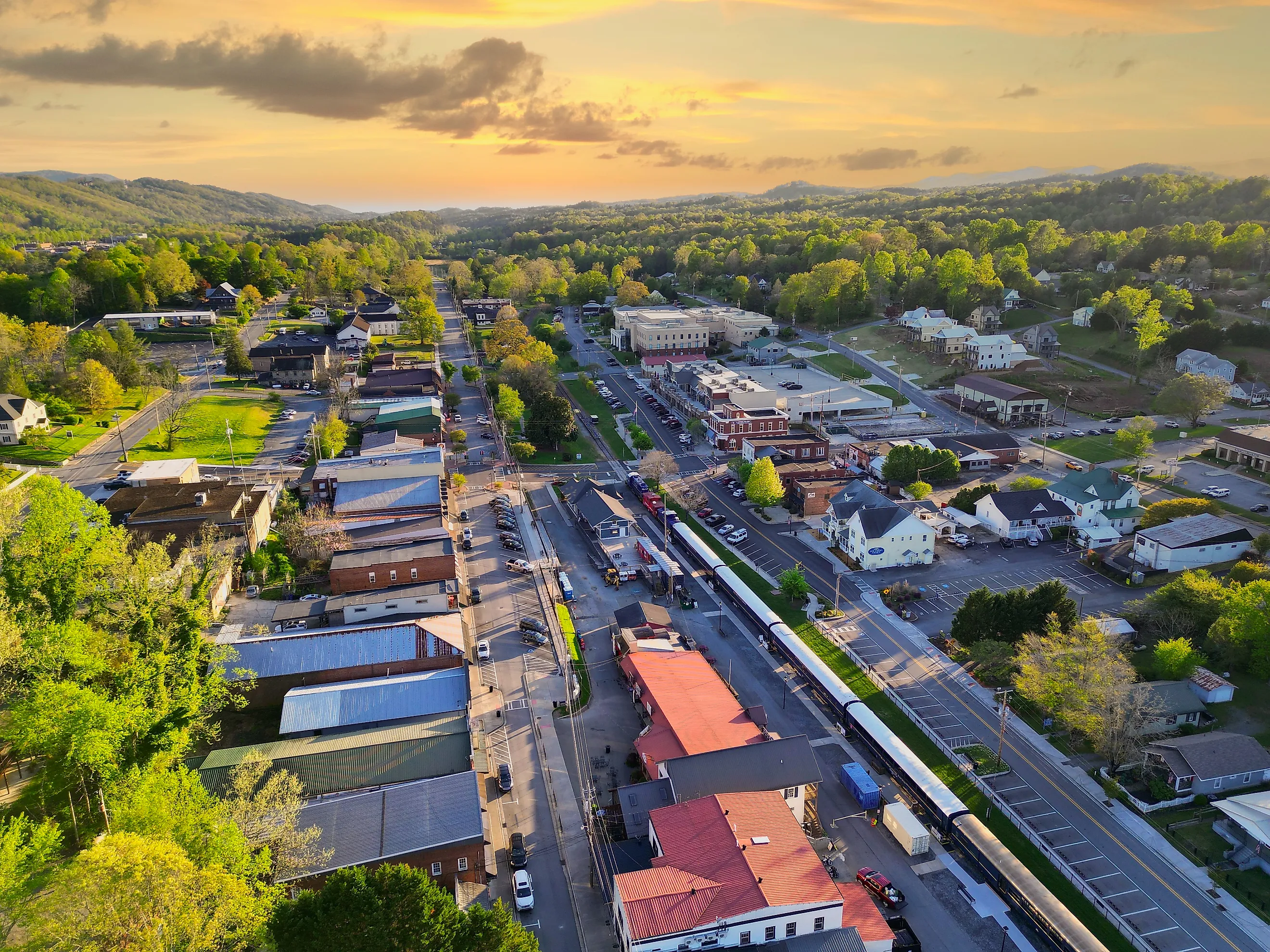
In the North Georgia mountains in Fannin County, Blue Ridge centers on a compact downtown near the old depot, about 90 minutes north of Atlanta. Mercier Orchards spreads across the hills outside town with U-pick fruit, a busy farm market, fried pies, and hard cider tied to one of the area’s best-known agricultural stops. From the 1905 Blue Ridge Depot, the Blue Ridge Scenic Railway follows the Toccoa River toward McCaysville, bringing mountain scenery and vintage rail character into the middle of town. Fall Branch Falls rewards a short wooded hike with a two-tier cascade framed by boulders and thick rhododendron. The Downtown Blue Ridge Heritage Walk passes the Butt House and the former City Hall & Jail, weaving local stories into the galleries and storefronts.
Madison

About an hour east of Atlanta in Morgan County, Madison unfolds around a handsome district filled with church spires, brick storefronts, and preserved 19th-century residences. Heritage Hall gives South Main one of its defining landmarks through an 1811 mansion with a columned façade and richly detailed interiors tied to the community’s early years. On Eatonton Highway, Farmview Market brings together a butcher shop, café, grocery, and farmers market stocked with products from Georgia farms. The Madison-Morgan Cultural Center fills an 1895 Romanesque Revival schoolhouse, where exhibitions and performances animate one of the district’s boldest buildings. Rogers House and Rose Cottage open another window into daily life through guided tours of two carefully preserved homes with period furnishings and domestic details.
Helen

Along the Chattahoochee in White County, Helen takes shape in the Northeast Georgia mountains through timbered facades, painted balconies, and a compact alpine-style core created during the community’s 1968 redesign. Cool River Tubing sends visitors onto the Chattahoochee for a gentle float beneath bridges and beside the busy riverfront. Anna Ruby Falls draws people up a paved path to twin waterfalls formed by Curtis Creek and York Creek, with the taller stream dropping more than 150 feet. Nora Mill Granary, established in 1876 on South Main, still grinds grits and cornmeal on original French burr stones beside the water. Just south of Helen, Hardman Farm State Historic Site preserves an 1870 Italianate mansion, the Nacoochee Indian Mound, and a visible piece of the old Unicoi Turnpike.
Thomasville

Near the Florida line in far southwest Georgia, Thomasville blends brick-paved streets, Victorian-era buildings, and a long tradition of gardens and sporting estates. At the edge of the center, the Big Oak spreads its immense limbs across a landmark live oak estimated at more than 330 years old. Pebble Hill Plantation stretches south of Thomasville with a grand main house, formal gardens, stables, and museum collections tied to quail hunting and plantation-era history. The Thomasville Rose Garden fills a city park with thousands of rose bushes and curving paths that bring a major burst of color into the landscape. In the central district, local merchants, restaurants, and galleries fill long rows of preserved storefronts.
St. Marys

On Georgia’s southern coast near the Florida border, St. Marys fronts the water with oak-lined streets, a marina, and one of the state’s oldest continuously inhabited communities. Orange Hall rises on Osborne Street as a commanding Greek Revival house from the 1830s, with towering columns and a prominent place near the old quarter. From the waterfront, the ferry to Cumberland Island National Seashore carries passengers toward wild beaches, maritime forest, and the Dungeness ruins. The St. Marys Submarine Museum fills two floors with naval artifacts, models, and memorabilia tied to the submarine service and nearby Kings Bay. Along the shoreline, galleries, locally owned restaurants, and broad river views create a lively stretch.
Darien

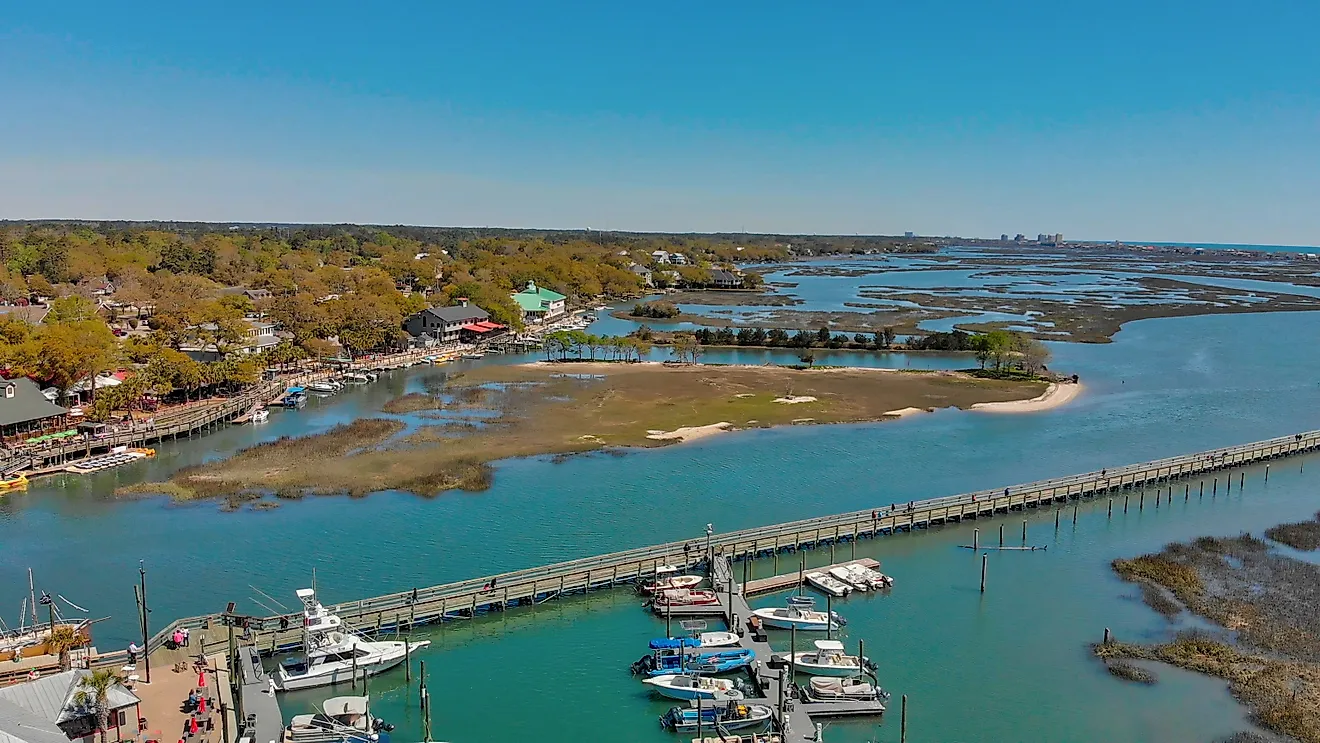
On the Georgia coast in McIntosh County, Darien rests amid salt marsh, shrimp docks, and riverfront streets shaped by a settlement founded by Scottish Highlanders in 1736. Skipper’s Fish Camp brings the working waterfront into focus with dockside tables, views over the Darien River, and a menu built around local seafood. Fort King George Historic Site preserves a reconstructed 1721 British fort on the Altamaha bluff, where palisades, barracks, and river vistas connect the landscape to colonial history. Altamaha Coastal Tours moves through blackwater creeks, tidal forest, and open marsh, showing the wider coastal environment around Darien. Vernon Square brings together St. Andrew’s Episcopal Church, 19th-century homes, and one of Georgia’s earliest planned street grids.
Ellijay

Where the Coosawattee and Ellijay rivers meet in Gilmer County, Ellijay stands in North Georgia amid orchard country, mountain ridges, and a compact central area. The Tabor House and Civil War Museum stands in an 1870s brick home filled with period furnishings and exhibits on local families, soldiers, and county history. East of Ellijay, Cartecay Vineyards spreads across rolling countryside with a barn tasting room and broad views of the southern Appalachians. Panorama Orchards & Farm Market on Talona Spur ranks among the area’s best-known stops for apples, cider, fried pies, and bins of local produce. Harrison Park follows the river through central Ellijay with lawns, walking paths, and easy access to the water.
Toccoa

At the edge of the Blue Ridge foothills in Stephens County, Toccoa combines a compact central district with wooded slopes, rushing water, and mountain-country scenery in northeast Georgia. Inside the restored train depot on Alexander Street, the Currahee Military Museum presents World War II artifacts and exhibits tied to Camp Toccoa and the paratroopers who trained there. Toccoa Falls drops 186 feet down a sheer rock wall on the campus of Toccoa Falls College, creating one of the area’s defining natural sights. A few miles south of Toccoa, Traveler’s Rest State Historic Site preserves an 1815 inn linked to early stagecoach travel through the region. Shops, galleries, and the renovated Stephens County Courthouse give the main thoroughfare its visual focus.
Tybee Island

East of Savannah on Georgia’s Atlantic coast, Tybee Island spreads across a barrier-island landscape of beaches, marsh, cottages, and a compact oceanfront strip. Tybee Pier and Pavilion serves as the heart of the beach district with fishing, beach access, and a direct link to Butler Avenue’s restaurants and shops. At the north end, Tybee Island Light Station & Museum towers above the shoreline with its black-and-white lighthouse, keeper’s cottages, and wide views toward the Savannah River entrance. Fort Pulaski National Monument stands near the island approach inside a massive brick fort encircled by tidal flats, trails, and views toward Cockspur Island Lighthouse. Near the beach, the Tybee Island Marine Science Center offers live exhibits, touch tanks, and hands-on coastal programs focused on sea turtles and Georgia marine life.
Senoia

About 35 miles south of Atlanta in Coweta County, Senoia preserves a 19th-century downtown of brick storefronts and wooden facades that gives the place its distinctive streetscape. Hollberg’s Fine Furniture has shaped the town center since the late 1800s, giving the area one of its longest-running landmark businesses. Georgia Tour Company leads visitors through streets and building exteriors used as Woodbury and Alexandria in The Walking Dead, tying film culture directly to Senoia’s streets. The Senoia Area Historical Society History Museum adds local depth through exhibits on railroads, agriculture, and everyday life in Coweta County. The Woodbury Shoppe fills a well-known storefront with licensed memorabilia, themed displays, and photo-ready props connected to the series filmed here.
Dahlonega

In Lumpkin County in the North Georgia mountains, Dahlonega gathers around a courthouse square backed by vineyard-covered hills and steep wooded ridges shaped by gold-rush history. Consolidated Gold Mine carries that story underground through guided tours into a hard-rock mine, along with gold panning and gemstone mining on the property. The Dahlonega Gold Museum State Historic Site fills the 1836 courthouse at the center of Dahlonega, where minted coins, nuggets, and exhibits trace the 1829 rush that transformed the region. Wolf Mountain Vineyards & Winery spreads across northern slopes with estate wines, mountain views, and European-style tasting rooms. Montaluce Winery adds another standout destination through Tuscan-inspired architecture, a working vineyard, and a restaurant overlooking the vines.
Taken together, these places show how much character Georgia’s smaller communities can hold. The state’s beauty comes through in different ways from one stop to the next, shaped by mountains, marsh, old architecture, and deep local history. What makes these towns memorable is how naturally those pieces come together. A walk down the street or a view from the water often feels enough to understand why so many of Georgia’s small towns leave such a lasting impression.