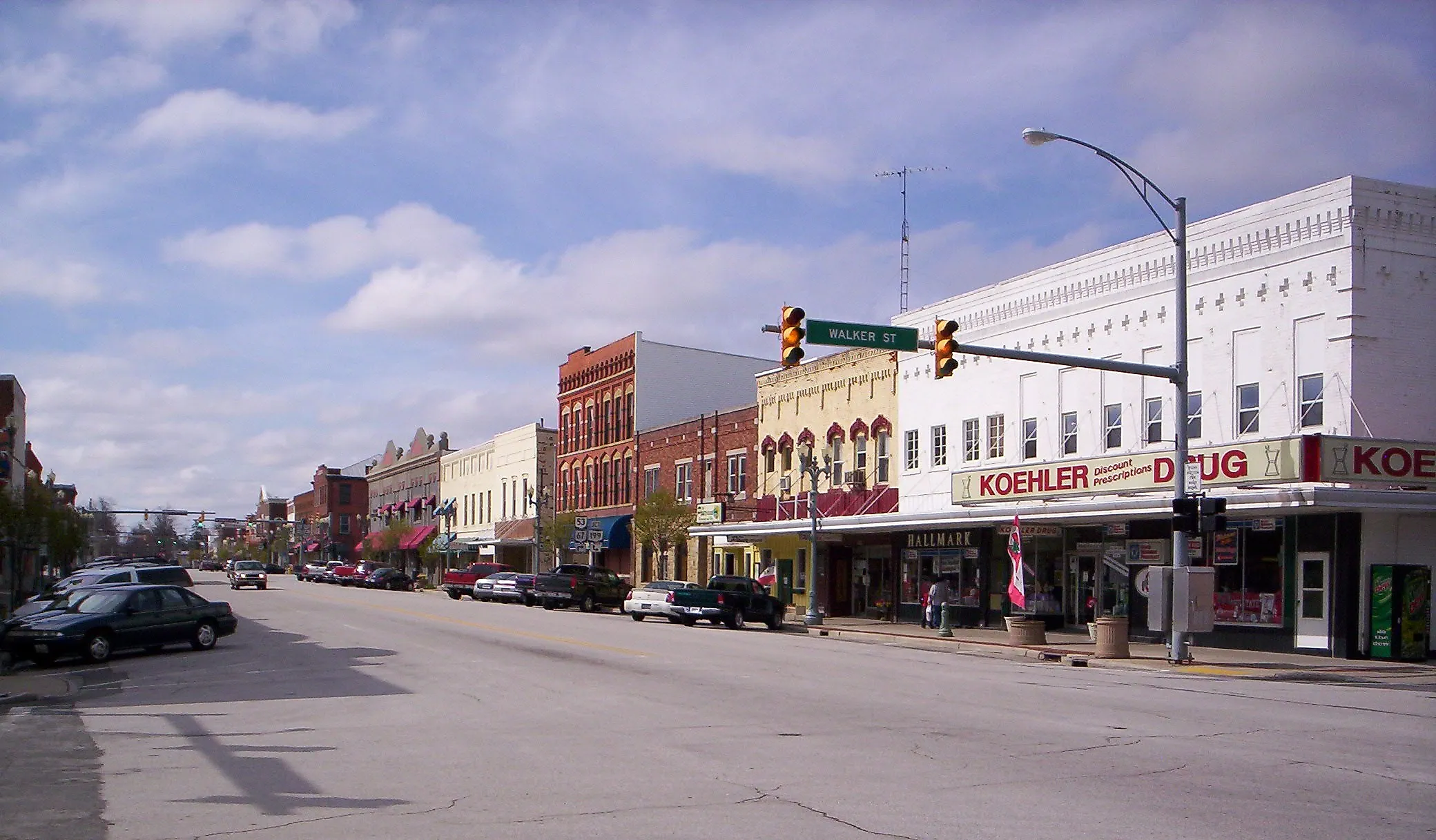
7 Of The Best Affordable Towns To Retire In Ohio
Tucked along Lake Erie and threaded through the Ohio's small cities and canal towns are places where a typical home still sells in the mid-$140,000s to mid-$160,000s, and where the "extras" most retirees want are built into daily life rather than saved for special trips. In these seven towns, a mortgage payment (if there is one at all) often comes in lower than what many people used to pay in property taxes alone, which leaves more room in the budget for travel, grandkids, hobbies and the odd indulgent dinner out.
This guide zooms in on communities where the details matter: a working harbor where freighters still pass under a lift bridge, and a former prison turned film landmark. Each town on this list offers its own version of that trade: solid healthcare, real history, and everyday places worth going back to, not just once on a scouting trip, but over and over once the moving boxes are gone.
Ashtabula

Most new arrivals in Ashtabula quickly learn that the harbor sets the tempo for retirement here, where freighters still move up the river into the same Lake Erie channel that once defined the town's working life. For many, the real surprise is that homes here typically sell in the mid-$150,000s, leaving room in a fixed budget for travel, hobbies, and the occasional splurge at local shops. The lift bridge rising for passing boats is not scenery, it's part of daily rhythm, and Bridge Street's restored buildings make it easy to settle into routines that feel earned rather than manufactured. Many mornings naturally end up at Rennick Meat Market, a historic butcher-shop-turned-steakhouse whose smoked kielbasa and house-made deli staples draw customers from across northeastern Ohio. It's the kind of place retirees appreciate for consistency and conversation as much as for food, where staff remember names and preferences without trying.
Five minutes from Bridge Street, Walnut Beach Park gives retirees an actual stretch of sand to walk, with open sunset views instead of a lake glimpsed over guardrails. The beach pairs naturally with visits to the Hubbard House Underground Railroad Museum, one of the most significant Underground Railroad sites in the state, where guides tell precise, local stories rather than broad history-book summaries. For retirees looking to stay creatively engaged, the Ashtabula Arts Center rounds things out with theater productions and classes that attract participants well past working age.
Sandusky

In Sandusky, retirement feels most rewarding when the town is treated as a lakeside hometown first and a theme-park neighbor second. For a Lake Erie city with this much waterfront, typical home values in the mid-$140,000s feel unexpectedly modest, especially to retirees arriving from pricier coastal or Sun Belt markets. Even so, Cedar Point plays an important role in daily life. On quiet weekday mornings, the peninsula becomes a place for long walks past the marina and empty boardwalks, with Lake Erie stretching uninterrupted to the horizon. That same shoreline continues downtown at the Jackson Street Pier, where retirees linger over the lake's shifting moods from wide wooden swings or along the open lawn. It's one of the few places in northern Ohio where the water feels integrated into everyday routine rather than set aside for tourists.
Sandusky's commercial history runs just as deep. A stop at Toft's Dairy is less about ice cream than continuity; the family-run creamery has been part of Ohio life since the 1890s, and locals still treat it as a ritual rather than a novelty. Nearby, the Maritime Museum of Sandusky ties the town's present to its working past, with exhibits focused on Great Lakes shipping, ice harvesting, and river trade specific to this stretch of Lake Erie.
Mansfield

Mansfield reveals itself to retirees through a mix of cultural depth and offbeat experiences that rarely show up in larger cities. On the practical side, Mansfield's typical home value sits in the mid-$140,000s, which keeps monthly housing costs surprisingly manageable for anyone trading down from a big-city property. The Ohio State Reformatory, one of the nation's most architecturally striking former prisons, stands at the center of that appeal. Its Romanesque façade and cavernous cell blocks, famous for their role in The Shawshank Redemption, offer retirees an unexpectedly engaging place to bring visiting family or explore during special history programs. Just a few minutes away, Kingwood Center Gardens provides a completely different rhythm: its meticulously designed formal gardens, restored estate home, and hands-on horticulture workshops give retirees a meaningful place to return to week after week, especially those who enjoy gardening at a deeper, more educational level.
That same commitment to creativity extends into Mansfield's commercial heart. The Renaissance Theatre, a restored 1920s movie palace, anchors downtown with symphony concerts, classic film nights and Broadway-caliber touring productions, an impressive roster for a town its size and an easy evening out for retirees who prefer culture close to home. A short drive south along I-71 near Bellville, the beloved Buckeye Express Diner offers a quirky but distinctly local dining experience inside a vintage red train car, making it a memorable stop for hosting grandchildren.
Lima

Lima tends to win retirees over not with scenery but with institutions that make aging in place practical and surprisingly enjoyable. Housing helps seal the deal: typical home values hover in the mid-$140,000s, a level that often lets retirees shed a mortgage or downsize into more space than they could afford in larger Ohio cities. At the heart of it is Mercy Health - St. Rita's Medical Center, a major hospital that not only anchors regional healthcare but maintains walking paths, landscaped gardens, and on-site education spaces. For retirees, it's reassuring to have high-level care in town without the typical cold, institutional feel. A few blocks east, the Veterans Memorial Civic and Convention Center offers a surprisingly wide range of cultural programming. The Lima Symphony Orchestra performs here regularly, alongside touring productions and film events, giving residents big-city entertainment without the drive to Columbus or Toledo.
Lima also carries its manufacturing legacy with pride, which shows most clearly at the Allen County Museum. It's one of Ohio's best regional museums, housing everything from an 1848 pioneer log house to a rare "Children's Discovery Center" and railroad exhibits that retirees often enjoy showing off to visiting grandchildren. A short walk from downtown, Alter Ego Comics doesn't cater only to collectors, it doubles as a gathering spot and event hub that retirees with niche interests often tap into.
Marion

In Marion, it rarely takes long before newcomers are pulled into the town's ongoing story rather than simply living alongside it. For many, that story begins with the realization that homes here often sell in the mid-$150,000s, making it possible to buy into a walkable, historic neighborhood without stretching a retirement budget. That connection usually begins at the Marion Palace Theatre, a 1928 atmospheric movie palace whose painted ceiling and twinkling "stars" still frame live theater, concerts, and classic films. Many retirees become season-ticket holders or volunteers, turning evenings out into a regular social anchor. Just a short walk away, the Harding Home grounds Marion in national history. Touring the meticulously restored home of President Warren G. Harding offers retirees something deeper than nostalgia, lectures and rotating exhibits keep the story relevant and surprisingly intimate.
Daily life in Marion flows easily beyond its historic core. The Tallgrass Trail gives retirees a flat, well-maintained route for long walks or bike rides through farmland and small communities, a rare amenity that encourages staying active without needing a car. When grandchildren visit, locals often head to OK Cafe, a Marion institution where oversized portions and familiar Midwestern cooking turn meals into events.
Cambridge

Cambridge tends to suit retirees who value close-up details over spectacle, and the town quietly rewards that mindset. The housing market fits that profile: typical home values in the low-to-mid $160,000s give retirees a chance to own close to downtown without taking on outsized monthly payments. Much of that revolves around the Guernsey County Courthouse, an imposing Second Empire landmark whose clock tower anchors daily life downtown. Each winter, its square becomes the centerpiece of Dickens Victorian Village, when dozens of life-size scenes line Wheeling Avenue. What keeps retirees coming back isn't novelty but participation, many help restore figures, staff evenings, or simply make it part of their seasonal rhythm. Outside the holidays, the same downtown blocks remain walkable and purposeful, especially when a long lunch at Theo's Restaurant stretches into the afternoon. Theo's has served classic Ohio comfort food for generations, and its longevity makes it a natural gathering place rather than a stop for visitors.
Nature, meanwhile, sits just beyond town limits at Salt Fork State Park, the largest state park in Ohio. Retirees use it not as a destination but as an extension of home, walking the lakeside paths, watching winter ice form on Salt Fork Lake, or meeting family at the lodge without logistical fuss.
Coshocton

Coshocton's rhythm for retirees usually takes shape along the river at Historic Roscoe Village, a restored 1830s canal-era community that feels less like a museum and more like an extension of town life. Matching that relaxed pace, Coshocton's homes typically sell somewhere in the mid-$140,000s to mid-$150,000s, so downsizing here rarely means sacrificing financial breathing room. Brick streets, original buildings, and working artisan shops create reasons to return repeatedly, whether for seasonal events, hands-on demonstrations, or quiet weekday walks when the village feels almost private. Many retirees volunteer here, not out of obligation but because Roscoe offers structure and social connection without demanding a schedule. A short drive uphill leads to Johnson-Humrickhouse Museum, whose globally significant collections, Native American artifacts, Asian art, and rare Ohio Valley archaeology, surprise first-time visitors and give longtime residents a reason to keep learning close to home.
Daily routines often stretch outdoors at Clary Gardens, where terraced paths, ponds, and river overlooks provide gentle exercise without crowds. It's a place retirees return to throughout the year, watching the landscape change rather than passing through it. Evenings tend to end downtown at Warehouse Steak n' Stein, a locally owned institution housed in a former warehouse, known for hearty Midwestern cooking and long-standing staff who recognize regulars.
Choosing among these towns isn’t about chasing the “perfect” retirement; it’s about matching daily habits to the right backdrop. If someone wants walkable errands, real health care, and places worth visiting twice, each city here delivers that in its own way. The constant is simple: lower housing costs buying back years of flexibility for travel, family, hobbies and small experiments.