10 Unforgettable Small Towns to Visit in Idaho
Big burly lumberjack muscles, a geyser that shoots 100 feet into the air, and 1,500 sheep running down Main Street are only a few of the ways Idaho's smallest towns are utterly unforgettable. An assortment of peculiarities, incredible boom-to-bust-to-boom-again stories, and notable infrastructure achievements draw in tourists to places they likely otherwise wouldn't go. But once there, names like Ketchum, Kellogg, Bonners Ferry, and Stanley become fixed points rather than passing curiosities. These are places where history, industry, and geography intersect in unexpected ways, producing moments and features that stick in memory long after a visit.
Soda Springs

The Soda Springs Geyser, discovered during a 1937 pool excavation, erupts on the hour every hour from a controlled valve, sending mineral water as high as 100 feet into the air inside Geyser Park. No other town in the country schedules a geyser as public infrastructure, and the surrounding boardwalk, lawn, and viewing area function as the town's most visible civic space.

The geyser sits within a compact downtown in Caribou County, where early brick and masonry buildings clustered to serve rail traffic, ranching families, and Oregon Trail pass-throughs. Eastman Drug Store, the oldest drug store in the state, remains part of that original commercial core and continues bottling its house Iron Port soda while running a working soda fountain. Hooper Springs Park allows direct access to naturally carbonated mineral water along Soda Creek, with paths threading through a small greenbelt just outside of downtown.
Ketchum

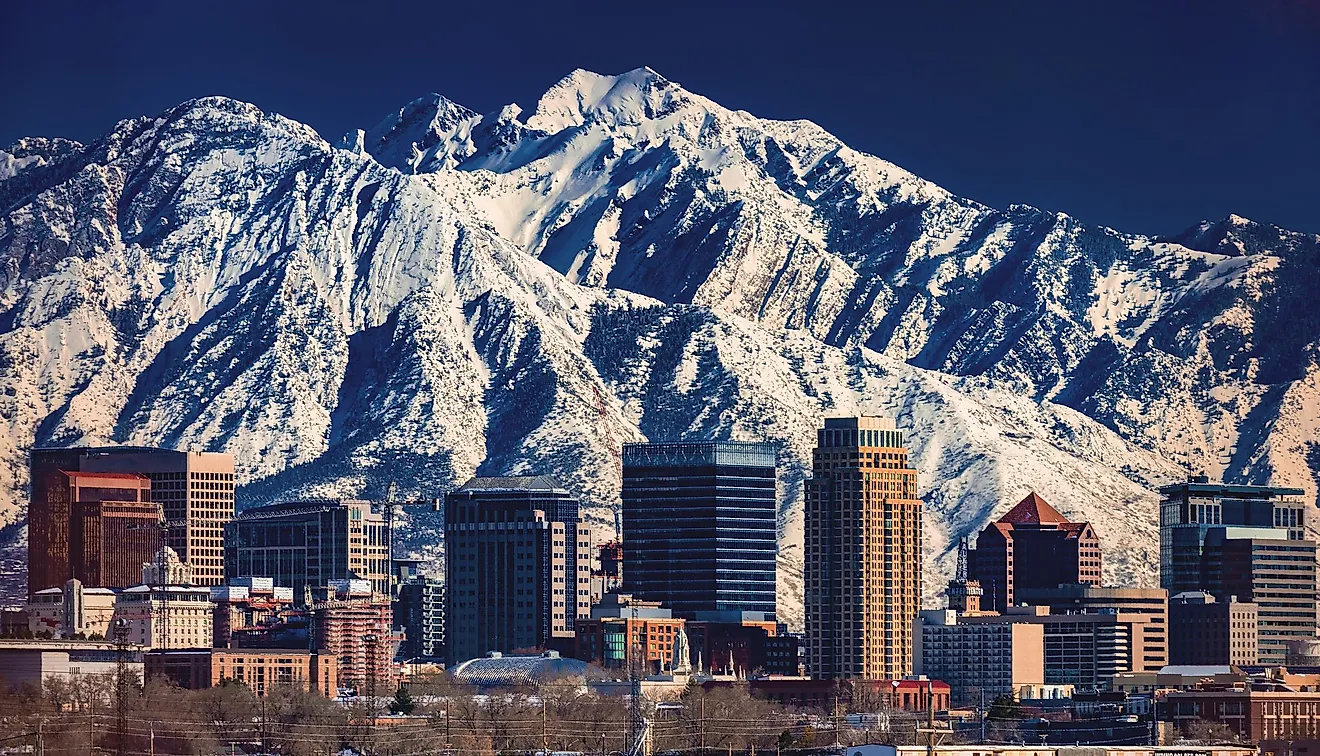
A storm of sheep takes over Main Street each October when the Trailing of the Sheep Festival runs straight through downtown Ketchum. Up to 1,500 sheep move between barricades and storefronts during the Big Sheep Parade. The 30th annual festival is scheduled for 2026, with sheepdog trials, wool events, culinary programs, and live performances that culminate in the type of experience that makes this place entirely unforgettable. Ketchum occupies a narrow section of central Idaho's Wood River Valley, and the town's street grid leads toward the base of Bald Mountain, where Bald Mountain ski runs drop directly toward town from Sun Valley Resort.

Once a silver mining town, Ketchum now draws crowds who want to enjoy the runs, indulge in après-ski at places like Grumpy's, and check out the sky at night. Ketchum falls within the Central Idaho Dark Sky Reserve, the first designated reserve of its kind in the United States, where lighting restrictions allow the Milky Way to register clearly above the valley floor.
Arco

On July 17, 1955, electricity generated at Experimental Breeder Reactor I powered the town for an hour, making Arco the first community in the world to be lit by atomic energy. That experiment unfolded on the eastern edge of the Snake River Plain, north of the Big Lost River, and permanently tied this town of fewer than 1,000 people to the early nuclear age. A small park in town marks the moment with the Atoms for Peace Historical Marker. EBR-I itself stands southeast of town within the Idaho National Laboratory site.
The reactor complex, which opens seasonally, preserves the control room and turbine hall where nuclear power first left the experimental stage. Atomic Days, held each summer in town, combines a parade, rodeo events, and community gatherings centered on the town's atomic identity.
Kellogg

Kellogg's transformation from a silver mining hub into a modern mountain destination is anchored by one singular infrastructure achievement: Silver Mountain Resort's gondola. At 3.1 miles from downtown to the Mountain House, it is North America's longest single-stage gondola, carrying passengers directly from the city's base into lift-served terrain without intermediate stops, a configuration rare among US ski resorts.

Silver Mountain Resort's lift system connects seven chairlifts and the gondola to 1,600 acres of trails and a 2,200-foot vertical drop for skiing and snowboarding in winter, while summer programming loads the lift with mountain bikes. The resort complex also includes Silver Rapids, Idaho's largest indoor waterpark. Then there is the annual Brewsfest, a really popular event that proves a town with a population of less than 3,000 can truly 'go big.'
Idaho City

Idaho City is unforgettable because it transformed its boomtown legacy into a defining asset despite a notable loss in popularity and population. During the 1860s gold rush, it was the largest city in the Pacific Northwest, outpacing Portland in population, yet a series of devastating fires and the decline in mining reduced it to a fraction of its former size.
Rather than erasing that past, the town preserved its original layout and 19th-century buildings along Main Street, turning its compact, frontier-era proportions into a living historical framework. Diamond Lil's Museum, Steakhouse & Saloon occupies a historic building and doubles as a working saloon, a true symbol of how something nearly wiped off the map has reinvented itself without losing its roots. The Simply Fun Historic Walking Tour connects the Judge Halley House (1867), Boot Hill Cemetery, and other original structures, offering a tangible sense of a town that turned the story of a near-ghost boomtown into a living, accessible, and historically coherent community.
Orofino

Orofino is one of the only American towns where a professional logging skill set, once at risk of extinction, became the town's primary civic spectacle and has remained so for nearly 80 years. The town's defining public event, Lumberjack Days, has run since 1947 and still stages axe throwing, two-man sawing, chopping contests, and log-rolling races, keeping competitive logging skills visible in a town built around them. The event grounds itself in the same industries that supported Orofino through the mid-20th century, when mechanization threatened to erase hand skills that once defined the Clearwater region's economy.
The town lines the eastern edge of the Clearwater River in north-central Idaho, where the waterway remains central to daily use. Ahsahka Beach and Orofino City Park downtown offer places for people to enjoy the water. Nearby, multiple restaurants and cafes line Main Street and Michigan Avenue.
Moscow

Moscow's identity is built around a scale of culture that is unusually concentrated for a town of its size. The clearest expression arrives each spring with the Lionel Hampton Jazz Festival, a three-day event that takes over University of Idaho performance spaces and draws thousands of student musicians and educators to town for concerts, clinics, and adjudicated performances.

The Moscow Renaissance Fair adds a contrasting signature. Each spring, East City Park becomes a temporary medieval landscape with reenactments, crafts markets, games, and staged performances. Along Main Street, the Moscow Farmers Market closes the street every Saturday from May through October, and on select third Thursdays, Moscow Artwalk links galleries, businesses, and temporary exhibits together to add an even more artistic flavor to this tiny town.
Wallace

Wallace compresses big ideas into a tight grid of brick streets in Idaho's Silver Valley, running alongside the South Fork of the Coeur d'Alene River and boxed in by the Coeur d'Alene Mountains. In 2004, the city formalized its sense of scale and irony by declaring itself the Center of the Universe. The designation lives at street level as a marked manhole cover at Bank and Sixth, installed by the city and treated as a civic fact rather than a stunt.

The Sierra Silver Mine Tour drops directly underground from within city limits, using original tunnels dug during Wallace's silver boom. A few blocks away, the Oasis Bordello Museum remains preserved exactly as it was when it closed in 1988, the last operating brothel in Idaho, and features surviving artifacts of Western mining towns.
Stanley

The combination of geothermal water, salmon, and darkness makes Stanley one of the most indelible spots in the state. Not far from town, Boat Box Hot Springs is a natural soaking site along the Salmon River's edge, while Mountain Village Resort maintains a built-in hot spring fed directly from the ground. After sunset, Stanley falls within the Central Idaho Dark Sky Reserve, the only Gold Tier reserve in the US, where minimal development and lighting controls allow the sky to shine bright with stars.
Stanley occupies the floor of the Sawtooth Valley at the junction of the Salmon River and Valley Creek, surrounded by the Sawtooth Mountains' granite peaks and lodgepole forests. While the town has only about 200 permanent residents, its annual event, the Sawtooth Salmon Festival, draws a large crowd to learn about, celebrate, and enjoy the 900-mile salmon migration.
Bonners Ferry

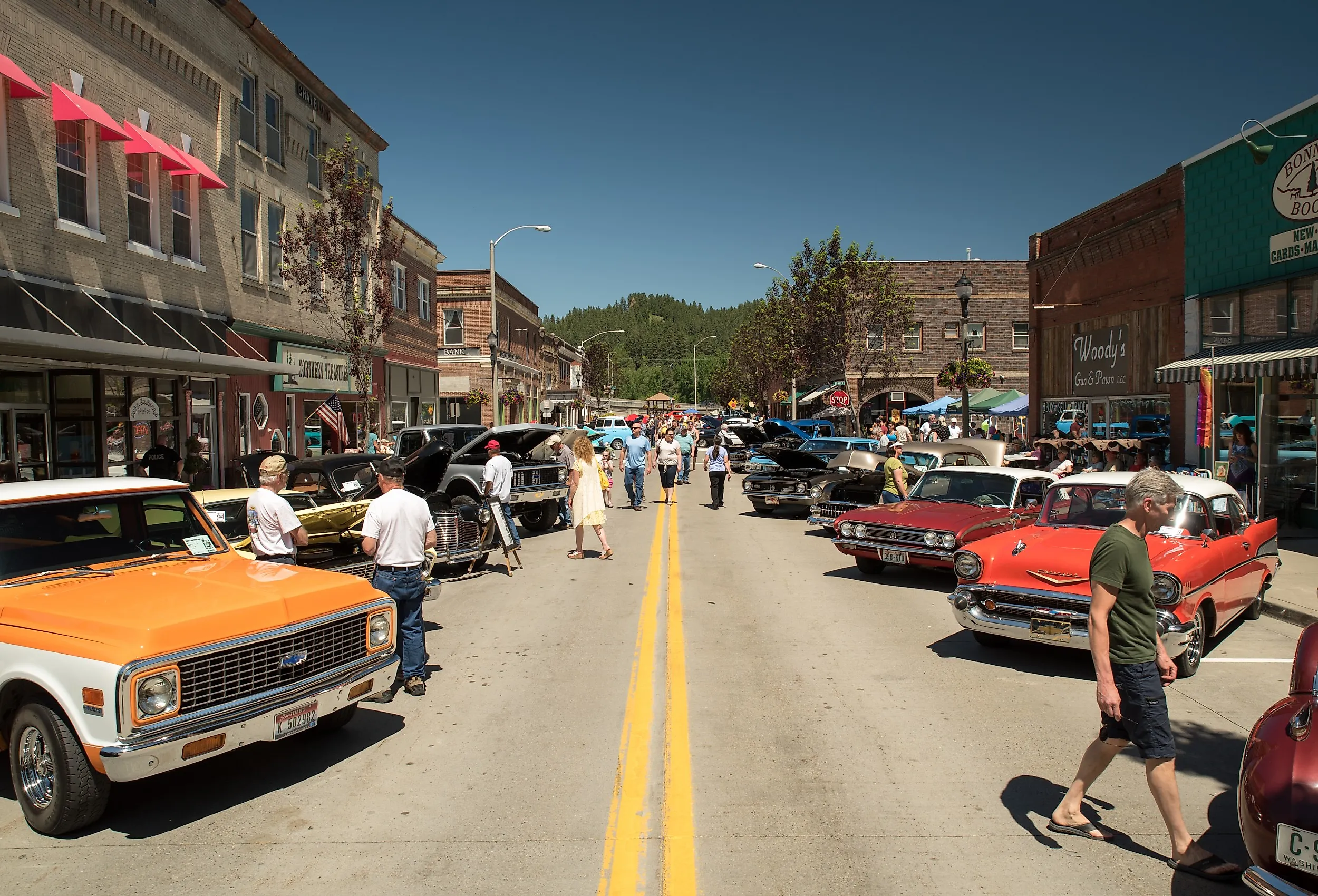
Bonners Ferry is unusual because its town center was physically engineered around a river that refused to be decorative. Early commercial buildings along Main Street in Bonners Ferry were built on stilts to survive seasonal flooding from the Kootenai River, a practical response that later gave way to brick storefronts once flood control measures reshaped the valley. That river-first design still defines the town's layout today, with downtown pressed close to the Kootenai River inside the broad, flat Kootenai River Valley of northern Idaho, less than 30 miles from the Canadian border.

The Boundary County Fairgrounds host the Boundary County Fair, where livestock shows and agricultural exhibits reflect the valley's long-standing role as a farming center shaped by river-fed soils. On market days, the Bonners Ferry Farmers Market brings local growers and artisans into the downtown grid, linking them to the river system that first shaped the town’s layout. And for those in the area in June, don't miss the annual Rod Benders Car Club car show.
Each town is defined by something that happened there and could only have happened there, leaving marks that remain visible in street layouts, landmarks, and public rituals. Idaho's most unforgettable towns persist through concrete claims: firsts, extremes, experiments, and improbable survival. Together, towns like Ketchum, Kellogg, Wallace, and Bonners Ferry form a map of how unlikely ideas, geography, and industry shaped lasting identities across the state.