10 Of The Most Welcoming Towns In The Adirondack Mountains
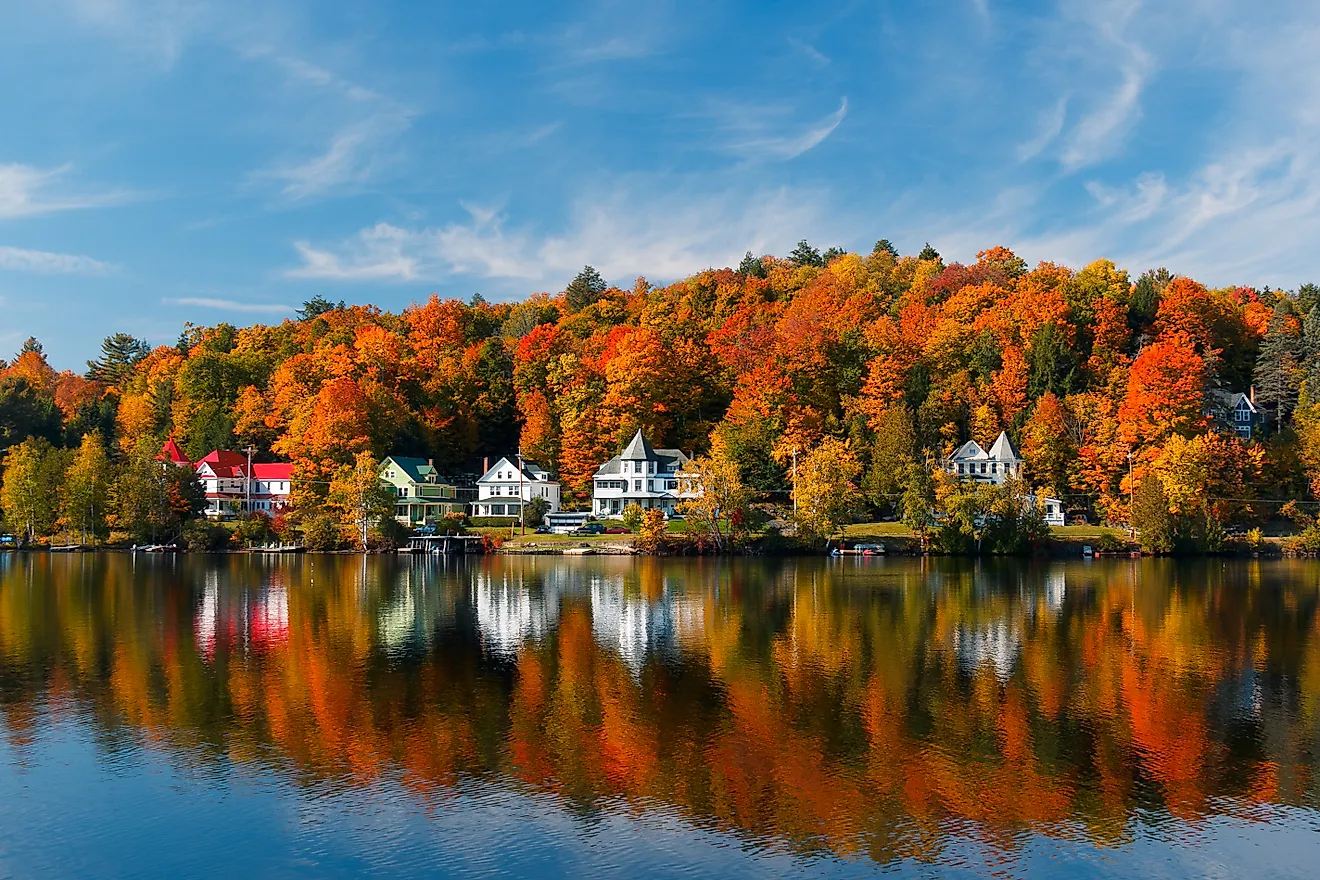
There is a warmth in the Adirondacks that defies the snowy winters. This hospitality is not accidental; it is historical. In the late 1800s, the region became famous as a sanctuary for healing. Thousands traveled here to recover in the clean mountain air, and local communities dedicated themselves to caring for these long-term visitors. This history of caring for strangers has created a deep-rooted culture of kindness that remains today. You will feel that spirit in Lake Placid, which twice rallied to host the world for the Winter Olympics. It thrives in Saranac Lake, where locals hand-build ice palaces for their community carnival, and in Tupper Lake, where the grit of the lumber industry has evolved into a welcoming, family-focused atmosphere. Visit these Adirondack Mountain towns where you are greeted with open arms.
Lake Placid

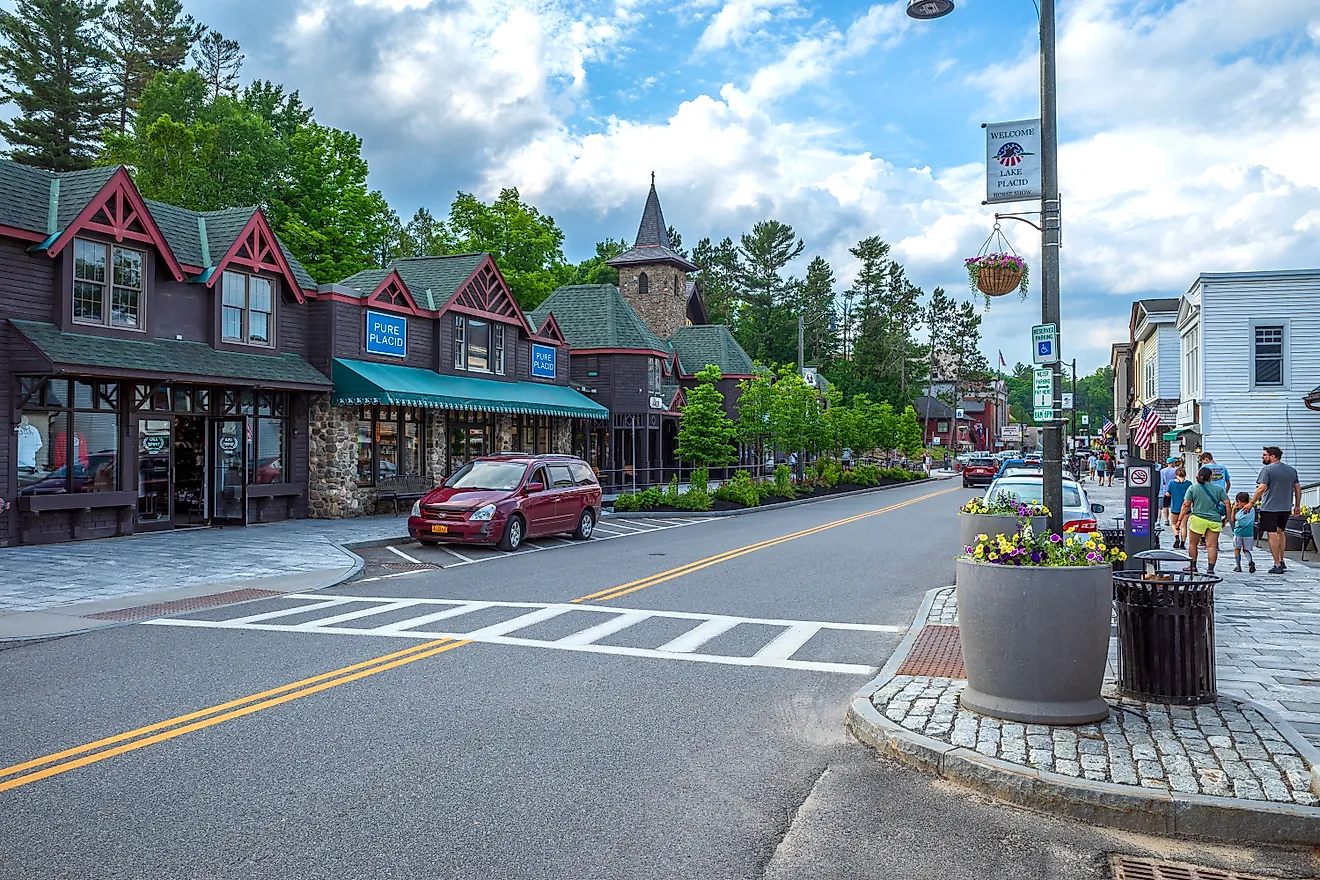
This world-famous village of Lake Placid offers a level of embrace that few places can match, largely because it has twice opened its doors to the entire globe. As the host of the Winter Olympics in 1932 and 1980, Lake Placid developed a legacy of volunteerism that defines the local character to this day. You can feel this energy during the annual Ironman competition, where thousands of residents line the streets to cheer for strangers until the very last runner crosses the finish line. Beyond sports, the Olympic Center serves as a living museum of the "Miracle on Ice," grounding the area in a shared history of triumph. Culture seekers also flock here for the Lake Placid Film Festival, an intimate gathering that connects cinephiles with filmmakers in a relaxed setting. Whether you are skating on the speed track or walking around Mirror Lake, you are stepping into a setting that views every visitor as part of its ongoing story.
Saranac Lake
If Lake Placid is the athlete of the mountains, Saranac Lake is the artist and the nurturer. This village differentiates itself through a creative spirit born from its history as a pioneer health resort. In the late 1800s, Dr. Edward Livingston Trudeau established a sanitarium here to treat tuberculosis, drawing patients from all walks of life who sought the "fresh air cure." This unique origin fostered a deep-seated culture of empathy and acceptance that persists today. Nowhere is this collective bond more visible than during the Saranac Lake Winter Carnival, a tradition dating back to 1897. Unlike commercial festivals, this celebration is entirely built by residents who harvest ice blocks from Lake Flower to construct a massive Ice Palace by hand. Walking through the downtown galleries or visiting the historic Robert Louis Stevenson Cottage (where the author sought his own cure) reveals a place where neighbors actively collaborate to create beauty for everyone to enjoy.
Tupper Lake

Tupper Lake is situated along the winding banks of the Raquette River, and the area defines itself through a "can-do" resilience that dates back to the mid-19th-century logging boom. That heritage is loudly celebrated during the Tupper Lake Woodsmen’s Days, a mid-summer fair that brings residents and visitors together for parades, heavy equipment demonstrations, and chainsaw carving competitions. It is an unpretentious gathering that honors the hard work that built the region. This collective drive was also responsible for the creation of The Wild Center, a world-class natural history museum. The facility was not a corporate implant but the result of a massive mobilization by locals to revitalize their home, proving that this settlement does not just observe its history, it builds its future with its own hands.
Old Forge

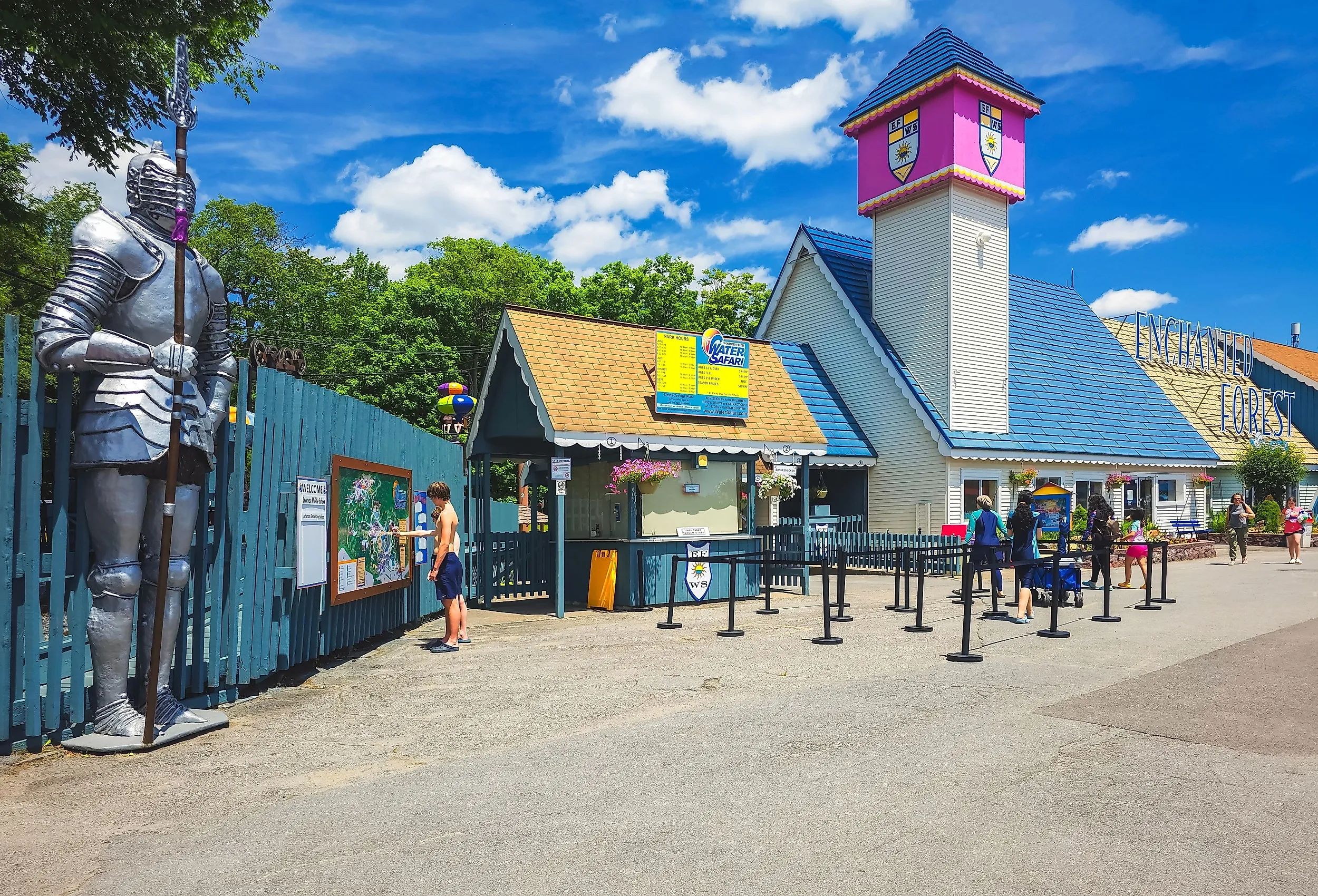
Old Forge, as the "Gateway to the Adirondacks," offers an immediate sense of belonging that greets you the moment you drive through. Its name pays homage to a literal iron forge built here in 1817 by Charles Herreshoff, but today, the sparks come from local gatherings rather than industrial anvils. The most magical of these is Christmas on Main Street, a celebration that transforms the village into a living snow globe, drawing families from across the state to share in the festive spirit. Summer brings a different kind of energy, anchored by the Enchanted Forest Water Safari, a classic park that has been a distinct family tradition since 1956. For a quieter connection, the View Arts Center showcases regional talent, proving that this hub is not just a tourist stop, but a place where creativity and tradition run deep.
Lake George

Often called the "Queen of American Lakes," Lake George defined the American family vacation long before road trips became a national pastime. Its legacy of hosting travelers dates back to the colonial era, anchored by the imposing Fort William Henry, a restored 1755 fortification where history buffs can step directly into the French and Indian War. While summer crowds flock to the sandy expanse of Million Dollar Beach, the local spirit shines brightest when the temperatures drop. The Lake George Winter Carnival, held every weekend in February, proves that this destination never hibernates. Since 1961, residents have organized outhouse races, chili cook-offs, and polar plunges, creating a raucous, open-hearted atmosphere that turns the frozen lake into a shared playground for visitors from across the country.
Schroon Lake

Schroon Lake hums with a melody that has been playing for over a century, distinguishing itself as a surprising cultural heavyweight in the region. Since 1915, it has been home to the Seagle Festival Colony, the oldest summer vocal training program in the United States. This institution brings world-class opera and musical theater performers to the mountains, allowing residents and visitors to mingle with rising Broadway stars in an intimate setting. The area also carries a touch of Hollywood glamour; the historic Scaroon Manor (now a state park) was the filming location for the 1958 classic Marjorie Morningstar and a favorite stomping ground for Gene Kelly. That love for the arts continues at the Strand Theater, an Art Deco gem on Main Street that serves as the living room for the town, hosting everything from classic film screenings to jam sessions that encourage everyone to sing along.
Wilmington

Known as the "Home of Whiteface Mountain," Wilmington feels less like a municipality and more like a permanent holiday. It is the site of Santa's Workshop, one of the first theme parks in the United States, which opened in 1949. Unlike modern corporate parks, this was a passion project by a local businessman and an artist who wanted to build a "summer home" for Santa Claus. That whimsical, family-first energy permeates the entire area. You can see it at High Falls Gorge, where private citizens have maintained safe walkways since the 1890s, allowing everyone to witness the power of the AuSable River's waterfalls. Whether you are driving up the Veterans Memorial Highway to the summit of Whiteface or fishing in the river that runs through the town center, the vibe here is unhurried and genuinely magical.
Keene

Keene serves as the spiritual basecamp for mountaineers in the Northeast. While it is physically small, the camaraderie here is immense, mainly centered around the legendary Noon Mark Diner. Since the mid-20th century, this eatery has served as the area's unofficial meeting hall, where locals and visitors share stories over slices of homemade pie, blurring the lines between residents and tourists. This shared bond was tested and solidified during Hurricane Irene in 2011, when devastating floods temporarily cut off the valley. The residents mobilized instantly to feed and shelter stranded travelers and neighbors alike, a testament to the resilience that defines the population. Whether you are parking at The Garden Trailhead to start an ascent or visiting the local markets, you are entering a circle of people who treat every person with the respect due a fellow traveler.
Long Lake

At the geographic center of the park, Long Lake functions as the great intersection of the Adirondacks, a place where roads and rivers converge. Historically, this was the domain of legendary guides like Mitchell Sabattis, who steered 19th-century travelers through the wilderness with a steady hand. That tradition of guidance and hospitality continues at the Adirondack Hotel, a landmark that has stood since the 1850s (rebuilt in 1900) and serves as the town's living room. Sitting on its porch offers a front-row seat to local life, where conversations start easily between strangers. The connection to the water is celebrated during the Long Lake Long Boat Regatta, an event honoring the Adirondack Guideboat, a unique vessel indigenous to the region, designed to carry heavy loads yet be light enough for a single person to portage. Down at the Long Lake Town Beach, neighbors gather to watch historic seaplanes take off, maintaining a rhythm of life that has stayed consistent for generations.
Speculator

Despite being one of the smallest villages in the region, Speculator has a history that packs quite a punch. In the 1920s, it became the preferred training ground for heavyweight boxing champions, including Gene Tunney, who prepared here for his legendary "Long Count" fight against Jack Dempsey. That era left a lasting mark on the local identity, creating a sense of pride that is still palpable when speaking with residents. Today, the energy centers around Oak Mountain, a family-owned ski area that defies the trend of corporate resorts. It operates as a year-round gathering spot, hosting summer music festivals and fall harvest fairs that feel more like large family reunions than commercial events. Down in the village, the historic Hamilton County Courthouse stands as a testament to the area's longevity, anchoring a settlement that calls itself the "All-Season Vacationland." It is a place where the population is small, but the camaraderie is massive, ensuring no visitor stays a stranger for long.
The true magic of the Adirondacks lies not just in the height of the High Peaks or the depth of the waters, but in the generosity of the people who call this wilderness home. Whether you are cheering alongside locals at a sporting event or sharing a slice of pie in a roadside diner, you are engaging in a tradition of connection that goes back centuries. These hamlets were built by guides, healers, and lumberjacks who understood that life in the mountains required relying on one another. Today, that reliance has evolved into an open-hearted invitation to anyone willing to make the journey. So, when you cross the "Blue Line" into this vast park, know that you are doing more than sightseeing. You are stepping into a circle of neighbors who are ready to make you feel like you have lived here all your life.