The Middle-Eastern Town Where Jesus Performed His First Miracle
Few pilgrimage sites can quite match Qana. Set in the hills of southern Lebanon, 57 miles south of Beirut, this small community occupies territory that was historically considered part of Upper Galilee, the same biblical Galilee where Jesus of Nazareth conducted much of his ministry nearly 2,000 years ago.
Known locally by its Arabic name, قانا, and sometimes spelled Cana or Kana, its connection to Jesus has led to its being of immense importance to Christians. This unique connection dates to the fourth century when Eusebius of Caesarea, a Roman church historian, identified this location in his writings as the site where the Gospel of John records Jesus' first miracle.
Described in John 2:1-11, it was here that Jesus turned water into wine at a wedding feast. Not only did this event mark the beginning of Christ's public ministry, but it remains one of the most celebrated events in Christian scripture. Lebanese Christians, as well as some Shia Muslims, strongly believe that Qana was indeed the location of this transformative moment, cementing the town’s reputation as a major pilgrimage destination for believers from around the world.
The Wedding Miracle

According to the Gospel of John, Jesus attended the wedding feast in Cana of Galilee, accompanied by his mother, Mary, and his newly gathered disciples. When the hosts ran out of wine (a serious faux pas in first-century Jewish culture), Mary is said to have informed her son of the problem.
John’s account describes six large stone jars used for Jewish purification rituals, each capable of holding 20 to 30 gallons of water. Jesus instructed the servants to fill each of them, after which he scooped some out to be sampled.
Upon tasting the liquid, the host, unaware of its source, asked the bridegroom why he had saved the very best wine for last. This was contrary to the tradition of serving the best wine first, saving inferior wines for later in the wedding.
The Significance of the First Miracle

The importance of Christ’s first miracle far outweighs what might have been considered a simple act of hospitality. Christian scholars have long interpreted the transformation of simple water into a high-quality wine as deeply symbolic, perhaps representing the transition from the old covenant (that of law) to a newer covenant that focused instead on grace.
The six stone jars, too, carry great significance. In fact, scholars suggest the empty jars may represent incompleteness as they were one short of the perfect number seven, with Christ himself becoming the seventh, thus enabling fulfillment. The estimated 120 gallons of wine produced also suggests the potential for divine abundance, suggesting the overflowing grace that believers would receive.
The fact that the miracle took place at a wedding is also significant. Old Testament prophets frequently employed marital imagery to describe God's relationship with Israel, using wedding banquets throughout scripture as symbols of the coming of the Messiah.
The Grotto of Qana
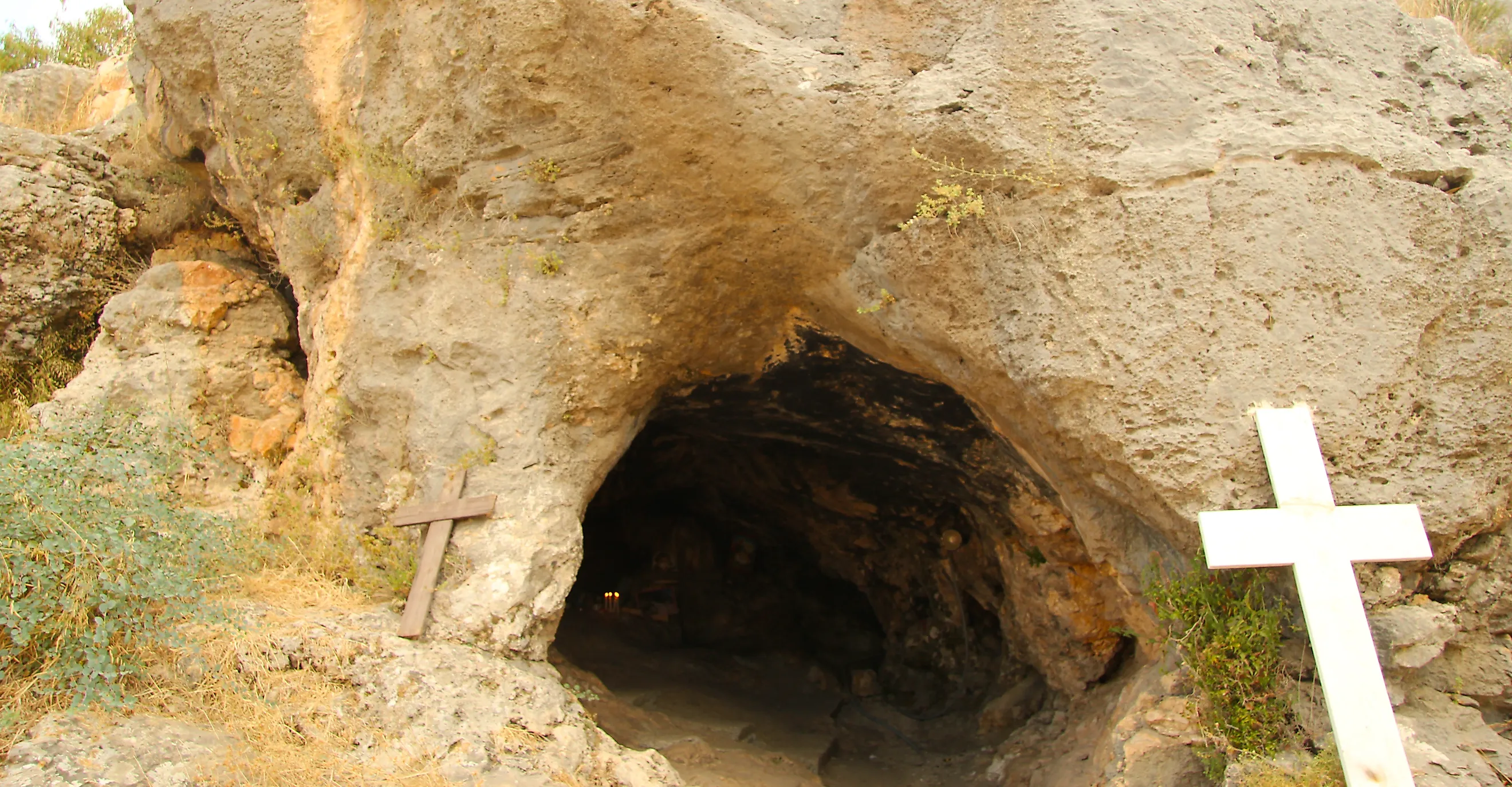
Modern-day Qana has several notable attractions that religious scholars, pilgrims, and history enthusiasts alike will want to visit. The Grotto of Qana (aka, Qana Holy Grotto) is the big draw and comprises a natural cavern where Jesus is said to have rested and prayed before performing his wedding miracle.
Consecrated to the Virgin Mary in the early 2000s, it now serves as a place of worship for believers from multiple faiths. Nearby bas-reliefs carved into the rockface depict figures identified by tradition as Jesus and his 12 apostles. You can get to the grotto by descending a path from the nearby road.
Though their historical origins remain a mystery, locals claim that the large stone basins also found here are the very vessels used by Jesus for his wedding miracle.
Qana’s Other Important Sites

The Melkite Greek Catholic Church of Saint Joseph is another must-see in Qana. Reconstructed after being damaged by a fire several years ago, you’ll find it in the town’s Christian quarter (just look for the large statue of the Virgin Mary standing in front of it).
To learn more about local culture and art, pay a visit to the Moussa Tiba Museum. Housed in the famous Lebanese painter’s family home (Tiba was born in Qana), it features 300 works of art painted between 1962 and 2002. You’ll also see artwork by notable Lebanese and international artists, including Shafic Abboud, Halim Jurdak, and Hussein Madi. A student of the Lebanese Academy of Fine Arts, Tiba’s work can also be seen in the British Museum in London, the Museum of Fine Arts, Houston, and the Arab World Institute in Paris.
If you can, stop in at the neighboring village of Hanaway. Here you’ll find the Sarcophagus of Hiram, one of Lebanon's largest ancient tombs. Stretching an impressive 13 feet in length, it has traditionally been attributed to King Hiram of Tyre, though this is up for debate.
Making the Pilgrimage to Qana

Reaching Qana requires a two-hour drive from Beirut, covering roughly 57 miles along the coastal highway toward Sidon before turning south.
It’s even easier from the ancient port city of Tyre, just six miles away. One of the biggest cities in Lebanon, the journey takes around 30 minutes by taxi. The grotto is well signposted along the road from Tyre, and is about six miles from the Hiram Sarcophagus, making a stop at both sites an option.
While Qana lacks accommodations, you’ll find plenty of places to stay in Tyre (check up to date safety information). Options include boutique hotels such as Dar Alma and Dar Camelia in the old town's Christian quarter, Al Fanar Restaurant & Auberge on the waterfront, or the El Boutique Hotel.
The Final Word
Whether you’re a religious scholar, a person of faith, or someone on the look out for unique historical sites to visit, the Lebanese town of Qana is worth including in your Middle East travel itinerary. Considered the actual site of Jesus’s first miracle when he turned water into wine at a wedding, a pilgrimage to Qana and its grotto is a must-do highlight of any Christian’s faith journey.