Maps of Pennsylvania
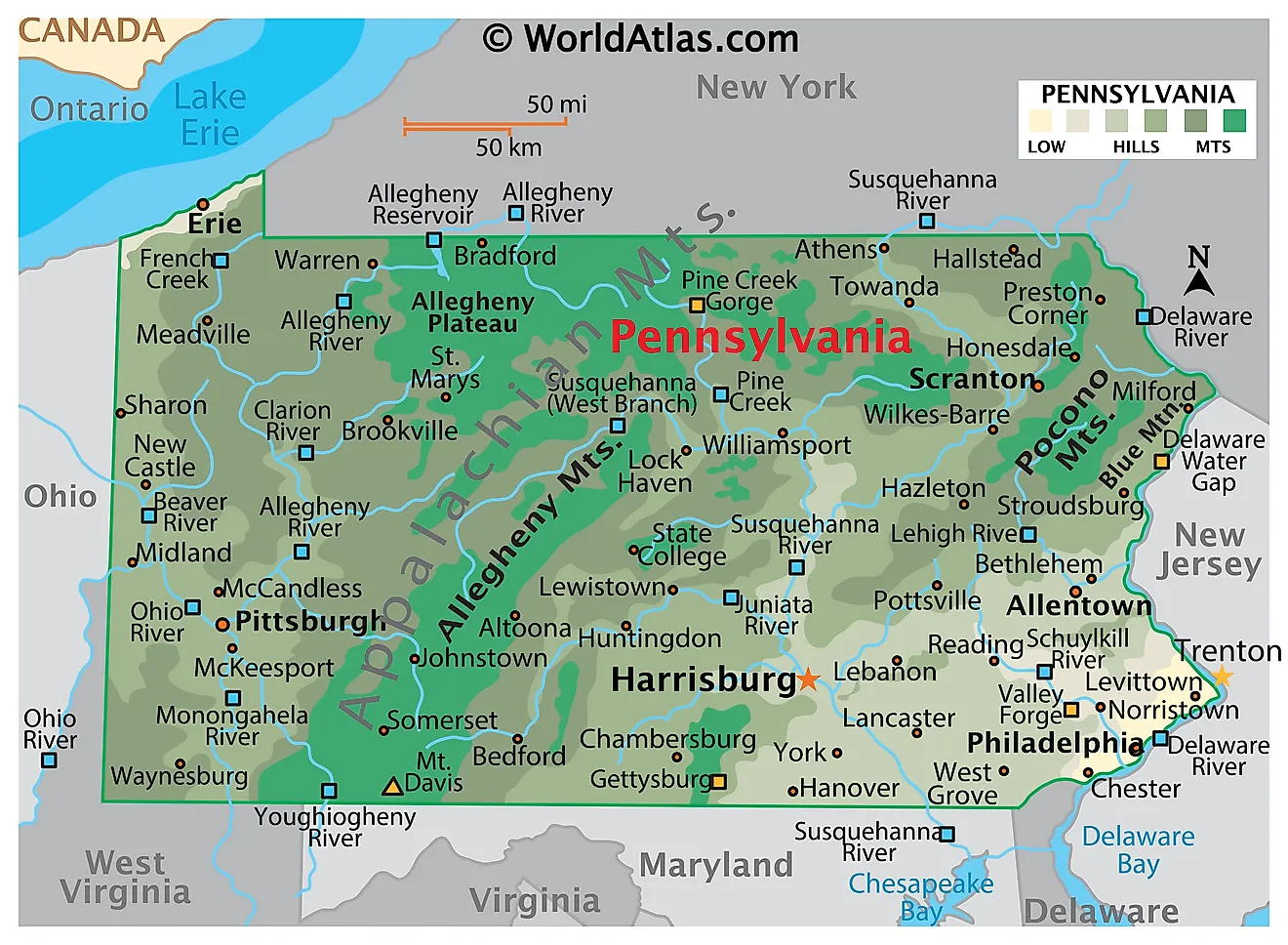
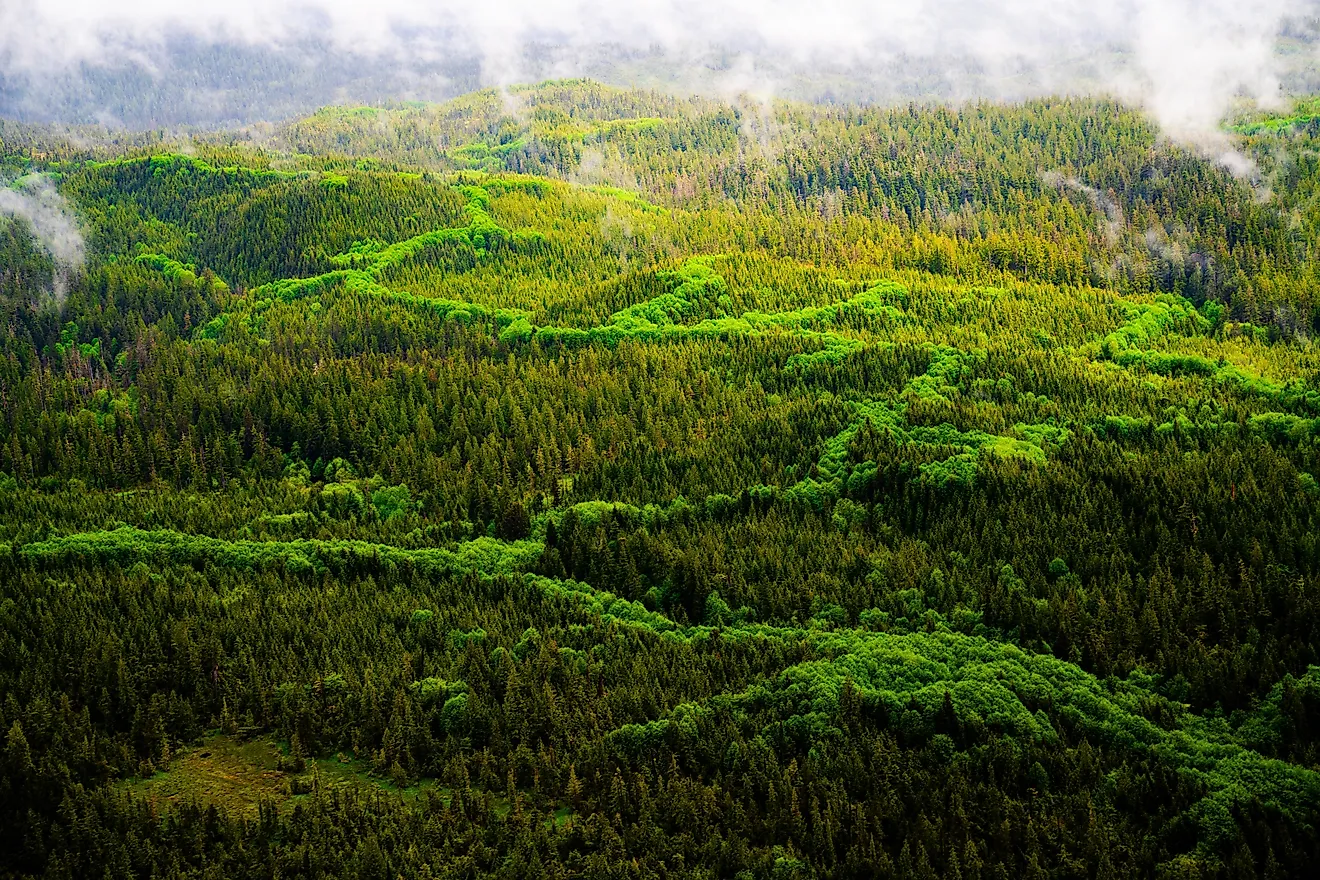
Pennsylvania is in the Mid-Atlantic and Northeastern regions of the United States. It borders Delaware, Maryland, West Virginia, Ohio, New Jersey, and New York. Pennsylvania covers an area of 46,055 square miles. It is the 33rd largest state in the U.S. Pennsylvania is almost totally covered by mountains and a series of rolling hills, plateaus, and ridges punctuated by valleys. Forests cover about 50% of the state's land area, and the only lowlands (Atlantic Coastal Plains) are in the extreme southeastern corner of the state.
Pennsylvania comprises several distinct geographic regions, including the Piedmont region in the east; Appalachian Plateau and Ridge-and-Valley Appalachians in central and western Pennsylvania; Allegheny Plateau in southwestern Pennsylvania; and Great Lakes Lowland in northwestern Pennsylvania.
The Appalachian Mountains slice through the center of Pennsylvania. The Allegheny and Pocono Mountains form the state's most significant subranges. Situated in the southern part of the state, on a ridge of the Allegheny and Appalachian Mountains, is Mount Davis – the state's highest point, which rises to an elevation of 3,213ft. The Blue Mountain, located to the east of the Pocono Mountain, comprises a 150-mile-long ridge, which forms a part of the eastern edge of the Appalachian Mountain range.
The Delaware Water Gap, on the border of Pennsylvania and New Jersey, was formed as the Delaware River carved a deep path through a ridge of the Appalachian Mountains on its way to the sea. The state's lowest point is at sea level in the Delaware River.
The Susquehanna River flows through Pennsylvania's heartland, while many other rivers connect the state to its surrounding states. Additionally, the Ohio River runs along 140 miles of Pennsylvania's border with West Virginia and Ohio. Pennsylvania also has several large lakes, including Lake Erie in its northern corner and Lake Wallenpaupack in its northeastern part. Most of central Pennsylvania has temperate woodlands, with evergreen forests prevalent in higher elevations. The eastern region of Pennsylvania consists primarily of farmland ideal for agricultural production due to its fertile soil.
The majority of Pennsylvania lies in the humid continental climate zone with cold winters, warm summers, and varying amounts of precipitation throughout the year. Pennsylvanian summers typically range from mild to hot during the day, while winter temperatures average below freezing throughout most of the state. Average annual precipitation ranges from 36 inches near Lake Erie to 40 inches near Philadelphia.
Counties Map
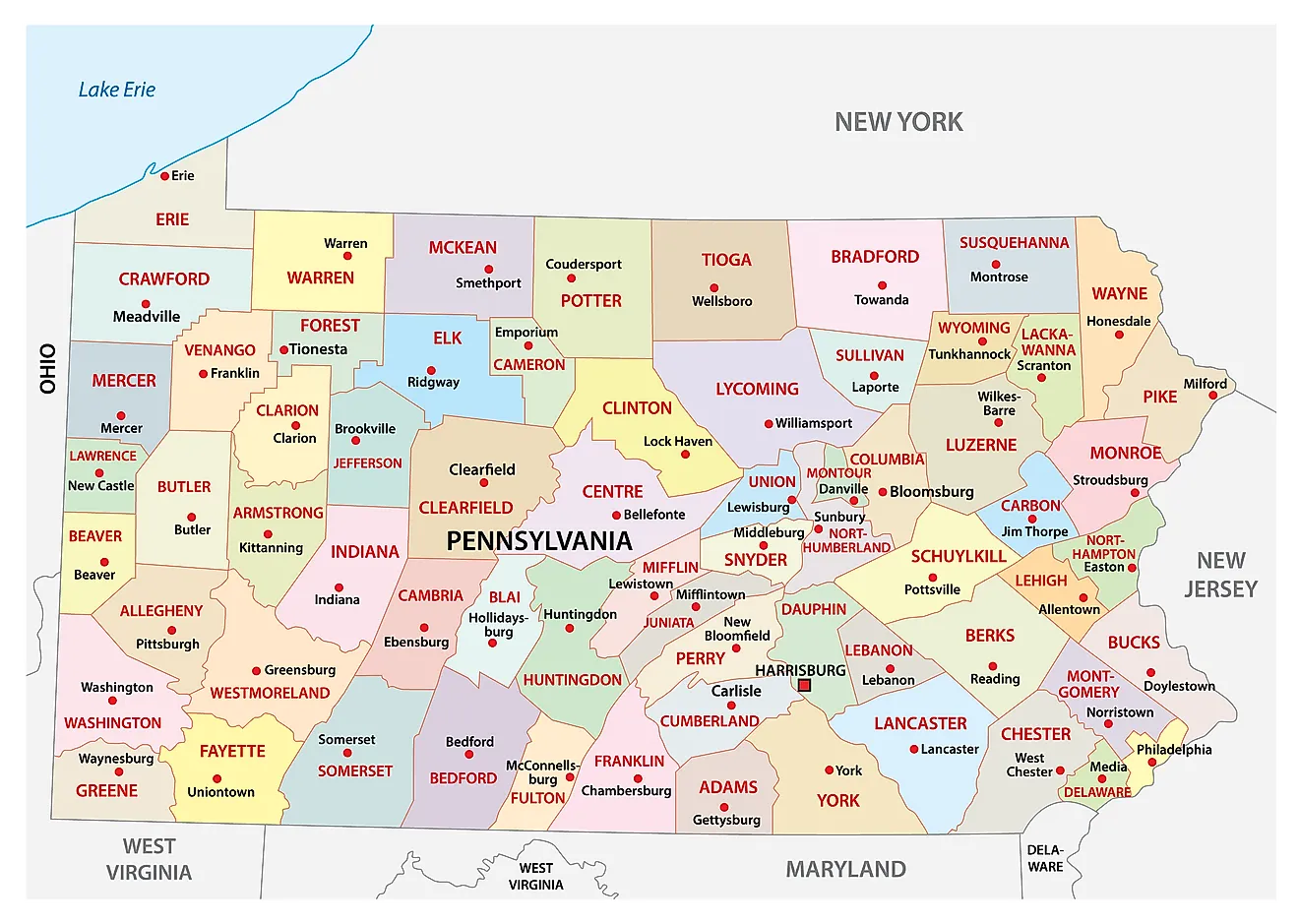
The State of Pennsylvania is divided into 67 counties. In alphabetical order, these counties are: Adams, Allegheny, Armstrong, Beaver, Bedford, Berks, Blair, Bradford, Bucks, Butler, Cambria, Cameron, Carbon, Centre, Chester, Clarion, Clearfield, Clinton, Columbia, Crawford, Cumberland, Dauphin, Delaware, Elk, Erie, Fayette, Forest, Franklin, Fulton, Greene, Huntingdon, Indiana, Jefferson, Juniata, Lackawanna, Lancaster, Lawrence, Lebanon, Lehigh, Luzerne, Lycoming, McKean, Mercer, Mifflin, Monroe, Montgomery, Montour, Northampton, Northumberland, Perry, Philadelphia, Pike, Potter, Schuylkill, Snyder, Somerset, Sullivan, Susquehanna, Tioga, Union, Venango, Warren, Washington, Wayne, Westmoreland, Wyoming, and York.
With an area of 119,283 sq. km, Pennsylvania is the 33rd largest and the 5th most populous state in the USA. Located on the eastern banks of the Susquehanna River at the foothills of the Appalachian Mountains is Harrisburg – the capital and the 13th largest city in Pennsylvania. Government services, industrial development, transportation hub, and manufacture of electrical devices have contributed to the economic growth of the capital city. Situated in the southeastern part of the state, at the confluence of Schuylkill and Delaware Rivers is Philadelphia – the largest and the most populous city in Pennsylvania. It serves as the chief cultural and economic hub in the Delaware Valley. Philadelphia is also the principal industrial, transportation, educational, and economic center of the state. The city is also a major tourist destination and a home to many firsts in the US.
Where is Pennsylvania?
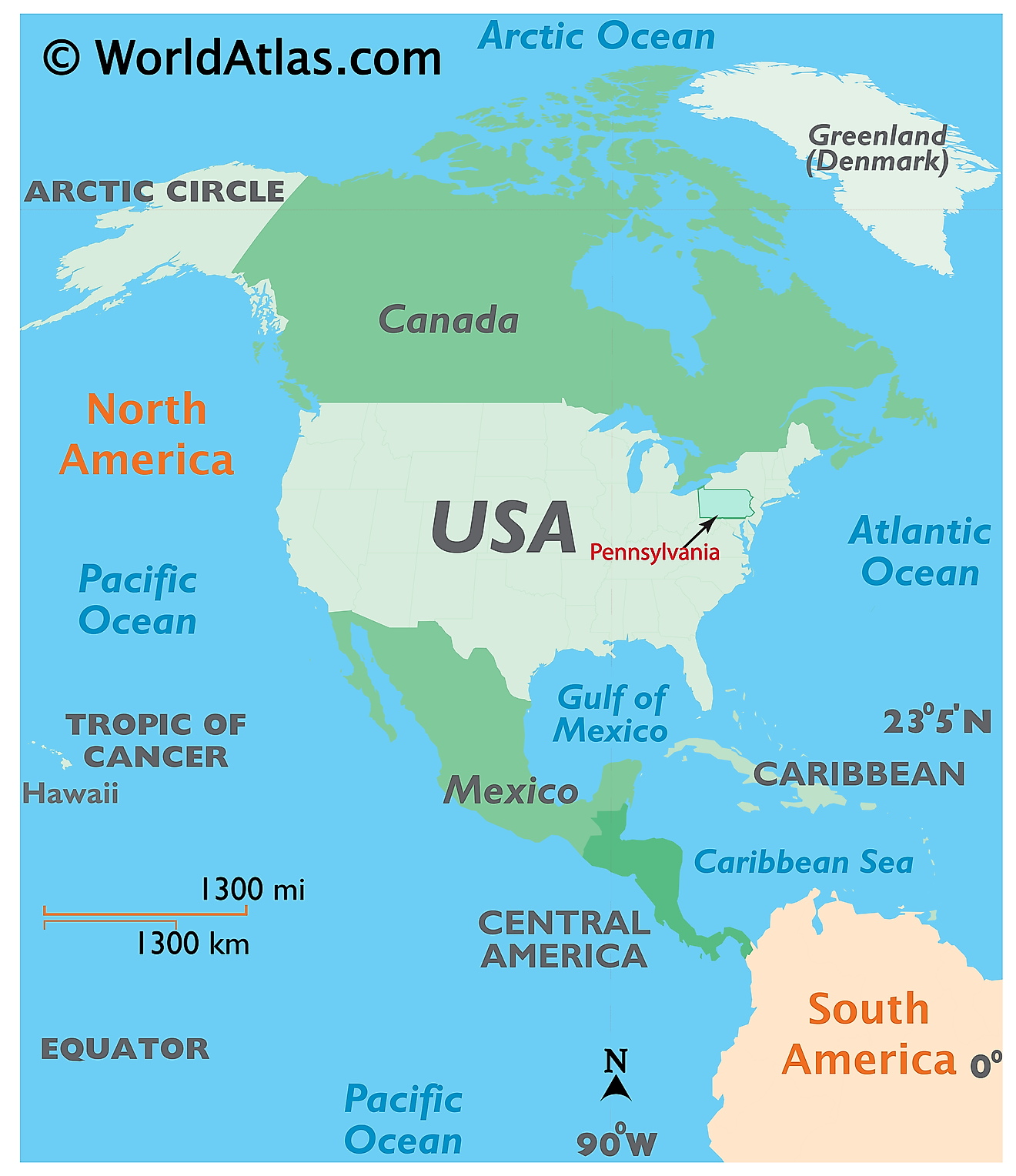
The State of Pennsylvania is located in the Middle Atlantic region of the United States. Pennsylvania is bordered by the state of New York in the north; by Delaware in the southeast; by Maryland in the south; by West Virginia in the southwest; by Ohio in the west and by New Jersey and Delaware River in the east. It is also bordered by Lake Erie and the Canadian province of Ontario in the northwest.
Regional Maps: Map of North America
Outline Map of Pennsylvania
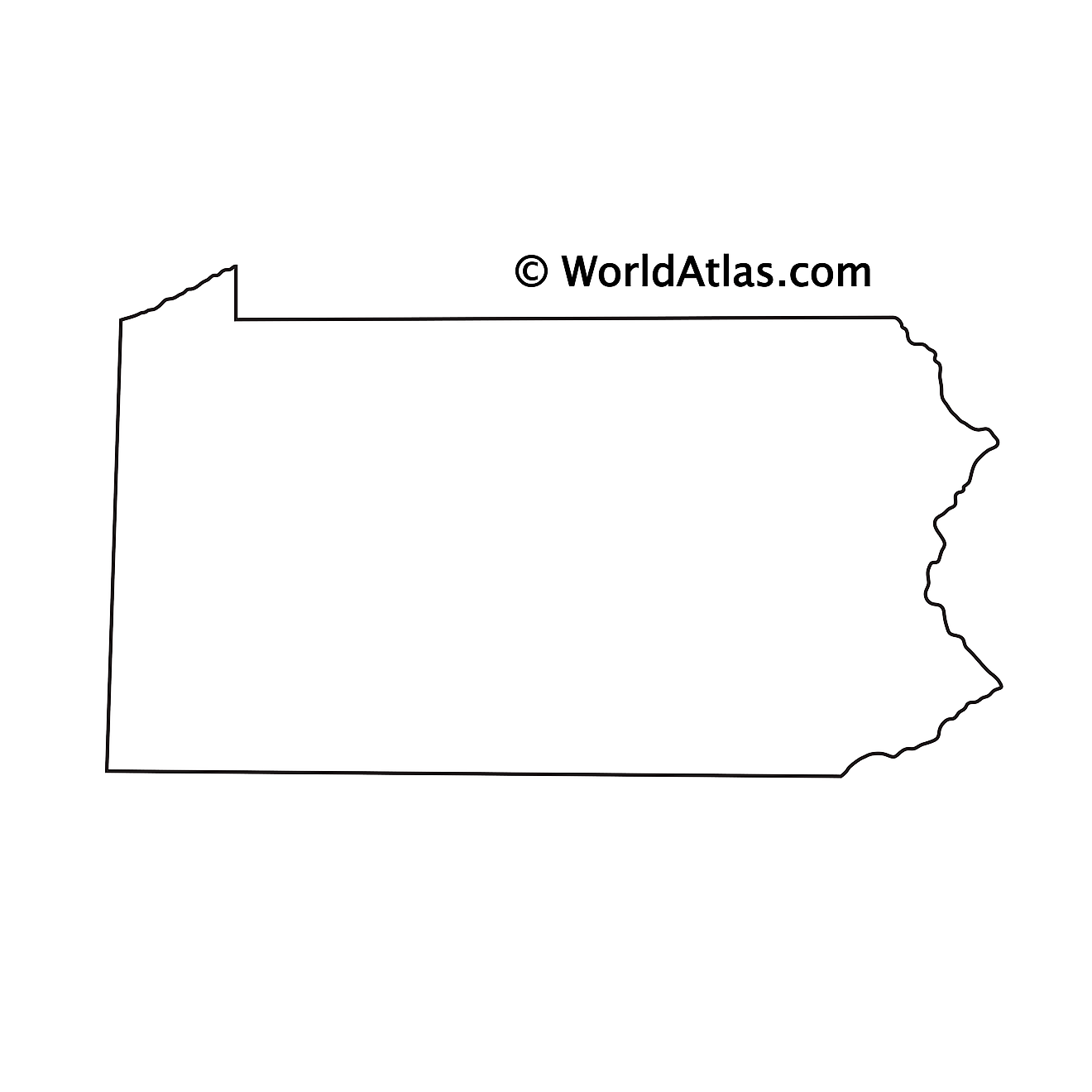
The above blank map represents the State of Pennsylvania, located in the Middle Atlantic region of the United States. The above map can be downloaded, printed and used for geography education purposes like map-pointing and coloring activities.
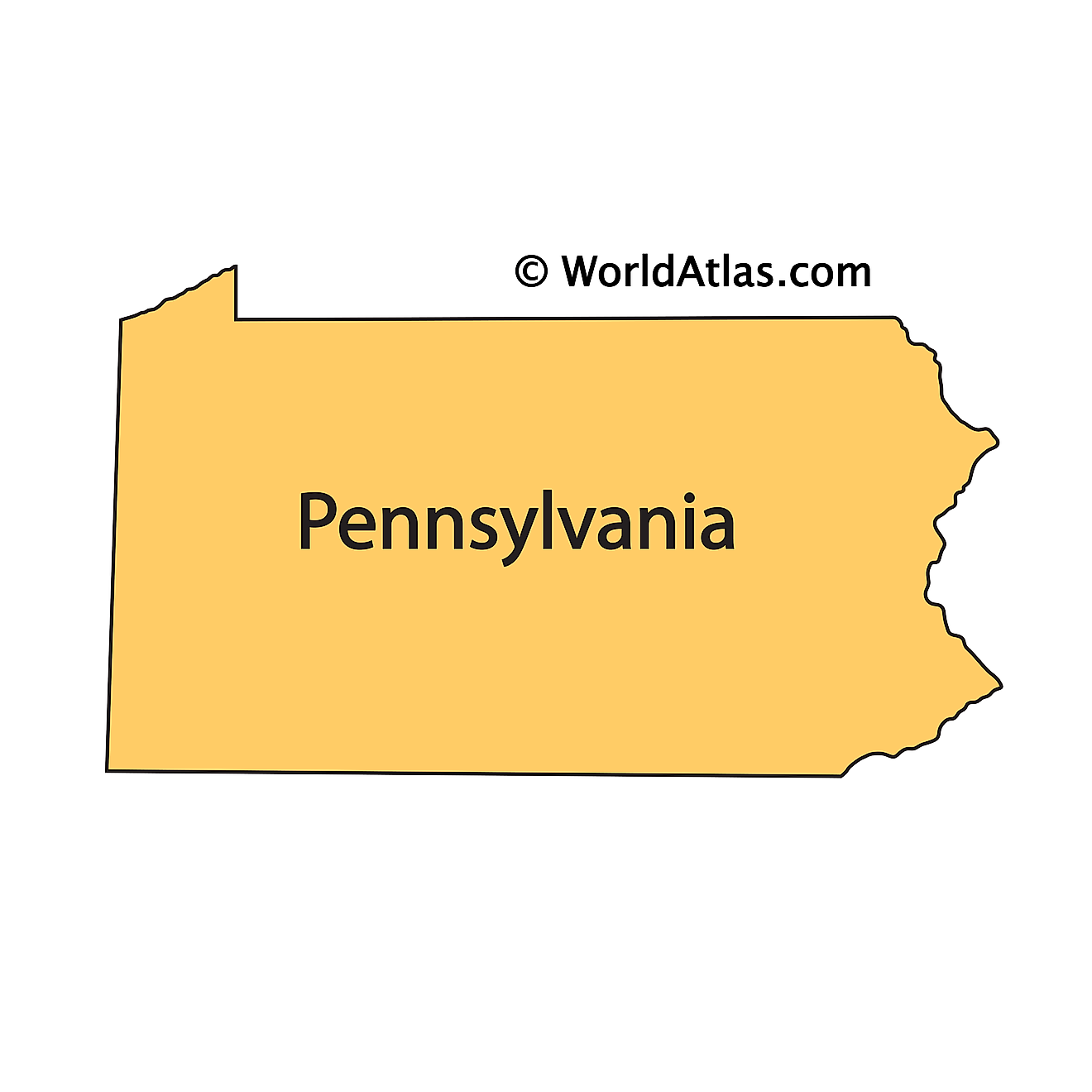
The above outline map represents the State of Pennsylvania, located in the Middle Atlantic region of the United States.
Key Facts
| Legal Name | State of Pennsylvania |
|---|---|
| ISO 3166 Code | US-PA |
| Capital City | Harrisburg |
| Major Cities |
|
This page was last updated on March 15, 2023